This Friday at noon PDT, I will be speaking about UNIX V4 for @lindsey's Languages, Systems, and Data Seminar!
-
@aburka The talk is at noon PDT. I should have put that in the post, but now I have.
-
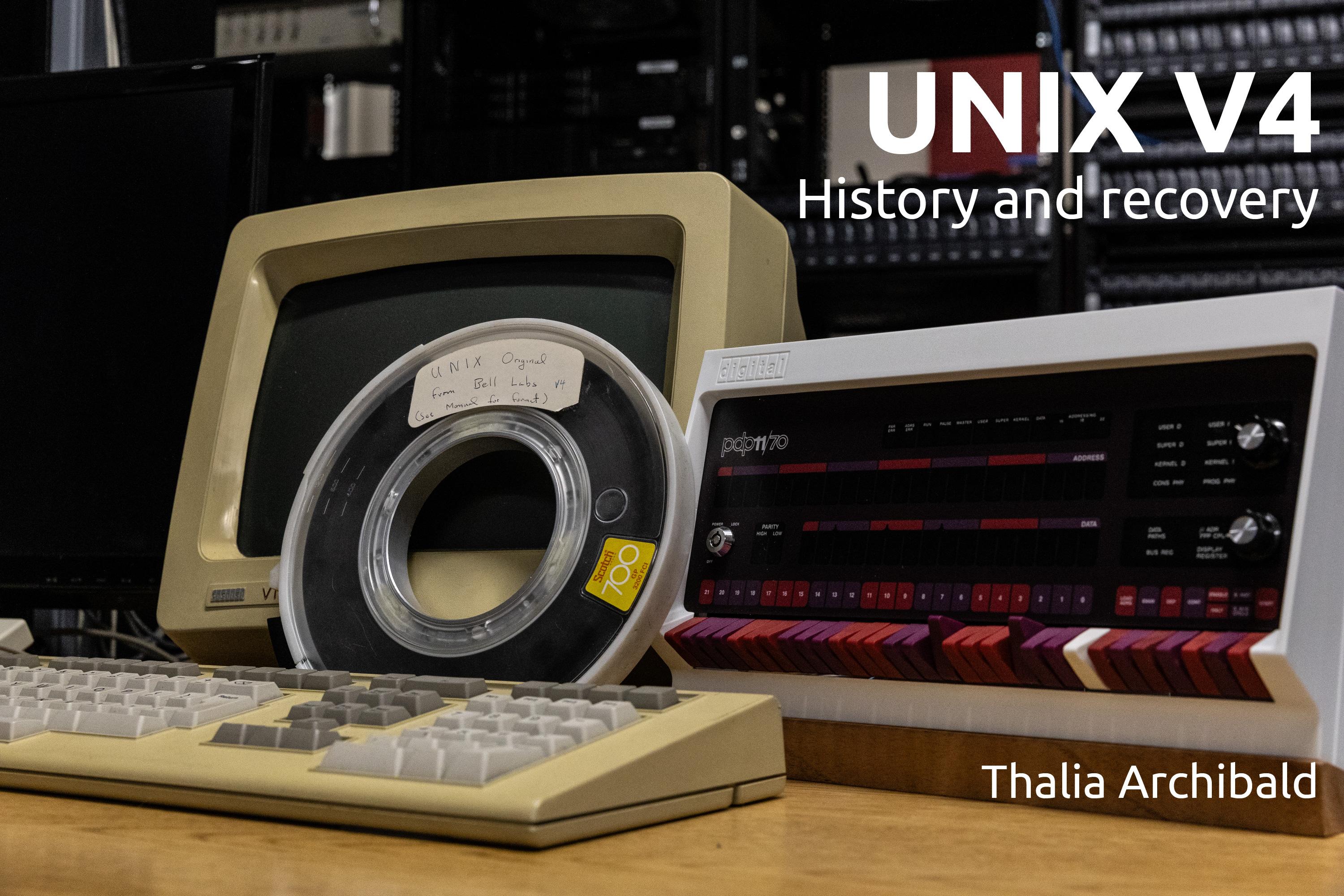
This Friday at noon PDT, I will be speaking about UNIX V4 for @lindsey's Languages, Systems, and Data Seminar! I'm excited to demonstrate programming with a teletype, as that hasn't fit into my other talks.
If you're interested, email (see my site) or DM me for a Zoom invite.
Abstract: We recently recovered UNIX V4 from a 1974 magnetic tape at the University of Utah. This version of the UNIX operating system, thought to have been lost, was the 19th copy distributed to the public, just months after the first public announcement. It was originally acquired by Martin Newell while managing the computer graphics laboratory, and it was likely connected to his foundational research in procedural modeling and the famous Utah teapot. UNIX V4 was the culmination of the effort to rewrite the kernel in C, made possible by the introduction of structs to the language, and has shaped all modern operating systems. In this talk, I put this artifact into context within the larger history of UNIX and demonstrate period-appropriate software development with a paper-printing teletype and replica PDP-11.
Languages, Systems, and Data Seminar (Spring 2026) | Languages, Systems, and Data Lab @ UCSC
Time: Fridays, noon - 1:05pm (PT) Location: The Internet / The LSD Lab (Engineering 2, Room 398) Organizers: Lindsey Kuper, Tyler Sorensen, Reese Levine, and Achilles Benetopoulos The Languages, Systems, and Data Seminar meets weekly to discuss interesting topics in the areas of programming languages, systems, databases, formal methods, security, software engineering, verification, architecture, and beyond. Our goal is to encourage interactions and discussions between students, researchers, and faculty with interests in these areas.

Languages, Systems, and Data Lab @ UCSC (lsd.ucsc.edu)
@ed1conf I will be demonstrating the standard text editor with a teletype :).
-
This Friday at noon PDT, I will be speaking about UNIX V4 for @lindsey's Languages, Systems, and Data Seminar! I'm excited to demonstrate programming with a teletype, as that hasn't fit into my other talks.
If you're interested, email (see my site) or DM me for a Zoom invite.
Abstract: We recently recovered UNIX V4 from a 1974 magnetic tape at the University of Utah. This version of the UNIX operating system, thought to have been lost, was the 19th copy distributed to the public, just months after the first public announcement. It was originally acquired by Martin Newell while managing the computer graphics laboratory, and it was likely connected to his foundational research in procedural modeling and the famous Utah teapot. UNIX V4 was the culmination of the effort to rewrite the kernel in C, made possible by the introduction of structs to the language, and has shaped all modern operating systems. In this talk, I put this artifact into context within the larger history of UNIX and demonstrate period-appropriate software development with a paper-printing teletype and replica PDP-11.
Languages, Systems, and Data Seminar (Spring 2026) | Languages, Systems, and Data Lab @ UCSC
Time: Fridays, noon - 1:05pm (PT) Location: The Internet / The LSD Lab (Engineering 2, Room 398) Organizers: Lindsey Kuper, Tyler Sorensen, Reese Levine, and Achilles Benetopoulos The Languages, Systems, and Data Seminar meets weekly to discuss interesting topics in the areas of programming languages, systems, databases, formal methods, security, software engineering, verification, architecture, and beyond. Our goal is to encourage interactions and discussions between students, researchers, and faculty with interests in these areas.
Languages, Systems, and Data Lab @ UCSC (lsd.ucsc.edu)
@thalia Dang, those old DEC minis are sexy. Whenever I see one, I have to cry a little bit at how utterly BORING the computers since then have been.
-
@ed1conf I will be demonstrating the standard text editor with a teletype :).
-
This Friday at noon PDT, I will be speaking about UNIX V4 for @lindsey's Languages, Systems, and Data Seminar! I'm excited to demonstrate programming with a teletype, as that hasn't fit into my other talks.
If you're interested, email (see my site) or DM me for a Zoom invite.
Abstract: We recently recovered UNIX V4 from a 1974 magnetic tape at the University of Utah. This version of the UNIX operating system, thought to have been lost, was the 19th copy distributed to the public, just months after the first public announcement. It was originally acquired by Martin Newell while managing the computer graphics laboratory, and it was likely connected to his foundational research in procedural modeling and the famous Utah teapot. UNIX V4 was the culmination of the effort to rewrite the kernel in C, made possible by the introduction of structs to the language, and has shaped all modern operating systems. In this talk, I put this artifact into context within the larger history of UNIX and demonstrate period-appropriate software development with a paper-printing teletype and replica PDP-11.
Languages, Systems, and Data Seminar (Spring 2026) | Languages, Systems, and Data Lab @ UCSC
Time: Fridays, noon - 1:05pm (PT) Location: The Internet / The LSD Lab (Engineering 2, Room 398) Organizers: Lindsey Kuper, Tyler Sorensen, Reese Levine, and Achilles Benetopoulos The Languages, Systems, and Data Seminar meets weekly to discuss interesting topics in the areas of programming languages, systems, databases, formal methods, security, software engineering, verification, architecture, and beyond. Our goal is to encourage interactions and discussions between students, researchers, and faculty with interests in these areas.
Languages, Systems, and Data Lab @ UCSC (lsd.ucsc.edu)
Reply from @zerodogg: "I love learning about UNIX history! Just got my physical copy of «a quarter century» in the mail (and for some reason no one I know are super-excited about this)."
Sadly Peter Salus passed away on Friday. It's an incredible book and a tragic loss :(.
https://www.tuhs.org/pipermail/tuhs/2026-May/033750.html -
This Friday at noon PDT, I will be speaking about UNIX V4 for @lindsey's Languages, Systems, and Data Seminar! I'm excited to demonstrate programming with a teletype, as that hasn't fit into my other talks.
If you're interested, email (see my site) or DM me for a Zoom invite.
Abstract: We recently recovered UNIX V4 from a 1974 magnetic tape at the University of Utah. This version of the UNIX operating system, thought to have been lost, was the 19th copy distributed to the public, just months after the first public announcement. It was originally acquired by Martin Newell while managing the computer graphics laboratory, and it was likely connected to his foundational research in procedural modeling and the famous Utah teapot. UNIX V4 was the culmination of the effort to rewrite the kernel in C, made possible by the introduction of structs to the language, and has shaped all modern operating systems. In this talk, I put this artifact into context within the larger history of UNIX and demonstrate period-appropriate software development with a paper-printing teletype and replica PDP-11.
Languages, Systems, and Data Seminar (Spring 2026) | Languages, Systems, and Data Lab @ UCSC
Time: Fridays, noon - 1:05pm (PT) Location: The Internet / The LSD Lab (Engineering 2, Room 398) Organizers: Lindsey Kuper, Tyler Sorensen, Reese Levine, and Achilles Benetopoulos The Languages, Systems, and Data Seminar meets weekly to discuss interesting topics in the areas of programming languages, systems, databases, formal methods, security, software engineering, verification, architecture, and beyond. Our goal is to encourage interactions and discussions between students, researchers, and faculty with interests in these areas.
Languages, Systems, and Data Lab @ UCSC (lsd.ucsc.edu)
Reply from @SteveBellovin: "I have programmed on a Teletype, starting in 1967"
I have these teleprinters:
- 3x Teletype Model 43 KSR (post-dates UNIX V4, but it's the closest I have)
- TI Silent 700 Model 733 ASR (cassette send/receive)
- TI Silent 700 Model 742 (programmable with 8086)
- TI Silent 700 Model 703 (tiny with RS-232)
- TI Silent 700 Model 707 (tiny with modem)Which did you use?
-
-
@thalia What Teletype are you using? The ASR33 lacks curly brackets which makes me skeptical it was used in C development. Yes, there are trigraphs ( https://en.wikipedia.org/wiki/Digraphs_and_trigraphs_(programming) ) but FWIU these came some time later.
-
Reply from @zerodogg: "I love learning about UNIX history! Just got my physical copy of «a quarter century» in the mail (and for some reason no one I know are super-excited about this)."
Sadly Peter Salus passed away on Friday. It's an incredible book and a tragic loss :(.
https://www.tuhs.org/pipermail/tuhs/2026-May/033750.html -
-
-
-
This Friday at noon PDT, I will be speaking about UNIX V4 for @lindsey's Languages, Systems, and Data Seminar! I'm excited to demonstrate programming with a teletype, as that hasn't fit into my other talks.
If you're interested, email (see my site) or DM me for a Zoom invite.
Abstract: We recently recovered UNIX V4 from a 1974 magnetic tape at the University of Utah. This version of the UNIX operating system, thought to have been lost, was the 19th copy distributed to the public, just months after the first public announcement. It was originally acquired by Martin Newell while managing the computer graphics laboratory, and it was likely connected to his foundational research in procedural modeling and the famous Utah teapot. UNIX V4 was the culmination of the effort to rewrite the kernel in C, made possible by the introduction of structs to the language, and has shaped all modern operating systems. In this talk, I put this artifact into context within the larger history of UNIX and demonstrate period-appropriate software development with a paper-printing teletype and replica PDP-11.
Languages, Systems, and Data Seminar (Spring 2026) | Languages, Systems, and Data Lab @ UCSC
Time: Fridays, noon - 1:05pm (PT) Location: The Internet / The LSD Lab (Engineering 2, Room 398) Organizers: Lindsey Kuper, Tyler Sorensen, Reese Levine, and Achilles Benetopoulos The Languages, Systems, and Data Seminar meets weekly to discuss interesting topics in the areas of programming languages, systems, databases, formal methods, security, software engineering, verification, architecture, and beyond. Our goal is to encourage interactions and discussions between students, researchers, and faculty with interests in these areas.
Languages, Systems, and Data Lab @ UCSC (lsd.ucsc.edu)
-
Reply from @SteveBellovin: "I have programmed on a Teletype, starting in 1967"
I have these teleprinters:
- 3x Teletype Model 43 KSR (post-dates UNIX V4, but it's the closest I have)
- TI Silent 700 Model 733 ASR (cassette send/receive)
- TI Silent 700 Model 742 (programmable with 8086)
- TI Silent 700 Model 703 (tiny with RS-232)
- TI Silent 700 Model 707 (tiny with modem)Which did you use?
@thalia Many… In 1967, I used a 33 ASR to sign on to the Dartmouth Timesharing System, on which I taught myself BASIC and Algol. College was punch cards and old-style video terminals, plus IBM 2741 (Selectric-based) hard copy terminals.. Grad school was punch cards, 2741s, and (I think) 37s. There may also have been a 35; I don't recall. Also during grad school, I used a variety of fairly dumb CRT, generically known as "glass TTYs", plus a few months with a TI Silent 700 with modem (but I don't know the submodel).
Given your other interests, you may be interested in my dissertation: https://www.cs.columbia.edu/~smb/dissabstract.html. As far as I know, it's been cited exactly once and has had zero influence on anyone… If you want, the (scanned) PDF is online but not linked-to.
I have published a few papers on technical history, mostly cryptography but also a couple of legal history papers. See https://www.cs.columbia.edu/~smb/papers/#history, "The antiquity of algorithmic patents", and 'Who coined the phrase “data shadow”?'
-
@thalia Many… In 1967, I used a 33 ASR to sign on to the Dartmouth Timesharing System, on which I taught myself BASIC and Algol. College was punch cards and old-style video terminals, plus IBM 2741 (Selectric-based) hard copy terminals.. Grad school was punch cards, 2741s, and (I think) 37s. There may also have been a 35; I don't recall. Also during grad school, I used a variety of fairly dumb CRT, generically known as "glass TTYs", plus a few months with a TI Silent 700 with modem (but I don't know the submodel).
Given your other interests, you may be interested in my dissertation: https://www.cs.columbia.edu/~smb/dissabstract.html. As far as I know, it's been cited exactly once and has had zero influence on anyone… If you want, the (scanned) PDF is online but not linked-to.
I have published a few papers on technical history, mostly cryptography but also a couple of legal history papers. See https://www.cs.columbia.edu/~smb/papers/#history, "The antiquity of algorithmic patents", and 'Who coined the phrase “data shadow”?'
@SteveBellovin Jealous. It's like I'm resurrecting these technologies, because I'm not learning them from school or a colleague, as they're long obsolete. Digging through manuals and reverse engineering is fun, but not quite the same.
Where were these Model 37s?? I've been desperately trying to track one down. They're exceedingly rare and I'll follow any lead.
The Terminals Wiki has photos of the Silent 700 models. I'd group them into 743/745, 703/707, 732/733/742 ASR, 732/733/742 KSR, and 725, if you only remember how they looked.
https://terminals-wiki.org/wiki/index.php?search=ti+silent+700&title=Special%3ASearch&go=GoAt a glance, those papers look interesting. I'll give them a read.
-
@SteveBellovin Jealous. It's like I'm resurrecting these technologies, because I'm not learning them from school or a colleague, as they're long obsolete. Digging through manuals and reverse engineering is fun, but not quite the same.
Where were these Model 37s?? I've been desperately trying to track one down. They're exceedingly rare and I'll follow any lead.
The Terminals Wiki has photos of the Silent 700 models. I'd group them into 743/745, 703/707, 732/733/742 ASR, 732/733/742 KSR, and 725, if you only remember how they looked.
https://terminals-wiki.org/wiki/index.php?search=ti+silent+700&title=Special%3ASearch&go=GoAt a glance, those papers look interesting. I'll give them a read.
@thalia The 37s I used were at the University of North Carolina Computer Center, way back when. 14 years ago, I saw some at the Connections Museum in Seattle (https://www.telcomhistory.org/seattleTelegraphs.html). Here are two of my pictures, of an ASR 33 and a 37.
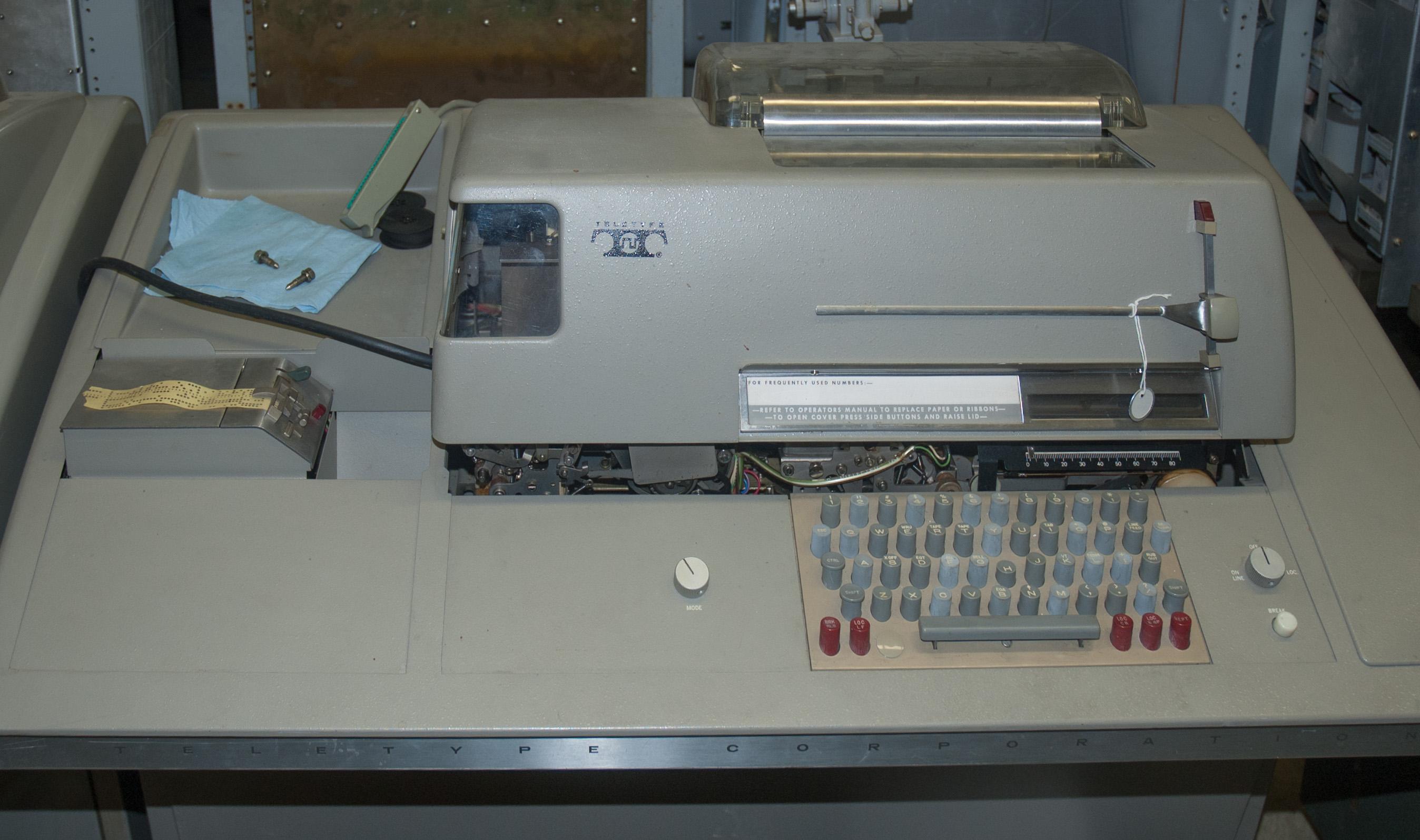
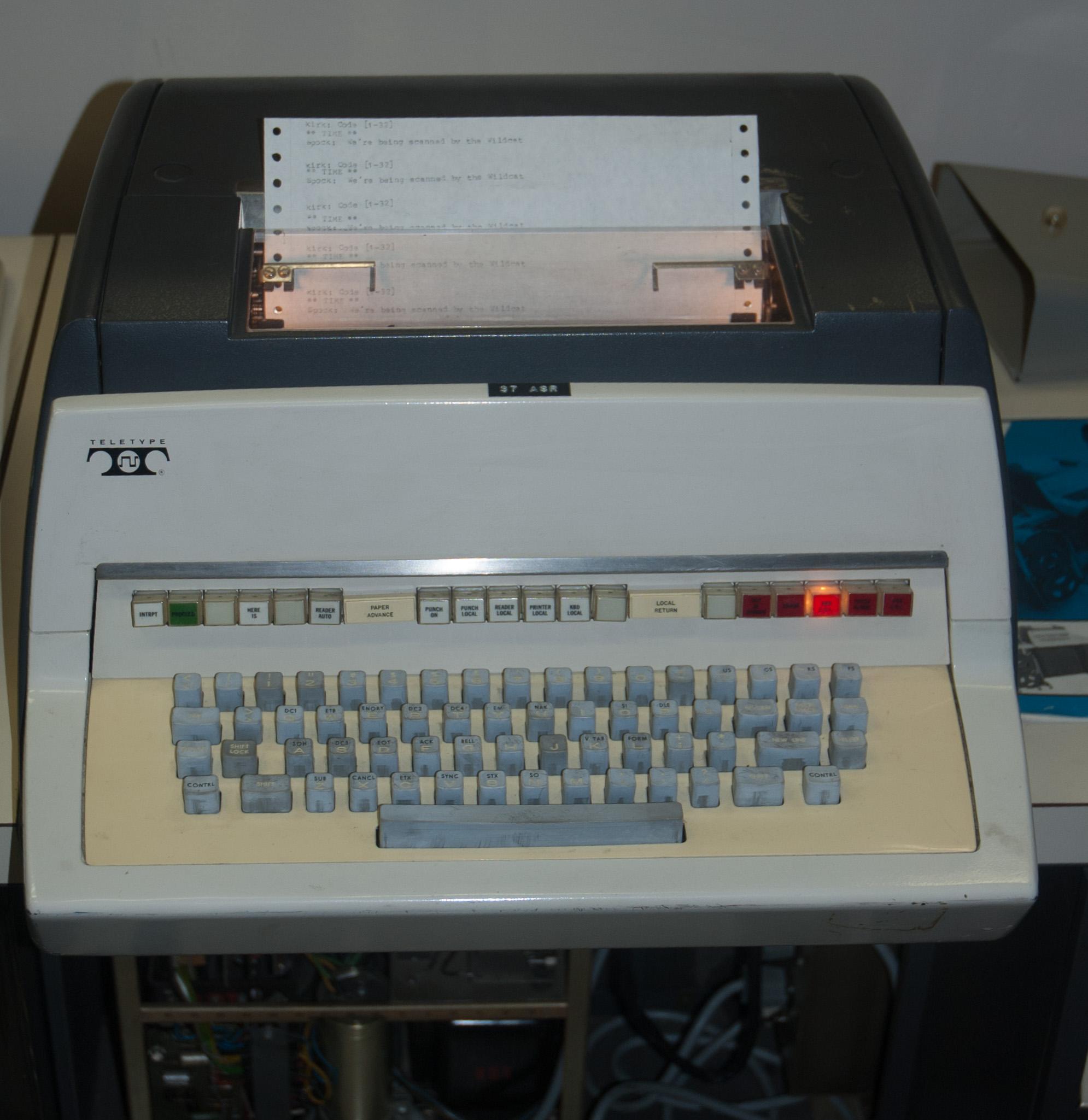
-
R relay@relay.infosec.exchange shared this topic