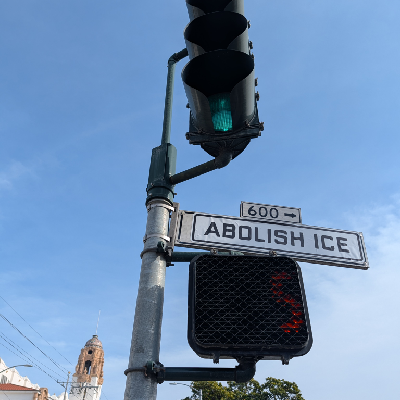
Age verification is a deliberate attack on system sovereignty, both for individuals and countries.
-
Age verification is a deliberate attack on system sovereignty, both for individuals and countries. There’s no “age verifcation”, there is only “identity verification that includes age”, and the system doing verification is not just a privacy-invasive user tracking system but a remotely controlled off switch for anyone of any age.
-
R relay@relay.infosec.exchange shared this topic
-
Age verification is a deliberate attack on system sovereignty, both for individuals and countries. There’s no “age verifcation”, there is only “identity verification that includes age”, and the system doing verification is not just a privacy-invasive user tracking system but a remotely controlled off switch for anyone of any age.
@mhoye @Gargron
And if we have to do this by government law, we should verify to a single gov database that confirms we are who we are to other systems.All of us giving our identity info to all the systems is stupid squared.
For my next insurer I want the Gov to confirm who I am, not hand over a pile of personal stuff. If the Government can’t do this safely, that’s my proof it shouldn’t be done.
-
Age verification is a deliberate attack on system sovereignty, both for individuals and countries. There’s no “age verifcation”, there is only “identity verification that includes age”, and the system doing verification is not just a privacy-invasive user tracking system but a remotely controlled off switch for anyone of any age.
If it's 'up to the parents' to raise their children.
...then why do the EU feel the need to get involved?
Best case scenario, this is taking a sledgehammer to a hangnail...
-
Age verification is a deliberate attack on system sovereignty, both for individuals and countries. There’s no “age verifcation”, there is only “identity verification that includes age”, and the system doing verification is not just a privacy-invasive user tracking system but a remotely controlled off switch for anyone of any age.
@mhoye EXACTLY THAT is why I #RefuseToComply and bow before #Cyberfascists #Terrorists' demands like "#AgeVerification" ( @OS1337 ) and I expect others to do the same!
-
R relay@relay.mycrowd.ca shared this topic
-
@mhoye @Gargron
And if we have to do this by government law, we should verify to a single gov database that confirms we are who we are to other systems.All of us giving our identity info to all the systems is stupid squared.
For my next insurer I want the Gov to confirm who I am, not hand over a pile of personal stuff. If the Government can’t do this safely, that’s my proof it shouldn’t be done.
-
Age verification is a deliberate attack on system sovereignty, both for individuals and countries. There’s no “age verifcation”, there is only “identity verification that includes age”, and the system doing verification is not just a privacy-invasive user tracking system but a remotely controlled off switch for anyone of any age.
There is nothing special about “age” as a differentiator. It’s just a data point, a condition and a branch. And if a system exists that can start from some condition of your identity and decide that you don’t get to use a computer today - meaning, talk to your friends or employer or read the news or get medical information or, you know, _participate in society_, then that system can use _any_ data to make that decision. Age, gender, race, credit rating, anything about you and anyone like you.
-
Age verification is a deliberate attack on system sovereignty, both for individuals and countries. There’s no “age verifcation”, there is only “identity verification that includes age”, and the system doing verification is not just a privacy-invasive user tracking system but a remotely controlled off switch for anyone of any age.
@mhoye If only we had an authentication technology that was shaped vaguely like Macaroons which allowed for opaque and scoped attribute exposure/predicate evaluation
(Of course that’s not the point of the legislation)
-
@mhoye @Gargron
And if we have to do this by government law, we should verify to a single gov database that confirms we are who we are to other systems.All of us giving our identity info to all the systems is stupid squared.
For my next insurer I want the Gov to confirm who I am, not hand over a pile of personal stuff. If the Government can’t do this safely, that’s my proof it shouldn’t be done.
-
There is nothing special about “age” as a differentiator. It’s just a data point, a condition and a branch. And if a system exists that can start from some condition of your identity and decide that you don’t get to use a computer today - meaning, talk to your friends or employer or read the news or get medical information or, you know, _participate in society_, then that system can use _any_ data to make that decision. Age, gender, race, credit rating, anything about you and anyone like you.
If this system exists at all, then everyone subject to it is one state-coerced software update from away from their computer working for them only at the whim of that state. Age, gender, race, disability, debt, credit rating, citizenship, neighborhood, search history, political affiliation, all of that plus the state itself is one breach away from no computer working - or only the _right people's_ computers working, you understand - at all.
Age verification is the footgun of public democracy.
-
@http_error_418 @mhoye @Gargron
No. A slight retraction. I made an edit to say also 3rd party but user gets to chose.What is important is the user isn’t forced to verify with a scammer who offers a free verification service to the retailer.
The government supply a service but also allow other recognised 3rd parties, so you should get to chose which. Not Google. Not Microsoft. Not Amazon. You.
-
If this system exists at all, then everyone subject to it is one state-coerced software update from away from their computer working for them only at the whim of that state. Age, gender, race, disability, debt, credit rating, citizenship, neighborhood, search history, political affiliation, all of that plus the state itself is one breach away from no computer working - or only the _right people's_ computers working, you understand - at all.
Age verification is the footgun of public democracy.
At the implementation level data is just data, and in a democratic society, human privacy and state sovereignty are the same the same thing. You wouldn't think so, until you take a hard look into how to implement them, but they are the same thing. And both of them are national security issues.
Nobody will be made safer, by age verification. But everyone will be put at risk by the systems that have to exist to implement it.
-
Age verification is a deliberate attack on system sovereignty, both for individuals and countries. There’s no “age verifcation”, there is only “identity verification that includes age”, and the system doing verification is not just a privacy-invasive user tracking system but a remotely controlled off switch for anyone of any age.
"La verificación de edad constituye un ataque deliberado a la soberanía del sistema, tanto para los individuos como para los países. No existe tal cosa como la «verificación de edad»; lo único que existe es una «verificación de identidad que incluye la edad», y el sistema encargado de realizar dicha verificación no es meramente un sistema de rastreo de usuarios invasivo para la privacidad, sino un interruptor de apagado controlado a distancia, aplicable a cualquier persona de cualquier edad."
-
@mhoye @Gargron
And if we have to do this by government law, we should verify to a single gov database that confirms we are who we are to other systems.All of us giving our identity info to all the systems is stupid squared.
For my next insurer I want the Gov to confirm who I am, not hand over a pile of personal stuff. If the Government can’t do this safely, that’s my proof it shouldn’t be done.
@taatm @mhoye @Gargron I had initially thought have the OS do the verification, and only respond "true" or "false" to a transparent condition (eg user gets to see the app is asking for age>=18) but putting the onus onto Govt entities is even better (single point of failure, and we know how they love to shirk blame, but tie it into personal consequences for the politicians in power at the time of a breach and maybe it would work)
-
Age verification is a deliberate attack on system sovereignty, both for individuals and countries. There’s no “age verifcation”, there is only “identity verification that includes age”, and the system doing verification is not just a privacy-invasive user tracking system but a remotely controlled off switch for anyone of any age.
@mhoye I’m wondering if it would be possible create a protocol similar to passkeys, where the device verifies my identity but only exposes my DOB to a service?
-
Age verification is a deliberate attack on system sovereignty, both for individuals and countries. There’s no “age verifcation”, there is only “identity verification that includes age”, and the system doing verification is not just a privacy-invasive user tracking system but a remotely controlled off switch for anyone of any age.
@mhoye That’s a strong critique—age verification does raise serious concerns around privacy, data control, and potential overreach if not carefully designed and regulated.
-
@taatm @mhoye @Gargron I had initially thought have the OS do the verification, and only respond "true" or "false" to a transparent condition (eg user gets to see the app is asking for age>=18) but putting the onus onto Govt entities is even better (single point of failure, and we know how they love to shirk blame, but tie it into personal consequences for the politicians in power at the time of a breach and maybe it would work)
@Offbeatmammal @taatm @mhoye @Gargron I, personally, do not want any government or corporation to hold that kind of power over what I can do with my own computing devices.
-
At the implementation level data is just data, and in a democratic society, human privacy and state sovereignty are the same the same thing. You wouldn't think so, until you take a hard look into how to implement them, but they are the same thing. And both of them are national security issues.
Nobody will be made safer, by age verification. But everyone will be put at risk by the systems that have to exist to implement it.
@mhoye thank you for this, I've been kind of skeptical of this, and you've moved me significantly closer to your position.
I don't like any state mandated age verification, but I do think we need something along the lines of a consumer opt-in "naive Internet". For all the stuff you talk about that's necessary for daily life we should be able to do that as safely as we can walk down the street.
If people can put up a storefront that leads you into a scam or sex shop on the way to interacting with your local government or doing your homework or paying your utilities that's unacceptable.
Age verification isn't a fix, but ignoring these problems just leaves more space for bad laws and policing.
-
@mhoye That’s a strong critique—age verification does raise serious concerns around privacy, data control, and potential overreach if not carefully designed and regulated.
@mhoye I am Saja from Gaza, Palestine
 . Please follow my page and support my story
 -
Age verification is a deliberate attack on system sovereignty, both for individuals and countries. There’s no “age verifcation”, there is only “identity verification that includes age”, and the system doing verification is not just a privacy-invasive user tracking system but a remotely controlled off switch for anyone of any age.
@mhoye big brother is literally taking notes