A quick, effective way to improve our cities - cut police budgets in half and give the difference to fire departments and social services.
-
A quick, effective way to improve our cities - cut police budgets in half and give the difference to fire departments and social services.
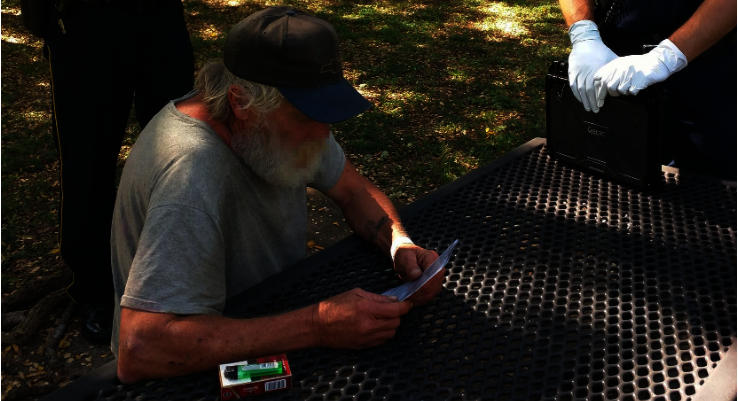
"Take the cuffs off. Take the fucking cuffs off right now. Come on, you can't do that. This guy's under stress right now. We need to take vitals!"
Toronto firefighters confront police constables after they arrested and handcuffed a man who was suffering a mental health crisis.
#Toronto #Police #Firefighters -
A quick, effective way to improve our cities - cut police budgets in half and give the difference to fire departments and social services.
"Take the cuffs off. Take the fucking cuffs off right now. Come on, you can't do that. This guy's under stress right now. We need to take vitals!"
Toronto firefighters confront police constables after they arrested and handcuffed a man who was suffering a mental health crisis.
#Toronto #Police #Firefighters@dbattistella I wrote this in 2020, and an earlier, longer article on the topic in the Dallas Morning News. This article appeared in the Violence Reduction Project at Quality Policing.
Invest in Mental Health Squads • Nick Selby
In 2014, I began formally tracking unarmed people who died after an encounter with the police. In each year since then, one statistic leaps out to me as the lowest of the low-hanging fruit: more than half of those who die after a police encounter are suffering from mental illness, addiction, physical disability, or a combination of those things. Based on the data I have been analyzing for five years, I believe an asymmetrically effective way to reduce police-involved violence is for every one of America’s 12,500 local police departments to create from their existing workforce a mental health unit, comprising two cops and a mental health professional. Have them patrol every day.
nickselby.com (nickselby.com)
-
@dbattistella I wrote this in 2020, and an earlier, longer article on the topic in the Dallas Morning News. This article appeared in the Violence Reduction Project at Quality Policing.
Invest in Mental Health Squads • Nick Selby
In 2014, I began formally tracking unarmed people who died after an encounter with the police. In each year since then, one statistic leaps out to me as the lowest of the low-hanging fruit: more than half of those who die after a police encounter are suffering from mental illness, addiction, physical disability, or a combination of those things. Based on the data I have been analyzing for five years, I believe an asymmetrically effective way to reduce police-involved violence is for every one of America’s 12,500 local police departments to create from their existing workforce a mental health unit, comprising two cops and a mental health professional. Have them patrol every day.
nickselby.com (nickselby.com)
@dbattistella But to your comment, in my opinion:
- The difference between a person in acute mental health crisis and a person who is acutely intoxicated is challenging; mistaking the latter for the former can be deadly if the intoxication is something like Flakka, PCP, or other drugs
- Firefighters can't detain and have no power of arrest.
Cops are rarely paramedics (my former agency was triple threat - everyone was police, fire, and EMT).
- Firefighters don't patrol.
Cops *tend to view things through a binary filter: arrest or don't.
The answer isn't zero sum; the problem is too big for the kind of cut you mention. It needs police, fire, and EMT to be better trained in mental health emergencies, train together, and, as happens in Tarrant County, proactively seek out and help to stabilize patients, especially those who are treatment and medication non-compliant.
-
R relay@relay.infosec.exchange shared this topic
-
@dbattistella But to your comment, in my opinion:
- The difference between a person in acute mental health crisis and a person who is acutely intoxicated is challenging; mistaking the latter for the former can be deadly if the intoxication is something like Flakka, PCP, or other drugs
- Firefighters can't detain and have no power of arrest.
Cops are rarely paramedics (my former agency was triple threat - everyone was police, fire, and EMT).
- Firefighters don't patrol.
Cops *tend to view things through a binary filter: arrest or don't.
The answer isn't zero sum; the problem is too big for the kind of cut you mention. It needs police, fire, and EMT to be better trained in mental health emergencies, train together, and, as happens in Tarrant County, proactively seek out and help to stabilize patients, especially those who are treatment and medication non-compliant.
@fuzztech I appreciate your comments. I still believe we have put too many resources into the police force at the cost of every other form of social care giving. And I'm very much afraid it's only going to get worse.

-
R relay@relay.mycrowd.ca shared this topic