This is delightful fun: how far back in time can you understand English?
-
@alexhaist I was just generally puzzled in my 20's.
@jerzone I mean, me, too, but I was trying to figure it out with a medieval studies degree
-
I can read back to about 1400, but I used to be able to puzzle through middle English in my 20s.
(Un)Surprisingly, competent Germanic skills (all the Nordics + Dutch) helps a lot with very old English. I don't understand as much as I'd like, but significantly more compared to in my early 20's when I "just" had linguistics skills
-
@jerzone I mean, me, too, but I was trying to figure it out with a medieval studies degree
@alexhaist Between 1200 and 1100 it seems like they changed topic completely.
-
(Un)Surprisingly, competent Germanic skills (all the Nordics + Dutch) helps a lot with very old English. I don't understand as much as I'd like, but significantly more compared to in my early 20's when I "just" had linguistics skills
@forestfjord how far back did you get? (Ish)
-
This is delightful fun: how far back in time can you understand English?
In a fictional travel blog, the author writes about their experience in a small town, jumping back 100 years of English each entry.
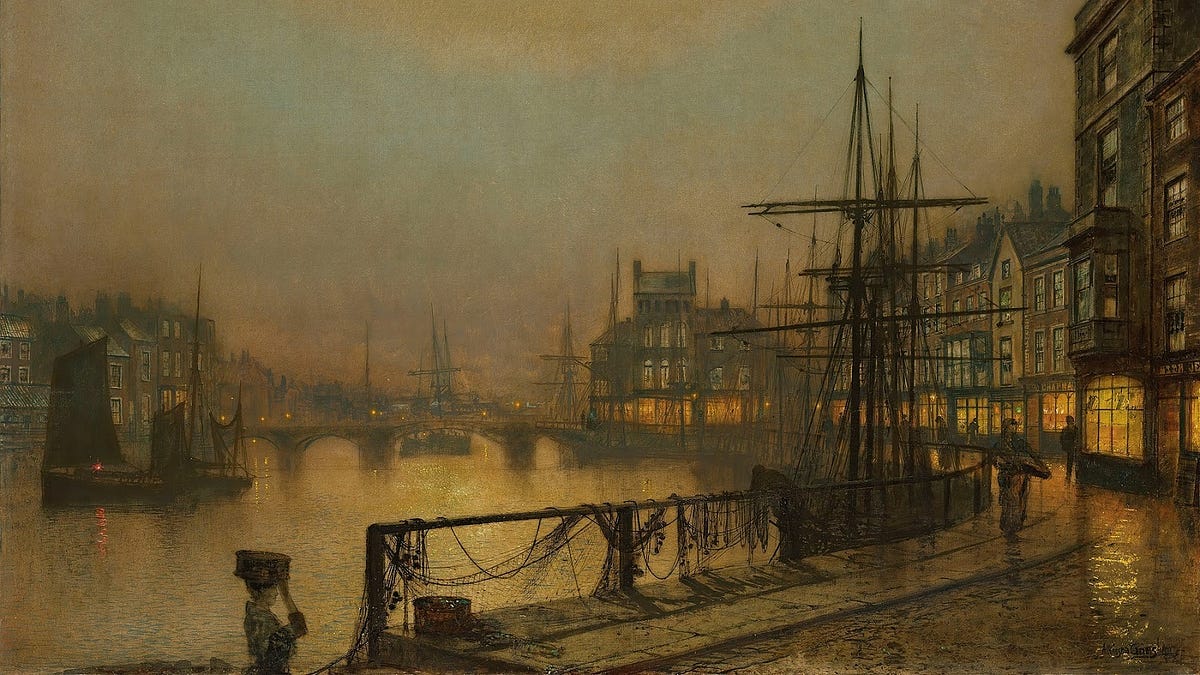
How far back in time can you understand English?
An experiment in language change

(www.deadlanguagesociety.com)
@alexhaist This will be great fun to read in the blizzard tomorrow. Thanks!
Oh, and “for neuer in al my lyf hadde I beholden so foule a creature.”
-
I can read back to about 1400, but I used to be able to puzzle through middle English in my 20s.
@alexhaist At 1200 I was lost. I got the sense with a Braille display and some gnawing I might have been able to figure out some of that one, but that's probably where it would have ended.
-
I can read back to about 1400, but I used to be able to puzzle through middle English in my 20s.
Allas! I scholde neuer hauen icumen to þis toune of Wuluesfleete!
I know I should be able to read the 1100, and while finding I can read it aloud, the meaning of it has entirely escaped me in my dotage.
So 1200 is the last I can manage sensibly, and that much did I enjoy greatly.
-
@alexhaist At 1200 I was lost. I got the sense with a Braille display and some gnawing I might have been able to figure out some of that one, but that's probably where it would have ended.
@Gaptangle oh wow! I was thoroughly lost by then.
-
@alexhaist This will be great fun to read in the blizzard tomorrow. Thanks!
Oh, and “for neuer in al my lyf hadde I beholden so foule a creature.”
@danmccullough I wish you much joy of it! I love this sort of historical linguistic stroll.
-
@Gaptangle oh wow! I was thoroughly lost by then.
@alexhaist At one point I had learned a chunk of German and a tiny bit of French, and don't recall enough of either now to have a conversation but some of the old structure is still sitting rusty in my brain. Comparing all of them and recognizing sources of phrasing or spelling can help with that if I have the Braille. Screenreaders of course with their modern English pronunciation rules wreck it all lol.
-
This is delightful fun: how far back in time can you understand English?
In a fictional travel blog, the author writes about their experience in a small town, jumping back 100 years of English each entry.
How far back in time can you understand English?
An experiment in language change
(www.deadlanguagesociety.com)
@alexhaist by 1600 I'm reading aloud out of necessity.
By 1300 I'm struggling.
1200 I can get the gist of with the help of my linguistics degree.
Past that it's all just German to me. -
Allas! I scholde neuer hauen icumen to þis toune of Wuluesfleete!
I know I should be able to read the 1100, and while finding I can read it aloud, the meaning of it has entirely escaped me in my dotage.
So 1200 is the last I can manage sensibly, and that much did I enjoy greatly.
@dgold @alexhaist Wuluesfleet.
Now I'm wondering where the f in wolf came from. A little extra efficiency of speech? A borrowing of the p from Latin lupus? Whatever it is, I'm charmed by the idea that the word wolf used to be onomatopoeia. -
This is delightful fun: how far back in time can you understand English?
In a fictional travel blog, the author writes about their experience in a small town, jumping back 100 years of English each entry.
How far back in time can you understand English?
An experiment in language change
(www.deadlanguagesociety.com)
@alexhaist
Thanks for posting! (I made it through 1400, with a smidgen of 1300’s.) -
This is delightful fun: how far back in time can you understand English?
In a fictional travel blog, the author writes about their experience in a small town, jumping back 100 years of English each entry.
How far back in time can you understand English?
An experiment in language change
(www.deadlanguagesociety.com)
@alexhaist I'm fine as far as 1300, but further back is opaque. I find that those last couple of centuries, 1300 and 1400, become vastly more accessible if (a) written in modern orthography and (b) read aloud.
-
This is delightful fun: how far back in time can you understand English?
In a fictional travel blog, the author writes about their experience in a small town, jumping back 100 years of English each entry.
How far back in time can you understand English?
An experiment in language change
(www.deadlanguagesociety.com)
@alexhaist Wow. I barely read the 1500 text

My boyfriend however, an English philologist, recognised all the things he learned at the university!

-
This is delightful fun: how far back in time can you understand English?
In a fictional travel blog, the author writes about their experience in a small town, jumping back 100 years of English each entry.
How far back in time can you understand English?
An experiment in language change
(www.deadlanguagesociety.com)
@alexhaist
1200 is more guessing than reading.
🧝 : "The languages of humans are many, and they change faster than a dragon flies." -
I can read back to about 1400, but I used to be able to puzzle through middle English in my 20s.
@alexhaist I was comfortable until 14/1300, but quickly zoned out around 12/1100 unless I was *really* focusing.
Caveat that I’m German/English bilingual with decades old linguistics studies behind me.
-
This is delightful fun: how far back in time can you understand English?
In a fictional travel blog, the author writes about their experience in a small town, jumping back 100 years of English each entry.
How far back in time can you understand English?
An experiment in language change
(www.deadlanguagesociety.com)
This is excellent and yes, 1300 for me was when I tapped out
-
@dgold @alexhaist Wuluesfleet.
Now I'm wondering where the f in wolf came from. A little extra efficiency of speech? A borrowing of the p from Latin lupus? Whatever it is, I'm charmed by the idea that the word wolf used to be onomatopoeia.Well, Wuluesfleet would be pronounced Wulvesfleet...
so the plural wulves takes a singular wulv with a hard stop, which you can imagine scribes writing as WolF
EDIT: coming to partial memory of my englishianisms - it would be singular wuluv, making wolF almost inevitable
-
@danmccullough I wish you much joy of it! I love this sort of historical linguistic stroll.
@alexhaist @danmccullough I'm kind of a dictionary, reference hoarder. Probably no surprise to some who follow me...
Came across "The English Dialect Dictionary" on Archive a few years ago. It's a six volume set. Kinda nifty if you're into this sort of stuff