Coal produces about 33% of global electricitySolar and wind produce 8–9% eachElectricity meets about 20% of total energy demandhttps://www.visualcapitalist.com/coal-still-powers-more-electricity/
-
Demanding currently impossible solutions while demonizing actual partial solutions sounds great but will not solve anything.
EOD for me at this point, sorry.
@knud The actual solution is to use less energy, period. Transitions have always been a smokescreen to, in fact, use more. @gerrymcgovern
-
I need to correct this: coal was used for 17% of US electricity, gas for 40%:
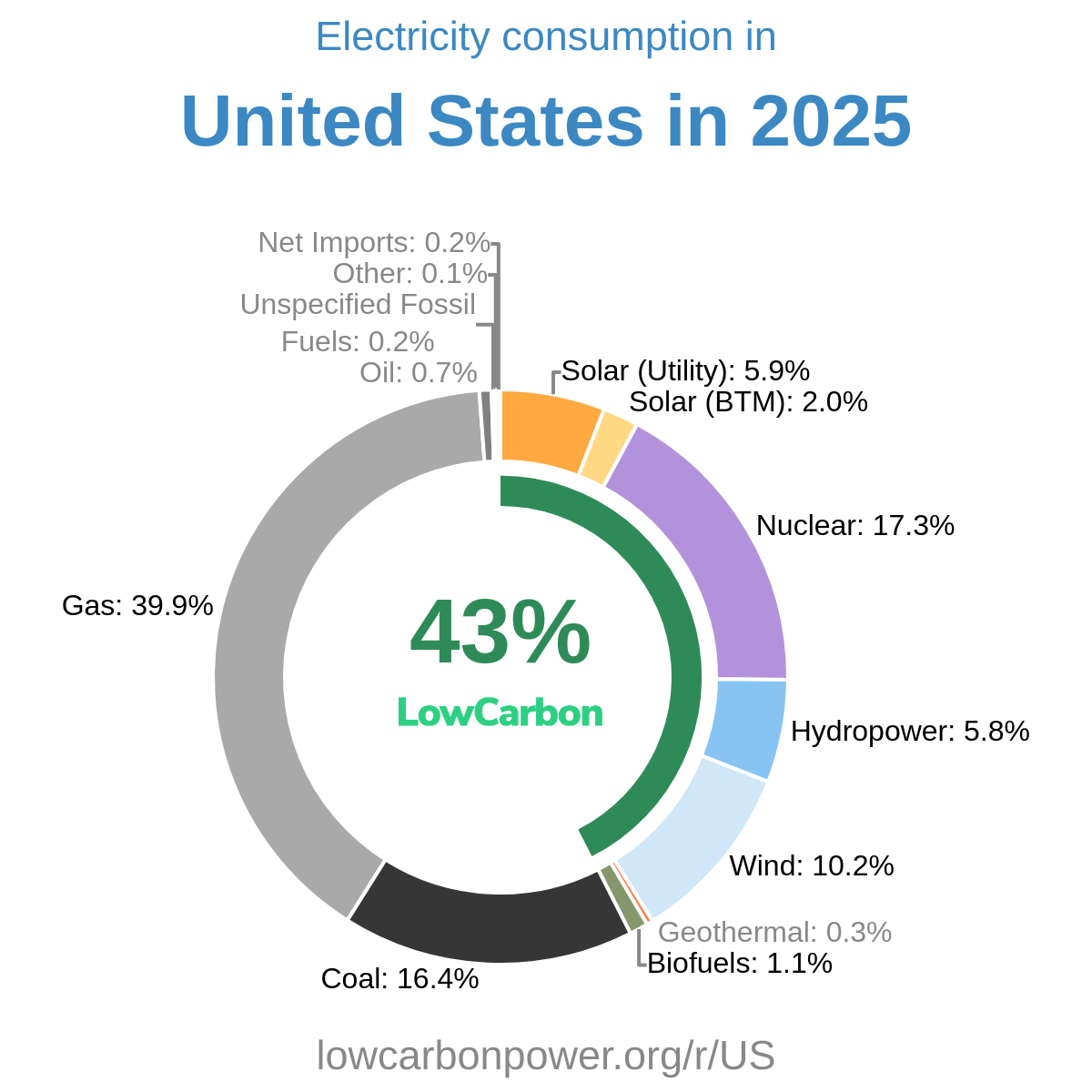
United States Electricity Generation Mix 2025 | Low-Carbon Power Data
United States's electricity mix includes 39% Gas, 17% Nuclear and 17% Coal. Low-carbon generation reached a record high in 2025.
(lowcarbonpower.org)
@knud
Sorry, got my figures confused. China accounts for 55.8% of global coal consumption. The U.S. ranks third at 4.8%.
https://www.visualcapitalist.com/ranked-worlds-biggest-coal-consumers/ -
@knud The actual solution is to use less energy, period. Transitions have always been a smokescreen to, in fact, use more. @gerrymcgovern
@dnkboston @knud @gerrymcgovern I support this. Let’s take smartphones for example: do we need a new smartphone every 2 years, or one truly great smartphone that will hopefully last for 15-20 years? Because the way Android (~70% of the mobile OS market) handles multitasking is literal trolling at this point.
Likewise, a fraction of novel videogames actually needs fancy 3D graphics but this is literally a niche way of having fun with your friends. IMHO this is symptomatic in the US of the “bowling alone” trend – the collapse of associations. If one was part of a union they could just repurpose their Windows 10 computer and install Bazzite on it instead of trashing it.
We don’t need to consume less, we need to consume better.
-
@dnkboston @knud @gerrymcgovern I support this. Let’s take smartphones for example: do we need a new smartphone every 2 years, or one truly great smartphone that will hopefully last for 15-20 years? Because the way Android (~70% of the mobile OS market) handles multitasking is literal trolling at this point.
Likewise, a fraction of novel videogames actually needs fancy 3D graphics but this is literally a niche way of having fun with your friends. IMHO this is symptomatic in the US of the “bowling alone” trend – the collapse of associations. If one was part of a union they could just repurpose their Windows 10 computer and install Bazzite on it instead of trashing it.
We don’t need to consume less, we need to consume better.
@oceane We need to consume less. I'd love to live in a world in which pay phones and water fountains were abundant. And in which I don't have to use my phone on an increasing number of sites in order to access them, period. Or be forced to use websites to do basic financial transactions.
-
@knud
Sorry, got my figures confused. China accounts for 55.8% of global coal consumption. The U.S. ranks third at 4.8%.
https://www.visualcapitalist.com/ranked-worlds-biggest-coal-consumers/@gerrymcgovern @knud @dnkboston
How is that consumption calculated and allocated? One of the reasons why the UK managed to reduce its carbon footprint was relocating energy intensive production to the Far East. If we count the carbon emissions for stiff made in China towards the carbon footprint that consumes/buys that stuff, the figures might change dramatically.
-
@gerrymcgovern @knud @dnkboston
How is that consumption calculated and allocated? One of the reasons why the UK managed to reduce its carbon footprint was relocating energy intensive production to the Far East. If we count the carbon emissions for stiff made in China towards the carbon footprint that consumes/buys that stuff, the figures might change dramatically.
@tschenkel
This has been the claasic story of the Global North and the Global South for centuries. The essence of imperialism and colonialism is the outsourcing and hiding of harms. We now have green colonialism in Green Sacrifice Zones, where the greens annoint the mining olligarchs like the priests used to do -
@dnkboston @knud @gerrymcgovern I support this. Let’s take smartphones for example: do we need a new smartphone every 2 years, or one truly great smartphone that will hopefully last for 15-20 years? Because the way Android (~70% of the mobile OS market) handles multitasking is literal trolling at this point.
Likewise, a fraction of novel videogames actually needs fancy 3D graphics but this is literally a niche way of having fun with your friends. IMHO this is symptomatic in the US of the “bowling alone” trend – the collapse of associations. If one was part of a union they could just repurpose their Windows 10 computer and install Bazzite on it instead of trashing it.
We don’t need to consume less, we need to consume better.
@oceane @dnkboston @knud @gerrymcgovern
We DO need to consume less, by consuming better... -
@oceane @dnkboston @knud @gerrymcgovern
We DO need to consume less, by consuming better...@martinlentink What do you mean by better? @oceane @knud @gerrymcgovern
-
@oceane @dnkboston @knud @gerrymcgovern
We DO need to consume less, by consuming better...@martinlentink
We need to consume much better and much less. I saw this quote recently:"Less stuff. More fun."
-
@martinlentink What do you mean by better? @oceane @knud @gerrymcgovern
@dnkboston @oceane @knud @gerrymcgovern
As an example: the fact that they can use renewable energy isn't the only advantage of BEV's: they use less parts, parts that can be made to be easily replaceable and therefore much more durable. But I'm far from a product design guy. Just think we should build stuff to last. Just like we need to build relationships, institutions and companies to last. -
@dnkboston @oceane @knud @gerrymcgovern
As an example: the fact that they can use renewable energy isn't the only advantage of BEV's: they use less parts, parts that can be made to be easily replaceable and therefore much more durable. But I'm far from a product design guy. Just think we should build stuff to last. Just like we need to build relationships, institutions and companies to last.@martinlentink We should definitely build to last and have a culture that values durability.
I would much rather see an EV version of a municipal bus than an EV car.
-
@martinlentink We should definitely build to last and have a culture that values durability.
I would much rather see an EV version of a municipal bus than an EV car.
@dnkboston @oceane @knud @gerrymcgovern Very true. Public transit is undervalued. A lot.
-
@martinlentink We should definitely build to last and have a culture that values durability.
I would much rather see an EV version of a municipal bus than an EV car.
@dnkboston @oceane @knud @gerrymcgovern
And regional bus services here in the NL already use EV-buses. More comfortable too! -
@oceane @dnkboston @knud @gerrymcgovern
We DO need to consume less, by consuming better...@martinlentink
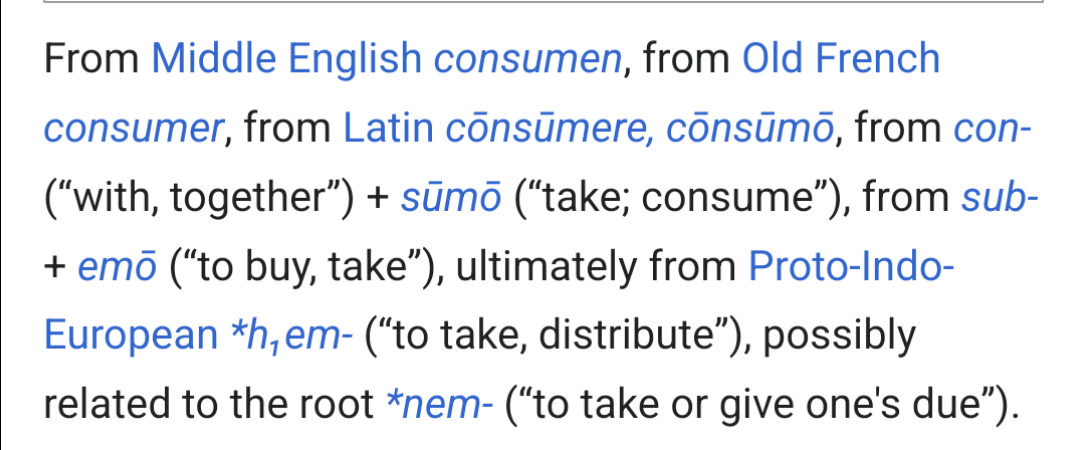
So we definitely need another term for using something with appreciation and care in a non destructive fashion.@oceane @dnkboston @knud @gerrymcgovern
-
@knud The actual solution is to use less energy, period. Transitions have always been a smokescreen to, in fact, use more. @gerrymcgovern
That's an easy statement to make. Sure, that would solve a lot of things. But no matter what, even if we half the total energy used, we need to produce the other half from renewable sourced. So there is no way around expanding solar and wind. Energy efficiency is completely independent from that. And is much harder: putting up solar panels is an easy thing (we produce 2.5x more than we directly consume), fixing e.g. US suburbs and low density is hard.
-
@gerrymcgovern @knud @dnkboston
How is that consumption calculated and allocated? One of the reasons why the UK managed to reduce its carbon footprint was relocating energy intensive production to the Far East. If we count the carbon emissions for stiff made in China towards the carbon footprint that consumes/buys that stuff, the figures might change dramatically.
@tschenkel @gerrymcgovern @dnkboston
Typically imports account for ~1 tCO2 per person and year. This is not nothing, but substantially less than the per capita emission even in the UK right now. UK's main change was much more wind power to phase out coal.
-
That's an easy statement to make. Sure, that would solve a lot of things. But no matter what, even if we half the total energy used, we need to produce the other half from renewable sourced. So there is no way around expanding solar and wind. Energy efficiency is completely independent from that. And is much harder: putting up solar panels is an easy thing (we produce 2.5x more than we directly consume), fixing e.g. US suburbs and low density is hard.
@knud I don't know what your metrics and projections are based off of, and it's irrelevant. You're looking at it, perhaps from the POV of the people using the energy. I'm thinking about the people who are being exploited to get the raw material for said energy, the ecosystems they're coming from, and the actual capacity of the planet. Your orientation requires more, mine less.
-
@oceane We need to consume less. I'd love to live in a world in which pay phones and water fountains were abundant. And in which I don't have to use my phone on an increasing number of sites in order to access them, period. Or be forced to use websites to do basic financial transactions.
@dnkboston @knud @gerrymcgovern Yes it’s a systemic issue. But we don’t need less salads, we need actual salads – salads with thick leaves, bought through a food bank, that will fill you for several meals.
This has to be combined with higher wages, merely because they’re extracted from workers by their employers (CEOs, top executives, and shareholders). Drawing from a single read – although an awarded one, CNRS gold medal – I’m going out on a limb here and claim that growth is pauperism by another name.
Anyway, I’d consider “less forced consumerism” as “better consumption”, wouldn’t you?
-
@dnkboston @knud @gerrymcgovern Yes it’s a systemic issue. But we don’t need less salads, we need actual salads – salads with thick leaves, bought through a food bank, that will fill you for several meals.
This has to be combined with higher wages, merely because they’re extracted from workers by their employers (CEOs, top executives, and shareholders). Drawing from a single read – although an awarded one, CNRS gold medal – I’m going out on a limb here and claim that growth is pauperism by another name.
Anyway, I’d consider “less forced consumerism” as “better consumption”, wouldn’t you?
@dnkboston @knud @gerrymcgovern I’m not being condescending or sarcastic, this isn’t a rhetoric question – you’re talking here about dematerialization and forced consumerism with public services tied to the Google/Apple ecosystems, aren’t you?
-
@tschenkel @gerrymcgovern @dnkboston
Typically imports account for ~1 tCO2 per person and year. This is not nothing, but substantially less than the per capita emission even in the UK right now. UK's main change was much more wind power to phase out coal.
@knud @gerrymcgovern @dnkboston
Does that include things like producing the steel, to build the ships for transport, well to till balances for all the production?