Skip to content
  • Categories
  • Recent
  • Tags
  • Popular
  • World
  • Users
  • Groups
Skins
  • Light
  • Brite
  • Cerulean
  • Cosmo
  • Flatly
  • Journal
  • Litera
  • Lumen
  • Lux
  • Materia
  • Minty
  • Morph
  • Pulse
  • Sandstone
  • Simplex
  • Sketchy
  • Spacelab
  • United
  • Yeti
  • Zephyr
  • Dark
  • Cyborg
  • Darkly
  • Quartz
  • Slate
  • Solar
  • Superhero
  • Vapor

  • Default (Cyborg)
  • No Skin
Collapse
Brand Logo

CIRCLE WITH A DOT

  1. Home
  2. Uncategorized
  3. Just built a home security gateway using a #RaspberryPi and #WireGuard (via ProtonVPN) 🛡️

Just built a home security gateway using a #RaspberryPi and #WireGuard (via ProtonVPN) 🛡️

Scheduled Pinned Locked Moved Uncategorized
raspberrypiwireguardiothtopselfhosted
14 Posts 4 Posters 0 Views
  • Oldest to Newest
  • Newest to Oldest
  • Most Votes
Reply
  • Reply as topic
Log in to reply
This topic has been deleted. Only users with topic management privileges can see it.
  • nickbearded@mastodon.socialN This user is from outside of this forum
    nickbearded@mastodon.socialN This user is from outside of this forum
    nickbearded@mastodon.social
    wrote last edited by
    #1

    Just built a home security gateway using a #RaspberryPi and #WireGuard (via ProtonVPN) 🛡️

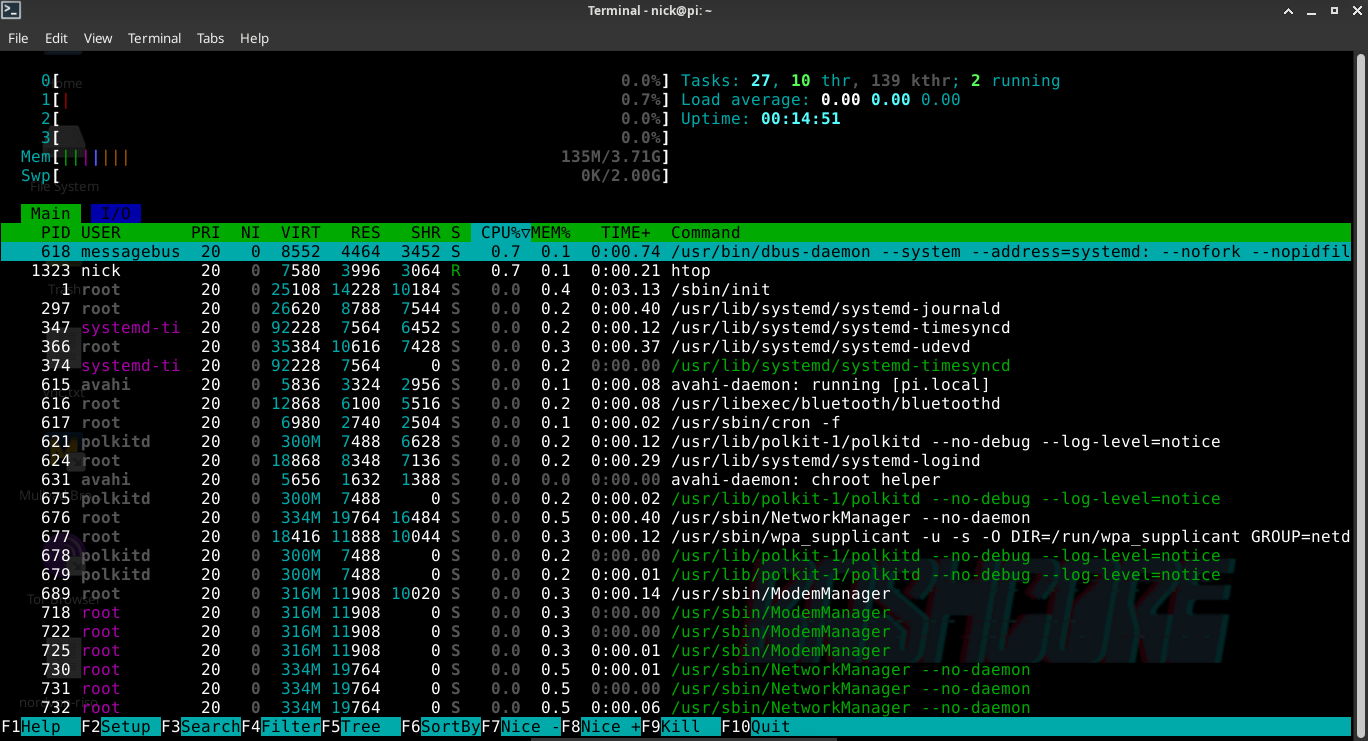
    It provides a secure tunnel for all my devices, especially #IoT ones that can't run a VPN. Best part? Efficiency! As you can see in the #htop shot, it’s barely sipping power: only ~135MB of RAM and near 0% CPU. 🚀

    I can toggle the VPN to manage remote IoT access while keeping a solid layer of protection. Small, silent, and rock solid.

    #SelfHosted #Privacy #CyberSecurity #Linux #OpenSource #VPN
    Link Preview Image
    dhry@mastodon.socialD guillaumerossolini@infosec.exchangeG 2 Replies Last reply
    0
    • nickbearded@mastodon.socialN nickbearded@mastodon.social

      Just built a home security gateway using a #RaspberryPi and #WireGuard (via ProtonVPN) 🛡️

      It provides a secure tunnel for all my devices, especially #IoT ones that can't run a VPN. Best part? Efficiency! As you can see in the #htop shot, it’s barely sipping power: only ~135MB of RAM and near 0% CPU. 🚀

      I can toggle the VPN to manage remote IoT access while keeping a solid layer of protection. Small, silent, and rock solid.

      #SelfHosted #Privacy #CyberSecurity #Linux #OpenSource #VPN

      Link Preview Image
      dhry@mastodon.socialD This user is from outside of this forum
      dhry@mastodon.socialD This user is from outside of this forum
      dhry@mastodon.social
      wrote last edited by
      #2

      @nickbearded Barely using CPU, but how much power is it sipping? I know it’s not much but always looking for quantifiable data. You’ll need a kill-a-watt or energy monitoring plug.

      nickbearded@mastodon.socialN 1 Reply Last reply
      0
      • dhry@mastodon.socialD dhry@mastodon.social

        @nickbearded Barely using CPU, but how much power is it sipping? I know it’s not much but always looking for quantifiable data. You’ll need a kill-a-watt or energy monitoring plug.

        nickbearded@mastodon.socialN This user is from outside of this forum
        nickbearded@mastodon.socialN This user is from outside of this forum
        nickbearded@mastodon.social
        wrote last edited by
        #3

        @dhry my Raspberry Pi 4 sips 5V DC via USB-C connector.

        dhry@mastodon.socialD 1 Reply Last reply
        0
        • nickbearded@mastodon.socialN nickbearded@mastodon.social

          @dhry my Raspberry Pi 4 sips 5V DC via USB-C connector.

          dhry@mastodon.socialD This user is from outside of this forum
          dhry@mastodon.socialD This user is from outside of this forum
          dhry@mastodon.social
          wrote last edited by
          #4

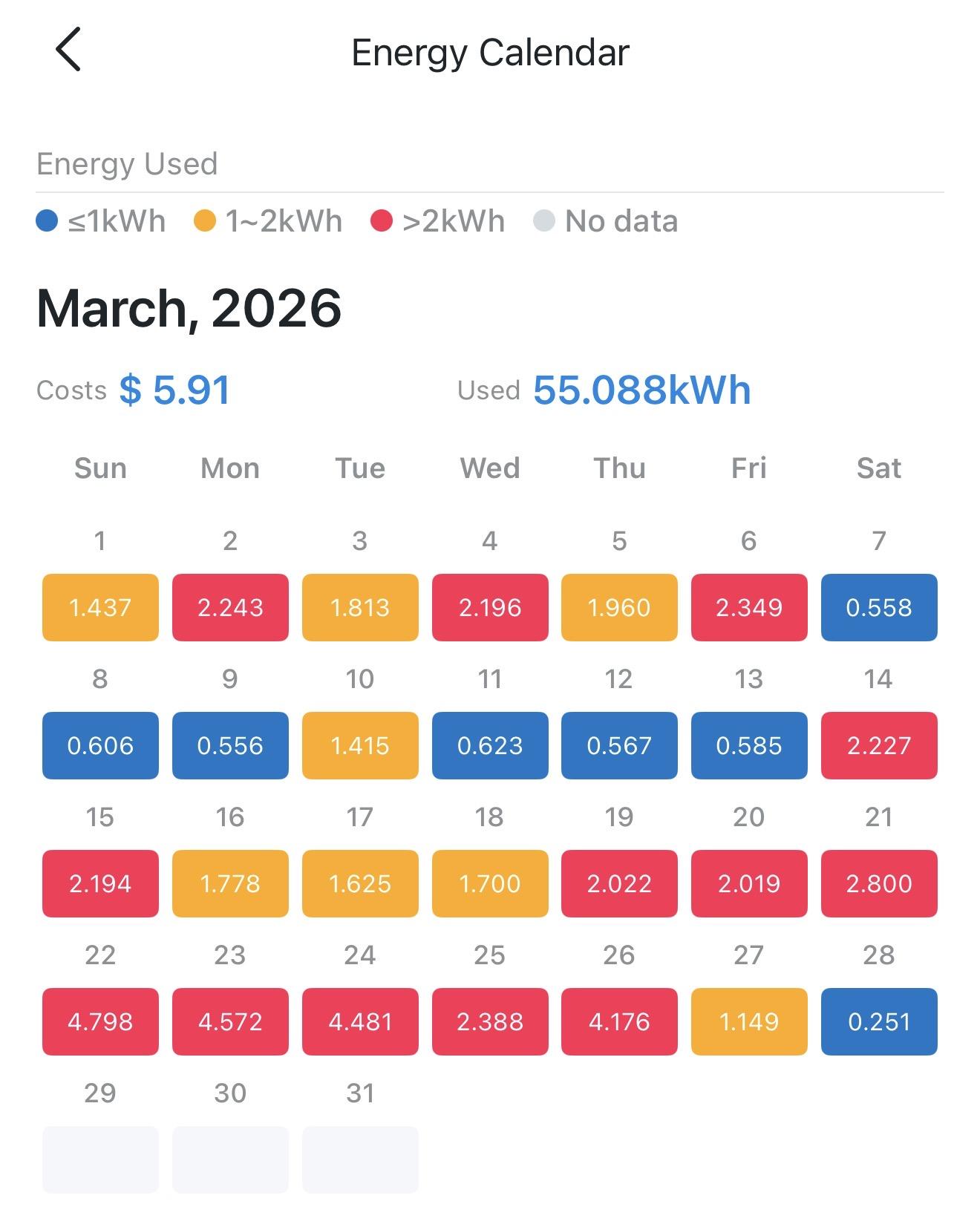
          @nickbearded I have three (gathering dust for years) and know that part - but how much energy does it use? kWh. Question might be unclear so attaching a screenshot showing energy usage for the month for my windows machines. Tapo P110M used. Hint - you can’t get this from htop.
          Link Preview Image
          nickbearded@mastodon.socialN 1 Reply Last reply
          0
          • dhry@mastodon.socialD dhry@mastodon.social

            @nickbearded I have three (gathering dust for years) and know that part - but how much energy does it use? kWh. Question might be unclear so attaching a screenshot showing energy usage for the month for my windows machines. Tapo P110M used. Hint - you can’t get this from htop.

            Link Preview Image
            nickbearded@mastodon.socialN This user is from outside of this forum
            nickbearded@mastodon.socialN This user is from outside of this forum
            nickbearded@mastodon.social
            wrote last edited by
            #5

            @dhry Fair point! While htop doesn't show kWh, the physics of a Pi 4 are well-documented. At the idle state shown (near 0% CPU), it draws ~3W.
            ​Doing the math: 3W * 24h * 30 days = 2.16 kWh per month.
            ​Comparing that to your 55 kWh Windows setup? My gateway uses about 25 times less energy to do the same job 24/7. That’s the beauty of ARM vs x86 for simple networking tasks 😃

            dhry@mastodon.socialD 1 Reply Last reply
            0
            • nickbearded@mastodon.socialN nickbearded@mastodon.social

              @dhry Fair point! While htop doesn't show kWh, the physics of a Pi 4 are well-documented. At the idle state shown (near 0% CPU), it draws ~3W.
              ​Doing the math: 3W * 24h * 30 days = 2.16 kWh per month.
              ​Comparing that to your 55 kWh Windows setup? My gateway uses about 25 times less energy to do the same job 24/7. That’s the beauty of ARM vs x86 for simple networking tasks 😃

              dhry@mastodon.socialD This user is from outside of this forum
              dhry@mastodon.socialD This user is from outside of this forum
              dhry@mastodon.social
              wrote last edited by
              #6

              @nickbearded Ok I’ll retract the question. Not after theoreticals.

              nickbearded@mastodon.socialN 1 Reply Last reply
              0
              • dhry@mastodon.socialD dhry@mastodon.social

                @nickbearded Ok I’ll retract the question. Not after theoreticals.

                nickbearded@mastodon.socialN This user is from outside of this forum
                nickbearded@mastodon.socialN This user is from outside of this forum
                nickbearded@mastodon.social
                wrote last edited by
                #7

                @dhry Fair enough! Real-world data is king. Though at these power levels, buying a $20 energy monitor to measure a ~$10/year electricity bill feels like overkill.

                1 Reply Last reply
                0
                • nickbearded@mastodon.socialN nickbearded@mastodon.social

                  Just built a home security gateway using a #RaspberryPi and #WireGuard (via ProtonVPN) 🛡️

                  It provides a secure tunnel for all my devices, especially #IoT ones that can't run a VPN. Best part? Efficiency! As you can see in the #htop shot, it’s barely sipping power: only ~135MB of RAM and near 0% CPU. 🚀

                  I can toggle the VPN to manage remote IoT access while keeping a solid layer of protection. Small, silent, and rock solid.

                  #SelfHosted #Privacy #CyberSecurity #Linux #OpenSource #VPN

                  Link Preview Image
                  guillaumerossolini@infosec.exchangeG This user is from outside of this forum
                  guillaumerossolini@infosec.exchangeG This user is from outside of this forum
                  guillaumerossolini@infosec.exchange
                  wrote last edited by
                  #8

                  @nickbearded could you try again with btop instead? It would give a better idea of the resources. Zero% seems unlikely

                  nickbearded@mastodon.socialN 1 Reply Last reply
                  0
                  • guillaumerossolini@infosec.exchangeG guillaumerossolini@infosec.exchange

                    @nickbearded could you try again with btop instead? It would give a better idea of the resources. Zero% seems unlikely

                    nickbearded@mastodon.socialN This user is from outside of this forum
                    nickbearded@mastodon.socialN This user is from outside of this forum
                    nickbearded@mastodon.social
                    wrote last edited by
                    #9

                    @GuillaumeRossolini I get why 0.00 load seems 'unlikely', but that’s just a well-optimized headless RPi4.
                    ​WireGuard runs in kernel space: it's invisible to the scheduler unless there's heavy traffic.
                    ​Load measures the queue: on 4 cores with no tasks waiting, 0.00 is a perfect score.
                    ​Irony: btop uses more CPU just to draw its UI than the VPN itself! I'd rather save those cycles for my data than for eye-candy 😆
                    ​#RaspberryPi #WireGuard #SelfHosted #Linux #Networking

                    guillaumerossolini@infosec.exchangeG newsgroup@social.vir.groupN 2 Replies Last reply
                    0
                    • nickbearded@mastodon.socialN nickbearded@mastodon.social

                      @GuillaumeRossolini I get why 0.00 load seems 'unlikely', but that’s just a well-optimized headless RPi4.
                      ​WireGuard runs in kernel space: it's invisible to the scheduler unless there's heavy traffic.
                      ​Load measures the queue: on 4 cores with no tasks waiting, 0.00 is a perfect score.
                      ​Irony: btop uses more CPU just to draw its UI than the VPN itself! I'd rather save those cycles for my data than for eye-candy 😆
                      ​#RaspberryPi #WireGuard #SelfHosted #Linux #Networking

                      guillaumerossolini@infosec.exchangeG This user is from outside of this forum
                      guillaumerossolini@infosec.exchangeG This user is from outside of this forum
                      guillaumerossolini@infosec.exchange
                      wrote last edited by
                      #10

                      @nickbearded fair enough for the UI, and thanks for the details of why the tools show no activity

                      guillaumerossolini@infosec.exchangeG 1 Reply Last reply
                      0
                      • guillaumerossolini@infosec.exchangeG guillaumerossolini@infosec.exchange

                        @nickbearded fair enough for the UI, and thanks for the details of why the tools show no activity

                        guillaumerossolini@infosec.exchangeG This user is from outside of this forum
                        guillaumerossolini@infosec.exchangeG This user is from outside of this forum
                        guillaumerossolini@infosec.exchange
                        wrote last edited by
                        #11

                        @nickbearded by the way all your messages show up as Italian, so it may confuse people trying to translate them 😅

                        1 Reply Last reply
                        0
                        • nickbearded@mastodon.socialN nickbearded@mastodon.social

                          @GuillaumeRossolini I get why 0.00 load seems 'unlikely', but that’s just a well-optimized headless RPi4.
                          ​WireGuard runs in kernel space: it's invisible to the scheduler unless there's heavy traffic.
                          ​Load measures the queue: on 4 cores with no tasks waiting, 0.00 is a perfect score.
                          ​Irony: btop uses more CPU just to draw its UI than the VPN itself! I'd rather save those cycles for my data than for eye-candy 😆
                          ​#RaspberryPi #WireGuard #SelfHosted #Linux #Networking

                          newsgroup@social.vir.groupN This user is from outside of this forum
                          newsgroup@social.vir.groupN This user is from outside of this forum
                          newsgroup@social.vir.group
                          wrote last edited by
                          #12

                          @nickbearded @GuillaumeRossolini love that you’re squeezing every last cycle out of the pi for what actually matters—true efficiency right there.

                          nickbearded@mastodon.socialN 1 Reply Last reply
                          0
                          • newsgroup@social.vir.groupN newsgroup@social.vir.group

                            @nickbearded @GuillaumeRossolini love that you’re squeezing every last cycle out of the pi for what actually matters—true efficiency right there.

                            nickbearded@mastodon.socialN This user is from outside of this forum
                            nickbearded@mastodon.socialN This user is from outside of this forum
                            nickbearded@mastodon.social
                            wrote last edited by
                            #13

                            @NewsGroup @GuillaumeRossolini this one was under Raspberry Pi OS. I did the same on the same Pi but using Armbian: same result, just it was a bit tricky to setup.

                            newsgroup@social.vir.groupN 1 Reply Last reply
                            0
                            • nickbearded@mastodon.socialN nickbearded@mastodon.social

                              @NewsGroup @GuillaumeRossolini this one was under Raspberry Pi OS. I did the same on the same Pi but using Armbian: same result, just it was a bit tricky to setup.

                              newsgroup@social.vir.groupN This user is from outside of this forum
                              newsgroup@social.vir.groupN This user is from outside of this forum
                              newsgroup@social.vir.group
                              wrote last edited by
                              #14

                              @nickbearded @GuillaumeRossolini nice to hear it's consistent across different distros, even if the setup was a bit tricky.

                              1 Reply Last reply
                              1
                              0
                              • R relay@relay.publicsquare.global shared this topic

                              Reply
                              • Reply as topic
                              Log in to reply
                              • Oldest to Newest
                              • Newest to Oldest
                              • Most Votes


                              • Login

                              • Login or register to search.
                              • First post
                                Last post
                              0
                              • Categories
                              • Recent
                              • Tags
                              • Popular
                              • World
                              • Users
                              • Groups