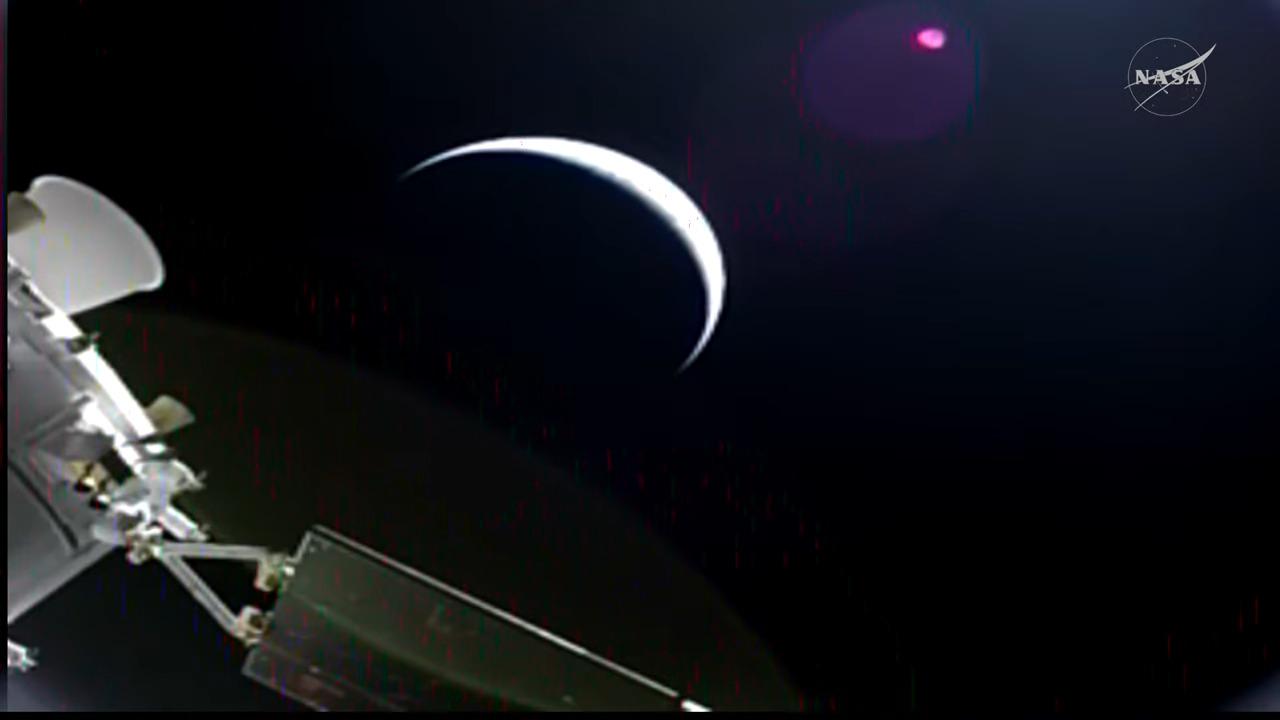
A crescent Earth as seen from the Artemis II Orion Integrity spacecraft, now over 46,000 km away.
-
The Blue Marble imaged by Artemis II Commander Reid Wiseman ~30 minutes after translunar injection yesterday, as Orion started its sprint to the moon.
The image shows 2 auroras (top right and bottom left) and zodiacal light (top left). This is the night side of Earth lit by moonlight.
Camera: NIKON D5 (DSLR, 20.8 MP), 14-24mm f/2.8
FocalLength: 22.0 mm
ISO 51200
ExposureTime: 1/4 s
CreateDate: 2026:04:03 00:27:39 UTC
Distance: 10,150 kmImage and EXIF data at https://images.nasa.gov/details/art002e000192
37/n@AkaSci Amazing. Looks fake. Spectacular picture.
-
This is an image of the full night-side Earth disk taken seconds before the image in the previous post but with a shorter exposure time.
In this image, we can see the electric lights of human activity. In the lower right, sunlight illuminates the limb of the planet.
Camera: NIKON D5 (DSLR, 20.8 MP)
Lens: 14-24mm f/2.8
FocalLength: 22.0 mm
ISO 51200
ExposureTime: 1/15 s
CreateDate: 2026:04:03 00:27:20 UTC
Distance: 10,050 kmImage and EXIF data at https://images.nasa.gov/details/art002e000193
38/n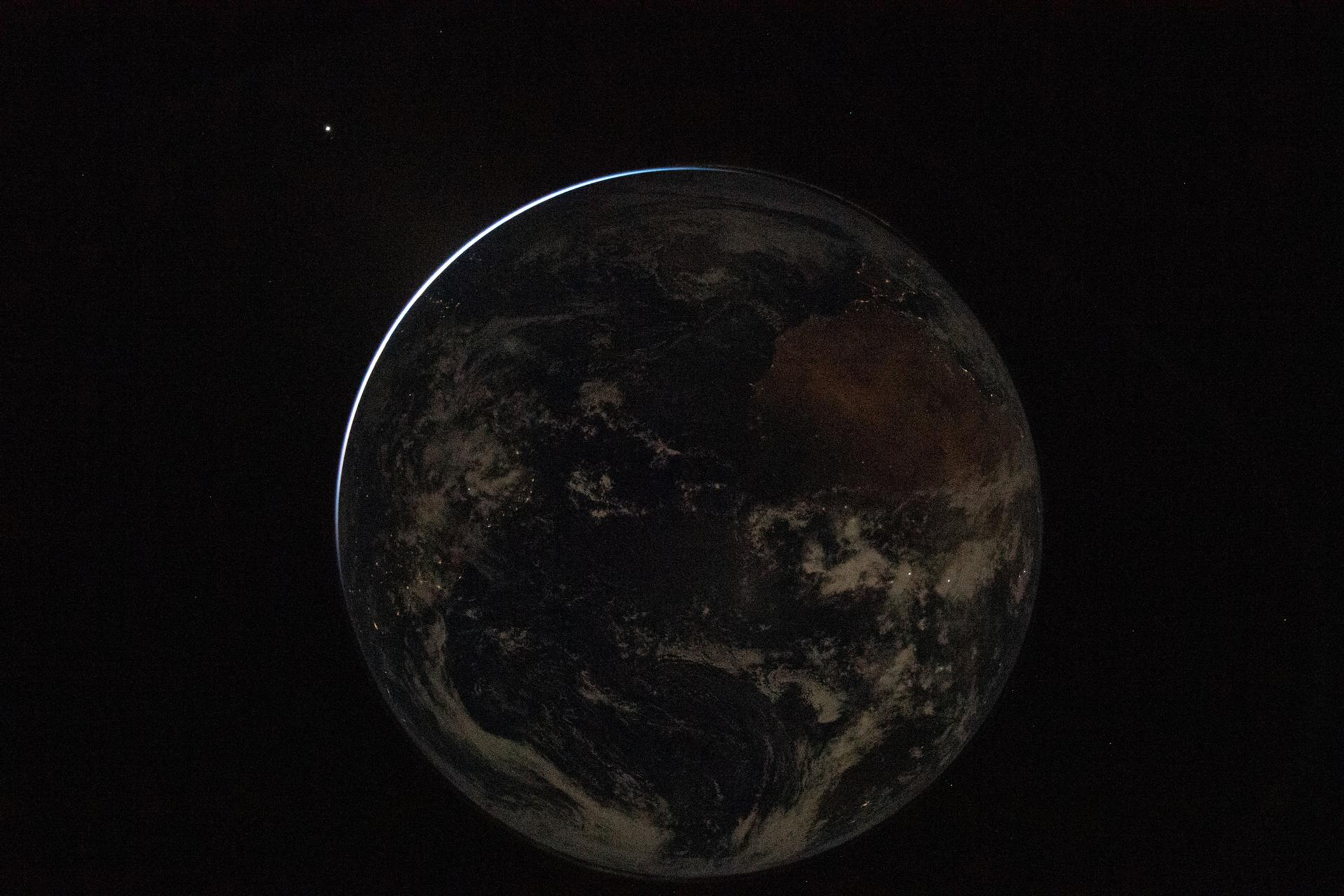
The Artemis II Orion spacecraft is now just over half way through on its journey to the vicinity of the moon.
It will take 3 more days to arrive near the moon as its velocity decreases over time, currently at 5,218 km/h.
Go #Integrity
https://eyes.nasa.gov/apps/solar-system/#/sc_artemis_2
39/n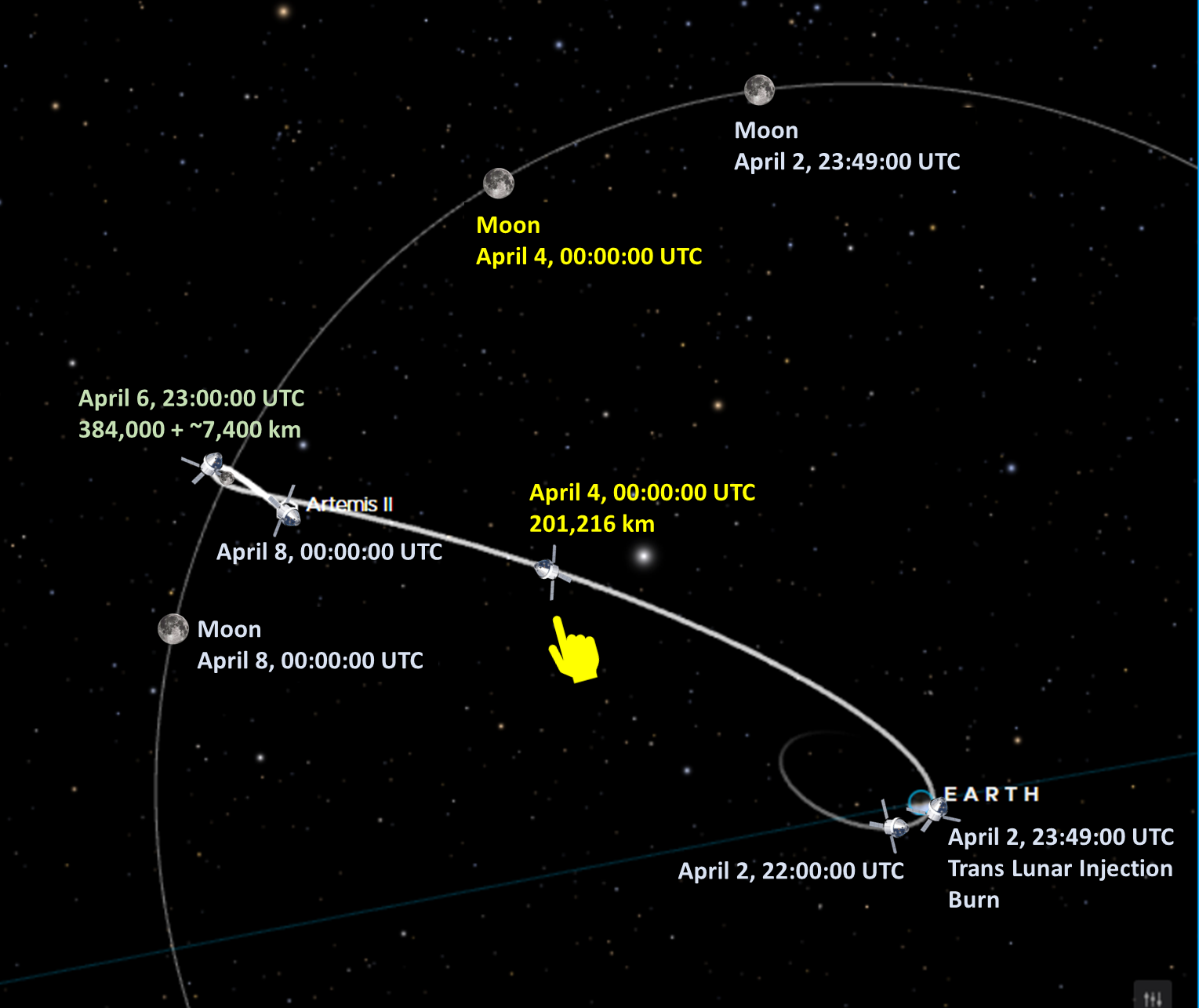
-
The Artemis II Orion spacecraft is now just over half way through on its journey to the vicinity of the moon.
It will take 3 more days to arrive near the moon as its velocity decreases over time, currently at 5,218 km/h.
Go #Integrity
https://eyes.nasa.gov/apps/solar-system/#/sc_artemis_2
39/n -
The Artemis II Orion spacecraft is now just over half way through on its journey to the vicinity of the moon.
It will take 3 more days to arrive near the moon as its velocity decreases over time, currently at 5,218 km/h.
Go #Integrity
https://eyes.nasa.gov/apps/solar-system/#/sc_artemis_2
39/n@AkaSci thank you for all the information. Appreciated
-
The Artemis II Orion spacecraft is now just over half way through on its journey to the vicinity of the moon.
It will take 3 more days to arrive near the moon as its velocity decreases over time, currently at 5,218 km/h.
Go #Integrity
https://eyes.nasa.gov/apps/solar-system/#/sc_artemis_2
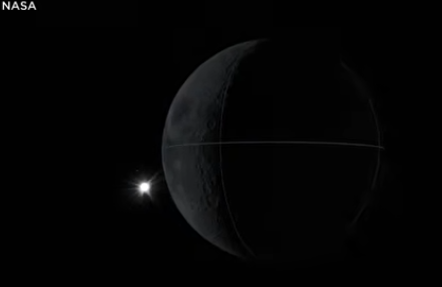
39/nA possible view from the Artemis II Orion spacecraft at 22:35 UTC April 6 of a crescent Earth setting over the limb of a crescent Moon, as visualized using the NASA Eyes on the Solar System tool. In this image, Orion has traveled past the moon and is looking over its far side.
https://eyes.nasa.gov/apps/solar-system/#/sc_artemis_2?rate=0&time=2026-04-06T22:35:00.000+00:00
40/n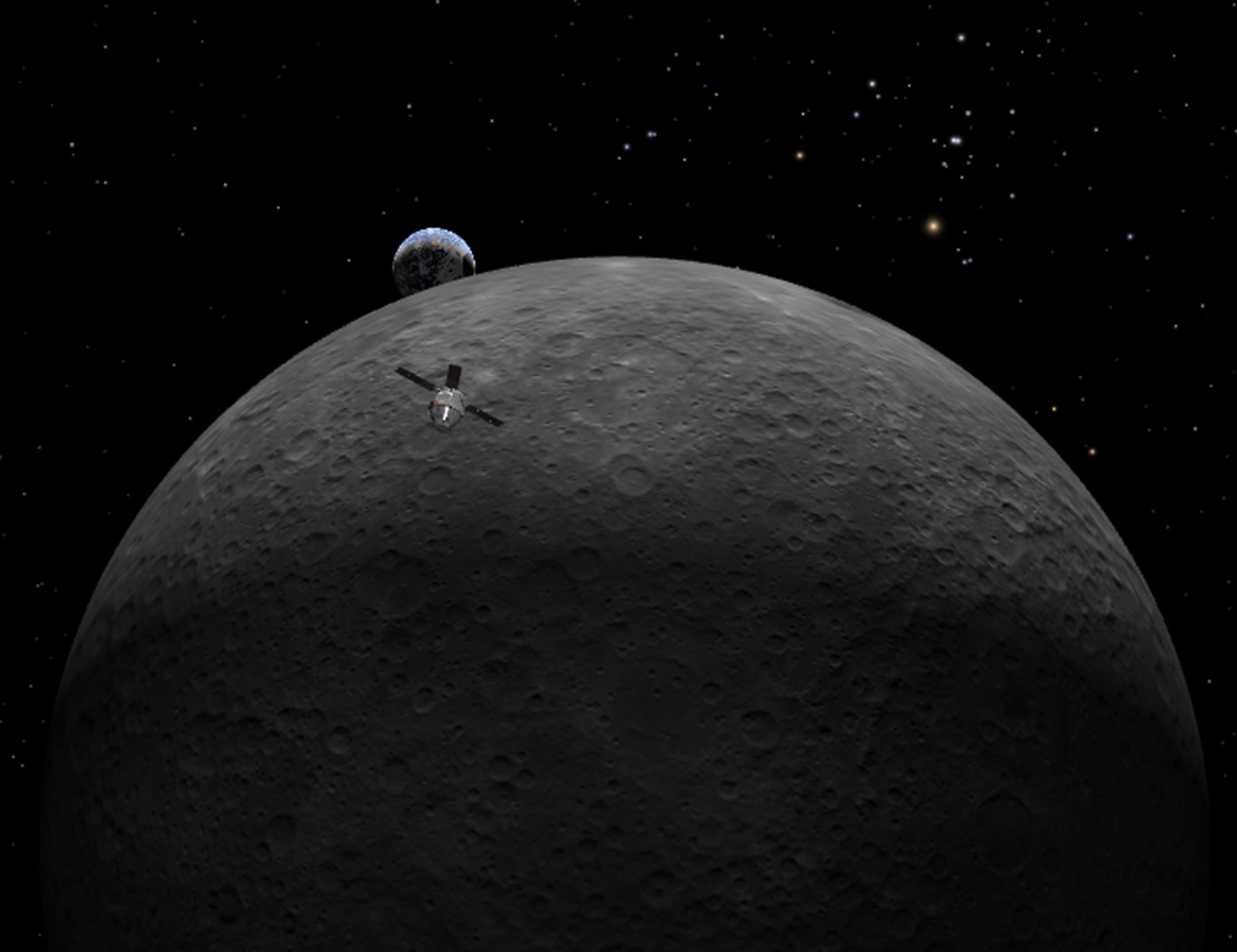
-
A possible view from the Artemis II Orion spacecraft at 22:35 UTC April 6 of a crescent Earth setting over the limb of a crescent Moon, as visualized using the NASA Eyes on the Solar System tool. In this image, Orion has traveled past the moon and is looking over its far side.
https://eyes.nasa.gov/apps/solar-system/#/sc_artemis_2?rate=0&time=2026-04-06T22:35:00.000+00:00
40/nThe simulated view from the Artemis II Orion spacecraft 45 minutes later at 23:20 UTC April 6 of a crescent Earth rising over the dark lunar surface, as visualized using the NASA Eyes on the Solar System tool. In this image, Orion has traveled past the moon and is looking over its far side.
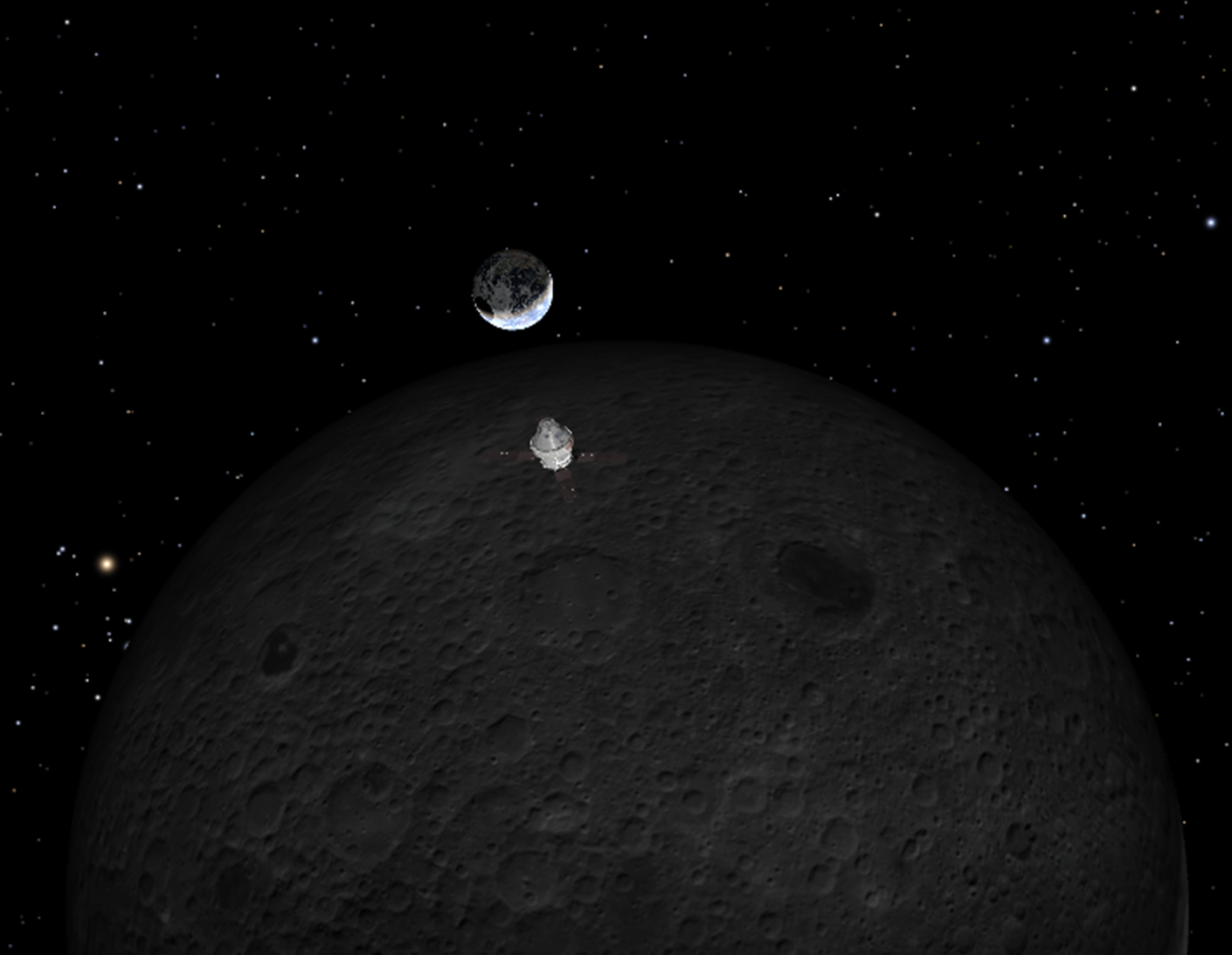
-
The simulated view from the Artemis II Orion spacecraft 45 minutes later at 23:20 UTC April 6 of a crescent Earth rising over the dark lunar surface, as visualized using the NASA Eyes on the Solar System tool. In this image, Orion has traveled past the moon and is looking over its far side.
A closeup of the aurora australis over the Antarctic in the Blue Marble image highlights the thin fragile atmosphere that sustains all life on Earth. Note that South is up.
These images, the first such images taken by humans in over 54 years, remind us of the beauty and the fragility our planet, and of our shared responsibility to care of it and of each other.
🧑 🧑
🧑 
https://images.nasa.gov/details/art002e000192
42/n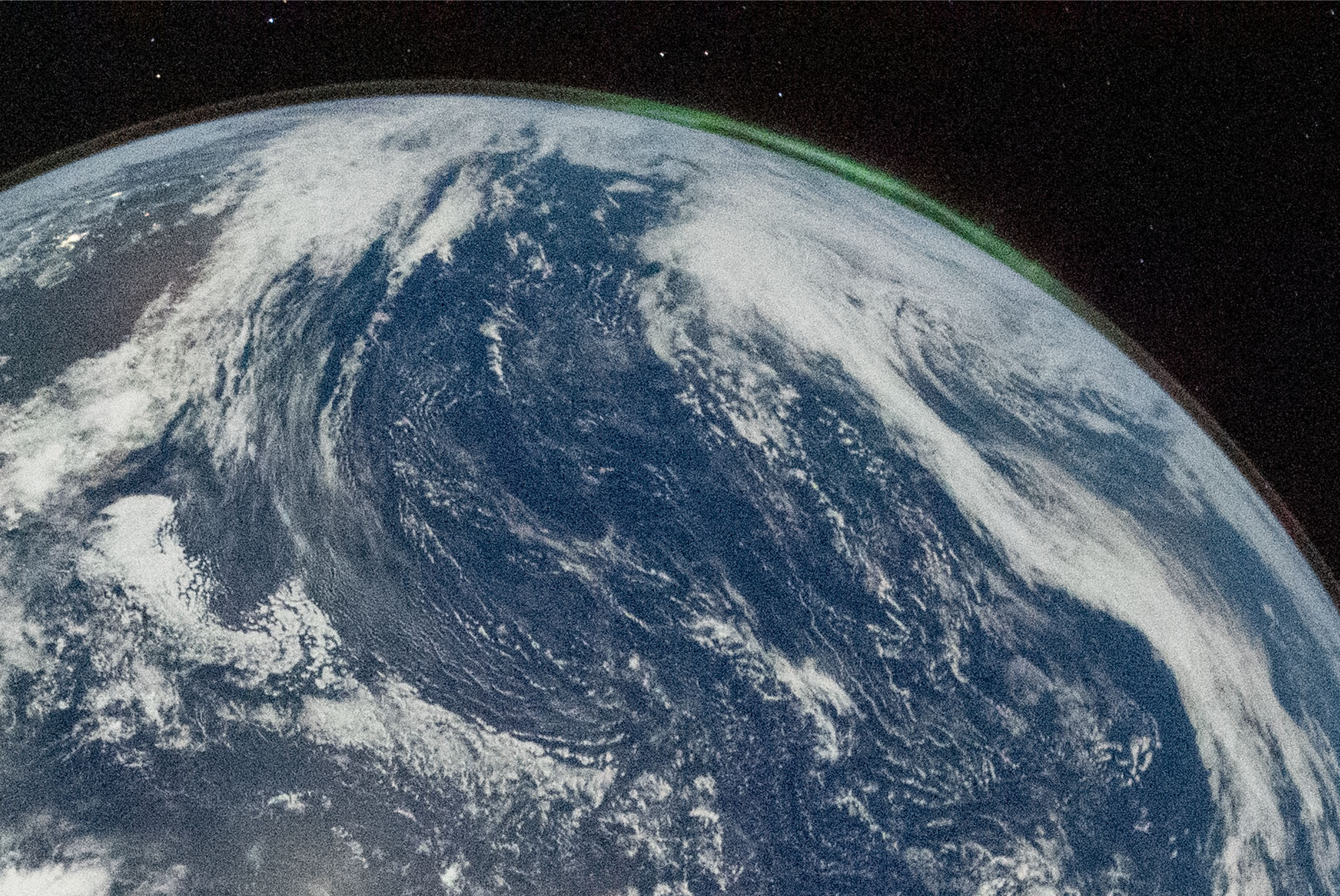
-
A possible view from the Artemis II Orion spacecraft at 22:35 UTC April 6 of a crescent Earth setting over the limb of a crescent Moon, as visualized using the NASA Eyes on the Solar System tool. In this image, Orion has traveled past the moon and is looking over its far side.
https://eyes.nasa.gov/apps/solar-system/#/sc_artemis_2?rate=0&time=2026-04-06T22:35:00.000+00:00
40/n@AkaSci This is speculative bullshit. Please mark it as unofficial and artificially generated
-
A closeup of the aurora australis over the Antarctic in the Blue Marble image highlights the thin fragile atmosphere that sustains all life on Earth. Note that South is up.
These images, the first such images taken by humans in over 54 years, remind us of the beauty and the fragility our planet, and of our shared responsibility to care of it and of each other.
🧑🧑
https://images.nasa.gov/details/art002e000192
42/n@AkaSci this image reminded me to stop burning fossil fuels
-
A closeup of the aurora australis over the Antarctic in the Blue Marble image highlights the thin fragile atmosphere that sustains all life on Earth. Note that South is up.
These images, the first such images taken by humans in over 54 years, remind us of the beauty and the fragility our planet, and of our shared responsibility to care of it and of each other.
🧑🧑
https://images.nasa.gov/details/art002e000192
42/nThe Moon beckons!
Photo take by the GoPro camera, located on the tip of one of the 4 solar array wings, shows part of the Orion spacecraft with the Moon in the distance.
The ESA European Service Module (ESM) and its thrusters are clearly visible.
Camera: GoPro, HERO4 Black, 12MP
FocalLength: 3.0 mm
ISO 100
ExposureTime: 1/3900 s
CreateDate: 2026:04:03 14:21:47 UTC
Distance to moon: 238,900 kmImage and EXIF data at https://images.nasa.gov/details/art002e004429
Another similar image at https://images.nasa.gov/details/art002e004411
43/n -
The Moon beckons!
Photo take by the GoPro camera, located on the tip of one of the 4 solar array wings, shows part of the Orion spacecraft with the Moon in the distance.
The ESA European Service Module (ESM) and its thrusters are clearly visible.
Camera: GoPro, HERO4 Black, 12MP
FocalLength: 3.0 mm
ISO 100
ExposureTime: 1/3900 s
CreateDate: 2026:04:03 14:21:47 UTC
Distance to moon: 238,900 kmImage and EXIF data at https://images.nasa.gov/details/art002e004429
Another similar image at https://images.nasa.gov/details/art002e004411
43/n@AkaSci vor 50 Jahren war es Hasselblad. Heute ist es GoPro. Irgendwie stimmt mich das schon ein bissi sentimental, dass es von Feinmechanischer Exzellenz zu chinesischer Massenware geht.
-
@AkaSci vor 50 Jahren war es Hasselblad. Heute ist es GoPro. Irgendwie stimmt mich das schon ein bissi sentimental, dass es von Feinmechanischer Exzellenz zu chinesischer Massenware geht.
@Reinald
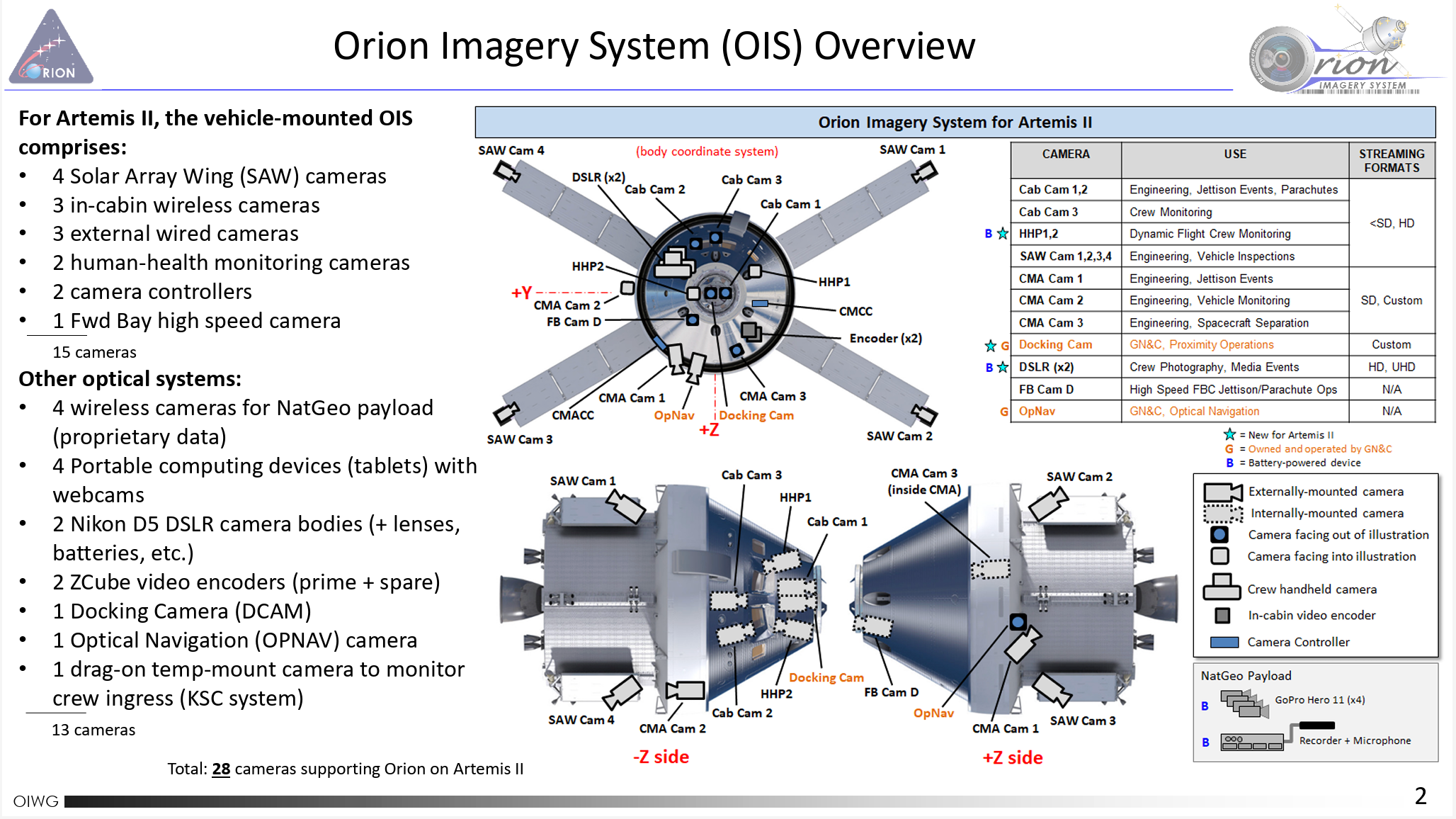
Note that this is an engineering camera meant for inspection of the spacecraft exterior.See post #26 in this thread for the list of 28 camera systems on board, including 2 Nikon D5s and 4 unspecified cameras from NatGeo.
AkaSci 🛰️ (@AkaSci@fosstodon.org)
Attached: 1 image Artemis II has a total of 28 camera systems, many for internal and external inspection and navigation, 4 located on each of Orion’s 4 solar arrays. The fixed engineering cameras are primarily meant for in-flight inspection of the spacecraft. But they also opportunistically capture images of Earth and the moon in the background. The astronauts carry two handheld Nikon D5 digital SLR 20.8 MP cameras for hi-res images and videos. https://talkoftitusville.com/2025/12/24/what-cameras-will-the-artemis-ii-astronauts-have-aboard/ https://ntrs.nasa.gov/api/citations/20230017638/downloads/1325_Melendrez_Orion%20Imaging%20Capabilities.pdf 26/n

Fosstodon (fosstodon.org)
-
The Moon beckons!
Photo take by the GoPro camera, located on the tip of one of the 4 solar array wings, shows part of the Orion spacecraft with the Moon in the distance.
The ESA European Service Module (ESM) and its thrusters are clearly visible.
Camera: GoPro, HERO4 Black, 12MP
FocalLength: 3.0 mm
ISO 100
ExposureTime: 1/3900 s
CreateDate: 2026:04:03 14:21:47 UTC
Distance to moon: 238,900 kmImage and EXIF data at https://images.nasa.gov/details/art002e004429
Another similar image at https://images.nasa.gov/details/art002e004411
43/nNaked eye field of view of moon at this distance 0.83° as compared 0.5° from earth. 1.6 times larger seeming.
-
The Moon beckons!
Photo take by the GoPro camera, located on the tip of one of the 4 solar array wings, shows part of the Orion spacecraft with the Moon in the distance.
The ESA European Service Module (ESM) and its thrusters are clearly visible.
Camera: GoPro, HERO4 Black, 12MP
FocalLength: 3.0 mm
ISO 100
ExposureTime: 1/3900 s
CreateDate: 2026:04:03 14:21:47 UTC
Distance to moon: 238,900 kmImage and EXIF data at https://images.nasa.gov/details/art002e004429
Another similar image at https://images.nasa.gov/details/art002e004411
43/nTwo of the 4 CubeSats deployed by Artemis II failed to enter proper orbit.
Successfully deployed:
TACHELES, German Space Agency
Space Weather CubeSat-1, Saudi Space AgencyFailed to enter proper orbit:
K-RadCube, Korea AeroSpace Admin
ATENEA, Argentina's Space Agencyhttps://fosstodon.org/@planet4589.bsky.social@bsky.brid.gy/116345118308094276
@jpshoer
44/n
-
One might consider it foolhardy for Artemis II Orion to come screaming down at 11 km/s to 191 km altitude, cross the paths of the LEO constellations and debris around 500 km, perform the TLI to adjust its speed and trajectory and race away, without colliding with anything.
But we can be assured that all that is taken care of and LEO satellites will maneuver to get out of the way as needed.


https://satellitetracker3d.com/track?norad-id=27426
30/n@AkaSci Did anyone warn the Space Karen about this?
-
Two of the 4 CubeSats deployed by Artemis II failed to enter proper orbit.
Successfully deployed:
TACHELES, German Space Agency
Space Weather CubeSat-1, Saudi Space AgencyFailed to enter proper orbit:
K-RadCube, Korea AeroSpace Admin
ATENEA, Argentina's Space Agencyhttps://fosstodon.org/@planet4589.bsky.social@bsky.brid.gy/116345118308094276
@jpshoer
44/nSo, does this mean that NASA released the CubeSats at the wrong time?
-
Two of the 4 CubeSats deployed by Artemis II failed to enter proper orbit.
Successfully deployed:
TACHELES, German Space Agency
Space Weather CubeSat-1, Saudi Space AgencyFailed to enter proper orbit:
K-RadCube, Korea AeroSpace Admin
ATENEA, Argentina's Space Agencyhttps://fosstodon.org/@planet4589.bsky.social@bsky.brid.gy/116345118308094276
@jpshoer
44/nPics of a crescent Earth and the Moon, taken from Artemis II at about the same time last night.
Earth:
Camera: NIKON D5 (DSLR, 20.8 MP)
Lens: 80-400mm f/4.5-5.6
FocalLength: 150 mm
ISO 500
ExposureTime: 1/640 s
CreateDate: 2026:04:03 23:38:59 UTC
Distance: 198,200 kmMoon:
Camera: NIKON D5 (DSLR, 20.8 MP)
Lens: 80-400mm f/4.5-5.6
FocalLength: 400 mm
ISO 500
ExposureTime: 1/500 s
CreateDate: 2026:04:03 23:44:47 UTC
Distance: 233,800 kmhttps://images.nasa.gov/details/art002e004437
https://images.nasa.gov/details/art002e004438
45/n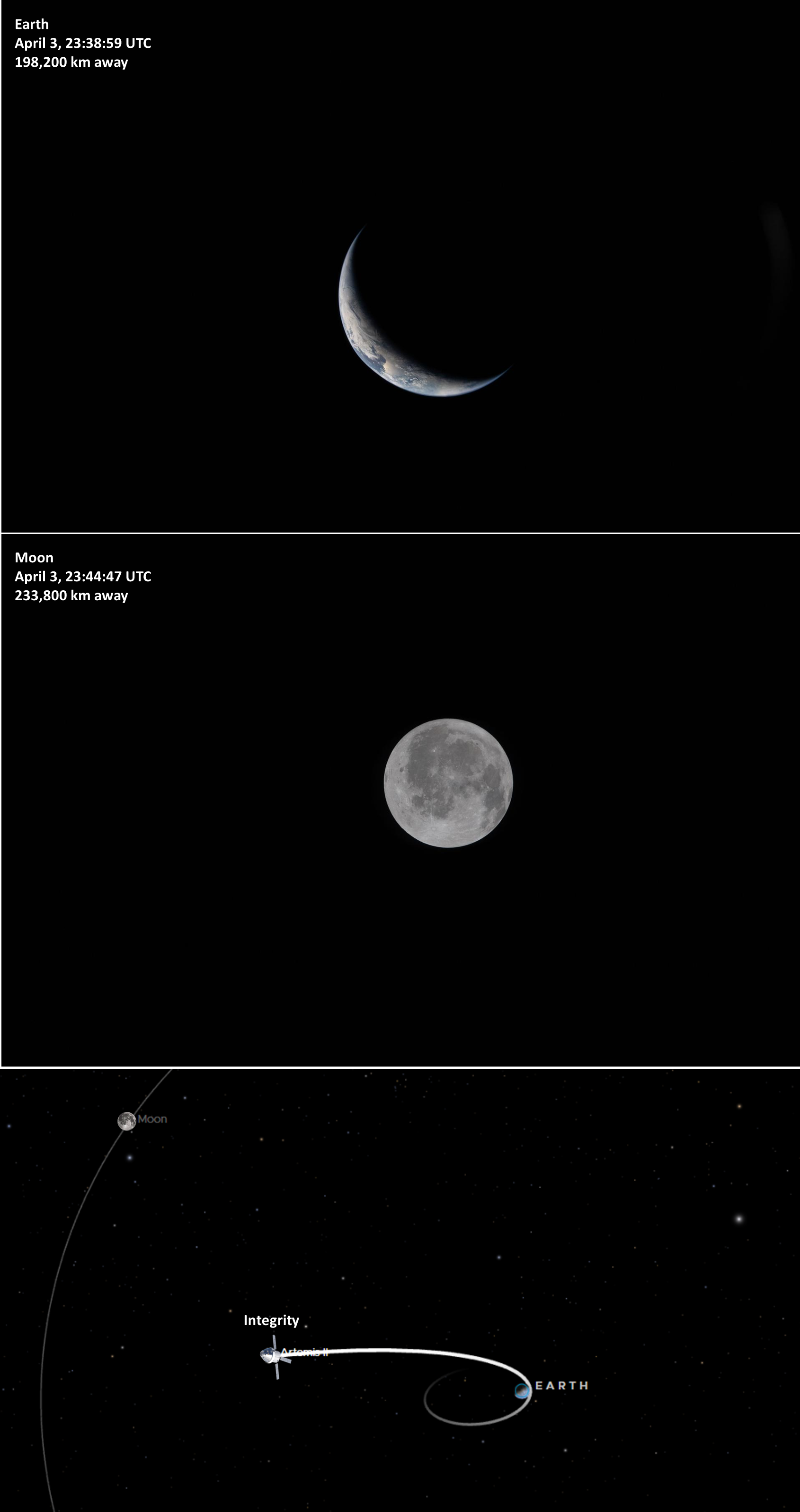
-
Pics of a crescent Earth and the Moon, taken from Artemis II at about the same time last night.
Earth:
Camera: NIKON D5 (DSLR, 20.8 MP)
Lens: 80-400mm f/4.5-5.6
FocalLength: 150 mm
ISO 500
ExposureTime: 1/640 s
CreateDate: 2026:04:03 23:38:59 UTC
Distance: 198,200 kmMoon:
Camera: NIKON D5 (DSLR, 20.8 MP)
Lens: 80-400mm f/4.5-5.6
FocalLength: 400 mm
ISO 500
ExposureTime: 1/500 s
CreateDate: 2026:04:03 23:44:47 UTC
Distance: 233,800 kmhttps://images.nasa.gov/details/art002e004437
https://images.nasa.gov/details/art002e004438
45/nWake-up music at Artemis II Integrity earlier today - "Chappell Roan – Pink Pony Club."
"I know you wanted me to stay
But I can’t ignore the crazy visions of me in LA
And I heard that there’s a special place
Where boys and girls can all be queens every single dayI’m having wicked dreams
Of leaving Tennessee
Oh, Santa Monica
I swear it’s calling meWon’t make my mama proud
It’s gonna cause a scene
She sees her baby girl
I know she’s gonna scream
..." -
Wake-up music at Artemis II Integrity earlier today - "Chappell Roan – Pink Pony Club."
"I know you wanted me to stay
But I can’t ignore the crazy visions of me in LA
And I heard that there’s a special place
Where boys and girls can all be queens every single dayI’m having wicked dreams
Of leaving Tennessee
Oh, Santa Monica
I swear it’s calling meWon’t make my mama proud
It’s gonna cause a scene
She sees her baby girl
I know she’s gonna scream
..."Visualization of what Artemis II astronauts will see during the lunar flyby as Integrity approaches the Moon and flies around its far side.
The flyby will last from 2:45 – 9:40 p.m. EDT on Monday, April 6, 2026.
Highlights in the 420x time-compressed video:
00:35: Earth sets behind the lunar llimb
00:35 - 00:40: Earth is eclipsed by the moon for about an hour
00:40: Earth-rise on the other side of the moon.https://www.youtube.com/watch?v=pMr86Yrvzlo
Also at https://www.nasa.gov/blogs/missions/2026/04/04/artemis-ii-flight-day-4-deep-space-flying-lunar-flyby-prep/
NASA/Ernie Wright
47/n -
Visualization of what Artemis II astronauts will see during the lunar flyby as Integrity approaches the Moon and flies around its far side.
The flyby will last from 2:45 – 9:40 p.m. EDT on Monday, April 6, 2026.
Highlights in the 420x time-compressed video:
00:35: Earth sets behind the lunar llimb
00:35 - 00:40: Earth is eclipsed by the moon for about an hour
00:40: Earth-rise on the other side of the moon.https://www.youtube.com/watch?v=pMr86Yrvzlo
Also at https://www.nasa.gov/blogs/missions/2026/04/04/artemis-ii-flight-day-4-deep-space-flying-lunar-flyby-prep/
NASA/Ernie Wright
47/n@AkaSci not sure why they decided to change it to the Death Star at the end...