Don't make me regret this ...
-
Marie Curie
Rosalind Franklin
Ada Lovelace
Cecilia Payne-Gaposchkin
Jocelyn Bell Burnell3/n
@ColinTheMathmo Noether?
-
@e7_87 I'd like to have "Well known characters" included to help some people make the cross-connections.
Knowing that X was at the same time as Y can be a useful connection.
Example: Knowing that Alexander the Great was tutored by Aristotle, and that Aristotle was in Plato's Academy, is a nice connection.
Oh I had set a difficult/impossible task for myself...
I limited the scope to the 20th century.
I HAVE TO say Math as a historical intellectual field, was not fair enough to women. It is hard to find 'famous/iconic' discoveries by females in 20th century, EXCEPT Emmy Noether's work. I read on the wikipedia articles on "Hilbert's 23 problems", and all main contributors/pushers have been males. [*] On the other hand, I guess because CS had been a green field, there were less "traditions" and "restrictions", many pioneers in CS were/are females and some are trans (Lynn Conway). REF: https://en.wikipedia.org/wiki/List_of_pioneers_in_computer_science
---
So, since I got some training in physics, I tried to identify the important events. I choose 4 important Physics events in 20th century which female scientists involved heavily:1. Radioactivity - Marie Curie and Pierre Curie got the Nobel Prize in 1903
2. parity non-conservation in weak interaction - the experimental physicist Ms Chien-Shiung Wu proved Tsung-Dao Lee and Chen-Ning Yang's theory, lead to the two males' Nobel Prize in 1957
3. Discovery of Dark Matter - Vera Rubin found the first evidence around 1970
4. Nuclear Weapons / Manhattan Project - Maria Goeppert Mayer, a Nobel Prize winner(1963, "for their discoveries concerning nuclear shell structure"), had involved in the project.
I would like to list five events, maybe someone could help.
References:
https://en.wikipedia.org/wiki/Women_in_physics
https://en.wikipedia.org/wiki/Timeline_of_women_in_science[*]: correction:https://mathstodon.xyz/@antoinechambertloir/116154031088146836
-
@e7_87 I'd like to have "Well known characters" included to help some people make the cross-connections.
Knowing that X was at the same time as Y can be a useful connection.
Example: Knowing that Alexander the Great was tutored by Aristotle, and that Aristotle was in Plato's Academy, is a nice connection.
"Be less curious about people and more curious about ideas" - Marie Curie

-
@ColinTheMathmo
Also, there exists a fledgling network for people interested in the history of maths (and the maths of history) and exploring how each might enrich the other in educational settings: https://historyand.mathsy.space/@TeaKayB I think this is important ... but to offer a counter-point ...
I *hated* it in school when the history of maths was brought up, and I *hated* it when people tried to "make it relevant".
So it's worth noting that such drives will engage some who might otherwise be excluded, but will also turn some people off the subject.
Finding the right balance will be hard.
Not having the resources is a crime.
-
To some extent, I'd like people in general, children in particular, to hear of someone, then be able to put them into context.
I think this is an impossible task, so in some senses I'm looking to see why and how it's impossible, perhaps then to decrease the scope and ambition, possibly to make something useful.
Eventually.
4/n, n=4
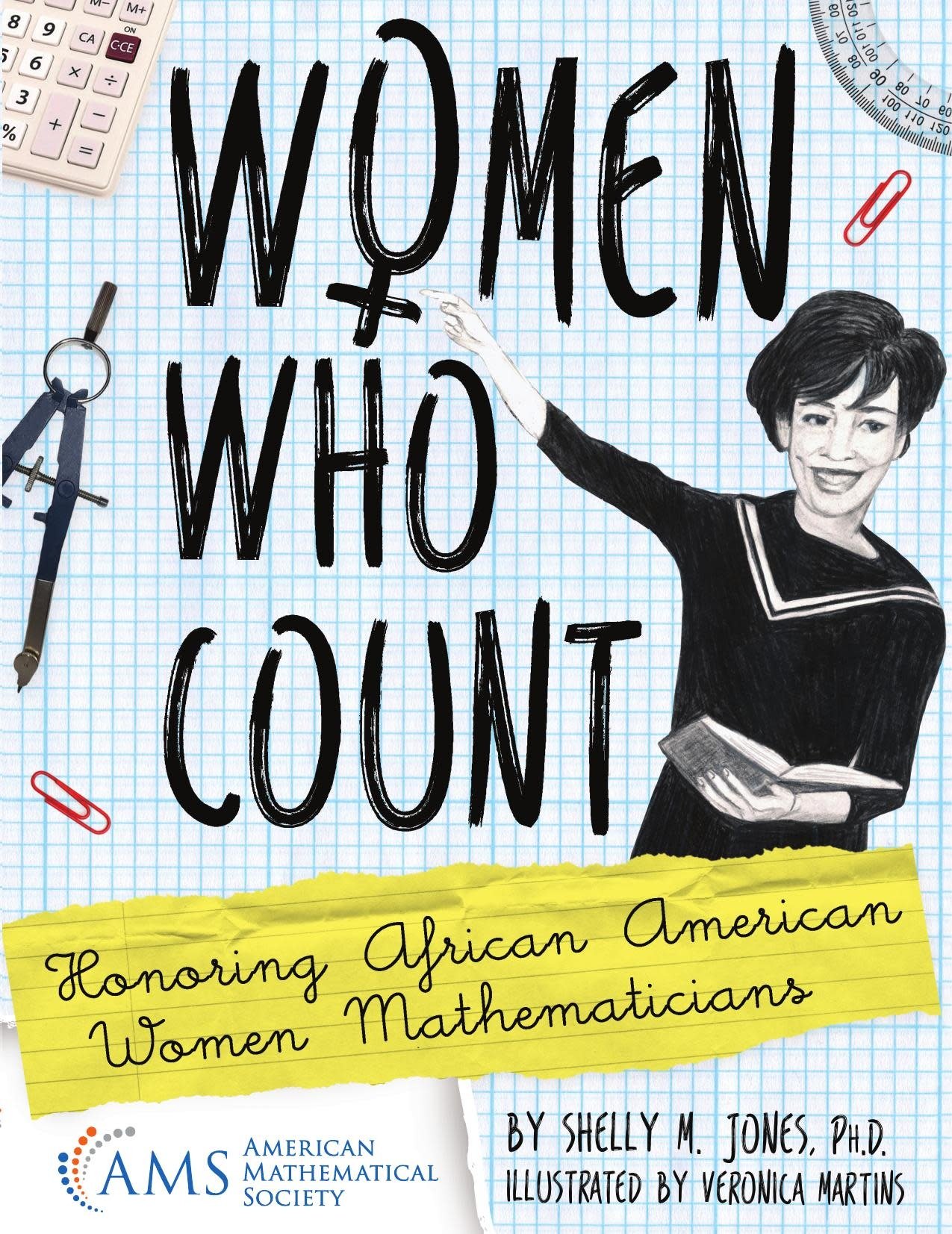
@ColinTheMathmo check out "Women Who Count" about 29 African American mathematicians. Shelly Jones is a friend of mine in Connecticut.
-
Oh I had set a difficult/impossible task for myself...
I limited the scope to the 20th century.
I HAVE TO say Math as a historical intellectual field, was not fair enough to women. It is hard to find 'famous/iconic' discoveries by females in 20th century, EXCEPT Emmy Noether's work. I read on the wikipedia articles on "Hilbert's 23 problems", and all main contributors/pushers have been males. [*] On the other hand, I guess because CS had been a green field, there were less "traditions" and "restrictions", many pioneers in CS were/are females and some are trans (Lynn Conway). REF: https://en.wikipedia.org/wiki/List_of_pioneers_in_computer_science
---
So, since I got some training in physics, I tried to identify the important events. I choose 4 important Physics events in 20th century which female scientists involved heavily:1. Radioactivity - Marie Curie and Pierre Curie got the Nobel Prize in 1903
2. parity non-conservation in weak interaction - the experimental physicist Ms Chien-Shiung Wu proved Tsung-Dao Lee and Chen-Ning Yang's theory, lead to the two males' Nobel Prize in 1957
3. Discovery of Dark Matter - Vera Rubin found the first evidence around 1970
4. Nuclear Weapons / Manhattan Project - Maria Goeppert Mayer, a Nobel Prize winner(1963, "for their discoveries concerning nuclear shell structure"), had involved in the project.
I would like to list five events, maybe someone could help.
References:
https://en.wikipedia.org/wiki/Women_in_physics
https://en.wikipedia.org/wiki/Timeline_of_women_in_science[*]: correction:https://mathstodon.xyz/@antoinechambertloir/116154031088146836
@e7_87 This is all important, and I'm making notes because I *will* return to this, but it's not my original objective.
Kids have heard of Newton ... when was he? What was happening at the time?
Kids have heard of, say, Alexander the Great. Or Mozart. Who might Mozart have met? Or Beethoven?
I'm trying to leverage off from names and events they will know to create connections with maths (specifically) and science in general.
There are books and books and books to be written here. I'm not the one to write them, but getting connections is a start.
1/n
-
@e7_87 This is all important, and I'm making notes because I *will* return to this, but it's not my original objective.
Kids have heard of Newton ... when was he? What was happening at the time?
Kids have heard of, say, Alexander the Great. Or Mozart. Who might Mozart have met? Or Beethoven?
I'm trying to leverage off from names and events they will know to create connections with maths (specifically) and science in general.
There are books and books and books to be written here. I'm not the one to write them, but getting connections is a start.
1/n
@e7_87 I also need to make sure I don't get distracted (too much) from the book I am trying to write ... so ...
Yeah.
I'll find somewhere public to keep my notes.
-
@ColinTheMathmo this thread contains three brilliant stories and if you include the mathematics it is amazing
@ColinTheMathmo Hermann Weyl wrote an obituary and a memorial both delivered in the US for Emmy, details of both are in Weyl's Levels of Infinity, an essay collection.
-
Oh I had set a difficult/impossible task for myself...
I limited the scope to the 20th century.
I HAVE TO say Math as a historical intellectual field, was not fair enough to women. It is hard to find 'famous/iconic' discoveries by females in 20th century, EXCEPT Emmy Noether's work. I read on the wikipedia articles on "Hilbert's 23 problems", and all main contributors/pushers have been males. [*] On the other hand, I guess because CS had been a green field, there were less "traditions" and "restrictions", many pioneers in CS were/are females and some are trans (Lynn Conway). REF: https://en.wikipedia.org/wiki/List_of_pioneers_in_computer_science
---
So, since I got some training in physics, I tried to identify the important events. I choose 4 important Physics events in 20th century which female scientists involved heavily:1. Radioactivity - Marie Curie and Pierre Curie got the Nobel Prize in 1903
2. parity non-conservation in weak interaction - the experimental physicist Ms Chien-Shiung Wu proved Tsung-Dao Lee and Chen-Ning Yang's theory, lead to the two males' Nobel Prize in 1957
3. Discovery of Dark Matter - Vera Rubin found the first evidence around 1970
4. Nuclear Weapons / Manhattan Project - Maria Goeppert Mayer, a Nobel Prize winner(1963, "for their discoveries concerning nuclear shell structure"), had involved in the project.
I would like to list five events, maybe someone could help.
References:
https://en.wikipedia.org/wiki/Women_in_physics
https://en.wikipedia.org/wiki/Timeline_of_women_in_science[*]: correction:https://mathstodon.xyz/@antoinechambertloir/116154031088146836
@e7_87 @ColinTheMathmo for Hilbert's 10th problem, the rôle of Julia Robinson is largely underestimated.
-
@ColinTheMathmo Hermann Weyl wrote an obituary and a memorial both delivered in the US for Emmy, details of both are in Weyl's Levels of Infinity, an essay collection.
@ompaul My aim here is not to write a comprehensive biography and bibliography of all these people ... that would replicate existing work and take several lifetimes.
But aim is to help kids put into context names and events they've heard of, to help spark curiosity and reduce the compartmentalisation of subjects.
-
@TeaKayB I think this is important ... but to offer a counter-point ...
I *hated* it in school when the history of maths was brought up, and I *hated* it when people tried to "make it relevant".
So it's worth noting that such drives will engage some who might otherwise be excluded, but will also turn some people off the subject.
Finding the right balance will be hard.
Not having the resources is a crime.
@ColinTheMathmo
Keep your eyes peeled for a paper about a project I did on this with a research partner just over a year ago. Currently in peer-review.I was/am similarly resistant to the "make it relevant" stuff, largely because it often feels contrived or bolted-on, precisely because we (as maths teachers) are told to do these things with little-to-no training or resources to enable us to do it properly.
Exhortations to "make it {fun, interesting, relevant}" strongly imply that these things are not intrinsic, and _that_ is where we lose people with contrived relevance and context.
-
@ColinTheMathmo
Keep your eyes peeled for a paper about a project I did on this with a research partner just over a year ago. Currently in peer-review.I was/am similarly resistant to the "make it relevant" stuff, largely because it often feels contrived or bolted-on, precisely because we (as maths teachers) are told to do these things with little-to-no training or resources to enable us to do it properly.
Exhortations to "make it {fun, interesting, relevant}" strongly imply that these things are not intrinsic, and _that_ is where we lose people with contrived relevance and context.
@TeaKayB Part of the problem is that people making these exhortations were themselves badly served by the educational experience they suffered through.
It's complex, and I suspect we are in (near) complete agreement.
-
@ColinTheMathmo
Keep your eyes peeled for a paper about a project I did on this with a research partner just over a year ago. Currently in peer-review.I was/am similarly resistant to the "make it relevant" stuff, largely because it often feels contrived or bolted-on, precisely because we (as maths teachers) are told to do these things with little-to-no training or resources to enable us to do it properly.
Exhortations to "make it {fun, interesting, relevant}" strongly imply that these things are not intrinsic, and _that_ is where we lose people with contrived relevance and context.
@ColinTheMathmo
This is partly why we decided to set up a network rather than producing a collection of resources; connecting people (including but not limited to teachers of mathematics and history) who are already interested and want to explore further to develop *themselves*, rather than firing some PowerPoint slides into the ether and saying 'break your lesson-flow and slot this script in'. -
@TeaKayB Part of the problem is that people making these exhortations were themselves badly served by the educational experience they suffered through.
It's complex, and I suspect we are in (near) complete agreement.
@ColinTheMathmo
Absolutely. I find with many 'arguments' about maths education, both sides are arguing the same point, but from slightly different angles and with differing understandings of seemingly common vocabulary. -
To some extent, I'd like people in general, children in particular, to hear of someone, then be able to put them into context.
I think this is an impossible task, so in some senses I'm looking to see why and how it's impossible, perhaps then to decrease the scope and ambition, possibly to make something useful.
Eventually.
4/n, n=4
@ColinTheMathmo
Beatrice Shilling (aeronautics)
Janet Taylor (astronomy, navigation)
Rosalind_Franklin
Valentina Tereshkova
Dorothy Hodgkin
Tu Youyou (pharmaceutical chemist)
Baroness Ingrid Daubechies (JPEG)
Grace Hopper
Gladys Mae West (GPS)
Emmy Noether (symmetry)
Mary Cartwright (chaos theory)
Annie Scott Dill Maunder
Caroline Herschel
Gerty Theresa Cori (glycogen)
Williamina Fleming (astronomy)
Alice Augusta Ball (chemistry)
Katherine Johnson (orbital mechanics) -
@ColinTheMathmo
Beatrice Shilling (aeronautics)
Janet Taylor (astronomy, navigation)
Rosalind_Franklin
Valentina Tereshkova
Dorothy Hodgkin
Tu Youyou (pharmaceutical chemist)
Baroness Ingrid Daubechies (JPEG)
Grace Hopper
Gladys Mae West (GPS)
Emmy Noether (symmetry)
Mary Cartwright (chaos theory)
Annie Scott Dill Maunder
Caroline Herschel
Gerty Theresa Cori (glycogen)
Williamina Fleming (astronomy)
Alice Augusta Ball (chemistry)
Katherine Johnson (orbital mechanics)@spacemagick Out of interest, how many of these people (who should be better known, and who I will definitely include (mostly)) do you think kids ... or adults ... will have heard of?
-
Don't make me regret this ...
I'm thinking of making a timeline of characters and events from history that school children might know of and be interested in. Most timelines you find are overly complex, or overly simplistic.
Who and what would you include?
I'm interested in connecting science people with historical context, and pulling in non-(old dead white dude)s.
1/n
@ColinTheMathmo for events rather than people: the reign of terror. Which explains why several famous French mathematicians and scientists died in 1794.
-
@e7_87 @ColinTheMathmo for Hilbert's 10th problem, the rôle of Julia Robinson is largely underestimated.
@e7_87 @ColinTheMathmo just lazily browsing Wikipedia's list of women in mathematics, I would suggest to look at the work of Yvonne Choquet-Bruhat, Nicole El Karoui, Shafi Goldwasser, Krystina Kuperberg, Olga Ladyzhenskaia, Dusa McDuff, Maryam Mirzakhani, Cathleen Morawetz, Ruth Moufang, Marina Ratner, Diana Shelstad, Vera Sós, Irene Stegun, Olga Taussky-Todd, Ulrike Tilman, Karen Uhlenbeck, Marie-France Vignéras, etc. For many of them, a Fields medal or a similar award would not have been inappropriate.
-
@ColinTheMathmo
Sir Christopher Wren is another well-known historical figure whose mathematical connections are almost unheard of amongst the population at large.A certain someone will give me another funny look if I don't mention Mary Somerville.
On that note, I created some resources for @mathsweek.scot that aim to help people explore some Scottish mathematical figures: https://mathsweek.scot/schools/learning-resources/finn-finity-meets
I don't think I've seen anyone else mention him, but in terms of situating developments in maths alongside more well-known historical events, then... Shakespeare. Born in between publication of Robert Recorde's two important books that helped to embed an entirely new number system into British life, industry, and commerce. He and his own father would have learnt not just different algorithms for calculating in their respective school careers, but entirely different number _systems_, and there's evidence of Bill playing with this new-fangled system throughout his famous works.
-
@e7_87 @ColinTheMathmo just lazily browsing Wikipedia's list of women in mathematics, I would suggest to look at the work of Yvonne Choquet-Bruhat, Nicole El Karoui, Shafi Goldwasser, Krystina Kuperberg, Olga Ladyzhenskaia, Dusa McDuff, Maryam Mirzakhani, Cathleen Morawetz, Ruth Moufang, Marina Ratner, Diana Shelstad, Vera Sós, Irene Stegun, Olga Taussky-Todd, Ulrike Tilman, Karen Uhlenbeck, Marie-France Vignéras, etc. For many of them, a Fields medal or a similar award would not have been inappropriate.
@e7_87 @ColinTheMathmo ... And if I were like to understand why many of those names belong to applied mathematics, then I would study the concept of gatekeeping.