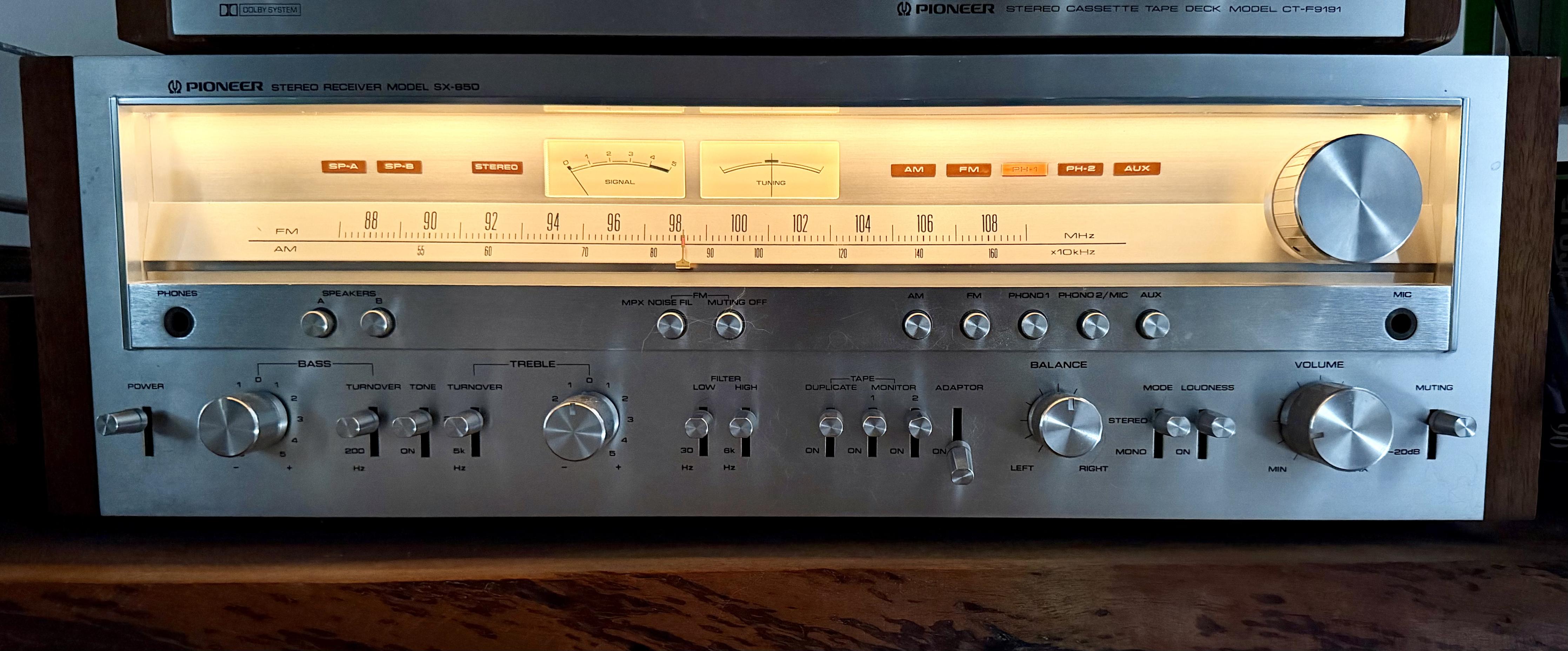
This is a Pioneer Stereo Receiver SX-850 from just about 50 years ago.
-
This is a Pioneer Stereo Receiver SX-850 from just about 50 years ago.
It’s not spying on you.
It doesn’t need firmware updates.
There’s no subscription.
It’s widely compatible with other audio equipment from other manufacturers.
It won’t suddenly decide you can’t listen to explicit lyrics anymore.
It won’t “autocorrect” you, interrupt you with notifications or get hijacked by a botnet.
If a component breaks, it’s pretty easy fixable, even by amateurs.It still works great, sounds great and looks great and it will probably do so for another 50 years. It’s a piece of useful electronics that you can hand down for literally generations.
Can you do this with modern technology?
Why is modern technology considered “better”?
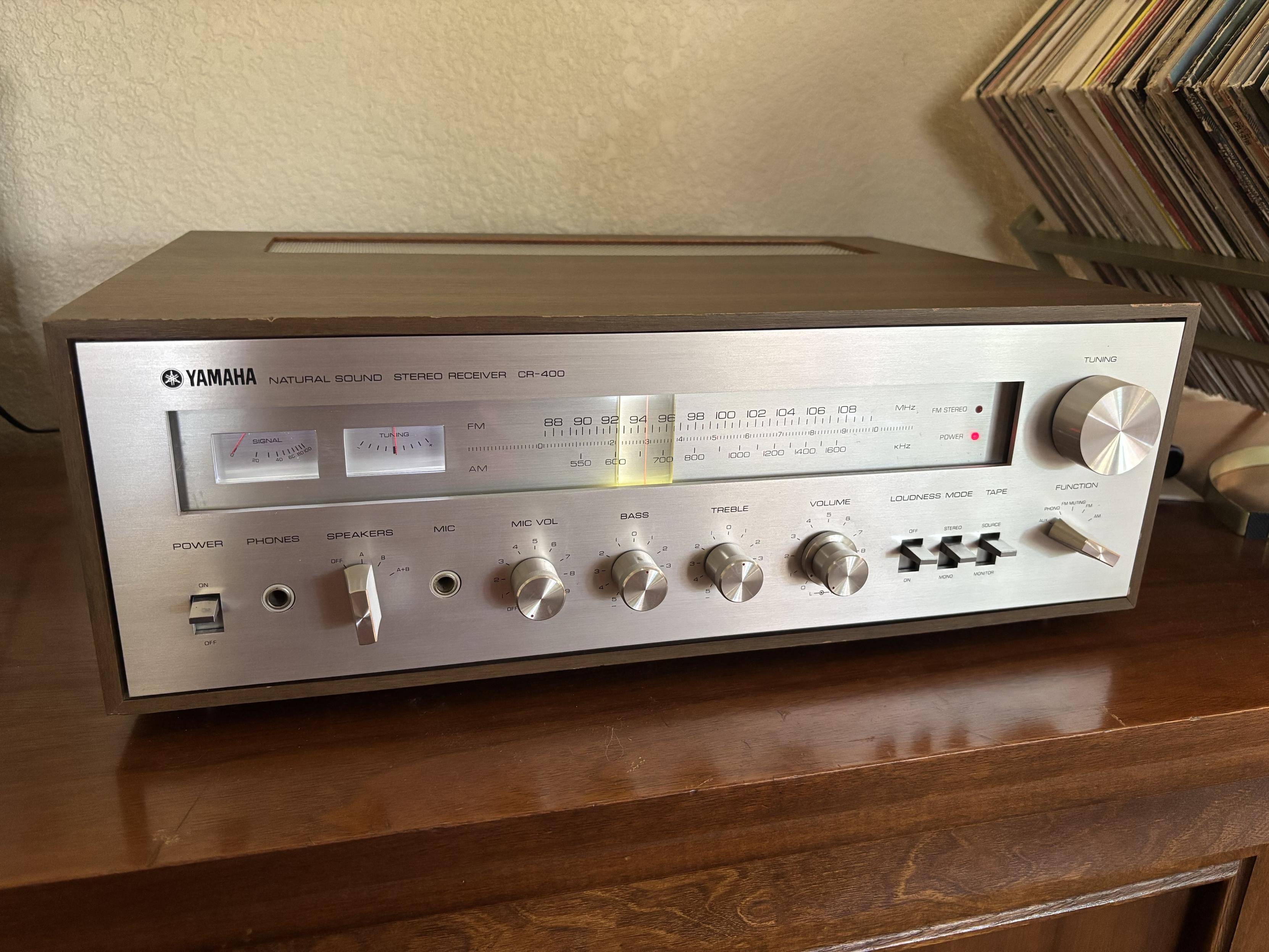
@thomasfuchs rescued from my parents garage, recapped, some new switches and LED lights. It just works.
-
R relay@relay.an.exchange shared this topic
-
@thomasfuchs I really hope I can find someone willing to part with an old setup like that, one day.
I can hear those switches.
@tehstu Words cannot describe how solid and good these controls feel
-
This is a Pioneer Stereo Receiver SX-850 from just about 50 years ago.
It’s not spying on you.
It doesn’t need firmware updates.
There’s no subscription.
It’s widely compatible with other audio equipment from other manufacturers.
It won’t suddenly decide you can’t listen to explicit lyrics anymore.
It won’t “autocorrect” you, interrupt you with notifications or get hijacked by a botnet.
If a component breaks, it’s pretty easy fixable, even by amateurs.It still works great, sounds great and looks great and it will probably do so for another 50 years. It’s a piece of useful electronics that you can hand down for literally generations.
Can you do this with modern technology?
Why is modern technology considered “better”?
@thomasfuchs
Ha. That's what my folks had for ages. -
@thomasfuchs my old amp is only 25W/ channel but plenty loud. H H Scott type 299 from 1958.
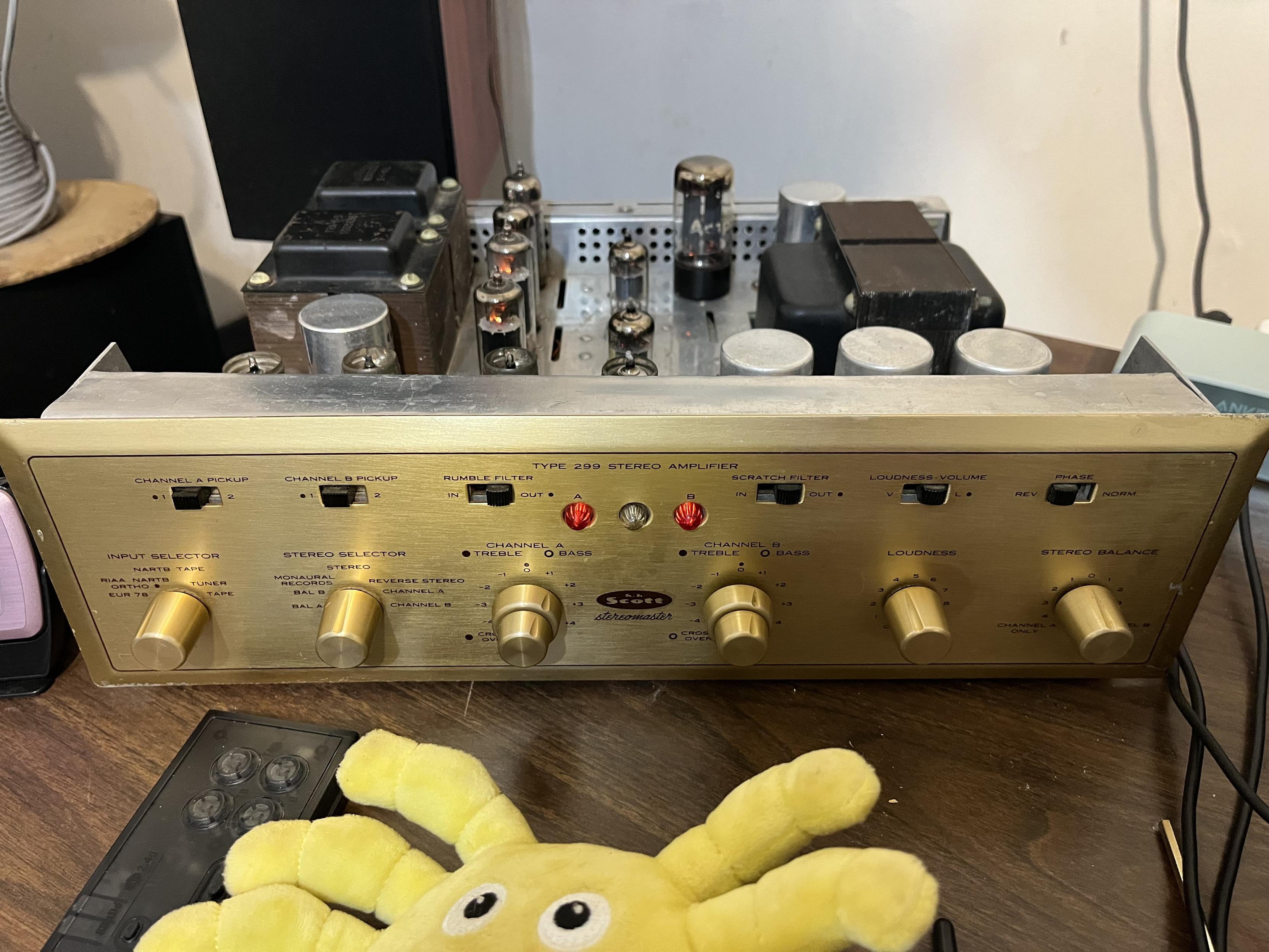
@heppycat what a beauty
-
This is a Pioneer Stereo Receiver SX-850 from just about 50 years ago.
It’s not spying on you.
It doesn’t need firmware updates.
There’s no subscription.
It’s widely compatible with other audio equipment from other manufacturers.
It won’t suddenly decide you can’t listen to explicit lyrics anymore.
It won’t “autocorrect” you, interrupt you with notifications or get hijacked by a botnet.
If a component breaks, it’s pretty easy fixable, even by amateurs.It still works great, sounds great and looks great and it will probably do so for another 50 years. It’s a piece of useful electronics that you can hand down for literally generations.
Can you do this with modern technology?
Why is modern technology considered “better”?
@thomasfuchs my dad still has his Pioneer setup from 50 years ago. It sounds great, and the only thing that needed fixing was the direct drive record player - the rubber drive band had perished. I used to play my guitars through the amp, and still think it is the best sound I have ever got.
-
This is a Pioneer Stereo Receiver SX-850 from just about 50 years ago.
It’s not spying on you.
It doesn’t need firmware updates.
There’s no subscription.
It’s widely compatible with other audio equipment from other manufacturers.
It won’t suddenly decide you can’t listen to explicit lyrics anymore.
It won’t “autocorrect” you, interrupt you with notifications or get hijacked by a botnet.
If a component breaks, it’s pretty easy fixable, even by amateurs.It still works great, sounds great and looks great and it will probably do so for another 50 years. It’s a piece of useful electronics that you can hand down for literally generations.
Can you do this with modern technology?
Why is modern technology considered “better”?
As soon as FM radio is replaced by DAB with DRM (as ATSC is posed to do in the near future), that gadget will sadly become an elegant paperweight. -
This is a Pioneer Stereo Receiver SX-850 from just about 50 years ago.
It’s not spying on you.
It doesn’t need firmware updates.
There’s no subscription.
It’s widely compatible with other audio equipment from other manufacturers.
It won’t suddenly decide you can’t listen to explicit lyrics anymore.
It won’t “autocorrect” you, interrupt you with notifications or get hijacked by a botnet.
If a component breaks, it’s pretty easy fixable, even by amateurs.It still works great, sounds great and looks great and it will probably do so for another 50 years. It’s a piece of useful electronics that you can hand down for literally generations.
Can you do this with modern technology?
Why is modern technology considered “better”?
I feel every house had one of these in the 70's, ours did. It sounds great and still looks good.
-
This is a Pioneer Stereo Receiver SX-850 from just about 50 years ago.
It’s not spying on you.
It doesn’t need firmware updates.
There’s no subscription.
It’s widely compatible with other audio equipment from other manufacturers.
It won’t suddenly decide you can’t listen to explicit lyrics anymore.
It won’t “autocorrect” you, interrupt you with notifications or get hijacked by a botnet.
If a component breaks, it’s pretty easy fixable, even by amateurs.It still works great, sounds great and looks great and it will probably do so for another 50 years. It’s a piece of useful electronics that you can hand down for literally generations.
Can you do this with modern technology?
Why is modern technology considered “better”?
@thomasfuchs @nuintari
Holy shit are those expensive on ebay! -
R relay@relay.infosec.exchange shared this topic
-
As soon as FM radio is replaced by DAB with DRM (as ATSC is posed to do in the near future), that gadget will sadly become an elegant paperweight.
@csolisr even if FM does get deprecated in the US(doubtful), it's a stereo receiver, not just a radio. You can easily adapt any electronic audio device to a format it'll accept with no major loss of fidelity.
This thing won't lose its purpose until electricity is deprecated.
-
@csolisr even if FM does get deprecated in the US(doubtful), it's a stereo receiver, not just a radio. You can easily adapt any electronic audio device to a format it'll accept with no major loss of fidelity.
This thing won't lose its purpose until electricity is deprecated.
Or until DRM makes digital to analog converters unusable, although that one is harder to justify in the market.