I don't want to formalize any of my work on mathematics.
-
I don't want to formalize any of my work on mathematics. First because, as Emily Riehl notes, formalization tends to impose consensus. And second, because I find it boring. It steals time from creative thought to nail things down with more rigidity than I need or want.
Kevin Buzzard says "It forces you to think about mathematics in the right way." But there is no such thing as "the" right way to think about mathematics - and certainly not one that can be forced on us.

In Math, Rigor Is Vital. But Are Digitized Proofs Taking It Too Far? | Quanta Magazine
The quest to make mathematics rigorous has a long and spotty history — one mathematicians can learn from as they push to formalize everything in the computer program Lean.

Quanta Magazine (www.quantamagazine.org)
@johncarlosbaez "It forces you to think about mathematics in the right way." is such a rich statement given the amount of mathematical jank there is in Mathlib.
For example, did you know that (ℝ,+) is technically not a group?
-
@johncarlosbaez "It forces you to think about mathematics in the right way." is such a rich statement given the amount of mathematical jank there is in Mathlib.
For example, did you know that (ℝ,+) is technically not a group?
@jameshanson - because that ordered pair doesn't include the additive identity, or inverses, or something?
-
@jameshanson - because that ordered pair doesn't include the additive identity, or inverses, or something?
@johncarlosbaez No, it's an additive group, which is a distinct thing from a group (which happens to be defined in the same way but with different notation).
-
@johncarlosbaez No, it's an additive group, which is a distinct thing from a group (which happens to be defined in the same way but with different notation).
@jameshanson - wow, so there's no type coercion that makes every additive group count as a group?
-
@jameshanson - wow, so there's no type coercion that makes every additive group count as a group?
@johncarlosbaez There's a tactic/script that converts proofs of statements for groups to the corresponding statement for additive groups, but it's not yet seamless.
-
@jameshanson - wow, so there's no type coercion that makes every additive group count as a group?
@johncarlosbaez @jameshanson There is (there has to be, since you just take the data and reassemble it under different notation), but I heavily heavily advise you to not use it because it would be miserable under mathlib's system of conventions. Instead people just duplicate every single theorem proved about groups.
Worth noting that the Rocq proof assistant uses another approach called the Hierarchy Builder where they don't need this duplication. -
@johncarlosbaez "It forces you to think about mathematics in the right way." is such a rich statement given the amount of mathematical jank there is in Mathlib.
For example, did you know that (ℝ,+) is technically not a group?
@johncarlosbaez Another classic is of course 1/0 = 0 and its corollary, ζ(1) = (γ - log(4π))/2. https://leanprover-community.github.io/mathlib4_docs/Mathlib/NumberTheory/Harmonic/ZetaAsymp.html#riemannZeta_one
-
I don't want to formalize any of my work on mathematics. First because, as Emily Riehl notes, formalization tends to impose consensus. And second, because I find it boring. It steals time from creative thought to nail things down with more rigidity than I need or want.
Kevin Buzzard says "It forces you to think about mathematics in the right way." But there is no such thing as "the" right way to think about mathematics - and certainly not one that can be forced on us.
In Math, Rigor Is Vital. But Are Digitized Proofs Taking It Too Far? | Quanta Magazine
The quest to make mathematics rigorous has a long and spotty history — one mathematicians can learn from as they push to formalize everything in the computer program Lean.
Quanta Magazine (www.quantamagazine.org)
@johncarlosbaez I take your point on Kevin's comment ( @xenaproject if he logs in and sees this), but a) Kevin likes making hyperbolic public statements to stir the pot b) never forget the journalist and then their editors in the process and c) what Kevin in currently doing is actually stopping to re-think how best to prove FLT, in a way that's novel and more cleanly abstracted and packaged. Perhaps this type of novel re-thinking is not happening every day in number theory, and so it feels really fun. Obviously, category theorists abstract structures and proofs all the time, so this process feels like an absolute no-brainer to us. (Nota Bene: I can also make hyperbolic statements to stir the pot).
Actually looking at the mathematics he is doing currently is really interesting, because it's making it much clearer and leaner (pun not intended), or at least exposing where the really hard core theorems are. Ideally those can subsequently get the same treatment, and people don't just cite a 150-page paper from the 70s or 80s that makes enormous effort to prove a very elementary statement as a black box, but think through if it can be improved.
-
@johncarlosbaez I take your point on Kevin's comment ( @xenaproject if he logs in and sees this), but a) Kevin likes making hyperbolic public statements to stir the pot b) never forget the journalist and then their editors in the process and c) what Kevin in currently doing is actually stopping to re-think how best to prove FLT, in a way that's novel and more cleanly abstracted and packaged. Perhaps this type of novel re-thinking is not happening every day in number theory, and so it feels really fun. Obviously, category theorists abstract structures and proofs all the time, so this process feels like an absolute no-brainer to us. (Nota Bene: I can also make hyperbolic statements to stir the pot).
Actually looking at the mathematics he is doing currently is really interesting, because it's making it much clearer and leaner (pun not intended), or at least exposing where the really hard core theorems are. Ideally those can subsequently get the same treatment, and people don't just cite a 150-page paper from the 70s or 80s that makes enormous effort to prove a very elementary statement as a black box, but think through if it can be improved.
@highergeometer - I'm glad Kevin can have good new ideas about math while formalizing it. I don't want to go that way myself, and I don't want people to feel pressured to do it.
-
@highergeometer - I'm glad Kevin can have good new ideas about math while formalizing it. I don't want to go that way myself, and I don't want people to feel pressured to do it.
@johncarlosbaez @highergeometer I hope we're not in for some kind of 'purity test' era, where if it ain't formally verified, it ain't really mathematics.
-
@johncarlosbaez @highergeometer I hope we're not in for some kind of 'purity test' era, where if it ain't formally verified, it ain't really mathematics.
@RobJLow @johncarlosbaez Well, I heard Kevin talk about problems in the Langlands program where Jim Arthur claimed big results in a number of really meaty "forthcoming" papers and people took his word, and then it turned out there were big problems. In that kind of mathematics, the problem wasn't that it wasn't formalised, but that people are perhaps getting a bit too confident.....
-
I don't want to formalize any of my work on mathematics. First because, as Emily Riehl notes, formalization tends to impose consensus. And second, because I find it boring. It steals time from creative thought to nail things down with more rigidity than I need or want.
Kevin Buzzard says "It forces you to think about mathematics in the right way." But there is no such thing as "the" right way to think about mathematics - and certainly not one that can be forced on us.
In Math, Rigor Is Vital. But Are Digitized Proofs Taking It Too Far? | Quanta Magazine
The quest to make mathematics rigorous has a long and spotty history — one mathematicians can learn from as they push to formalize everything in the computer program Lean.
Quanta Magazine (www.quantamagazine.org)
@johncarlosbaez I, on the other hand, like using Agda as a blackboard for thinking, just like I like using pen and paper for thinking.
I do believe that mathematics is inherently informal (and that ZFC, MLTT, ETCS etc. are not the ultimate answer to anything, but just distillation of what various people did informally in various different fronts).
This doesn't prevent me from both liking and finding formal mathematics with the aid of a computer useful (for myself - I am not advocating it would be useful for e.g. you).
-
@UweHalfHand - I am not kind of lost without computer-based formalization. Math did perfectly fine without it for millennia.
@johncarlosbaez @UweHalfHand Even before computers, a few mathematicians felt that formalization was a good thing to do. Frege, and Russell and Whitehead, are the most obvious examples; Freek Wiedijk also pointed out how similar Euclid's writing is to the input to a proof assistant.
But of course the important question is consent. Mathematicians should be free to build formal proofs, for a variety of reasons. They should never be required to do so
-
I don't want to formalize any of my work on mathematics. First because, as Emily Riehl notes, formalization tends to impose consensus. And second, because I find it boring. It steals time from creative thought to nail things down with more rigidity than I need or want.
Kevin Buzzard says "It forces you to think about mathematics in the right way." But there is no such thing as "the" right way to think about mathematics - and certainly not one that can be forced on us.
In Math, Rigor Is Vital. But Are Digitized Proofs Taking It Too Far? | Quanta Magazine
The quest to make mathematics rigorous has a long and spotty history — one mathematicians can learn from as they push to formalize everything in the computer program Lean.
Quanta Magazine (www.quantamagazine.org)
@johncarlosbaez by "formalize" do you mean, "rewrite in a computer-checked proof system"?
The definition of a function as a set of ordered pairs was/is a formalisation, but not computer-checked; it just allows us to state in simpler terms the properties a function needs to have.
-
@johncarlosbaez by "formalize" do you mean, "rewrite in a computer-checked proof system"?
The definition of a function as a set of ordered pairs was/is a formalisation, but not computer-checked; it just allows us to state in simpler terms the properties a function needs to have.
@ActiveMouse - yes, that's what I mean. I grew up in the era where it had a different meaning, and that meaning is still common. but now a lot of mathematicians use "formalize" to mean "prove using a proof assistant such as Lean or Rocq".

What is the endgoal of formalising mathematics?
Recently, I've become interested in proof assistants such as Lean, Coq, Isabelle, and the drive from many mathematicians (Kevin Buzzard, Tom Hales, Metamath, etc) to formalise all of mathematics in...
MathOverflow (mathoverflow.net)
-
@dougmerritt - You got my point. Working in Lean or any computer system for formalization, you need to submit to the already laid down approaches, or spend a lot of time rewriting things.
I added a quote from Kevin Buzzard to emphasize the problem:
Kevin Buzzard says "It [formalization? Lean?] forces you to think about mathematics in the right way."
But there's no such thing as "the" right way!
This is just the beginning.
Current systems are the FORTRAN and Pascal of proof systems; they are for building pyramids--imposing, breathtaking, static structures built by armies pushing heavy blocks into place.
What we need is for someone to invent the Lisp of proof systems. Something that helps individuals to think new thoughts.
-
This is just the beginning.
Current systems are the FORTRAN and Pascal of proof systems; they are for building pyramids--imposing, breathtaking, static structures built by armies pushing heavy blocks into place.
What we need is for someone to invent the Lisp of proof systems. Something that helps individuals to think new thoughts.
@maxpool @johncarlosbaez
Yes, well, moving past John's point:Easier said than done. Current things like Lean are lots better than the systems of years ago, but -- do you have any specific ideas?
I used to follow that area of technology, but I somewhat burned out on it. For now, Terry Tao et al is getting good mileage out of Lean.
I suppose there's some analogy with the period of shift from Peano axioms to ZFC and beyond.
-
@maxpool @johncarlosbaez
Yes, well, moving past John's point:Easier said than done. Current things like Lean are lots better than the systems of years ago, but -- do you have any specific ideas?
I used to follow that area of technology, but I somewhat burned out on it. For now, Terry Tao et al is getting good mileage out of Lean.
I suppose there's some analogy with the period of shift from Peano axioms to ZFC and beyond.
@dougmerritt - I follow some people who are into formalization, logic and type theory more sophisticated than Lean: @MartinEscardo, @andrejbauer, @pigworker and @JacquesC2 leap to mind. They're the ones to answer your question.
-
@dougmerritt - You got my point. Working in Lean or any computer system for formalization, you need to submit to the already laid down approaches, or spend a lot of time rewriting things.
I added a quote from Kevin Buzzard to emphasize the problem:
Kevin Buzzard says "It [formalization? Lean?] forces you to think about mathematics in the right way."
But there's no such thing as "the" right way!
@johncarlosbaez @dougmerritt Formalism exists to provide rigor and math without rigor isn't really math. But you are right that rigor can be developed in multiple ways, also that computer verified formulations are not as rich as the math literature at large.
I wonder if generative AI will lead to richer computer verified formulations though. I keep hearing about how the AI assisted with a problem that people find interesting. What happens when we train an AI to recognize results that people find interesting and tell it to go find new results of that sort?
-
I don't want to formalize any of my work on mathematics. First because, as Emily Riehl notes, formalization tends to impose consensus. And second, because I find it boring. It steals time from creative thought to nail things down with more rigidity than I need or want.
Kevin Buzzard says "It forces you to think about mathematics in the right way." But there is no such thing as "the" right way to think about mathematics - and certainly not one that can be forced on us.
In Math, Rigor Is Vital. But Are Digitized Proofs Taking It Too Far? | Quanta Magazine
The quest to make mathematics rigorous has a long and spotty history — one mathematicians can learn from as they push to formalize everything in the computer program Lean.
Quanta Magazine (www.quantamagazine.org)
I agree,
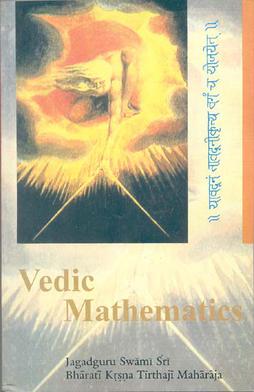
Many years ago, um, last century...lol I stumbled over Vedic Mathematics and had all my illusions shattered about there being a right way to do maths.
It's so utterly different to anything I was taught in school, and yet it's easier and it works