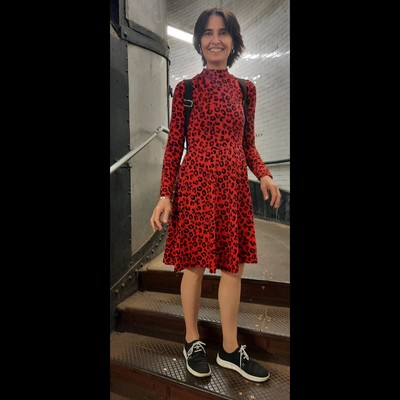
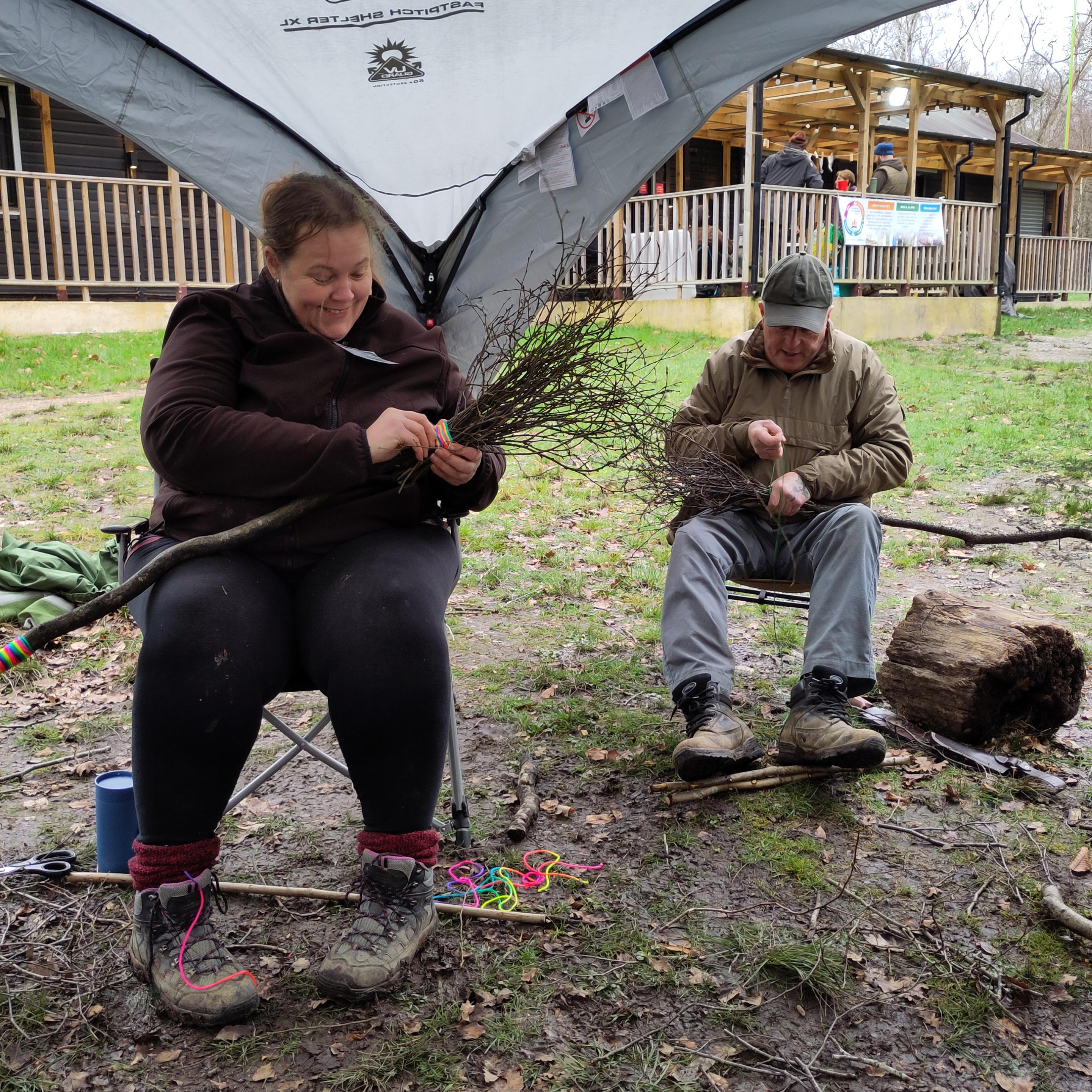
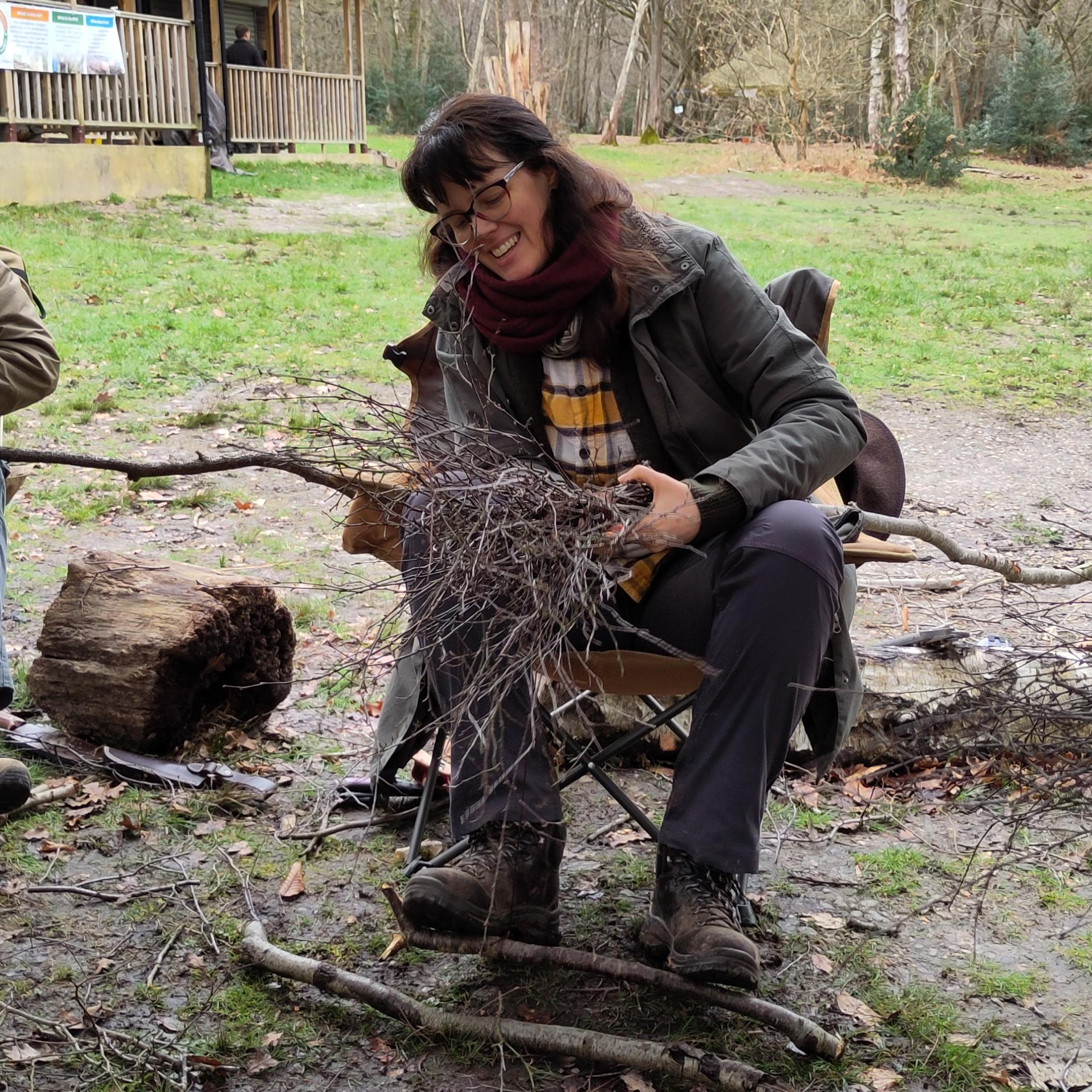
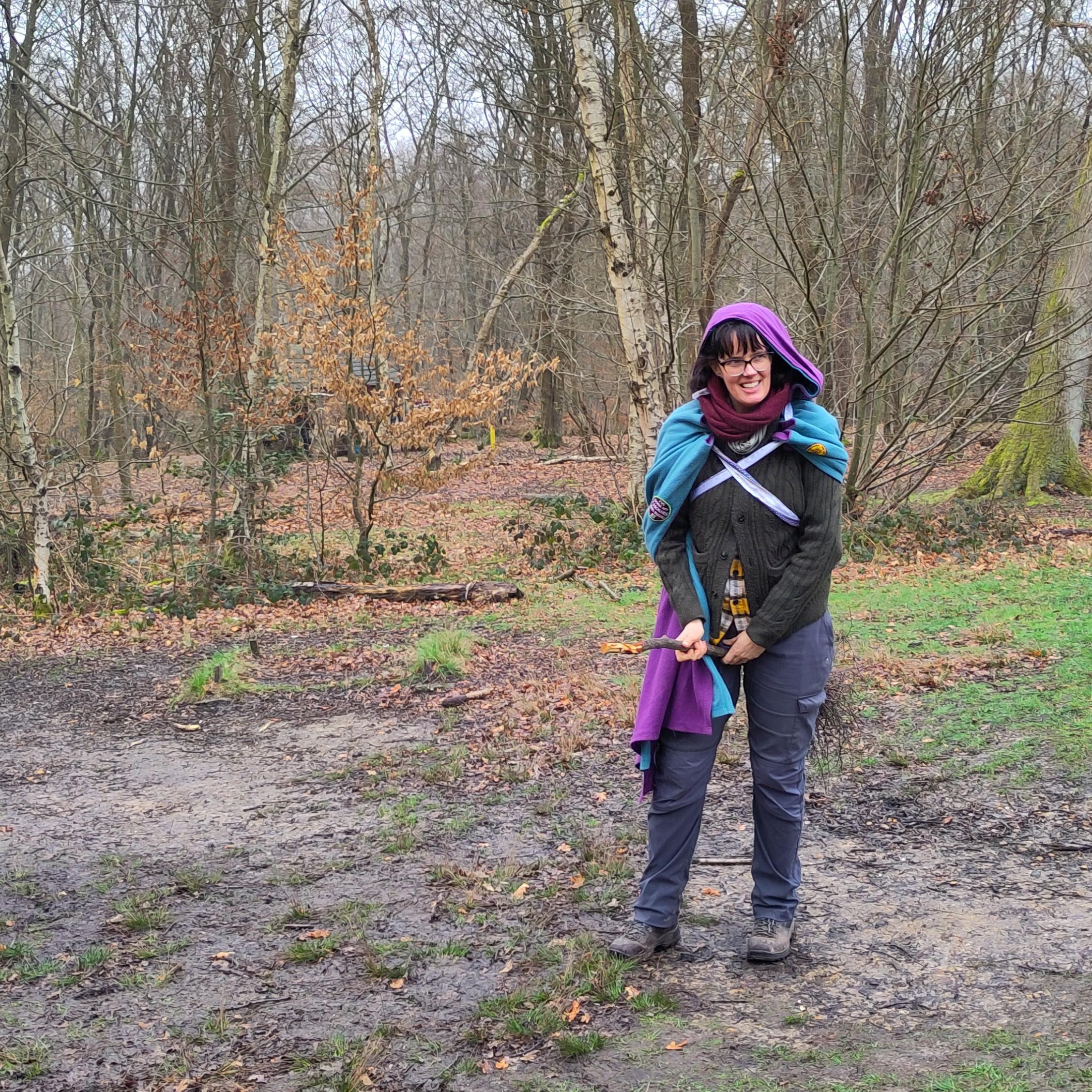
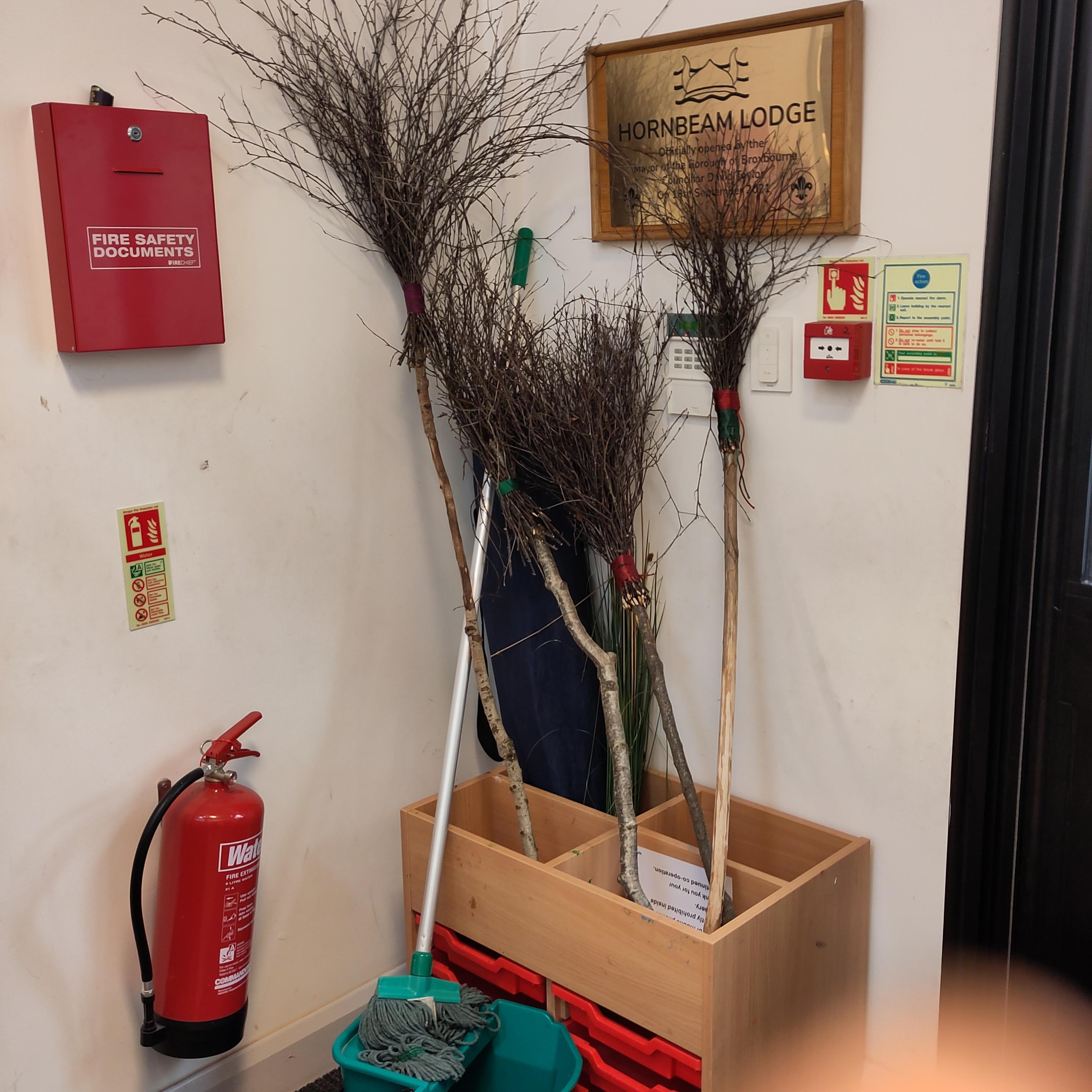
Anyway the reason I've been travelling through London being bewildered by hipster cafes is I went to the Institute of Outdoor Learning's #Bushcraft conference this weekend and taught a couple of besom broom making workshops.
-
Anyway the reason I've been travelling through London being bewildered by hipster cafes is I went to the Institute of Outdoor Learning's #Bushcraft conference this weekend and taught a couple of besom broom making workshops.
@afewbugs I was going to ask how it went! Looks like it was great fun.
I guess the institute of outdoor learning has a campus where you could forage for the twigs and broomsticks?
-
@afewbugs I was going to ask how it went! Looks like it was great fun.
I guess the institute of outdoor learning has a campus where you could forage for the twigs and broomsticks?
@amenonsen the conference was held at a scout camp which is in a woodland just outside London yes, fortunately I didn't have to cart armfuls of sticks there on the London underground
-
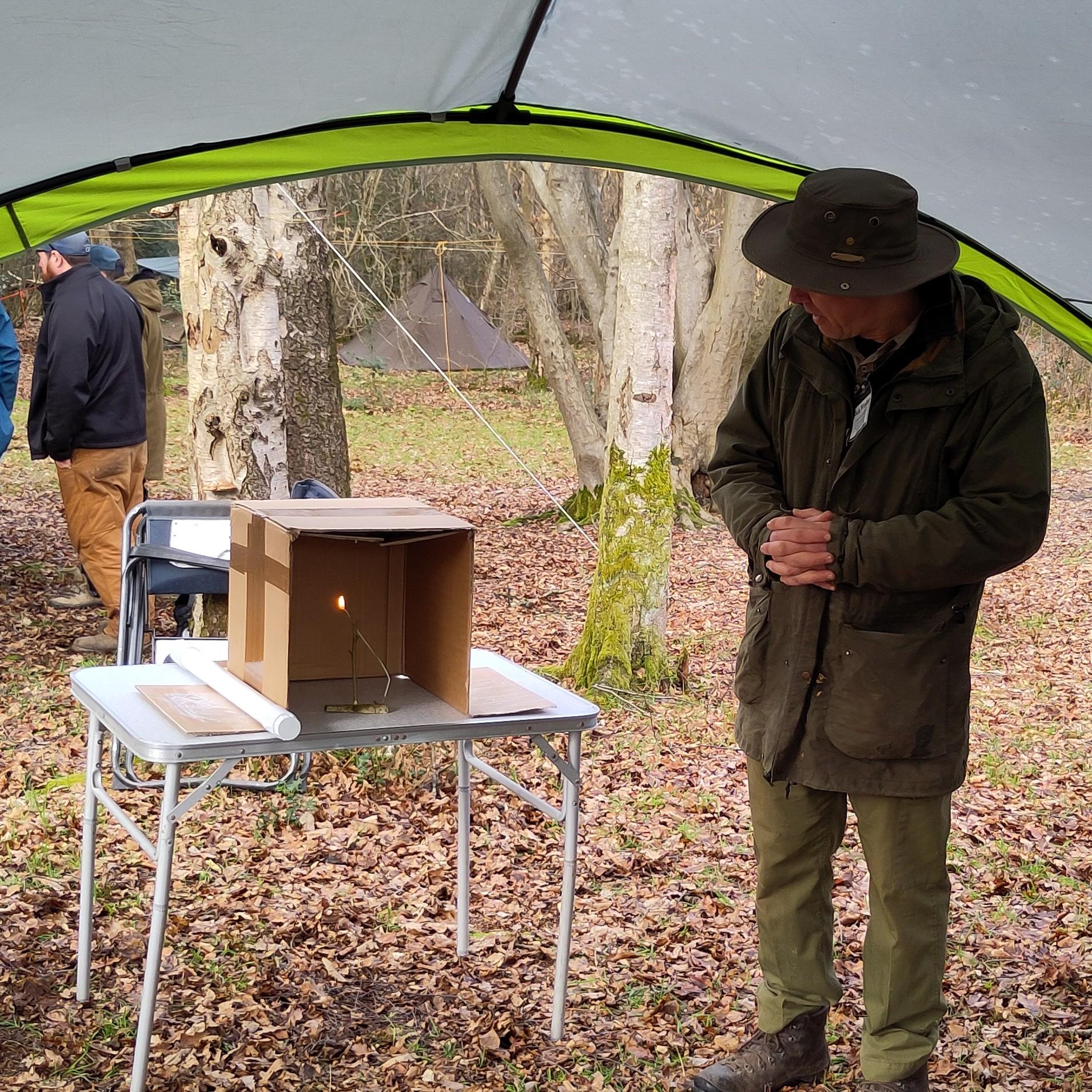
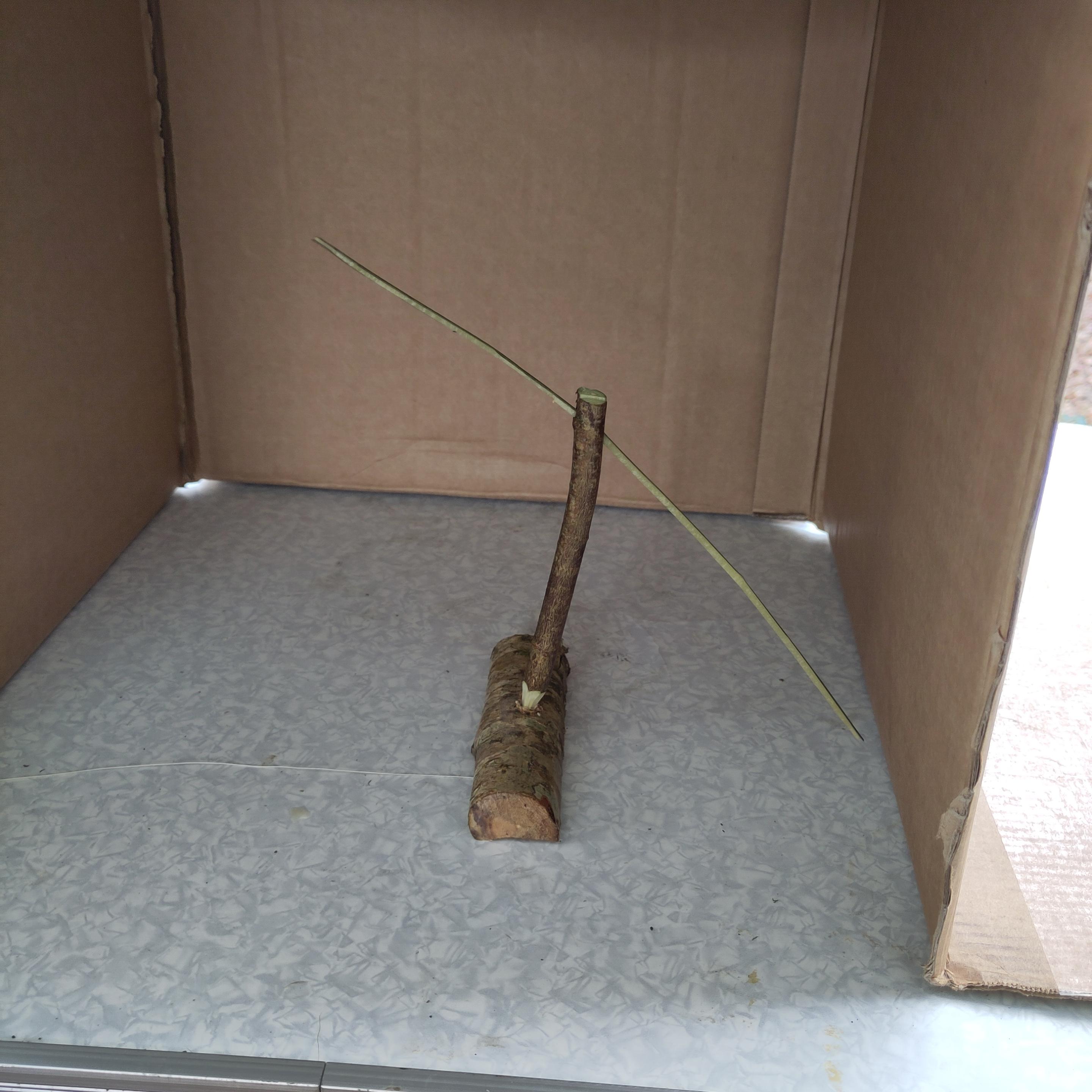
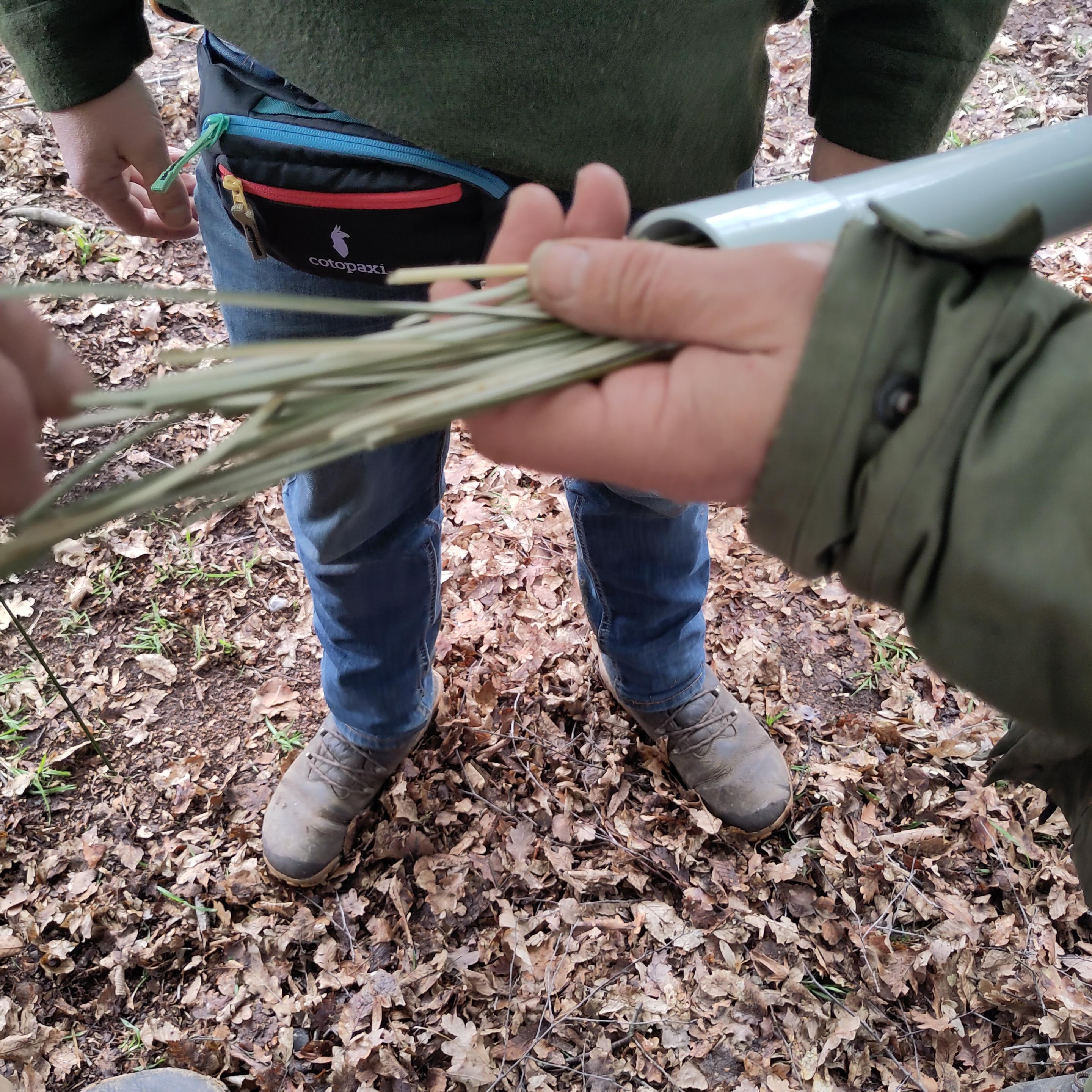
I also got to attend a workshop on how to make rushlights. Rushlights were recorded as having been made in Britain by the native inhabitants by Roman chroniclers, and remained in use in the poorest households as a more affordable alternative to candles into the 19th century.
They're made by stripping most of the epidermis off the soft rush Juncus effusus, leaving only a thin strip to provide structure but exposing the inner pith. The rushes are then dried, soaked in fat and burned for light. Traditionally pig or mutton fat would have been used, but as candles became more widely commercially available it was apparently quite common for families to buy one candle and melt it down to make 30 rushlights, as a less messy alternative to rendering their own fat. You can use vegetable oil as I did here but solid fats are less messy.
#HeritageCrafts #AncestralSkills
@afewbugs I can't favourite this post enough, for multiple reasons.
1. I love reeds, of all kinds.
2. There's a lovely little bird called the Zitting Cisticola, whose scientific name is Cisticola juncidis; years ago, I wrote https://toroid.org/birds-named-after-habitat and I learned that "juncidis" comes from the Latin "iuncus" for reed. But I never actually connected that thought with a specific genus of reeds (though that just… makes perfect sense). Incidentally, there are a lot of reed-y latin names.
3. I'd heard vaguely of rushlights, but I didn't realise that they were such thin single strands, burned in a holder. That's really fascinating.
4. This made me think of the "spill plane" (https://en.wikipedia.org/wiki/Spill_plane), a rather obscure and niche woodworking tool used to peel a long spiral shaving from a piece of wood, once used like matches.
5. This also reminded me of a different leaf-peeling process: in Kerala (and elsewhere in south India, I'm sure), you make brooms(!) by peeling the green stuff off of coconut palm leaves, leaving only the thin (and very strong) central vein, and then binding a bunch of those together. My daughter is a stickler for the quality of said peeling: she wants very thin and even strands. So I was remembering sitting with her to peel a pile of leaves to make brooms (which I actually didn't think of at all when you mentioned brooms; it was this reed-peeling business that reminded me).
Phew. That's a lot. But:

-
I also got to attend a workshop on how to make rushlights. Rushlights were recorded as having been made in Britain by the native inhabitants by Roman chroniclers, and remained in use in the poorest households as a more affordable alternative to candles into the 19th century.
They're made by stripping most of the epidermis off the soft rush Juncus effusus, leaving only a thin strip to provide structure but exposing the inner pith. The rushes are then dried, soaked in fat and burned for light. Traditionally pig or mutton fat would have been used, but as candles became more widely commercially available it was apparently quite common for families to buy one candle and melt it down to make 30 rushlights, as a less messy alternative to rendering their own fat. You can use vegetable oil as I did here but solid fats are less messy.
#HeritageCrafts #AncestralSkills
@afewbugs that’s neat!
-
I also got to attend a workshop on how to make rushlights. Rushlights were recorded as having been made in Britain by the native inhabitants by Roman chroniclers, and remained in use in the poorest households as a more affordable alternative to candles into the 19th century.
They're made by stripping most of the epidermis off the soft rush Juncus effusus, leaving only a thin strip to provide structure but exposing the inner pith. The rushes are then dried, soaked in fat and burned for light. Traditionally pig or mutton fat would have been used, but as candles became more widely commercially available it was apparently quite common for families to buy one candle and melt it down to make 30 rushlights, as a less messy alternative to rendering their own fat. You can use vegetable oil as I did here but solid fats are less messy.
#HeritageCrafts #AncestralSkills
@afewbugs When I was a tyke my dad taught me how to make a torch from bullrushes, which are common wetland plants here in Canada. (He learned this from his grandfather who raised him.) Mainly we soaked them in kerosene. They did not work well nor for very long, but I wonder if this was a derivative practice?
-
Anyway the reason I've been travelling through London being bewildered by hipster cafes is I went to the Institute of Outdoor Learning's #Bushcraft conference this weekend and taught a couple of besom broom making workshops.
@afewbugs I
This looks like great fun! -
Anyway the reason I've been travelling through London being bewildered by hipster cafes is I went to the Institute of Outdoor Learning's #Bushcraft conference this weekend and taught a couple of besom broom making workshops.
@afewbugs I hope you taught people how to fly them too 🧹

-
@afewbugs I hope you taught people how to fly them too 🧹
@normjess so there was actually a professional photographer there, and a bunch of us did the jumping in the air so it hopefully looked like we were flying thing - I'm really looking forward to seeing how well that worked when the photos come out
-
@normjess so there was actually a professional photographer there, and a bunch of us did the jumping in the air so it hopefully looked like we were flying thing - I'm really looking forward to seeing how well that worked when the photos come out
@afewbugs I await that update ;3
-
@afewbugs I can't favourite this post enough, for multiple reasons.
1. I love reeds, of all kinds.
2. There's a lovely little bird called the Zitting Cisticola, whose scientific name is Cisticola juncidis; years ago, I wrote https://toroid.org/birds-named-after-habitat and I learned that "juncidis" comes from the Latin "iuncus" for reed. But I never actually connected that thought with a specific genus of reeds (though that just… makes perfect sense). Incidentally, there are a lot of reed-y latin names.
3. I'd heard vaguely of rushlights, but I didn't realise that they were such thin single strands, burned in a holder. That's really fascinating.
4. This made me think of the "spill plane" (https://en.wikipedia.org/wiki/Spill_plane), a rather obscure and niche woodworking tool used to peel a long spiral shaving from a piece of wood, once used like matches.
5. This also reminded me of a different leaf-peeling process: in Kerala (and elsewhere in south India, I'm sure), you make brooms(!) by peeling the green stuff off of coconut palm leaves, leaving only the thin (and very strong) central vein, and then binding a bunch of those together. My daughter is a stickler for the quality of said peeling: she wants very thin and even strands. So I was remembering sitting with her to peel a pile of leaves to make brooms (which I actually didn't think of at all when you mentioned brooms; it was this reed-peeling business that reminded me).
Phew. That's a lot. But:
@amenonsen @afewbugs This is very cool! And I happen to have some Juncus effusus right by the back door. Might fiddle around with a few blades and see if I can achieve something that would work as a taper.
-
@amenonsen @afewbugs This is very cool! And I happen to have some Juncus effusus right by the back door. Might fiddle around with a few blades and see if I can achieve something that would work as a taper.
@ClimateJenny @amenonsen ooh give it a go! Peel it when it's green then let it dry before soaking
-
Anyway the reason I've been travelling through London being bewildered by hipster cafes is I went to the Institute of Outdoor Learning's #Bushcraft conference this weekend and taught a couple of besom broom making workshops.
@afewbugs Looks great, what a great way to spend a wet Monday.
-
@afewbugs I can't favourite this post enough, for multiple reasons.
1. I love reeds, of all kinds.
2. There's a lovely little bird called the Zitting Cisticola, whose scientific name is Cisticola juncidis; years ago, I wrote https://toroid.org/birds-named-after-habitat and I learned that "juncidis" comes from the Latin "iuncus" for reed. But I never actually connected that thought with a specific genus of reeds (though that just… makes perfect sense). Incidentally, there are a lot of reed-y latin names.
3. I'd heard vaguely of rushlights, but I didn't realise that they were such thin single strands, burned in a holder. That's really fascinating.
4. This made me think of the "spill plane" (https://en.wikipedia.org/wiki/Spill_plane), a rather obscure and niche woodworking tool used to peel a long spiral shaving from a piece of wood, once used like matches.
5. This also reminded me of a different leaf-peeling process: in Kerala (and elsewhere in south India, I'm sure), you make brooms(!) by peeling the green stuff off of coconut palm leaves, leaving only the thin (and very strong) central vein, and then binding a bunch of those together. My daughter is a stickler for the quality of said peeling: she wants very thin and even strands. So I was remembering sitting with her to peel a pile of leaves to make brooms (which I actually didn't think of at all when you mentioned brooms; it was this reed-peeling business that reminded me).
Phew. That's a lot. But:
You'd probably enjoy the etymology of the word "junket." We use it in the US when our politicians take pleasure trips at public expense.
From iuncus, it first came into English as a reed mat, and then a fresh, soft cheese transported to market on such mats.
Then a sweetened cheese dessert.
Then a dessert or sweetmeat more generally.
Then a picnic.
Then a pleasure outing.
And finally it picked up its current pejorative sense.
-
You'd probably enjoy the etymology of the word "junket." We use it in the US when our politicians take pleasure trips at public expense.
From iuncus, it first came into English as a reed mat, and then a fresh, soft cheese transported to market on such mats.
Then a sweetened cheese dessert.
Then a dessert or sweetmeat more generally.
Then a picnic.
Then a pleasure outing.
And finally it picked up its current pejorative sense.
@stevegis_ssg @amenonsen I did indeed enjoy that!
-
You'd probably enjoy the etymology of the word "junket." We use it in the US when our politicians take pleasure trips at public expense.
From iuncus, it first came into English as a reed mat, and then a fresh, soft cheese transported to market on such mats.
Then a sweetened cheese dessert.
Then a dessert or sweetmeat more generally.
Then a picnic.
Then a pleasure outing.
And finally it picked up its current pejorative sense.
@stevegis_ssg @amenonsen @afewbugs we call such a pleasure trip on work a "jolly" in the UK. No idea of the origin of that.
-
You'd probably enjoy the etymology of the word "junket." We use it in the US when our politicians take pleasure trips at public expense.
From iuncus, it first came into English as a reed mat, and then a fresh, soft cheese transported to market on such mats.
Then a sweetened cheese dessert.
Then a dessert or sweetmeat more generally.
Then a picnic.
Then a pleasure outing.
And finally it picked up its current pejorative sense.
@stevegis_ssg That was immensely pleasing to learn.
-
I also got to attend a workshop on how to make rushlights. Rushlights were recorded as having been made in Britain by the native inhabitants by Roman chroniclers, and remained in use in the poorest households as a more affordable alternative to candles into the 19th century.
They're made by stripping most of the epidermis off the soft rush Juncus effusus, leaving only a thin strip to provide structure but exposing the inner pith. The rushes are then dried, soaked in fat and burned for light. Traditionally pig or mutton fat would have been used, but as candles became more widely commercially available it was apparently quite common for families to buy one candle and melt it down to make 30 rushlights, as a less messy alternative to rendering their own fat. You can use vegetable oil as I did here but solid fats are less messy.
#HeritageCrafts #AncestralSkills
Me, back from the IOL conference: "Hi there cats! I'm back! Did you miss me?"
Cats: completely ignore me to start chewing on the plant fibres I brought back.
-
Me, back from the IOL conference: "Hi there cats! I'm back! Did you miss me?"
Cats: completely ignore me to start chewing on the plant fibres I brought back.
@afewbugs this is why you have a partner
so you can dress them up as a cat and they can act out being pleased to see you
-
@stevegis_ssg @amenonsen I did indeed enjoy that!
@afewbugs @stevegis_ssg Me too, thank you!
For some reason, I thought there was also a boat called a junket (independently of the ones called junks), but I cannot find a single good reason now for me to have thought this.
-
I also got to attend a workshop on how to make rushlights. Rushlights were recorded as having been made in Britain by the native inhabitants by Roman chroniclers, and remained in use in the poorest households as a more affordable alternative to candles into the 19th century.
They're made by stripping most of the epidermis off the soft rush Juncus effusus, leaving only a thin strip to provide structure but exposing the inner pith. The rushes are then dried, soaked in fat and burned for light. Traditionally pig or mutton fat would have been used, but as candles became more widely commercially available it was apparently quite common for families to buy one candle and melt it down to make 30 rushlights, as a less messy alternative to rendering their own fat. You can use vegetable oil as I did here but solid fats are less messy.
#HeritageCrafts #AncestralSkills
Neat. My older neighbour told me about the common rush, which is called "light rush" (lyssiv) in Norwegian, he said because it was used for candle wicks. Nice to see what that looked like.