If you want to understand the underlying reason that the Govt.
-
@ChrisMayLA6 Right, so then there are some known miscarriages, and one could go in and study those to see the votes of the various judges and jury members? Since Norway abolished the jury system a few years ago, there is strong reasons to believe that such studies exist. It isn't likely that such a momentous decision would be made without reliable data. Sociologists tend not to abandon the concept of data alltogether?
yes, there is clearly a method, although it would need to be a long-term qualitative driven analytical project to ascertain (more) reliable data. Of course the distinction between common law systems (as in the UK) and civil law systems across the rest of Europe & Scandinavia, with a very different role for the judiciary, which also makes drawing comparisons difficult
-
R relay@relay.publicsquare.global shared this topic
-
@ChrisMayLA6 Right, so then there are some known miscarriages, and one could go in and study those to see the votes of the various judges and jury members? Since Norway abolished the jury system a few years ago, there is strong reasons to believe that such studies exist. It isn't likely that such a momentous decision would be made without reliable data. Sociologists tend not to abandon the concept of data alltogether?
@tor In England and Wales, jury deliberations are confidential. So the only data to analyse is the number of jurors who supported the final verdict, if a verdict was reached.
-
yes, there is clearly a method, although it would need to be a long-term qualitative driven analytical project to ascertain (more) reliable data. Of course the distinction between common law systems (as in the UK) and civil law systems across the rest of Europe & Scandinavia, with a very different role for the judiciary, which also makes drawing comparisons difficult
@ChrisMayLA6 @tor From a completely anecdotal point of view, I don't recall a documentary where the jury was the problem, it's always new evidence, poor investigation, mistakes in defence, misleading or unchallenged expert opinion and so on.
-
@tor In England and Wales, jury deliberations are confidential. So the only data to analyse is the number of jurors who supported the final verdict, if a verdict was reached.
Although I think I'm right in saying there was a research project that was given access to jury deliberations a couple of years ago? I recall it was limited in scope/scale & even its commissioning was regarded as controversial
-
@ChrisMayLA6 @tor From a completely anecdotal point of view, I don't recall a documentary where the jury was the problem, it's always new evidence, poor investigation, mistakes in defence, misleading or unchallenged expert opinion and so on.
The jury becomes a 'problem' when it doesn't deliver the verdict the prosecution (and by extension the state) wanted
-
@ChrisMayLA6 oh I can see that point alright @tor
-
Indeed, there are all sorts of problems in the justice system but the 'unreliability' of juries doesn't seem to be one, even when its argued that they get confused in complex fraud cases - to which the answer is, explain the criminal action better!
-
@ChrisMayLA6 @Murf This is an enormous simplification. If the jury delivers a guilty verdict when the accused is innocent then the jury is part of the problem, as the judge and lay-judges would be in the current system in Norway.
2 minutes and 30 seconds of research revealed that there is lots of competent writing on this topic, e.g. https://www.regjeringen.no/no/dokumenter/nou-2011-13/id648073/
Translation software will be able to assist English speakers to understand the documentation.
-
@IndyRichard @ChrisMayLA6 and look at the disgraceful comment Starmer made about Kneecap, who have now won against the British Government three times. This Labour government is not democratic. It is authoritative and leaning fascist.
-
@ChrisMayLA6 @2legged @tor
That would be the UCL Jury Project? Whereas the University of Glasgow research had to make use of mock juries sitting in simulated cases. -
@ChrisMayLA6 @Murf This is an enormous simplification. If the jury delivers a guilty verdict when the accused is innocent then the jury is part of the problem, as the judge and lay-judges would be in the current system in Norway.
2 minutes and 30 seconds of research revealed that there is lots of competent writing on this topic, e.g. https://www.regjeringen.no/no/dokumenter/nou-2011-13/id648073/
Translation software will be able to assist English speakers to understand the documentation.
the simplification is the assumption that the conduct of prosecution is the same under common law & civilian countries; your suggestion that there is an ability to know, outside the conduct of the court case whether an accused is guilty is exactly the sort of problem that the UK Police have got themselves in in the past - 'knowing someone is guilty' has then become a reason to fabricate evidence to secure a conviction. The process of the court, and appeal(s) is where truth is found.
-
@ChrisMayLA6 @2legged @tor
That would be the UCL Jury Project? Whereas the University of Glasgow research had to make use of mock juries sitting in simulated cases.Yes, maybe... since retiring my memory for research once read has declined....
-
the simplification is the assumption that the conduct of prosecution is the same under common law & civilian countries; your suggestion that there is an ability to know, outside the conduct of the court case whether an accused is guilty is exactly the sort of problem that the UK Police have got themselves in in the past - 'knowing someone is guilty' has then become a reason to fabricate evidence to secure a conviction. The process of the court, and appeal(s) is where truth is found.
@ChrisMayLA6 @Murf Linguists (in distinction from criminologists) would say that the notion of being judged by a jury of fellows may sound like a nice piece of rhetoric, but the sociological perspective might want to note that jury selection is also far from a neutral process. Come the day when junkies get to pass sentence on junkies!
-
If you want to understand the underlying reason that the Govt. (in the person of David Lammy) wants to restrict trial by jury, don't take the claims it will resolve the courts backlog too seriously (even Lammy admits it will have only a small effect over time), look at what juries often do.... which is not just take prosecutors claims at face value!
Yup, they're unreliable in the exercise of political repression & so need to be removed!
#politics #protest #TrialByJury
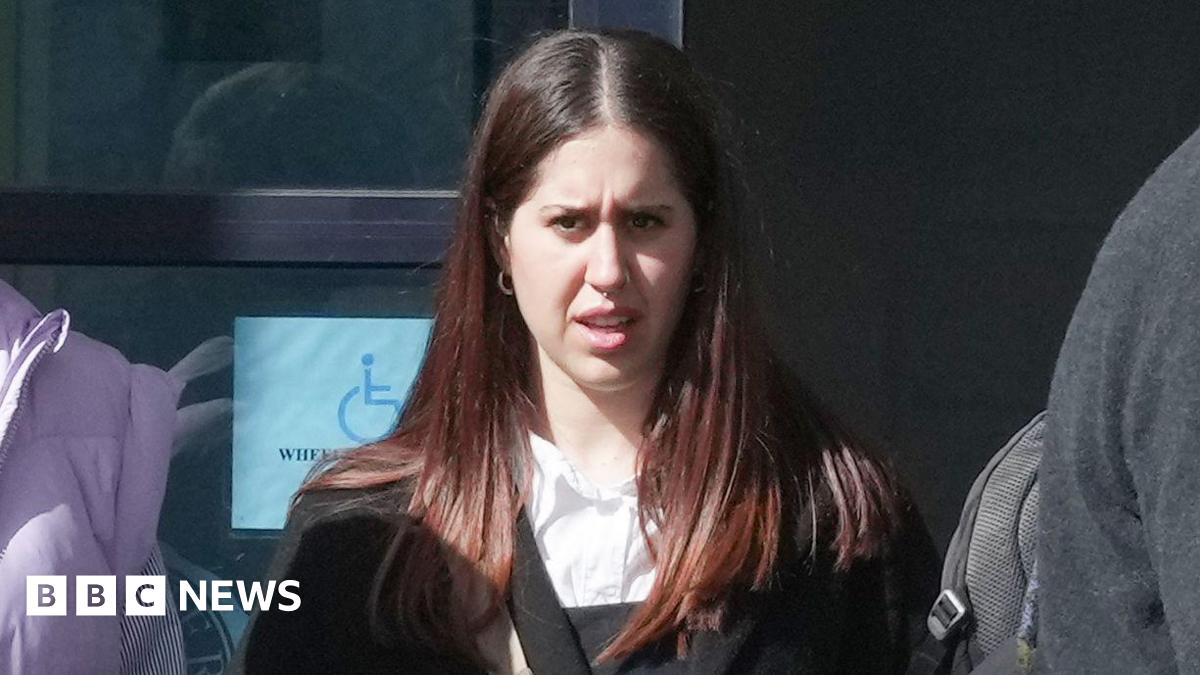
Jury fails to decide if former University of Sussex student supported Hamas
Hanin Barghouthi was accused of supporting the proscribed organisation during a speech in Brighton.

BBC News (www.bbc.co.uk)
@ChrisMayLA6 If the backlog is that bad that we need to remove jury trials, how quickly will the backlog be reduced by this action and what's the plan to restore a jury of our peers?
Oh wait I already know the answer to that
-
If you want to understand the underlying reason that the Govt. (in the person of David Lammy) wants to restrict trial by jury, don't take the claims it will resolve the courts backlog too seriously (even Lammy admits it will have only a small effect over time), look at what juries often do.... which is not just take prosecutors claims at face value!
Yup, they're unreliable in the exercise of political repression & so need to be removed!
#politics #protest #TrialByJury
Jury fails to decide if former University of Sussex student supported Hamas
Hanin Barghouthi was accused of supporting the proscribed organisation during a speech in Brighton.
BBC News (www.bbc.co.uk)
@ChrisMayLA6 And why wouldn't any protesters at risk of being political prisoners not escalate the situation to improve their odds of getting a favourable jury trial? Guarantee of a 15-30 minute long kangaroo court case followed by prison time Vs chance of a jury of your peers deciding in your favour.
-
@ChrisMayLA6 @Murf Linguists (in distinction from criminologists) would say that the notion of being judged by a jury of fellows may sound like a nice piece of rhetoric, but the sociological perspective might want to note that jury selection is also far from a neutral process. Come the day when junkies get to pass sentence on junkies!
-
R relay@relay.mycrowd.ca shared this topic