In "she saw him", it's clear there are two third persons because they're of different genders.
-
In "she saw him", it's clear there are two third persons because they're of different genders. In "she saw her", it's clear because otherwise we'd say "she saw herself".
In "she saw her dog" it's not clear. This has always bugged me.
But if we spoke an Algonquian language, we could easily make it clear!
These languages have a "proximate" third person, meaning the closest or most important one, and an "obviative" third person, meaning the farther or less important one. Sometimes the obviative is called the "fourth person".
In other languages, like Russian, we can make it clear a different way: they have, not only reflexive pronouns like "myself, his self, herself, itself", but also a reflexive possessive: sort of like "she saw herself's dog".
Algonquian languages are a family of native American languages including:
Arapahoan
Blackfoot
Cheyenne
Cree–Montagnais–Naskapi
Eastern Algonquian
Menominee
Meskwaki-Sauk-Kickapoo
Miami–Illinois
Ojibwe–Potawatomi
ShawneeI got pulled into this from trying to understand a bit about Hopi and Navaho before I go back to the Navaho Nation. Which are *not* Algonquian languages. Hopi is an Uto-Aztecan language, and Navaho is Athabascan. But then I realized I'm incredibly ignorant of American language groups.
https://en.wikipedia.org/wiki/Obviative
https://en.wikipedia.org/wiki/Algonquian_languages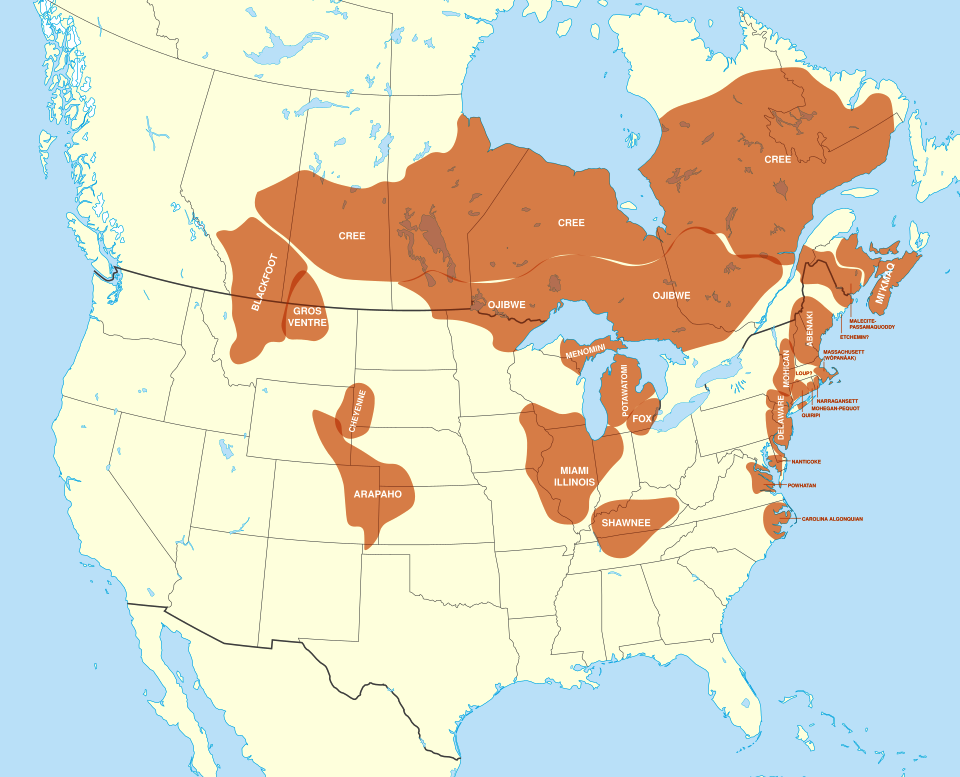
@johncarlosbaez I remember seeing a constructed language for dwarves that had a number of non-human features. One was a lack of pronouns, instead it had a half dozen words that worked as variables. You would mark the antecedent with a certain suffix, and then the chosen word would refer to only that noun for the rest of the conversation. It seemed like a reasonable system to avoid ambiguities like this one.
-
In "she saw him", it's clear there are two third persons because they're of different genders. In "she saw her", it's clear because otherwise we'd say "she saw herself".
In "she saw her dog" it's not clear. This has always bugged me.
But if we spoke an Algonquian language, we could easily make it clear!
These languages have a "proximate" third person, meaning the closest or most important one, and an "obviative" third person, meaning the farther or less important one. Sometimes the obviative is called the "fourth person".
In other languages, like Russian, we can make it clear a different way: they have, not only reflexive pronouns like "myself, his self, herself, itself", but also a reflexive possessive: sort of like "she saw herself's dog".
Algonquian languages are a family of native American languages including:
Arapahoan
Blackfoot
Cheyenne
Cree–Montagnais–Naskapi
Eastern Algonquian
Menominee
Meskwaki-Sauk-Kickapoo
Miami–Illinois
Ojibwe–Potawatomi
ShawneeI got pulled into this from trying to understand a bit about Hopi and Navaho before I go back to the Navaho Nation. Which are *not* Algonquian languages. Hopi is an Uto-Aztecan language, and Navaho is Athabascan. But then I realized I'm incredibly ignorant of American language groups.
https://en.wikipedia.org/wiki/Obviative
https://en.wikipedia.org/wiki/Algonquian_languages@johncarlosbaez I see a dog in the image, clearly...
-
In "she saw him", it's clear there are two third persons because they're of different genders. In "she saw her", it's clear because otherwise we'd say "she saw herself".
In "she saw her dog" it's not clear. This has always bugged me.
But if we spoke an Algonquian language, we could easily make it clear!
These languages have a "proximate" third person, meaning the closest or most important one, and an "obviative" third person, meaning the farther or less important one. Sometimes the obviative is called the "fourth person".
In other languages, like Russian, we can make it clear a different way: they have, not only reflexive pronouns like "myself, his self, herself, itself", but also a reflexive possessive: sort of like "she saw herself's dog".
Algonquian languages are a family of native American languages including:
Arapahoan
Blackfoot
Cheyenne
Cree–Montagnais–Naskapi
Eastern Algonquian
Menominee
Meskwaki-Sauk-Kickapoo
Miami–Illinois
Ojibwe–Potawatomi
ShawneeI got pulled into this from trying to understand a bit about Hopi and Navaho before I go back to the Navaho Nation. Which are *not* Algonquian languages. Hopi is an Uto-Aztecan language, and Navaho is Athabascan. But then I realized I'm incredibly ignorant of American language groups.
https://en.wikipedia.org/wiki/Obviative
https://en.wikipedia.org/wiki/Algonquian_languages@johncarlosbaez
I can confirm the Polish version:
- jej psa (accusative case of her dog)
- swojego psa (same but reflexive) -
In "she saw him", it's clear there are two third persons because they're of different genders. In "she saw her", it's clear because otherwise we'd say "she saw herself".
In "she saw her dog" it's not clear. This has always bugged me.
But if we spoke an Algonquian language, we could easily make it clear!
These languages have a "proximate" third person, meaning the closest or most important one, and an "obviative" third person, meaning the farther or less important one. Sometimes the obviative is called the "fourth person".
In other languages, like Russian, we can make it clear a different way: they have, not only reflexive pronouns like "myself, his self, herself, itself", but also a reflexive possessive: sort of like "she saw herself's dog".
Algonquian languages are a family of native American languages including:
Arapahoan
Blackfoot
Cheyenne
Cree–Montagnais–Naskapi
Eastern Algonquian
Menominee
Meskwaki-Sauk-Kickapoo
Miami–Illinois
Ojibwe–Potawatomi
ShawneeI got pulled into this from trying to understand a bit about Hopi and Navaho before I go back to the Navaho Nation. Which are *not* Algonquian languages. Hopi is an Uto-Aztecan language, and Navaho is Athabascan. But then I realized I'm incredibly ignorant of American language groups.
https://en.wikipedia.org/wiki/Obviative
https://en.wikipedia.org/wiki/Algonquian_languages@johncarlosbaez In spoken Finnish, all but one of those sentences could be ”it saw it”. The one exception would be ”it saw itself”. Man, woman, dog, chair, doesn’t matter.
-
R relay@relay.an.exchange shared this topic
-
@johncarlosbaez In spoken Finnish, all but one of those sentences could be ”it saw it”. The one exception would be ”it saw itself”. Man, woman, dog, chair, doesn’t matter.
@Pauliinalievonen - Neat! So the Finns can be very terse and ambiguous if they want. But what if they don't want? Can they use genders and say "he saw her?"
-
@johncarlosbaez I remember seeing a constructed language for dwarves that had a number of non-human features. One was a lack of pronouns, instead it had a half dozen words that worked as variables. You would mark the antecedent with a certain suffix, and then the chosen word would refer to only that noun for the rest of the conversation. It seemed like a reasonable system to avoid ambiguities like this one.
@Culver33550336 - nice! I've heard it said that mathematicians have a highly developed ability to work with pronouns - like we can "let p be the nth prime number and q the (n+1)st; then q < 2p." The dwarves are working in that direction.
-
@johncarlosbaez Not your primary point, obviously, but Latin also has a feature like Russian. Sort of his-own or her-own distinct from some other his or hers.
@michaelc - Yeah! Over on Bluesky, Robert Low told me:
Latin too:
canem suum vidit (she saw her own dog) and canem eius vidit (she saw <some other person>'s dog).
-
@johncarlosbaez also Scandinavian languages have a reflexive possessiv: in Danish, you would say: hun så sin hund (if it’s her own) vs hun så hendes hun (if it’s someone else’s).
Danes of older generations complain that younger speakers often do not use the reflexive possessives due to the influence of English.
@seelefand - there might be some good things that Scandinavian languages could borrow from English, but the reflexive possessive is a feature English should borrow from those languages! If I tried, I would say something "she saw herselve's dog".
-
@michaelc - Yeah! Over on Bluesky, Robert Low told me:
Latin too:
canem suum vidit (she saw her own dog) and canem eius vidit (she saw <some other person>'s dog).
@johncarlosbaez Yes! Very convenient.
-
In "she saw him", it's clear there are two third persons because they're of different genders. In "she saw her", it's clear because otherwise we'd say "she saw herself".
In "she saw her dog" it's not clear. This has always bugged me.
But if we spoke an Algonquian language, we could easily make it clear!
These languages have a "proximate" third person, meaning the closest or most important one, and an "obviative" third person, meaning the farther or less important one. Sometimes the obviative is called the "fourth person".
In other languages, like Russian, we can make it clear a different way: they have, not only reflexive pronouns like "myself, his self, herself, itself", but also a reflexive possessive: sort of like "she saw herself's dog".
Algonquian languages are a family of native American languages including:
Arapahoan
Blackfoot
Cheyenne
Cree–Montagnais–Naskapi
Eastern Algonquian
Menominee
Meskwaki-Sauk-Kickapoo
Miami–Illinois
Ojibwe–Potawatomi
ShawneeI got pulled into this from trying to understand a bit about Hopi and Navaho before I go back to the Navaho Nation. Which are *not* Algonquian languages. Hopi is an Uto-Aztecan language, and Navaho is Athabascan. But then I realized I'm incredibly ignorant of American language groups.
https://en.wikipedia.org/wiki/Obviative
https://en.wikipedia.org/wiki/Algonquian_languages@johncarlosbaez As a ASL (American Sign Language) signer, I can tell you ASL has a very powerful "pronoun" system, and one can easily specific which one is which using spatial deictic 'markers'. So I can easily say "We three go to a store" where "we" includes me and my friends next to me, using the "3" handshape. Or I can explicitly exclude my friends, instead mentioning other ones, with the same handshape, but move it differently. Practically infinite ways to do it!!!
-
@Pauliinalievonen - Neat! So the Finns can be very terse and ambiguous if they want. But what if they don't want? Can they use genders and say "he saw her?"
@johncarlosbaez "He" and "her" are the same word, "hän", mostly used in written Finnish. So to be completely clear you have to use the persons name, or say "the woman" or "the man" or something like that anyway.
I thought of an example, imagine I was telling you about something I saw in the park. That might go something like this: "This morning in the park I saw this woman with a dog, and it, the woman, bought an icecream. Then it gave it to the dog to lick, but it ate the whole thing!
So as the story goes on I would use "it" more often because it's already clear who is doing what.