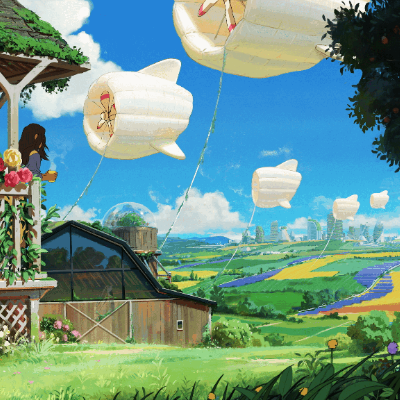
Energy companies really hate solar and wind.
-
Energy companies really hate solar and wind. They love nuclear and fossil fuels. Why? Renewables can be deployed in decentralised ways. That hurts their bottom line as they get reduced to taking care of distribution through their grids. But they want to control the input, not the distribution. They have focused on centralising electricity generation. That way they can simply make more money. That's why they oppose or actively try to fight microgrid solutions. Decentralisation is bad for them.
-
Energy companies really hate solar and wind. They love nuclear and fossil fuels. Why? Renewables can be deployed in decentralised ways. That hurts their bottom line as they get reduced to taking care of distribution through their grids. But they want to control the input, not the distribution. They have focused on centralising electricity generation. That way they can simply make more money. That's why they oppose or actively try to fight microgrid solutions. Decentralisation is bad for them.
-
Energy companies really hate solar and wind. They love nuclear and fossil fuels. Why? Renewables can be deployed in decentralised ways. That hurts their bottom line as they get reduced to taking care of distribution through their grids. But they want to control the input, not the distribution. They have focused on centralising electricity generation. That way they can simply make more money. That's why they oppose or actively try to fight microgrid solutions. Decentralisation is bad for them.
@jwildeboer Especially when you have a sane situation where the grid operator is publicly-owned, as all utilities should be.
-
Energy companies really hate solar and wind. They love nuclear and fossil fuels. Why? Renewables can be deployed in decentralised ways. That hurts their bottom line as they get reduced to taking care of distribution through their grids. But they want to control the input, not the distribution. They have focused on centralising electricity generation. That way they can simply make more money. That's why they oppose or actively try to fight microgrid solutions. Decentralisation is bad for them.
And that's why I really hope for a movement of connected microgrids. Of local energy cooperatives. Communities that understand that with local cooperation and, most importantly, full ownership of the local grid combined with solar, wind and local storage capacities, they can get the local cost for electricity down to levels that seem impossibly low, in some cases, with good design, even to zero. But only if this approach is based on Open Standards, Open Hardware. No vendor lock-in.
-
Energy companies really hate solar and wind. They love nuclear and fossil fuels. Why? Renewables can be deployed in decentralised ways. That hurts their bottom line as they get reduced to taking care of distribution through their grids. But they want to control the input, not the distribution. They have focused on centralising electricity generation. That way they can simply make more money. That's why they oppose or actively try to fight microgrid solutions. Decentralisation is bad for them.
@jwildeboer And this gets to the core of the central issue…the bottom line is never beneficial to the masses or the evolution of society as a whole! It specifically benefits a select few as everything erodes elsewhere!


-
And that's why I really hope for a movement of connected microgrids. Of local energy cooperatives. Communities that understand that with local cooperation and, most importantly, full ownership of the local grid combined with solar, wind and local storage capacities, they can get the local cost for electricity down to levels that seem impossibly low, in some cases, with good design, even to zero. But only if this approach is based on Open Standards, Open Hardware. No vendor lock-in.
Everyone who has tried something in that field knows that it is riddled with expensive certifications and demands that are hard to meet for small series production runs. This is by design. The energy companies want to be in control of the full value chain. In most European countries energy generation and distribution is an oligopoly. It's a system that has been developed over many decennia. Breaking into that market is hard, and I mean really hard work that needs cooperation on many levels.
-
Everyone who has tried something in that field knows that it is riddled with expensive certifications and demands that are hard to meet for small series production runs. This is by design. The energy companies want to be in control of the full value chain. In most European countries energy generation and distribution is an oligopoly. It's a system that has been developed over many decennia. Breaking into that market is hard, and I mean really hard work that needs cooperation on many levels.
@jwildeboer in the Netherlands there are quite a lot of successful energy co-ops? But I think that's primarily on the produce side? And your point is more about also the infrastructure and supply side?
-
@jwildeboer in the Netherlands there are quite a lot of successful energy co-ops? But I think that's primarily on the produce side? And your point is more about also the infrastructure and supply side?
@SolarDavy Yes. The Netherlands also suffers from a grid that supposedly is incapable to deal with all these decentralised electricity producers. So they are begging for more public money and ways to shut down solar plants and wind farms whenever they claim to see that the grid is under pressure. The grid they own and control. So the better solution for these coops is to focus on local storage and usage of excess electricity generated and ultimately decouple from the grid as much as possible.
-
Everyone who has tried something in that field knows that it is riddled with expensive certifications and demands that are hard to meet for small series production runs. This is by design. The energy companies want to be in control of the full value chain. In most European countries energy generation and distribution is an oligopoly. It's a system that has been developed over many decennia. Breaking into that market is hard, and I mean really hard work that needs cooperation on many levels.
@jwildeboer It is the same in America
 too. Unless you have a lot of funds & a lobbyist army, it is hard to setup local power plants due to local & state politics.
 -
And that's why I really hope for a movement of connected microgrids. Of local energy cooperatives. Communities that understand that with local cooperation and, most importantly, full ownership of the local grid combined with solar, wind and local storage capacities, they can get the local cost for electricity down to levels that seem impossibly low, in some cases, with good design, even to zero. But only if this approach is based on Open Standards, Open Hardware. No vendor lock-in.
@jwildeboer@social.wildeboer.net When I started understanding some engineering, I thought: "all devices should have some power storage and generation capabilities: that would make energy grids ridiculously resilient". Then I started understanding some economy: that's when I got angry. -
And that's why I really hope for a movement of connected microgrids. Of local energy cooperatives. Communities that understand that with local cooperation and, most importantly, full ownership of the local grid combined with solar, wind and local storage capacities, they can get the local cost for electricity down to levels that seem impossibly low, in some cases, with good design, even to zero. But only if this approach is based on Open Standards, Open Hardware. No vendor lock-in.
The revolution will not be centralized.
From LowTech Magazine an interesting paper about DC vs AC and local decentralized production of electricity : https://solar.lowtechmagazine.com/2016/04/slow-electricity-the-return-of-dc-power/
-
R relay@relay.publicsquare.global shared this topic