Skip to content
  • Categories
  • Recent
  • Tags
  • Popular
  • World
  • Users
  • Groups
Skins
  • Light
  • Brite
  • Cerulean
  • Cosmo
  • Flatly
  • Journal
  • Litera
  • Lumen
  • Lux
  • Materia
  • Minty
  • Morph
  • Pulse
  • Sandstone
  • Simplex
  • Sketchy
  • Spacelab
  • United
  • Yeti
  • Zephyr
  • Dark
  • Cyborg
  • Darkly
  • Quartz
  • Slate
  • Solar
  • Superhero
  • Vapor

  • Default (Cyborg)
  • No Skin
Collapse
Brand Logo

CIRCLE WITH A DOT

  1. Home
  2. Uncategorized
  3. Rare scientific instrument in National Museums Scotland's collection marks its 1000th anniversary

Rare scientific instrument in National Museums Scotland's collection marks its 1000th anniversary
Scheduled Pinned Locked Moved Uncategorized
astrolabemuseumsglobalmuseum
2 Posts 2 Posters 2 Views
  • Oldest to Newest
  • Newest to Oldest
  • Most Votes
Reply
  • Reply as topic
Log in to reply
This topic has been deleted. Only users with topic management privileges can see it.
  • globalmuseum@mastodon.onlineG This user is from outside of this forum
    globalmuseum@mastodon.onlineG This user is from outside of this forum
    globalmuseum@mastodon.online
    wrote last edited by
    #1

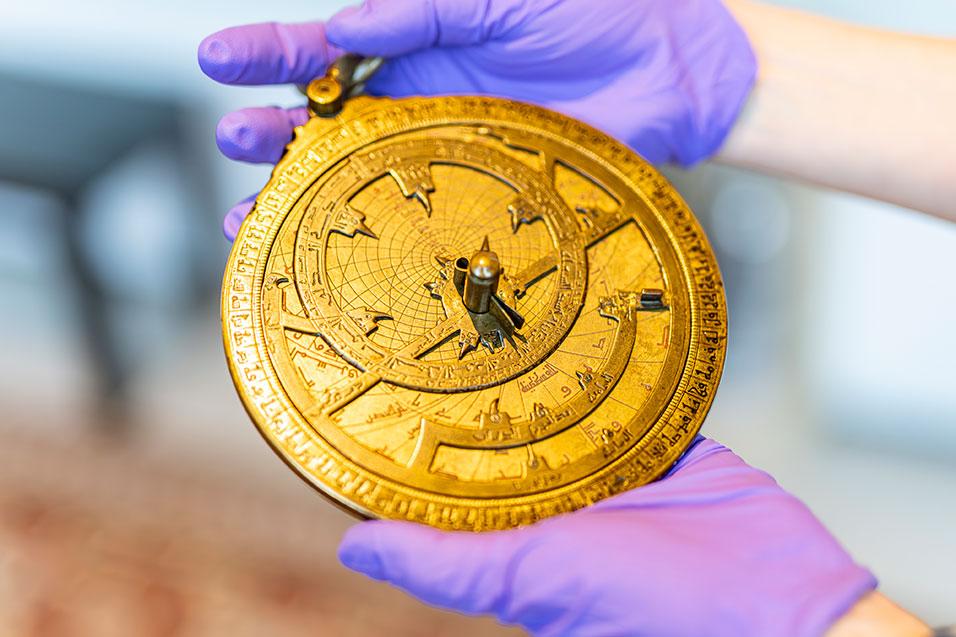
    Rare scientific instrument in National Museums Scotland's collection marks its 1000th anniversary.
    The object is an #astrolabe, an intricate brass instrument made in 11th century Spain, which was used for charting the position of the stars. One of Europe’s oldest surviving signed and dated astrolabes, the object was made in Cordoba by Muhammad ibn al-Saffâr, and is dated 417 AH (the Islamic calendar), which equates to 1026-1027 AD.
    https://artdaily.cc/index.asp?int_sec=11&int_new=191348 #globalmuseum #museums

    silvermoon82@wandering.shopS 1 Reply Last reply
    1
    0
    • globalmuseum@mastodon.onlineG globalmuseum@mastodon.online

      Rare scientific instrument in National Museums Scotland's collection marks its 1000th anniversary.
      The object is an #astrolabe, an intricate brass instrument made in 11th century Spain, which was used for charting the position of the stars. One of Europe’s oldest surviving signed and dated astrolabes, the object was made in Cordoba by Muhammad ibn al-Saffâr, and is dated 417 AH (the Islamic calendar), which equates to 1026-1027 AD.
      https://artdaily.cc/index.asp?int_sec=11&int_new=191348 #globalmuseum #museums

      silvermoon82@wandering.shopS This user is from outside of this forum
      silvermoon82@wandering.shopS This user is from outside of this forum
      silvermoon82@wandering.shop
      wrote last edited by
      #2

      @globalmuseum
      It's so beautiful!

      Do we know, is it still accurate, or have cosmic bodies shifted enough relative to us to throw it off? Could someone properly trained on a more modern device navigate with it?

      1000 years is a long time in human scale, but I don't know how significant it is in local astronomical terms.

      1 Reply Last reply
      0
      • R relay@relay.infosec.exchange shared this topic

      Reply
      • Reply as topic
      Log in to reply
      • Oldest to Newest
      • Newest to Oldest
      • Most Votes


      • Login

      • Login or register to search.
      • First post
        Last post
      0
      • Categories
      • Recent
      • Tags
      • Popular
      • World
      • Users
      • Groups