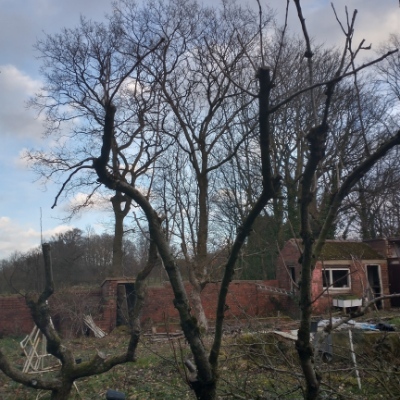
Forests in the United States are storing more carbon than at any point in decades.
-
Forests in the United States are storing more carbon than at any point in decades. New analysis finds gains are being driven by forest ageing, favourable climate trends and regrowth, outweighing losses from deforestation. From 2005 to 2022, forest age structure alone added about 89 million tonnes of carbon annually, highlighting the climate value of letting forests mature. PNAS https://www.pnas.org/doi/10.1073/pnas.2513588123
#ShareGoodNewsToo -
R relay@relay.infosec.exchange shared this topic onR relay@relay.mycrowd.ca shared this topic on
-
Forests in the United States are storing more carbon than at any point in decades. New analysis finds gains are being driven by forest ageing, favourable climate trends and regrowth, outweighing losses from deforestation. From 2005 to 2022, forest age structure alone added about 89 million tonnes of carbon annually, highlighting the climate value of letting forests mature. PNAS https://www.pnas.org/doi/10.1073/pnas.2513588123
#ShareGoodNewsToo@adapalmer good news but I keep hearing forests are now becoming carbon emitters rather than carbon absorbers. It's gone like immunology and oncology; you go to the seminar and one week a gene causes cancer, the next it represses it.
-
@adapalmer good news but I keep hearing forests are now becoming carbon emitters rather than carbon absorbers. It's gone like immunology and oncology; you go to the seminar and one week a gene causes cancer, the next it represses it.
@hicksy2 Where did you hear that?
-
@hicksy2 Where did you hear that?
@adapalmer
There was a Guardian article “Trees and land absorbed almost no CO2 last year” in October 2024.
Here is a good recent (2025) overview that at a global scale forests seem still to be a net carbon sink, but it’s rapidly weakening:
https://www.wri.org/insights/forest-carbon-sink-shrinking-fires-deforestation
There are published examples of regional patterns where forests have already become net carbon emitters, including a major global ecosystems, the Amazon. Forests in Germany, likely also Canada and Finland, are net emitters. EU forests are a net sink, but in decline.
@hicksy2 -
R relay@relay.mycrowd.ca shared this topic on
-
Forests in the United States are storing more carbon than at any point in decades. New analysis finds gains are being driven by forest ageing, favourable climate trends and regrowth, outweighing losses from deforestation. From 2005 to 2022, forest age structure alone added about 89 million tonnes of carbon annually, highlighting the climate value of letting forests mature. PNAS https://www.pnas.org/doi/10.1073/pnas.2513588123
#ShareGoodNewsToo@adapalmer
This is in contrast to a study also published in PNAS (in 2024) that finds forests in the west of US are net emitters because of climate effects on trees and suggests that the climate response has already overwhelmed the CO2 response in much of the United States.
David et al. (whom you link to) don't even cite this work by Hogan et al. what is kinda strange. -
@adapalmer
There was a Guardian article “Trees and land absorbed almost no CO2 last year” in October 2024.
Here is a good recent (2025) overview that at a global scale forests seem still to be a net carbon sink, but it’s rapidly weakening:
https://www.wri.org/insights/forest-carbon-sink-shrinking-fires-deforestation
There are published examples of regional patterns where forests have already become net carbon emitters, including a major global ecosystems, the Amazon. Forests in Germany, likely also Canada and Finland, are net emitters. EU forests are a net sink, but in decline.
@hicksy2