I just finished reading an interesting article in #QuantaMagazine about recent research on bird eyes.
-
I just finished reading an interesting article in #QuantaMagazine about recent research on bird eyes. Unlike our inferior mammal eyes, bird eyes lack the network of blood vessels covering the retina. When an optometrist shines a bright light in our eyes, we see a network of blood vessels that block parts of our vision. Sleight of hand from our brain removes this from our perception, but it permanently limits what we see.
Birds retinas don’t do this at all, and it turns out that this is made possible by using a form of glucose-driven metabolism that doesn’t require oxygen. That’s crazy for such an energy intensive tissue. No other species alive today do this, and it likely evolved in dinosaurs.
It’s wild stuff.
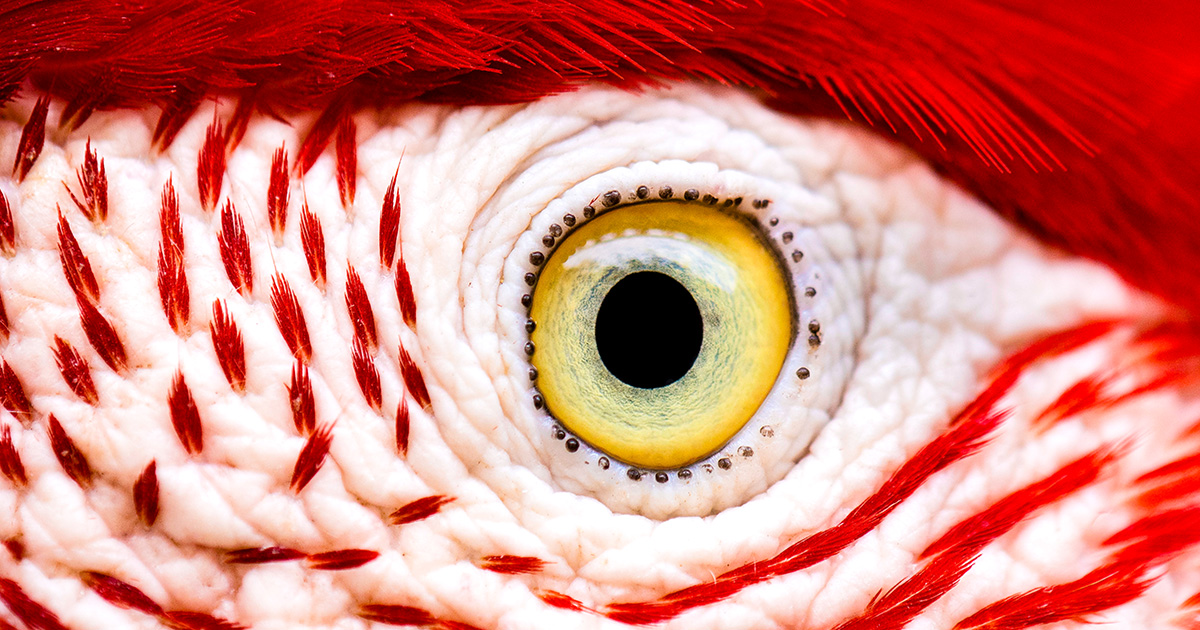
How the Bird Eye Was Pushed to an Evolutionary Extreme | Quanta Magazine
The bird retina is one of the most energetically expensive tissues in the animal kingdom, yet it doesn’t use the energy advantage of oxygen. New research finally explains how this is possible.

Quanta Magazine (www.quantamagazine.org)
@joncounts oh, those blood vessels were causing me problems 25 years ago (too much contact lens wear -> more blood vessels), so I got laser surgery which worked for a while...
-
I just finished reading an interesting article in #QuantaMagazine about recent research on bird eyes. Unlike our inferior mammal eyes, bird eyes lack the network of blood vessels covering the retina. When an optometrist shines a bright light in our eyes, we see a network of blood vessels that block parts of our vision. Sleight of hand from our brain removes this from our perception, but it permanently limits what we see.
Birds retinas don’t do this at all, and it turns out that this is made possible by using a form of glucose-driven metabolism that doesn’t require oxygen. That’s crazy for such an energy intensive tissue. No other species alive today do this, and it likely evolved in dinosaurs.
It’s wild stuff.
How the Bird Eye Was Pushed to an Evolutionary Extreme | Quanta Magazine
The bird retina is one of the most energetically expensive tissues in the animal kingdom, yet it doesn’t use the energy advantage of oxygen. New research finally explains how this is possible.
Quanta Magazine (www.quantamagazine.org)
@joncounts it's also incredible that this wasn't discovered until recently!!
-
@joncounts it's also incredible that this wasn't discovered until recently!!
@HydrePrever Indeed! It underscores how many more discoveries like this must still be waiting for us in nature.
-
R relay@relay.an.exchange shared this topic
-
I just finished reading an interesting article in #QuantaMagazine about recent research on bird eyes. Unlike our inferior mammal eyes, bird eyes lack the network of blood vessels covering the retina. When an optometrist shines a bright light in our eyes, we see a network of blood vessels that block parts of our vision. Sleight of hand from our brain removes this from our perception, but it permanently limits what we see.
Birds retinas don’t do this at all, and it turns out that this is made possible by using a form of glucose-driven metabolism that doesn’t require oxygen. That’s crazy for such an energy intensive tissue. No other species alive today do this, and it likely evolved in dinosaurs.
It’s wild stuff.
How the Bird Eye Was Pushed to an Evolutionary Extreme | Quanta Magazine
The bird retina is one of the most energetically expensive tissues in the animal kingdom, yet it doesn’t use the energy advantage of oxygen. New research finally explains how this is possible.
Quanta Magazine (www.quantamagazine.org)
@joncounts
Octopus eyes also don't have a backwards retina. Eyes have evolved independently a number of times and afaik only mammals have this design oddity. -
@HydrePrever Indeed! It underscores how many more discoveries like this must still be waiting for us in nature.
@joncounts @HydrePrever
Also they mostly have tetrachromatic vision with UV. Some black feathered birds are very colourful to birds. -
I just finished reading an interesting article in #QuantaMagazine about recent research on bird eyes. Unlike our inferior mammal eyes, bird eyes lack the network of blood vessels covering the retina. When an optometrist shines a bright light in our eyes, we see a network of blood vessels that block parts of our vision. Sleight of hand from our brain removes this from our perception, but it permanently limits what we see.
Birds retinas don’t do this at all, and it turns out that this is made possible by using a form of glucose-driven metabolism that doesn’t require oxygen. That’s crazy for such an energy intensive tissue. No other species alive today do this, and it likely evolved in dinosaurs.
It’s wild stuff.
How the Bird Eye Was Pushed to an Evolutionary Extreme | Quanta Magazine
The bird retina is one of the most energetically expensive tissues in the animal kingdom, yet it doesn’t use the energy advantage of oxygen. New research finally explains how this is possible.
Quanta Magazine (www.quantamagazine.org)
@joncounts the retina in our eyes was installed back to front, that's why we have a blindspot where the optic nerve feeds through. There are neurons running across the retina as well as the blood vessels.
Squid on the other hand have no such problems - all their cabling and plumbing is on the back of the retina.
Source: The Greatest Show on Earth, Richard Dawkins. It has been a decade at least since I read it, but I think that's the gist.
-
I just finished reading an interesting article in #QuantaMagazine about recent research on bird eyes. Unlike our inferior mammal eyes, bird eyes lack the network of blood vessels covering the retina. When an optometrist shines a bright light in our eyes, we see a network of blood vessels that block parts of our vision. Sleight of hand from our brain removes this from our perception, but it permanently limits what we see.
Birds retinas don’t do this at all, and it turns out that this is made possible by using a form of glucose-driven metabolism that doesn’t require oxygen. That’s crazy for such an energy intensive tissue. No other species alive today do this, and it likely evolved in dinosaurs.
It’s wild stuff.
How the Bird Eye Was Pushed to an Evolutionary Extreme | Quanta Magazine
The bird retina is one of the most energetically expensive tissues in the animal kingdom, yet it doesn’t use the energy advantage of oxygen. New research finally explains how this is possible.
Quanta Magazine (www.quantamagazine.org)
@joncounts It's been known for nearly 40 years that some eyes co-opt an enzyme from that pathway as a structural protein, see https://www.nature.com/articles/326622a0 ($)
-
@HydrePrever @jannem @joncounts And your point is?
-
I just finished reading an interesting article in #QuantaMagazine about recent research on bird eyes. Unlike our inferior mammal eyes, bird eyes lack the network of blood vessels covering the retina. When an optometrist shines a bright light in our eyes, we see a network of blood vessels that block parts of our vision. Sleight of hand from our brain removes this from our perception, but it permanently limits what we see.
Birds retinas don’t do this at all, and it turns out that this is made possible by using a form of glucose-driven metabolism that doesn’t require oxygen. That’s crazy for such an energy intensive tissue. No other species alive today do this, and it likely evolved in dinosaurs.
It’s wild stuff.
How the Bird Eye Was Pushed to an Evolutionary Extreme | Quanta Magazine
The bird retina is one of the most energetically expensive tissues in the animal kingdom, yet it doesn’t use the energy advantage of oxygen. New research finally explains how this is possible.
Quanta Magazine (www.quantamagazine.org)
@joncounts Love this!
-
@HydrePrever @jannem @joncounts When someone asks you what your point is, saying „I think my point is clear” is a form of intellectual masturbation.
You haven’t presented a point, you mentioned a known fact without making any statement about its relevance to the exchange at hand.
-
I just finished reading an interesting article in #QuantaMagazine about recent research on bird eyes. Unlike our inferior mammal eyes, bird eyes lack the network of blood vessels covering the retina. When an optometrist shines a bright light in our eyes, we see a network of blood vessels that block parts of our vision. Sleight of hand from our brain removes this from our perception, but it permanently limits what we see.
Birds retinas don’t do this at all, and it turns out that this is made possible by using a form of glucose-driven metabolism that doesn’t require oxygen. That’s crazy for such an energy intensive tissue. No other species alive today do this, and it likely evolved in dinosaurs.
It’s wild stuff.
How the Bird Eye Was Pushed to an Evolutionary Extreme | Quanta Magazine
The bird retina is one of the most energetically expensive tissues in the animal kingdom, yet it doesn’t use the energy advantage of oxygen. New research finally explains how this is possible.
Quanta Magazine (www.quantamagazine.org)
Now look up how bird lungs work! Equally fascinating and equally a TOTALLY different evolutionary approach!
-
R relay@relay.mycrowd.ca shared this topic