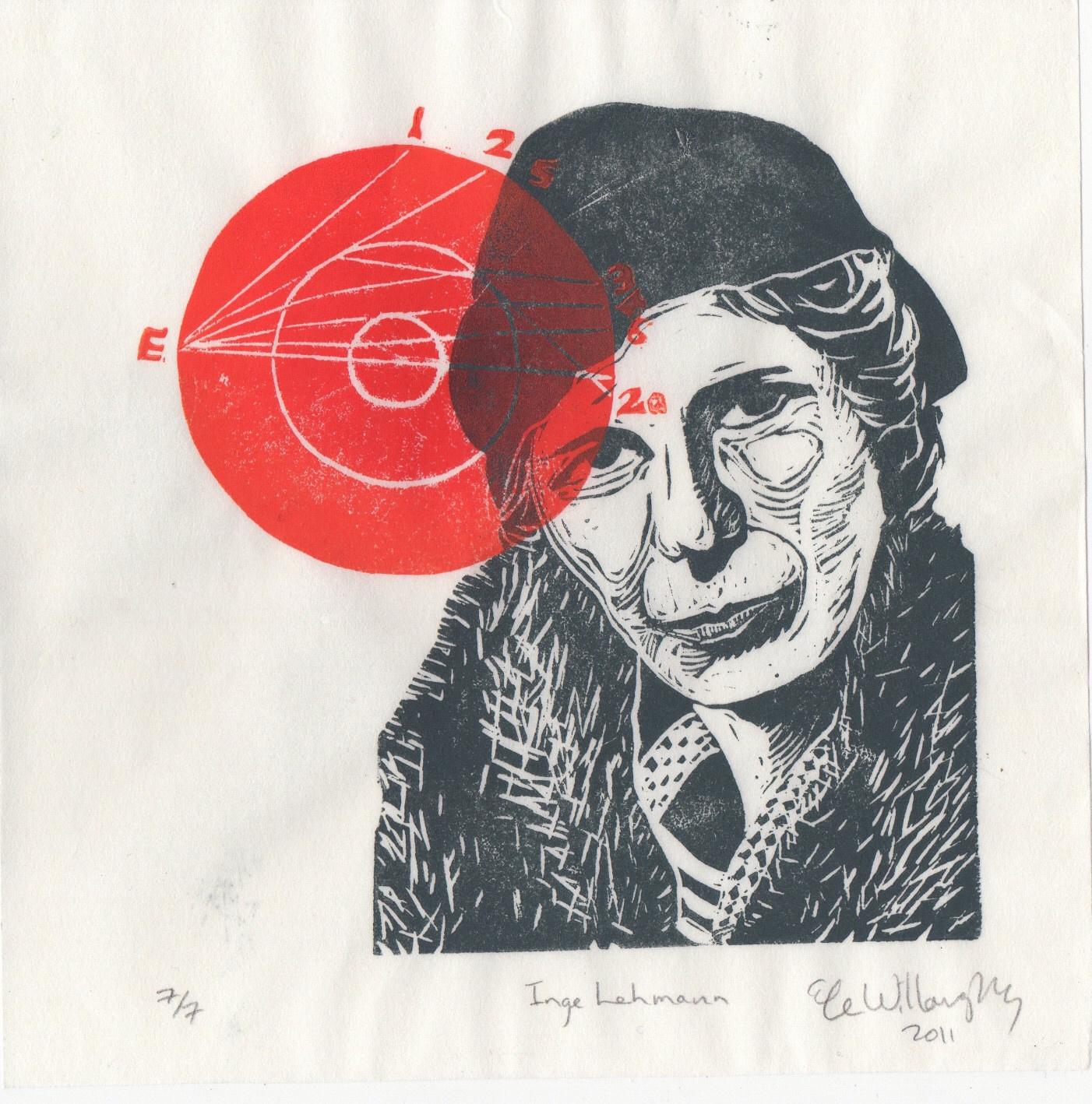
Happy birthday to Danish #seismologist Inge Lehmann (1888 – 1993) who demonstrated that the Earth’s core is not a single molten sphere, but contained an inner solid core, in ‘36.
-
Happy birthday to Danish #seismologist Inge Lehmann (1888 – 1993) who demonstrated that the Earth’s core is not a single molten sphere, but contained an inner solid core, in ‘36. She was a pioneer #womanInScience, a brilliant seismologist & lived to be 105.
As she first postulated, the earth has roughly 3 equal concentric sections: mantle, liquid outer core & solid inner core. 🧵https://minouette.etsy.com/listing/72525124
#printmaking #sciArt #geophysics #histsci #mastoArt
-
Happy birthday to Danish #seismologist Inge Lehmann (1888 – 1993) who demonstrated that the Earth’s core is not a single molten sphere, but contained an inner solid core, in ‘36. She was a pioneer #womanInScience, a brilliant seismologist & lived to be 105.
As she first postulated, the earth has roughly 3 equal concentric sections: mantle, liquid outer core & solid inner core. 🧵https://minouette.etsy.com/listing/72525124
#printmaking #sciArt #geophysics #histsci #mastoArt
The crust, on which we live is merely a thin scum on top of this slowly boiling pot. The only way to probe deep into the core is to employ massive earthquakes. There are 2 main types of seismic waves used: Primary (or P, or compressional) & Secondary (or S, or shear). Imagine a glass of water with a straw; the straw will appear broken at the air-water interface, because light bends as it enters the water. Just like light travelling 🧵2/
-
The crust, on which we live is merely a thin scum on top of this slowly boiling pot. The only way to probe deep into the core is to employ massive earthquakes. There are 2 main types of seismic waves used: Primary (or P, or compressional) & Secondary (or S, or shear). Imagine a glass of water with a straw; the straw will appear broken at the air-water interface, because light bends as it enters the water. Just like light travelling 🧵2/
through different media, these seismic waves can bend, reflect or be transmitted at any boundary. The difference in physical properties between the mantle & outer core causes a P-wave shadow. (For S-waves, the shadow zone is absolute because liquids, like outer core, do not support shear - imagine trying to cut water with a pair of shears and you can see this for yourself. Thus, no shear waves can make it through the outer core, & thus we can be certain the outer core is fluid). 🧵3/
-
through different media, these seismic waves can bend, reflect or be transmitted at any boundary. The difference in physical properties between the mantle & outer core causes a P-wave shadow. (For S-waves, the shadow zone is absolute because liquids, like outer core, do not support shear - imagine trying to cut water with a pair of shears and you can see this for yourself. Thus, no shear waves can make it through the outer core, & thus we can be certain the outer core is fluid). 🧵3/
That means, the p-waves from an earthquake can be recorded at seismic stations out to 105° from an epicentre & there is a zone which is in the core’s shadow. Lehmann found that there were some late-arriving P-waves are much larger angles (142 to 180°) which had been vaguely labelled ‘diffractions’. She showed that these could be explained instead by deflections of the waves which travelled through the outer core at her postulated inner core boundary.
🧵4/ -
That means, the p-waves from an earthquake can be recorded at seismic stations out to 105° from an epicentre & there is a zone which is in the core’s shadow. Lehmann found that there were some late-arriving P-waves are much larger angles (142 to 180°) which had been vaguely labelled ‘diffractions’. She showed that these could be explained instead by deflections of the waves which travelled through the outer core at her postulated inner core boundary.
🧵4/She later also discovered the Lehmann discontinuity in the mantle. When she received the Bowie medal in ‘71 (1st woman to receive the highest honour of the AGU), her citation noted that the “Lehmann discontinuity was discovered through exacting scrutiny of seismic records by a master of a black art for which no amount of computerization is likely to be a complete substitute...”. 🧵5/5
-
R relay@relay.infosec.exchange shared this topic