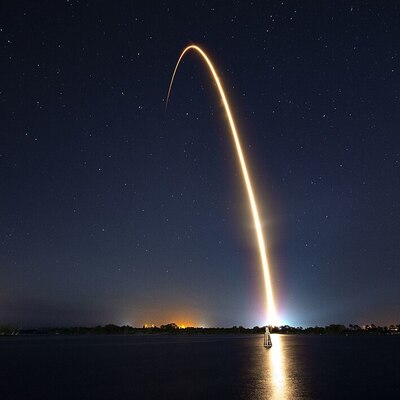
#NASA says the #Artemis II crew can ... move equipment 🛍️ around within the capsule to effectively thicken its walls in the direction from which the #SolarStorm is coming
-
Sometimes such flares
 ️ are accompanied by outbursts of high-energy radiation
  ️ particles, which can travel near the speed of light and would easily penetrate space vehicle shielding
  ️. High energy #radiation particles can be a cause of malfunctions in computers and electronics, and they also pose #health risks for #astronauts 🧑
 https://www.surrey.ac.uk/news/solar-flare-prompts-close-monitoring-space-weather-ahead-artemis-ii-launch
#RadiationProtection #HumanSpaceflight #SpaceWeather #Artemis #NASA
#SpaceWeather : The chance for strong flares
️ increased to 20%. The main driver is active region #AR4405Forecast:
 April 1: A #CME may provoke enhancements up to G2 (moderate) geomagnetic storming late today April 2: G1 (minor) #geomagnetic storm levels expected April 3: Unsettled to active conditions may occur. A chance of G1 (minor) storm intervals exists if the next coronal hole’s fast solar wind stream arrives earlier than expected
 -
#SpaceWeather : The chance for strong flares
️ increased to 20%. The main driver is active region #AR4405Forecast:
April 1: A #CME may provoke enhancements up to G2 (moderate) geomagnetic storming late today April 2: G1 (minor) #geomagnetic storm levels expected April 3: Unsettled to active conditions may occur. A chance of G1 (minor) storm intervals exists if the next coronal hole’s fast solar wind stream arrives earlier than expectedUnlike the easily predictable #radiation
️ exposures from flying through the Van Allen Belts or basking in the background flux of #galactic  cosmic rays, the dose an #astronaut gets from #solar ️ activity can vary enormously. Predicting #SpaceWeather remains a decidedly inexact
  #science. High-energy #protons and #ions can tear through metal and flesh alike, damaging #DNA and other delicate cellular machinery. Typically, these showers are linked to #CME https://www.scientificamerican.com/article/space-weather-could-threaten-nasas-artemis-ii-astronauts-during-their-trip/
 -
R relay@relay.infosec.exchange shared this topic
-
#NASA's #Artemis II two-hour launch window starts at 12:24 am CEST https://www.youtube.com/watch?v=Tf_UjBMIzNo
Live coverage of #Artemis II's lunar
 flyby will stream on this feed https://www.youtube.com/watch?v=m3kR2KK8TEs
 -
Live coverage of #Artemis II's lunar
flyby will stream on this feed https://www.youtube.com/watch?v=m3kR2KK8TEsThe #spacesuits on #Artemis II should be able to sustain astronauts for up to six days. Once Artemis II is on its way to the #Moon
, the mission’s trajectory is designed to bring it back to Earth even if Orion hits a snag.Artemis I : During Orion’s return through Earth’s atmosphere, material from the capsule’s heatshield had broken off in chunks. There was a similarly problematic heatshield already installed on the crew capsule for Artemis II https://www.planetary.org/articles/whats-keeping-the-artemis-astronauts-safe
-
Live coverage of #Artemis II's lunar
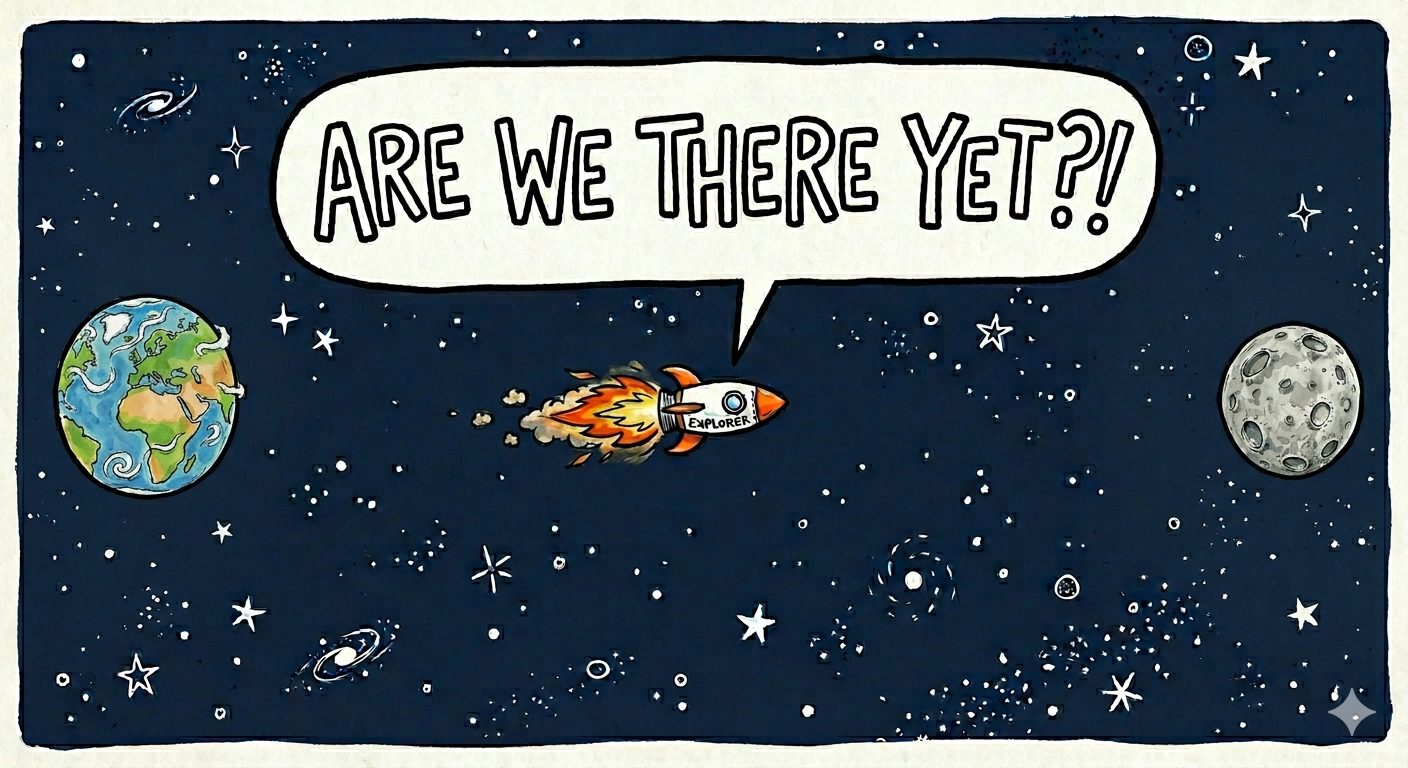
flyby will stream on this feed https://www.youtube.com/watch?v=m3kR2KK8TEsAre we there yet ?

#NASA’s #Artemis real-time orbit website https://www.nasa.gov/missions/artemis-ii/arow/
-
Are we there yet ?
#NASA’s #Artemis real-time orbit website https://www.nasa.gov/missions/artemis-ii/arow/
-
Are we there yet ?
#NASA’s #Artemis real-time orbit website https://www.nasa.gov/missions/artemis-ii/arow/
The far side of the #moon
 illuminated ️ (July 5, 2016) https://commons.wikimedia.org/wiki/Category:Photos_of_Earth_system_by_spacecraft
 -
#SpaceWeather : The chance for strong flares
️ increased to 20%. The main driver is active region #AR4405Forecast:
April 1: A #CME may provoke enhancements up to G2 (moderate) geomagnetic storming late today April 2: G1 (minor) #geomagnetic storm levels expected April 3: Unsettled to active conditions may occur. A chance of G1 (minor) storm intervals exists if the next coronal hole’s fast solar wind stream arrives earlier than expected#SpaceWeather : #Sun
️ activity jumped to moderate over the past day, with 24 total flares. Three of them were M, or moderate flares, and one was edging up toward being an X flareForecast:
April 4 we might get more G1-G2 (minor-moderate) #geomagnetic storms April 5 possibly with more G1 enhancements April 6 unsettled-to-active conditions as effects from the solar wind stream and #CME start to subside -
Are we there yet ?
#NASA’s #Artemis real-time orbit website https://www.nasa.gov/missions/artemis-ii/arow/
The #Moon orbits #Earth at a speed of 3,683 km/h. A #spacecraft travels 386,400 km to reach the Moon. Twelve #astronauts walked
 on the Moon between 1969 and 1972 https://coolcosmos.ipac.caltech.edu/ask/176--How-fast-does-the-Moon-travel-around-Earth-
 -
Are we there yet ?
#NASA’s #Artemis real-time orbit website https://www.nasa.gov/missions/artemis-ii/arow/
 8:45 pm CEST Lunar observation period begins 12:47 am CEST Loss of communications (estimated 40-min.) 1:02 am CEST Closest approach to the moon 3:20 am CEST Lunar observation period ends
 https://www.space.com/news/live/artemis-2-nasa-moon-mission-updates-april-6-2026
 -
R relay@relay.infosec.exchange shared this topic