Yet another #Artemis II article (from a French press agency, no less) ignoring that propulsion, power, & life support to the Orion capsule are provided by ESA’s European Service Module.
-
Yet another #Artemis II article (from a French press agency, no less) ignoring that propulsion, power, & life support to the Orion capsule are provided by ESA’s European Service Module.
Built in Bremen by Airbus, with parts from all over Europe, e.g. solar wings made in Leiden.
Also no mention of the fact that the ESM’s for the Moon-landing Artemis IV & V missions are to be supplied as part of ESA’s contribution to the Lunar Gateway.
Which NASA cancelled last week.
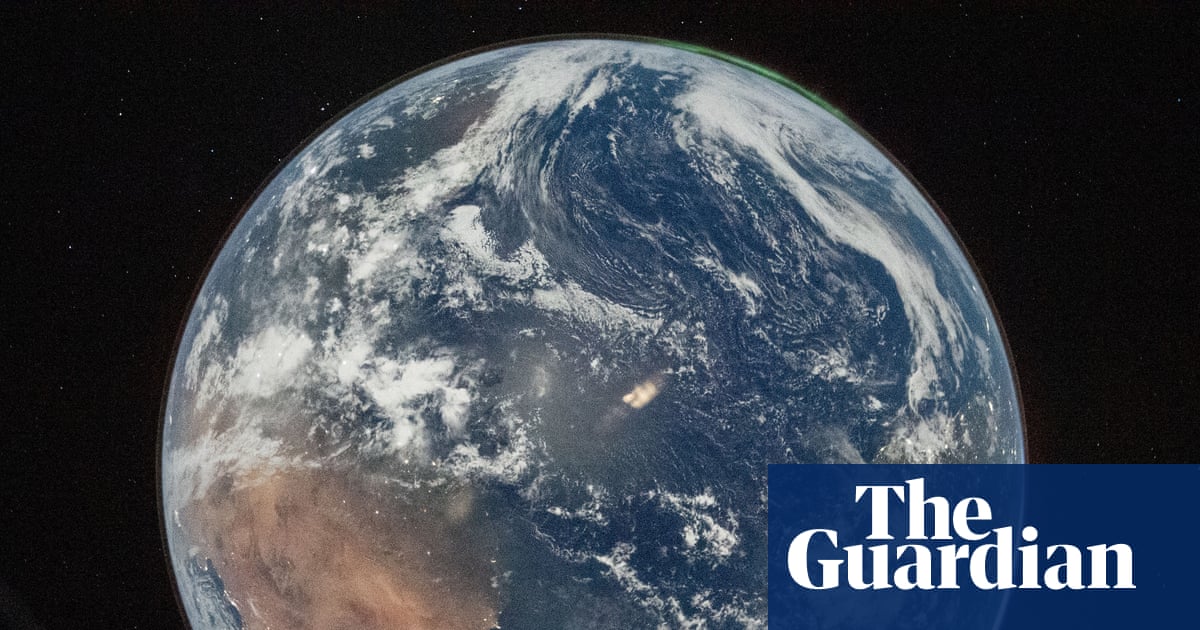
Artemis II astronauts closer to moon than Earth amid toilet malfunction
Crew members can now see the moon, which one described as ‘a beautiful sight’, from their spacecraft’s docking hatch
the Guardian (www.theguardian.com)
The ESM’s for Artemis I, II, III, & VI (if there ever is a VI if SLS is also cancelled) are provided by ESA as part of the barter for continued access to the ISS by European astronauts.
But ESM-4 & 5 are explicitly linked to Gateway, as are many other European-provided modules already under development, & which is now dead.
The trade also included seats on Artemis for European astronauts.
More on the ESM here:
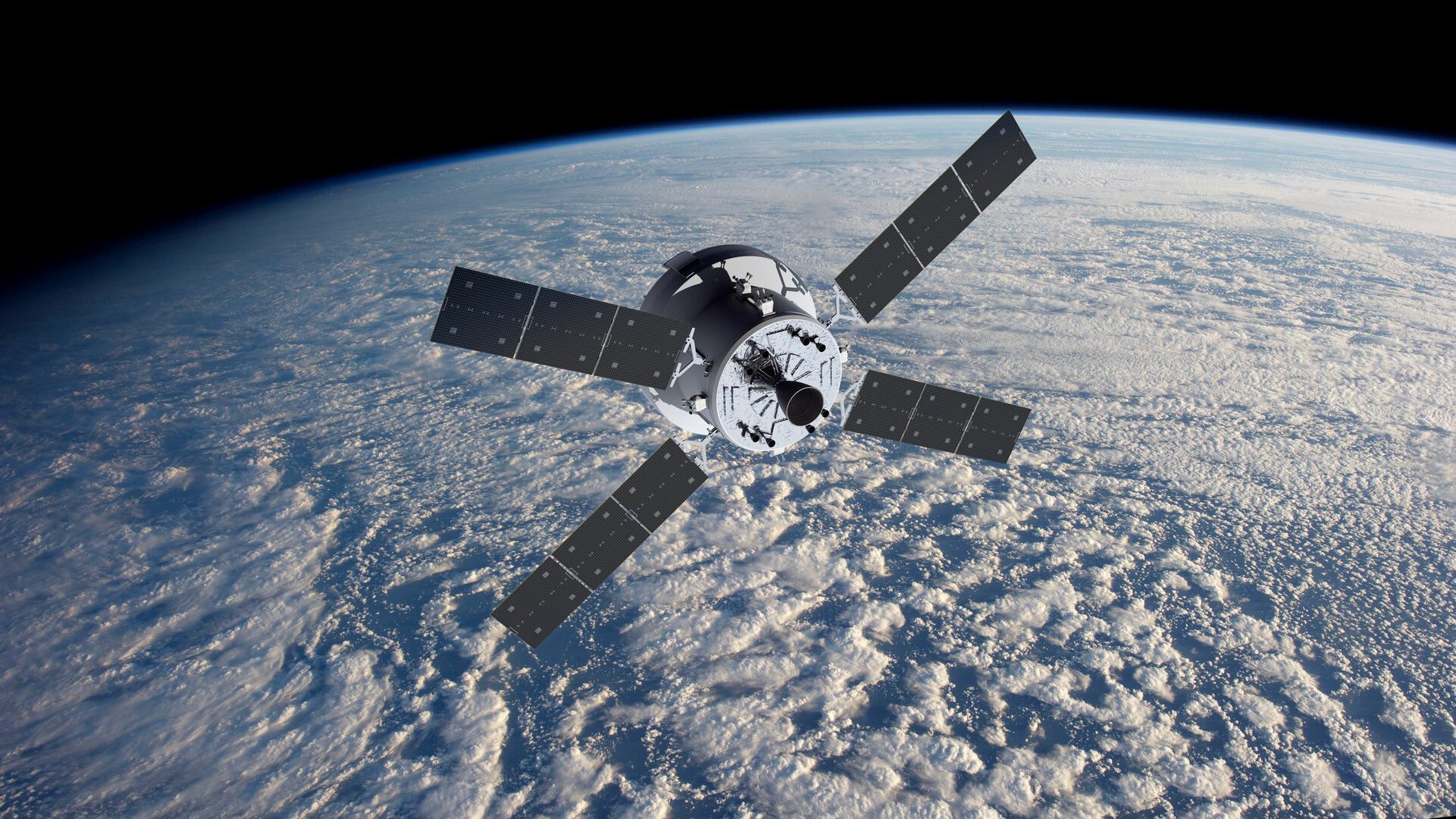
European Service Module
The European Service Module is ESA’s contribution to NASA’s Orion spacecraft that will send astronauts to the Moon and beyond. It provides electricity, water, oxygen and nitrogen as well as keeping the spacecraft at the right temperature and on course.
(www.esa.int)
Heart of the mission: Airbus-built ESM to power historic Artemis II crew to the Moon
The European service module, built by Airbus for ESA and NASA is at the heart of the mission and is ready to power the historic Artemis II crew to the Moon

Airbus (www.airbus.com)
-
The ESM’s for Artemis I, II, III, & VI (if there ever is a VI if SLS is also cancelled) are provided by ESA as part of the barter for continued access to the ISS by European astronauts.
But ESM-4 & 5 are explicitly linked to Gateway, as are many other European-provided modules already under development, & which is now dead.
The trade also included seats on Artemis for European astronauts.
More on the ESM here:
European Service Module
The European Service Module is ESA’s contribution to NASA’s Orion spacecraft that will send astronauts to the Moon and beyond. It provides electricity, water, oxygen and nitrogen as well as keeping the spacecraft at the right temperature and on course.
(www.esa.int)
Heart of the mission: Airbus-built ESM to power historic Artemis II crew to the Moon
The European service module, built by Airbus for ESA and NASA is at the heart of the mission and is ready to power the historic Artemis II crew to the Moon
Airbus (www.airbus.com)
To be clear, yes, the article is in a British newspaper, @guardian, but is directly sourced from @AFP.
Not that the articles written by the Guardian’s own journalists are necessarily any better, mind you:
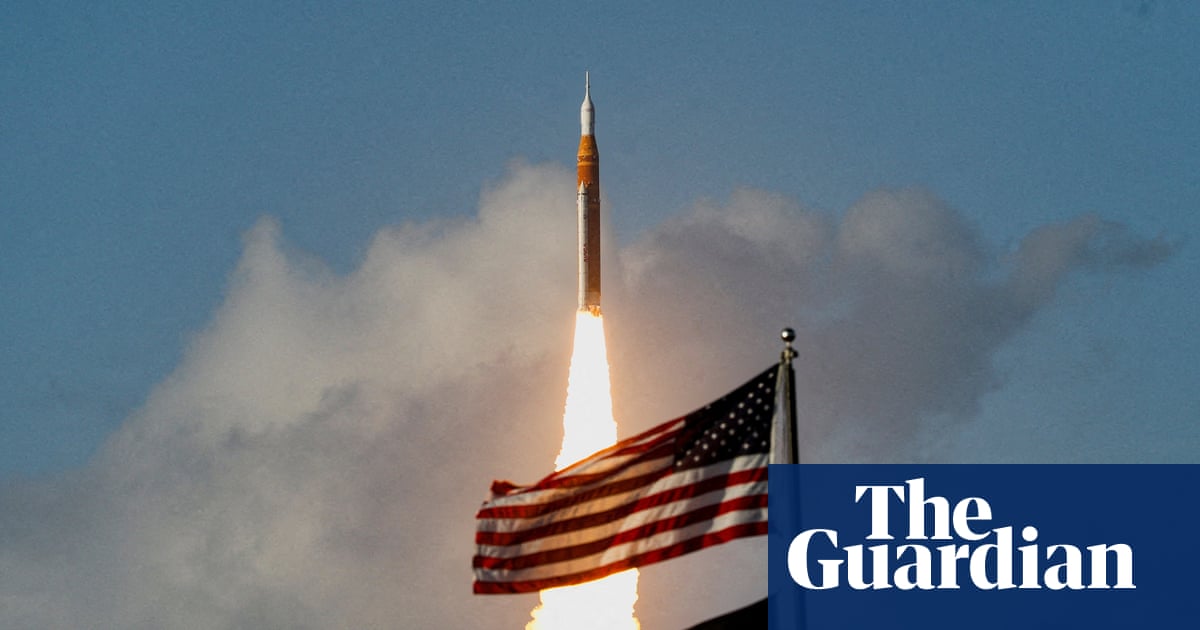
Artemis II marks Nasa’s new moon age, wrapped in patriotism and global promise
The moonshot gave US spectacle a broader face with the first woman, first person of color and first non-American
the Guardian (www.theguardian.com)
And this is no UK anti-Europe bias; same across most Euro-media.
Some are doing better though, & I know the BBC are doing a piece today about the key role being played by the ESM, & ESA themselves are of course talking up the ESM.
-
To be clear, yes, the article is in a British newspaper, @guardian, but is directly sourced from @AFP.
Not that the articles written by the Guardian’s own journalists are necessarily any better, mind you:
Artemis II marks Nasa’s new moon age, wrapped in patriotism and global promise
The moonshot gave US spectacle a broader face with the first woman, first person of color and first non-American
the Guardian (www.theguardian.com)
And this is no UK anti-Europe bias; same across most Euro-media.
Some are doing better though, & I know the BBC are doing a piece today about the key role being played by the ESM, & ESA themselves are of course talking up the ESM.
All of which begs the question of why this is.
Perhaps it’s a combination of media laziness, elisions in the material being issued by NASA, and the general view that only NASA does space anyway (despite plenty of evidence to the contrary).
Or is there perhaps a lack of interest from the European public in Artemis, not least given the broad rejection of the current US government & its ugly imperialism, much of which manifests itself in anti-European rhetoric & action?
-
Yet another #Artemis II article (from a French press agency, no less) ignoring that propulsion, power, & life support to the Orion capsule are provided by ESA’s European Service Module.
Built in Bremen by Airbus, with parts from all over Europe, e.g. solar wings made in Leiden.
Also no mention of the fact that the ESM’s for the Moon-landing Artemis IV & V missions are to be supplied as part of ESA’s contribution to the Lunar Gateway.
Which NASA cancelled last week.
Artemis II astronauts closer to moon than Earth amid toilet malfunction
Crew members can now see the moon, which one described as ‘a beautiful sight’, from their spacecraft’s docking hatch
the Guardian (www.theguardian.com)
@markmccaughrean I did not know that. Thanks for sharing.
-
@markmccaughrean I did not know that. Thanks for sharing.
@kigelia You’re welcome – case in point


-
All of which begs the question of why this is.
Perhaps it’s a combination of media laziness, elisions in the material being issued by NASA, and the general view that only NASA does space anyway (despite plenty of evidence to the contrary).
Or is there perhaps a lack of interest from the European public in Artemis, not least given the broad rejection of the current US government & its ugly imperialism, much of which manifests itself in anti-European rhetoric & action?
@markmccaughrean I think it's a lot easier: If one news agency, like AFP or dpa, get's it "wrong" or, to use a less loaded term, this certain way, outlets will cite them and it spreads quickly, because press is pretty accustomed to take the material and publish it with just a few adaptations. And Guardian's own guy lives in Florida, so he won't have a lot of contact to ESA staff, or would he?
Yeah, it's lazy af.
-
All of which begs the question of why this is.
Perhaps it’s a combination of media laziness, elisions in the material being issued by NASA, and the general view that only NASA does space anyway (despite plenty of evidence to the contrary).
Or is there perhaps a lack of interest from the European public in Artemis, not least given the broad rejection of the current US government & its ugly imperialism, much of which manifests itself in anti-European rhetoric & action?
And of course it’s entirely possible (personally, I think likely) that the wider European public isn’t especially interested in human spaceflight.
At least not in the way that superpowers like the US & China are, where it’s part of soft power propaganda & national myth-making.
After all, there are many other priorities on this planet, arguably more pressing than going to the Moon, such as climate change, security, & resource management, areas where space also plays a critical role though.
-
And of course it’s entirely possible (personally, I think likely) that the wider European public isn’t especially interested in human spaceflight.
At least not in the way that superpowers like the US & China are, where it’s part of soft power propaganda & national myth-making.
After all, there are many other priorities on this planet, arguably more pressing than going to the Moon, such as climate change, security, & resource management, areas where space also plays a critical role though.
These are issues that ESA will have to carefully & honestly examine with its Member States in the coming months, as they try to come up with a strategy for human spaceflight that takes into account its deep current dependence on an increasingly unreliable partner.
Do European governments & the European public believe that an independent human spaceflight capability is desirable & affordable?
IMO, it’s perfectly ok if the answer to that is no. But the current model appears very broken.
-
Yet another #Artemis II article (from a French press agency, no less) ignoring that propulsion, power, & life support to the Orion capsule are provided by ESA’s European Service Module.
Built in Bremen by Airbus, with parts from all over Europe, e.g. solar wings made in Leiden.
Also no mention of the fact that the ESM’s for the Moon-landing Artemis IV & V missions are to be supplied as part of ESA’s contribution to the Lunar Gateway.
Which NASA cancelled last week.
Artemis II astronauts closer to moon than Earth amid toilet malfunction
Crew members can now see the moon, which one described as ‘a beautiful sight’, from their spacecraft’s docking hatch
the Guardian (www.theguardian.com)
@markmccaughrean I am really upset that Gateway got cancelled. It was more interesting in my eyes than flags and footprints. Or phallic ego compensators.
-
These are issues that ESA will have to carefully & honestly examine with its Member States in the coming months, as they try to come up with a strategy for human spaceflight that takes into account its deep current dependence on an increasingly unreliable partner.
Do European governments & the European public believe that an independent human spaceflight capability is desirable & affordable?
IMO, it’s perfectly ok if the answer to that is no. But the current model appears very broken.
@markmccaughrean I think the Ariane 64 Block 2 will have the payload to launch a reasonable two-person capsule on top of an ESM to the ISS? But I imagine they couldn't be kept in storage long enough to both develop the capsule and crew rate the rocket.
So nothing short or medium term by that route, hm.
-
These are issues that ESA will have to carefully & honestly examine with its Member States in the coming months, as they try to come up with a strategy for human spaceflight that takes into account its deep current dependence on an increasingly unreliable partner.
Do European governments & the European public believe that an independent human spaceflight capability is desirable & affordable?
IMO, it’s perfectly ok if the answer to that is no. But the current model appears very broken.
Here's some food for thought: Where are the scientific publications that are coming out of the actual crewed space flights?
When you look at robotic missions (deep space probes, space telescopes, research satellites, etc.) it's easy enough to find your paper alerts being flooded with published results. There's a also a lot of publications on the engineering side.
But when it comes to crewed space flight? There's a lot less there. We're talking of several OOM discrepancy.
-
Here's some food for thought: Where are the scientific publications that are coming out of the actual crewed space flights?
When you look at robotic missions (deep space probes, space telescopes, research satellites, etc.) it's easy enough to find your paper alerts being flooded with published results. There's a also a lot of publications on the engineering side.
But when it comes to crewed space flight? There's a lot less there. We're talking of several OOM discrepancy.
@datenwolf One of my jobs at ESA was to give regular updates to our various committees & boards on scientific results from both the robotic missions & the human spaceflight programme.
That there’s a lot of material from the former goes without saying, but there is plenty from the latter too. That said it tends to be less “cosmically awesome”, relating to human & plant biology, materials science, fundamental physics, etc., less immediately exciting than stars, planets, & galaxies.
-
Yet another #Artemis II article (from a French press agency, no less) ignoring that propulsion, power, & life support to the Orion capsule are provided by ESA’s European Service Module.
Built in Bremen by Airbus, with parts from all over Europe, e.g. solar wings made in Leiden.
Also no mention of the fact that the ESM’s for the Moon-landing Artemis IV & V missions are to be supplied as part of ESA’s contribution to the Lunar Gateway.
Which NASA cancelled last week.
Artemis II astronauts closer to moon than Earth amid toilet malfunction
Crew members can now see the moon, which one described as ‘a beautiful sight’, from their spacecraft’s docking hatch
the Guardian (www.theguardian.com)
@markmccaughrean OH GREAT LEADER WITH GREAT SKY WAGON PLEASE LOOK AT US WITH PITY
-
@datenwolf One of my jobs at ESA was to give regular updates to our various committees & boards on scientific results from both the robotic missions & the human spaceflight programme.
That there’s a lot of material from the former goes without saying, but there is plenty from the latter too. That said it tends to be less “cosmically awesome”, relating to human & plant biology, materials science, fundamental physics, etc., less immediately exciting than stars, planets, & galaxies.
@datenwolf It also tends to be a lot more “bitty”, coming in small chunks as experiments are modified & upgraded over time. It’s also often a bit buried in wider studies of which the spaceflight experiments are just part.
Of course, I’m deliberately avoiding saying whether the cost-science benefit ratio is worth it compared to robotic missions, but arguably the two pots of money aren’t really fungible. Science is a by-product of other human spaceflight, not the primary goal.
-
@markmccaughrean I think the Ariane 64 Block 2 will have the payload to launch a reasonable two-person capsule on top of an ESM to the ISS? But I imagine they couldn't be kept in storage long enough to both develop the capsule and crew rate the rocket.
So nothing short or medium term by that route, hm.
@pauldrye There was Hermes for Ariane 5 & more recent efforts within ESA to get the Member States to agree to an independent human crew vehicle for Ariane 6, with Samantha Cristoferetti playing a big role.
But it didn’t go anywhere in the end, perhaps underlining my point about there continuing to be less appetite / desire / need for Europe to be autonomous in this regard.
Space bubbleers struggle to accept this, of course, saying it reflects poorly on Europe. But does it really?
-
And of course it’s entirely possible (personally, I think likely) that the wider European public isn’t especially interested in human spaceflight.
At least not in the way that superpowers like the US & China are, where it’s part of soft power propaganda & national myth-making.
After all, there are many other priorities on this planet, arguably more pressing than going to the Moon, such as climate change, security, & resource management, areas where space also plays a critical role though.
@markmccaughrean On a straw poll of the microcosm that is our golf club, I'd say that the (UK) public is more in favour of human involvement than their government is. All of a sudden, I found that I was having to slip a term like "Specific Impulse" into the post-round conversation yesterday!
-
@markmccaughrean On a straw poll of the microcosm that is our golf club, I'd say that the (UK) public is more in favour of human involvement than their government is. All of a sudden, I found that I was having to slip a term like "Specific Impulse" into the post-round conversation yesterday!
@birchbirch The problem with that is that people are often fine with glorious, exciting endeavours when the bill is footed by someone else.
Ask your golf friends whether they’d be willing to pay an extra few percent income tax to fund an independent European human spaceflight programme & a wider boost to education, universities, government R&D, tech incubation, & science needed to support, justify, & benefit from such a programme.
I suspect you know the answer already

-
@birchbirch The problem with that is that people are often fine with glorious, exciting endeavours when the bill is footed by someone else.
Ask your golf friends whether they’d be willing to pay an extra few percent income tax to fund an independent European human spaceflight programme & a wider boost to education, universities, government R&D, tech incubation, & science needed to support, justify, & benefit from such a programme.
I suspect you know the answer already
@birchbirch While I know that it’s de rigueur to knock the government (which leads to ugly populists like the Tangerine Tyrant getting into power), my sense is that European govts are following the lead of the public on this, not vice versa, i.e. that the taxpayers don’t wish to put too much money into big vanity endeavours like human spaceflight.
After all, didn’t the Tories propose a fully UK Crew Dragon flight, but to be paid privately, not by the govt? Shades of Project Juno.
-
These are issues that ESA will have to carefully & honestly examine with its Member States in the coming months, as they try to come up with a strategy for human spaceflight that takes into account its deep current dependence on an increasingly unreliable partner.
Do European governments & the European public believe that an independent human spaceflight capability is desirable & affordable?
IMO, it’s perfectly ok if the answer to that is no. But the current model appears very broken.
@markmccaughrean Quite a lot of people used to be really excited about manned space exploration, myself being one of them, but current events have made us almost indifferent to it. To refer to a professional author's take:
Charlie Stross (@cstross@wandering.shop)
Same for me, too. And Elon Musk took all the joy out of his big rocket launch (and occasional explosion) livestreams when he unmasked as full nazi in public. And the Russian space program? Dead to me. We should just get back in the sea. Our species is done.

The Wandering Shop (wandering.shop)
-
@datenwolf It also tends to be a lot more “bitty”, coming in small chunks as experiments are modified & upgraded over time. It’s also often a bit buried in wider studies of which the spaceflight experiments are just part.
Of course, I’m deliberately avoiding saying whether the cost-science benefit ratio is worth it compared to robotic missions, but arguably the two pots of money aren’t really fungible. Science is a by-product of other human spaceflight, not the primary goal.
I'm well aware of the experiments that are done on the ISS (or back in the day on the STS and Mir). Heck, a couple of years ago some hardware for a medical study went up to the ISS what was in part built (or rather modified from the commercial system) by colleagues of me (optical coherence tomography to investigate the eyesight problems astronauts develop in microgravity).
1/