#Permacomputing is about the future.
-
@tomjennings I’ve heard Alpine Linux is a good barebones start. Getting a desktop up and running requires some tinkering but Alpine & Xfce should be pretty lean.
@toxy @tomjennings Concur. Alpine is great. It takes as much disk space as Arch -- and the other "lightweight" distros that aren't -- take RAM, and it takes as little RAM as other distros did 20 years ago.
The next best was Raspberry Pi Desktop, their x86 version, but sadly it hasn't been updated in years. I wish the community would adopt it. It ran in under 200 MB of RAM and 2 or 3 GB of disk, but it was a Debian rebuild with all the packages available. (Unlike Puppy.)
Tiny Core remains nothing short of miraculous. A graphical desktop in 20 MB or so.
-
#Permacomputing is about the future. Old CPUs suck (but can be fun). Permacomputing has little to do with #retrocomputing, except insofar as we can examine our past solutions for synergies and such. And pre-enshittification versions of current software. The rest is nostalgia.
Used gear is the future too. There are so many "adequate" systems made in the last 10 years, alone, that meet most peoples needs.
The only non-enshittified OSes today are *nix OSes; freebsd, netbsd, derivatives, and the various linux.
I run Debian 13, as vanilla as I can get for the least effort involved. But linux/etc today are essentially server-class installs used on the desktop/laptop. OK lots of folk on the fedi lurv to wield complexity for it's own sake and that's fine. And eg. Debian is shockingly, wonderfully reliable and given the underlying complexity, surprisingly easy to install and maintain -- if you have the skills.
But I keep wondering about how much could a linux distro be pared back to cut size and complexity? A brutally stripped distro that runs Libreoffice and not much else; and a fancier one with networking (browser memory hogs).
Is there/are there super low end linux distributions I'm not aware of?
I'm not seeing a lot of traffic about permacomputing that aren't entangled with retrocomputing. I'm hoping that's just a feature of my feeds and follows!
@tomjennings Libreoffice's dependencies are colossal, unfortunately
-
#Permacomputing is about the future. Old CPUs suck (but can be fun). Permacomputing has little to do with #retrocomputing, except insofar as we can examine our past solutions for synergies and such. And pre-enshittification versions of current software. The rest is nostalgia.
Used gear is the future too. There are so many "adequate" systems made in the last 10 years, alone, that meet most peoples needs.
The only non-enshittified OSes today are *nix OSes; freebsd, netbsd, derivatives, and the various linux.
I run Debian 13, as vanilla as I can get for the least effort involved. But linux/etc today are essentially server-class installs used on the desktop/laptop. OK lots of folk on the fedi lurv to wield complexity for it's own sake and that's fine. And eg. Debian is shockingly, wonderfully reliable and given the underlying complexity, surprisingly easy to install and maintain -- if you have the skills.
But I keep wondering about how much could a linux distro be pared back to cut size and complexity? A brutally stripped distro that runs Libreoffice and not much else; and a fancier one with networking (browser memory hogs).
Is there/are there super low end linux distributions I'm not aware of?
I'm not seeing a lot of traffic about permacomputing that aren't entangled with retrocomputing. I'm hoping that's just a feature of my feeds and follows!
@tomjennings Puppy Linux is lightweight and might fit the bill: https://puppylinux-woof-ce.github.io/
-
#Permacomputing is about the future. Old CPUs suck (but can be fun). Permacomputing has little to do with #retrocomputing, except insofar as we can examine our past solutions for synergies and such. And pre-enshittification versions of current software. The rest is nostalgia.
Used gear is the future too. There are so many "adequate" systems made in the last 10 years, alone, that meet most peoples needs.
The only non-enshittified OSes today are *nix OSes; freebsd, netbsd, derivatives, and the various linux.
I run Debian 13, as vanilla as I can get for the least effort involved. But linux/etc today are essentially server-class installs used on the desktop/laptop. OK lots of folk on the fedi lurv to wield complexity for it's own sake and that's fine. And eg. Debian is shockingly, wonderfully reliable and given the underlying complexity, surprisingly easy to install and maintain -- if you have the skills.
But I keep wondering about how much could a linux distro be pared back to cut size and complexity? A brutally stripped distro that runs Libreoffice and not much else; and a fancier one with networking (browser memory hogs).
Is there/are there super low end linux distributions I'm not aware of?
I'm not seeing a lot of traffic about permacomputing that aren't entangled with retrocomputing. I'm hoping that's just a feature of my feeds and follows!
@tomjennings
Maybe TinyCoreLinux is of interest to you: http://tinycorelinux.net/This seems to be close to the lowest possible edge.
-
@tomjennings Puppy Linux is probably the distro you are looking for: if it works, it works, and it's so full of everything, and yet it's tiny (compared to some other things).
Alternatively, I've used to like SliTaz - but last time I used it properly was over 10 years ago.
@nina_kali_nina @tomjennings
Have always been a little skeptical of Puppy Linux, because the software selection was kind of a patchwork and I didn't like the idea of running everything as root (except for browsers and mail clients, apparently).
Tiny Core Linux ships with a window manager but basically no GUI software (not even a file manager) and uses some special package format.
If I ever run a minimalistic Linux install it'll probably be some customized/curated Gentoo system (never used it, but I appreciate that building stuff from source is treated as a first-class feature). -
R relay@relay.mycrowd.ca shared this topic
-
#Permacomputing is about the future. Old CPUs suck (but can be fun). Permacomputing has little to do with #retrocomputing, except insofar as we can examine our past solutions for synergies and such. And pre-enshittification versions of current software. The rest is nostalgia.
Used gear is the future too. There are so many "adequate" systems made in the last 10 years, alone, that meet most peoples needs.
The only non-enshittified OSes today are *nix OSes; freebsd, netbsd, derivatives, and the various linux.
I run Debian 13, as vanilla as I can get for the least effort involved. But linux/etc today are essentially server-class installs used on the desktop/laptop. OK lots of folk on the fedi lurv to wield complexity for it's own sake and that's fine. And eg. Debian is shockingly, wonderfully reliable and given the underlying complexity, surprisingly easy to install and maintain -- if you have the skills.
But I keep wondering about how much could a linux distro be pared back to cut size and complexity? A brutally stripped distro that runs Libreoffice and not much else; and a fancier one with networking (browser memory hogs).
Is there/are there super low end linux distributions I'm not aware of?
I'm not seeing a lot of traffic about permacomputing that aren't entangled with retrocomputing. I'm hoping that's just a feature of my feeds and follows!
@tomjennings a low resource, user friendly OS for non-vintage (but aged) PCs, that works for web browsing and office tasks?
Give Linux mint xfce a try. Your nana could use it. It’s my go-to for the underpowered ewaste computers I salvage and horde

-
#Permacomputing is about the future. Old CPUs suck (but can be fun). Permacomputing has little to do with #retrocomputing, except insofar as we can examine our past solutions for synergies and such. And pre-enshittification versions of current software. The rest is nostalgia.
Used gear is the future too. There are so many "adequate" systems made in the last 10 years, alone, that meet most peoples needs.
The only non-enshittified OSes today are *nix OSes; freebsd, netbsd, derivatives, and the various linux.
I run Debian 13, as vanilla as I can get for the least effort involved. But linux/etc today are essentially server-class installs used on the desktop/laptop. OK lots of folk on the fedi lurv to wield complexity for it's own sake and that's fine. And eg. Debian is shockingly, wonderfully reliable and given the underlying complexity, surprisingly easy to install and maintain -- if you have the skills.
But I keep wondering about how much could a linux distro be pared back to cut size and complexity? A brutally stripped distro that runs Libreoffice and not much else; and a fancier one with networking (browser memory hogs).
Is there/are there super low end linux distributions I'm not aware of?
I'm not seeing a lot of traffic about permacomputing that aren't entangled with retrocomputing. I'm hoping that's just a feature of my feeds and follows!
KISS Linux is an interesting exploration of that kind of minimal distro: it contains simple packages for precisely the minimal, opinionated, set of programs the author uses
In theory, I think a quick way to reduce complexity is to force people to compile software from scratch. It reveals the massively convoluted supply chain involved with modern software (obviously in practice, compiling software is a waste of time and power, if a binary package already exists)
https://kisslinux.github.io/ (beware of the knockoff website "k1ss")
-
#Permacomputing is about the future. Old CPUs suck (but can be fun). Permacomputing has little to do with #retrocomputing, except insofar as we can examine our past solutions for synergies and such. And pre-enshittification versions of current software. The rest is nostalgia.
Used gear is the future too. There are so many "adequate" systems made in the last 10 years, alone, that meet most peoples needs.
The only non-enshittified OSes today are *nix OSes; freebsd, netbsd, derivatives, and the various linux.
I run Debian 13, as vanilla as I can get for the least effort involved. But linux/etc today are essentially server-class installs used on the desktop/laptop. OK lots of folk on the fedi lurv to wield complexity for it's own sake and that's fine. And eg. Debian is shockingly, wonderfully reliable and given the underlying complexity, surprisingly easy to install and maintain -- if you have the skills.
But I keep wondering about how much could a linux distro be pared back to cut size and complexity? A brutally stripped distro that runs Libreoffice and not much else; and a fancier one with networking (browser memory hogs).
Is there/are there super low end linux distributions I'm not aware of?
I'm not seeing a lot of traffic about permacomputing that aren't entangled with retrocomputing. I'm hoping that's just a feature of my feeds and follows!
@tomjennings
 this is SO HUGE. And 'permacomputing' IS a great term that should be used more than (maybe even in place of) 'retro computing'.
 -
#Permacomputing is about the future. Old CPUs suck (but can be fun). Permacomputing has little to do with #retrocomputing, except insofar as we can examine our past solutions for synergies and such. And pre-enshittification versions of current software. The rest is nostalgia.
Used gear is the future too. There are so many "adequate" systems made in the last 10 years, alone, that meet most peoples needs.
The only non-enshittified OSes today are *nix OSes; freebsd, netbsd, derivatives, and the various linux.
I run Debian 13, as vanilla as I can get for the least effort involved. But linux/etc today are essentially server-class installs used on the desktop/laptop. OK lots of folk on the fedi lurv to wield complexity for it's own sake and that's fine. And eg. Debian is shockingly, wonderfully reliable and given the underlying complexity, surprisingly easy to install and maintain -- if you have the skills.
But I keep wondering about how much could a linux distro be pared back to cut size and complexity? A brutally stripped distro that runs Libreoffice and not much else; and a fancier one with networking (browser memory hogs).
Is there/are there super low end linux distributions I'm not aware of?
I'm not seeing a lot of traffic about permacomputing that aren't entangled with retrocomputing. I'm hoping that's just a feature of my feeds and follows!
@tomjennings huge fan of permacomputing!
https://writerdeckos.com/ is designed to be a writing-only Linux/GNU OS. I'm personally a huge fan of BunsenLabs which is a preconfiged Debian distro for low-spec machines. (My first Linux distro ever was their predecessor CrunchBang #! over a decade ago) https://www.bunsenlabs.org/
I've written a bit more here:
How are we preparing for the Long Web?
What will the Internet look like in 2036? 2046? How do we reckon with the challenges of digital preservation, link rot, and building for the Long Web in an age of ephemeral content?
brennan.day (brennan.day)
Computing for the Apocalypse
Building digital resilience through self-hosted infrastructure and permacomputing principles in an uncertain world. Using Docker, Caddy, and open-source tools for digital resilience and independence.
brennan.day (brennan.day)
-
@tomjennings
That's how I run Debian 13, too.
But I die usw CrunchBang, #!, a lot in the Papst and CrunchBang++, as well AS BunsenLabs seem to get in the same direction. But they're stripped down Debian 13.
https://www.crunchbangplusplus.org/
https://www.bunsenlabs.org/@alsternerd @tomjennings I used to run CrunchBang "back in the day", didn't know CrunchBang++ was a thing until now. Thank you 🤩
-
#Permacomputing is about the future. Old CPUs suck (but can be fun). Permacomputing has little to do with #retrocomputing, except insofar as we can examine our past solutions for synergies and such. And pre-enshittification versions of current software. The rest is nostalgia.
Used gear is the future too. There are so many "adequate" systems made in the last 10 years, alone, that meet most peoples needs.
The only non-enshittified OSes today are *nix OSes; freebsd, netbsd, derivatives, and the various linux.
I run Debian 13, as vanilla as I can get for the least effort involved. But linux/etc today are essentially server-class installs used on the desktop/laptop. OK lots of folk on the fedi lurv to wield complexity for it's own sake and that's fine. And eg. Debian is shockingly, wonderfully reliable and given the underlying complexity, surprisingly easy to install and maintain -- if you have the skills.
But I keep wondering about how much could a linux distro be pared back to cut size and complexity? A brutally stripped distro that runs Libreoffice and not much else; and a fancier one with networking (browser memory hogs).
Is there/are there super low end linux distributions I'm not aware of?
I'm not seeing a lot of traffic about permacomputing that aren't entangled with retrocomputing. I'm hoping that's just a feature of my feeds and follows!
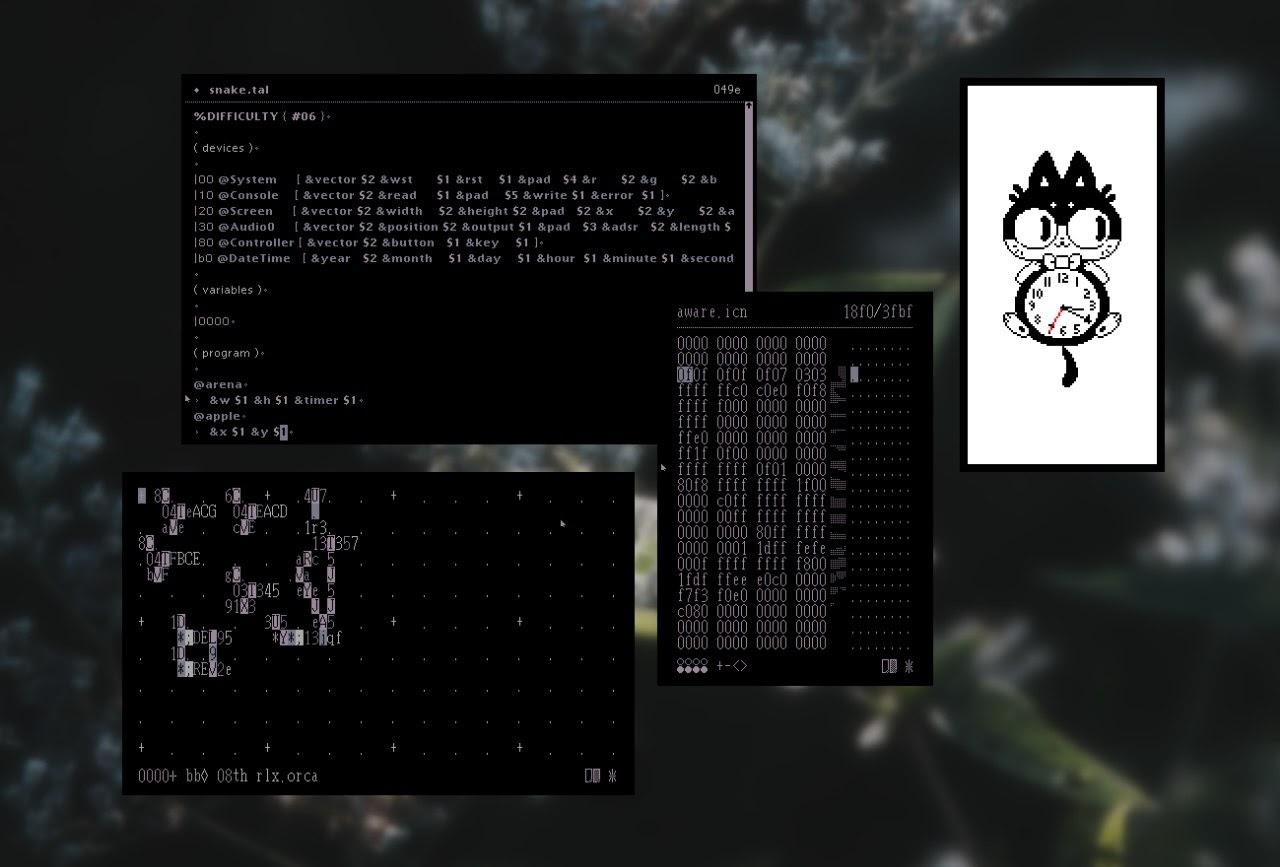
Ok, I've merely used #uxn , but the people, here on masto, who develop it, are amazing.
By GOD, this OS is only a few KiloBytes! It runs all kinds of specialised programs!
KBs people, KBs!!
I think the OS, along with it's emulator for linux, maxes out to maybe a few megabytes?

-
Ok, I've merely used #uxn , but the people, here on masto, who develop it, are amazing.
By GOD, this OS is only a few KiloBytes! It runs all kinds of specialised programs!
KBs people, KBs!!
I think the OS, along with it's emulator for linux, maxes out to maybe a few megabytes?
Wow thanks! Hadn't heard of #uxn (I need to rtfm) and also, indirectly, limited.systems.
-
R relay@relay.infosec.exchange shared this topic