The black shit covering the snow?
-
@Andres4NY Don't forget about brake dust.

@tk Yep, I'm aware but focused on microplastics rn

-
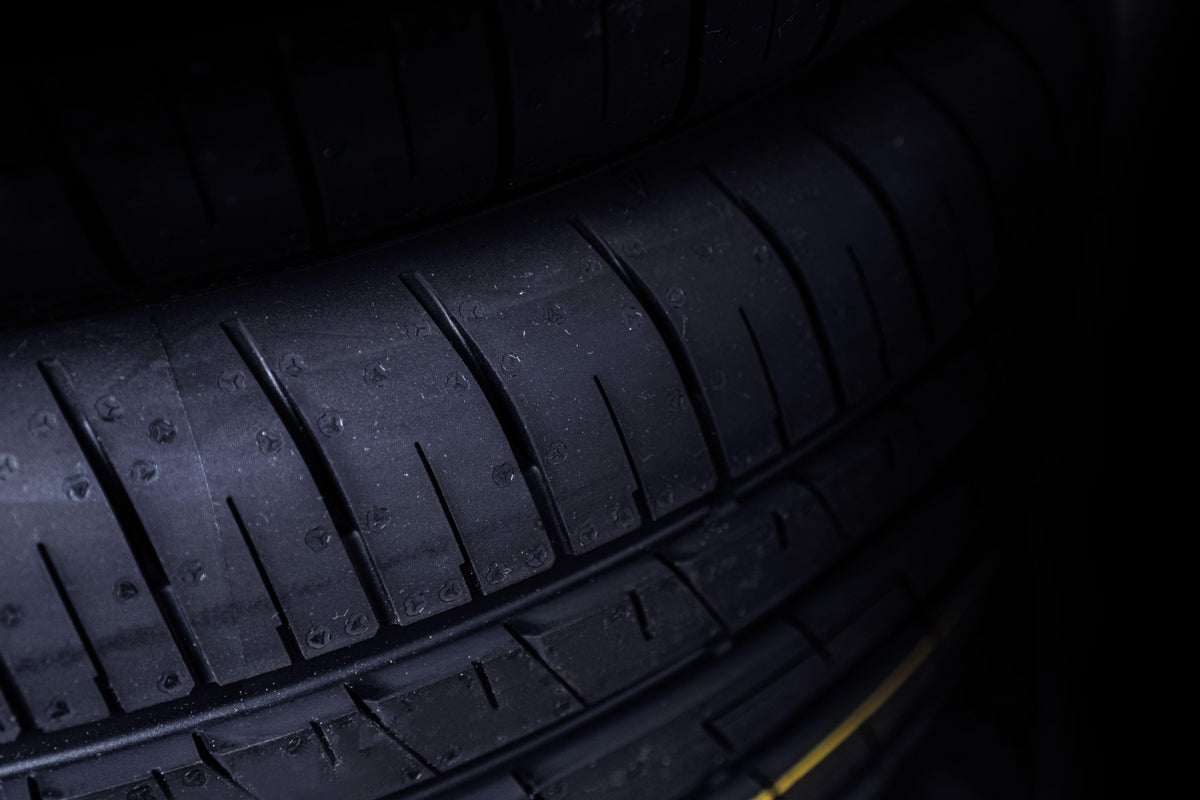
One of the biggest microplastic pollution sources revealed
Tire wear particles have been found to account for about 45 per cent of all microplastics in both terrestrial and aquatic systems

The Independent (www.independent.co.uk)
"In recent times, tire wear particles have been found to account for about 45% of all microplastics in both terrestrial and aquatic systems."
"Researchers in 2020 found that more than half of the coho salmon returning to streams in Washington state died before spawning, largely because of 6PPD-Q, a chemical stemming from 6PPD, which is added to tires to help keep them from degrading."
The most frustrating thing about all this? Cities don't clear sidewalks, so more cars
That article in particular focuses on filtering out tire wear particles AFTER they've entered the environment. Which is very much a band-aid, and it filters them AFTER we've breathed in the airborne particles.
We can stop them from ever being released by designing cities not for cars, but we need actual political leadership for that. Limiting/removing cars also comes with a ridiculous number of other benefits, too. Truly too many to count!
-
That article in particular focuses on filtering out tire wear particles AFTER they've entered the environment. Which is very much a band-aid, and it filters them AFTER we've breathed in the airborne particles.
We can stop them from ever being released by designing cities not for cars, but we need actual political leadership for that. Limiting/removing cars also comes with a ridiculous number of other benefits, too. Truly too many to count!
Tires were not tested to see if they're safe to eat.
As a result tire pollution was identified as the cause of some salmon die offs. (It's unclear what else might be impacted by the chemical 6PPD-quinone, it's bad enough there's some efforts to ban its use in tires)

Car tires are polluting the environment and killing salmon. A global plastics treaty could help
Tires are complex chemical products. When they wear away, they release additives into the environment that can poison wildlife.

The Conversation (theconversation.com)
-
That article in particular focuses on filtering out tire wear particles AFTER they've entered the environment. Which is very much a band-aid, and it filters them AFTER we've breathed in the airborne particles.
We can stop them from ever being released by designing cities not for cars, but we need actual political leadership for that. Limiting/removing cars also comes with a ridiculous number of other benefits, too. Truly too many to count!
Fun fact: did you know that the fascism that's taking over our country is enabled by car-centric design? Our rural and exurban areas are deep red and full of Trump voters. That's because places designed around cars isolate us and make us suspicious and hateful of our neighbors. What happens when we propose more housing? "What about the traffic!" say the NIMBYs. Because newcomers, rather than bringing interesting food, culture, conversation, language, & art, bring more cars in unwalkable places.
-
Fun fact: did you know that the fascism that's taking over our country is enabled by car-centric design? Our rural and exurban areas are deep red and full of Trump voters. That's because places designed around cars isolate us and make us suspicious and hateful of our neighbors. What happens when we propose more housing? "What about the traffic!" say the NIMBYs. Because newcomers, rather than bringing interesting food, culture, conversation, language, & art, bring more cars in unwalkable places.
Also a larger portion of people's money in those places goes to the oil industry than in walkable places and guess which industry fucking loves to fund fascists all over the place
-
Also a larger portion of people's money in those places goes to the oil industry than in walkable places and guess which industry fucking loves to fund fascists all over the place
Well it turns out it's most of them but oil is definitely up there in a special spot
-
Fun fact: did you know that the fascism that's taking over our country is enabled by car-centric design? Our rural and exurban areas are deep red and full of Trump voters. That's because places designed around cars isolate us and make us suspicious and hateful of our neighbors. What happens when we propose more housing? "What about the traffic!" say the NIMBYs. Because newcomers, rather than bringing interesting food, culture, conversation, language, & art, bring more cars in unwalkable places.
@Andres4NY I've just started to watch For All Mankind and something that clicked for me with the bad parenting that my partner noted was basically our parents generation: Post-War suburbanization was possibly the first generation of parents to not have a village of support in raising kids. It's only gotten worse since since at least kids used to be able to bike around town on their own but can't nowadays with car-required suburbs in full-form
-
One of the biggest microplastic pollution sources revealed
Tire wear particles have been found to account for about 45 per cent of all microplastics in both terrestrial and aquatic systems
The Independent (www.independent.co.uk)
"In recent times, tire wear particles have been found to account for about 45% of all microplastics in both terrestrial and aquatic systems."
"Researchers in 2020 found that more than half of the coho salmon returning to streams in Washington state died before spawning, largely because of 6PPD-Q, a chemical stemming from 6PPD, which is added to tires to help keep them from degrading."
The most frustrating thing about all this? Cities don't clear sidewalks, so more cars
This is the exhaustive review article on tires as a microplastics source. Not only in the waterways but also aerosolized (in the air)
Where Rubber Meets the Road: EPA Researchers Study the Environmental and Health Impacts of Tires | US EPA
The issue of tire pollution is complex, as every step of a tire’s life cycle, from production to use to disposal, can impact our environment, health and wildlife. This story discusses EPA research on tire wear and 6PPD-quinone.
US EPA (www.epa.gov)
-
Fun fact: did you know that the fascism that's taking over our country is enabled by car-centric design? Our rural and exurban areas are deep red and full of Trump voters. That's because places designed around cars isolate us and make us suspicious and hateful of our neighbors. What happens when we propose more housing? "What about the traffic!" say the NIMBYs. Because newcomers, rather than bringing interesting food, culture, conversation, language, & art, bring more cars in unwalkable places.
I’ve also got a friend who is a geochemist —
She has found another important road source of microplastics in rivers and estuaries are actually the road markings themselves which are no longer paint, but instead thermoplastics.
-
I’ve also got a friend who is a geochemist —
She has found another important road source of microplastics in rivers and estuaries are actually the road markings themselves which are no longer paint, but instead thermoplastics.
@atthenius That makes sense. Especially on highways, those things don't last very long!
-
The black shit covering the snow? That's from #cars. But importantly, it's not just exhaust soot - it's also pieces of tire (as they wear down). Eg, #microplastics that will end up in the ocean and in our drinking water.
@Andres4NY@social.ridetrans.it
And our lungs as we breath it in! -
This is the exhaustive review article on tires as a microplastics source. Not only in the waterways but also aerosolized (in the air)
Where Rubber Meets the Road: EPA Researchers Study the Environmental and Health Impacts of Tires | US EPA
The issue of tire pollution is complex, as every step of a tire’s life cycle, from production to use to disposal, can impact our environment, health and wildlife. This story discusses EPA research on tire wear and 6PPD-quinone.
US EPA (www.epa.gov)
@atthenius @Andres4NY Thanks for sharing these articles. I'm particularly interested in how much our exposure/ingestion/inhalation can be reduced by limiting vehicle speeds in populated areas. I hope to find some relevant info in the EPA report.
-
R relay@relay.infosec.exchange shared this topic