Bad: had to be up for a 6 AM to dial into an all-day east-coast offsite and listen to a bunch of *really* excited salespeople.
-
Bad: had to be up for a 6 AM to dial into an all-day east-coast offsite and listen to a bunch of *really* excited salespeople.
Good: I could run for the hills with a camera before the sun went down.
Of course, it started raining right as I arrived, and I was planning on shooting with the non-waterproof camera, so I spent 30 minutes hunched over the camera, doing my Human Umbrella act.
The upside is that everything ended up a bit spookier than normal.
-
Of course, it started raining right as I arrived, and I was planning on shooting with the non-waterproof camera, so I spent 30 minutes hunched over the camera, doing my Human Umbrella act.
The upside is that everything ended up a bit spookier than normal.
I didn't really love any of today's pictures at first. I was shooting with a wider lens than I'm really used to, and none of the framing seemed quite right. So I zoomed in a bit. Then a bit more. And then (usually) cropped about 25% out of the original image and was happy with the result.
-
I didn't really love any of today's pictures at first. I was shooting with a wider lens than I'm really used to, and none of the framing seemed quite right. So I zoomed in a bit. Then a bit more. And then (usually) cropped about 25% out of the original image and was happy with the result.
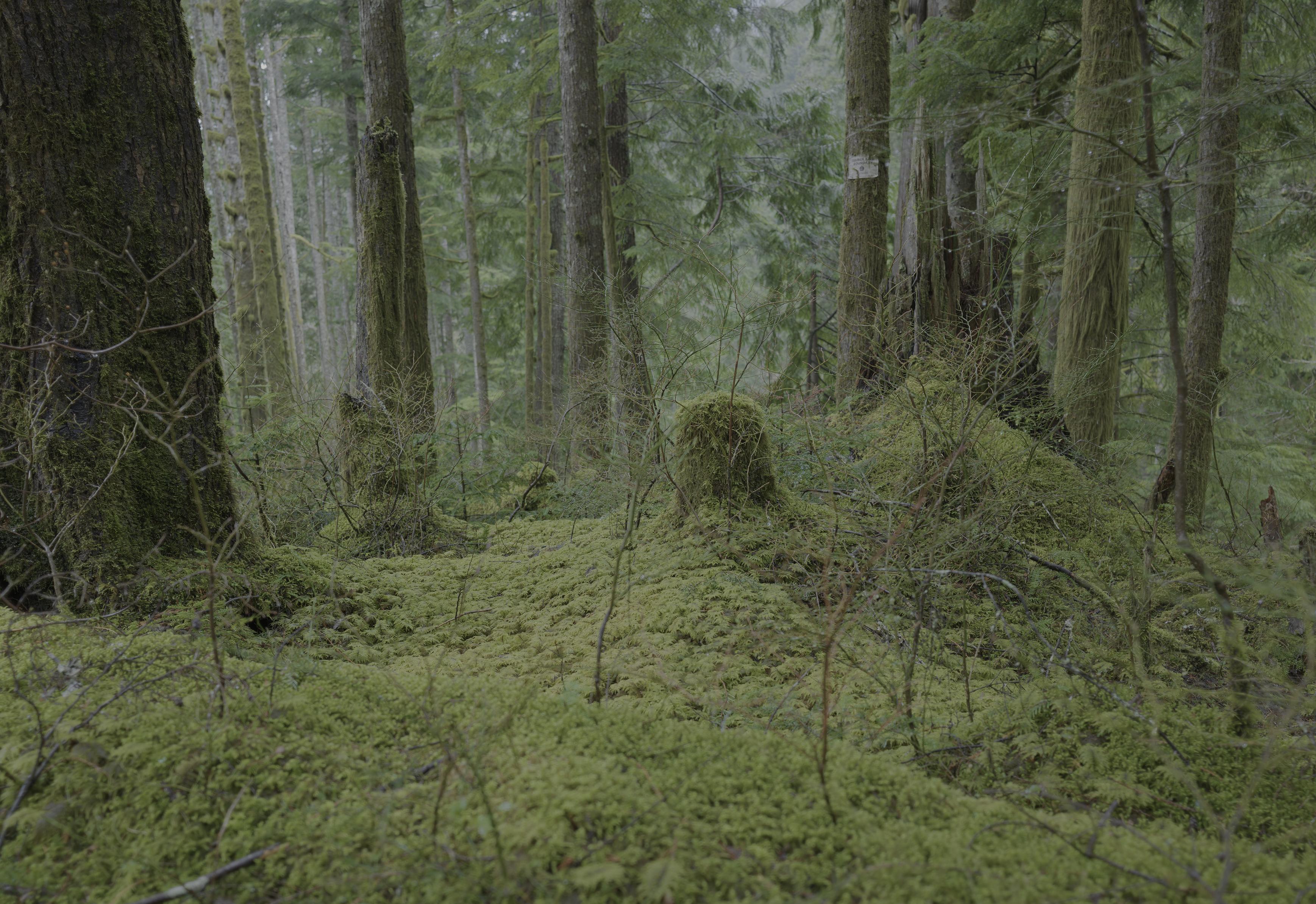
I can't decide quite what I think of this one. I don't think it works at all as a small image, but when viewed large enough it works for me. It feels a bit over-processed to me, but without that the various textures kind of turned to mush.
-
Bad: had to be up for a 6 AM to dial into an all-day east-coast offsite and listen to a bunch of *really* excited salespeople.
Good: I could run for the hills with a camera before the sun went down.
@laird Why are we still inflicting sales people on to the world?
-
I can't decide quite what I think of this one. I don't think it works at all as a small image, but when viewed large enough it works for me. It feels a bit over-processed to me, but without that the various textures kind of turned to mush.
Actually uploading these to Mastodon was kind of entertaining; they're all HDR images with a wide color gamut. Converting these specific images to sRGB JPEGs *probably* wouldn't have hurt a whole lot, but I wanted to keep as much data in the files as I could, and in the future I expect to be able to make better use of HDR, so I wanted to see what it'd take to get Mastodon to take them.
Try 1: export as full-sized HEIF from the photo editor. Mastodon refused to accept them, complaining that they weren't what they claimed to be. Presumably something about HEIF vs HEIC vs optional features?
Try 2: convert them to AVIF via Photoshop. They shrank to about 50% of their original size. But they were all still too high-resolution for Mastodon, so they were rejected when I tried to upload them.
Try 3: reduce to 4096 (long axis), re-save as AVIF. Success!
Now to find a workable way to turn 16-bit TIFFs with weird color spaces into 12-bit AVIFs without needing to pull out Photoshop.
-
@laird Why are we still inflicting sales people on to the world?
@ike this was more of "inflicting our own salespeople on our engineers." So it was sort of an own-goal.
Mind you, they seemed like very *nice* salespeople, who firmly believed that the company's product being MIT-licensed open source is absolutely a major feature in our (and our customers') favor. But they seem to talk some language that *sounds* like English but none of the words make sense.
-
Actually uploading these to Mastodon was kind of entertaining; they're all HDR images with a wide color gamut. Converting these specific images to sRGB JPEGs *probably* wouldn't have hurt a whole lot, but I wanted to keep as much data in the files as I could, and in the future I expect to be able to make better use of HDR, so I wanted to see what it'd take to get Mastodon to take them.
Try 1: export as full-sized HEIF from the photo editor. Mastodon refused to accept them, complaining that they weren't what they claimed to be. Presumably something about HEIF vs HEIC vs optional features?
Try 2: convert them to AVIF via Photoshop. They shrank to about 50% of their original size. But they were all still too high-resolution for Mastodon, so they were rejected when I tried to upload them.
Try 3: reduce to 4096 (long axis), re-save as AVIF. Success!
Now to find a workable way to turn 16-bit TIFFs with weird color spaces into 12-bit AVIFs without needing to pull out Photoshop.
@laird i wonder if there’s enough support around for 16-bit JPEG-XL and how it compares to these
-
@laird i wonder if there’s enough support around for 16-bit JPEG-XL and how it compares to these
@cwalkatron should be similar, but Chrome did weird things with JPEG XL for a while (added, then removed, then recently re-added), while nearly everything actually supports AVIF already. It's the same container as iPhone HEIC files, but with the codec from AV1 videos. So it's not really a lot of new code.
These are all 4:4:4 12-bit images, and they compressed down to 4-8 MB with an obnoxiously high quality setting. I don't think there's really much of a point to adding more bits most of the time.
I'm kind of hoping that we'll see the standard for web images pass from "must be sRGB JPEG" into "JPEG, AVIF, HEIC, or JPEG-XL with any sane color profile, optionally with HDR gain maps if that's a thing that your encoder really feels is necessary."
Weirdly, browsers are all there today. It's the middleware that's having a hard time. There's a lot of server code that assumes that all of the color metadata is just space-wasting noise and drops it, which mostly works if everything is sRGB. It fails horribly in pretty much every other case, but frequently just leaves you with an under-saturated image, like when you confuse sRGB vs Adobe RGB.
I need to whip up a couple test images saved as LAB or XYZ or something that *really* won't look right if you lose the color tags.
-
@cwalkatron should be similar, but Chrome did weird things with JPEG XL for a while (added, then removed, then recently re-added), while nearly everything actually supports AVIF already. It's the same container as iPhone HEIC files, but with the codec from AV1 videos. So it's not really a lot of new code.
These are all 4:4:4 12-bit images, and they compressed down to 4-8 MB with an obnoxiously high quality setting. I don't think there's really much of a point to adding more bits most of the time.
I'm kind of hoping that we'll see the standard for web images pass from "must be sRGB JPEG" into "JPEG, AVIF, HEIC, or JPEG-XL with any sane color profile, optionally with HDR gain maps if that's a thing that your encoder really feels is necessary."
Weirdly, browsers are all there today. It's the middleware that's having a hard time. There's a lot of server code that assumes that all of the color metadata is just space-wasting noise and drops it, which mostly works if everything is sRGB. It fails horribly in pretty much every other case, but frequently just leaves you with an under-saturated image, like when you confuse sRGB vs Adobe RGB.
I need to whip up a couple test images saved as LAB or XYZ or something that *really* won't look right if you lose the color tags.
@cwalkatron okay, this is kind of weird. These started as 16-bit TIFFs in Hasselblad's own colorspace. Whatever. I had their software produce a HEIF, which apparently it silently moved to Rec.2100 PQ rather than their own color profile. Honestly, that's not a bad choice.
Converting the TIFF to AVIC in Photoshop produced a 4.9 MB, 12-bit, 4:4:4 file, still using their own colorspace.
But saving as JPEG XL produced a 2.9 MB file, apparently 16-bit, and in Rec.2100 PQ. Photoshop didn't give me a 4:4:4/4:2:2/4:2:0 or a bit-depth option for JXL.
Both AVIC and JXL were set to "slowest" and Q=90 in Photoshop. JXL saved very quickly, while AVIC seemed substantially slower, although I didn't benchmark either.
I wonder if HEIC and JXL enforce Rec.2100 PQ or something? IMO Rec. 2100 with either PQ or HLG (different transfer functions, basically a fancier replacement for gamma) is probably the best colorspace for web images going forward.
-
@ike this was more of "inflicting our own salespeople on our engineers." So it was sort of an own-goal.
Mind you, they seemed like very *nice* salespeople, who firmly believed that the company's product being MIT-licensed open source is absolutely a major feature in our (and our customers') favor. But they seem to talk some language that *sounds* like English but none of the words make sense.
@laird Well, at least they can be amusing to watch, as long as you dont have to interact with them too much. Then it just becomes tedius.
-
R relay@relay.an.exchange shared this topic