What a lot of people do not understand is the fragility of supply chains.
-
What a lot of people do not understand is the fragility of supply chains.
Setup
Let us assume there is a part X that is used by a large number of other companies. It is not glamorous, it is not expensive, and nobody outside a small circle of specialists ever thinks about it. But it is needed. Without it, other products cannot be finished.
Everything is fine
Part X is made by a small company with a few dozen employees and a machine that is several decades old.
Everything runs smoothly. The company knows how to maintain the machine. They know how to operate it. They know its strange noises, its moods, its undocumented rituals. They know which lever needs a bit of persuasion on cold mornings and which replacement part must be machined by hand because nobody has made the original since 1987. They also know how to train new employees, because the knowledge still exists inside the company.
Crisis
Then, suddenly, a few large customers run into a crisis.
Orders slow down. The warehouses fill up with part X. Prices fall.
The company downsizes. Then it downsizes again. But nobody really notices, because stocks are still full. Customers are not yet affected. Purchasing departments can still get part X from inventory. Balance sheets still look fine. The problem has not yet reached the spreadsheet.
If this goes on for long enough, the company goes broke.
Again, nobody really notices. Stocks are still full. Some people may worry, but as long as no current production line is stopping and no quarterly number is visibly bleeding, nothing urgent is done.
The employees move on. They retire, change industries, start new careers. The old machine is sold for scrap. The building is repurposed. The knowledge evaporates.
Recovery
A few years later, demand picks up again.
The warehouses slowly empty. Stocks run low. People start ordering part X again, only to discover that nobody is offering it anymore.
Now someone decides to restart production.
The first thing they discover is that there is no machine. Building a new one would be prohibitively expensive, assuming anyone still knows how to build it properly. So they desperately search for an old one.
They get lucky. In a scrapyard, they find a machine that used to produce part X. It is rusted, incomplete, and dysfunctional. Naturally, they buy it.
Now they try to get it working again.
But there is another problem. There are no people left who know how to maintain it. So they hire someone who understands industrial maintenance in general, but has never worked on this specific machine. That person does their best. They improvise. They read old manuals. They reverse-engineer undocumented fixes. They keep the machine alive with skill, patience, and increasing amounts of despair.
But it breaks down every few hours. Output is abysmal.
Bottlenecks
And now that one poor maintenance person is overworked. They need help. But training help requires time, and the only person who can train others is the same person needed to keep the machine barely running. Every hour spent teaching is an hour not spent preventing the next failure.
Very few businesses survive this phase.
There is no institutional knowledge anymore. New people are hired, begin training, look at the state of the machine, the chaos of the process, and the constant emergency mode, and conclude that the business is doomed anyway. Then they quit.
Churn becomes terrible. Even if the company survives financially, it remains fragile. It is always just one or two people quitting away from disaster.
At the end the world decides it needs to get rid of part X as the supply is too fragile.
Summary
This is still very much simplified. The reality is more complex, more ugly.
And that is the part many people miss: a supply chain is not just warehouses, contracts, prices, and transport routes. It is also people, habits, obsolete machines, informal knowledge, and boring little skills that nobody values until they are gone.
-
What a lot of people do not understand is the fragility of supply chains.
Setup
Let us assume there is a part X that is used by a large number of other companies. It is not glamorous, it is not expensive, and nobody outside a small circle of specialists ever thinks about it. But it is needed. Without it, other products cannot be finished.
Everything is fine
Part X is made by a small company with a few dozen employees and a machine that is several decades old.
Everything runs smoothly. The company knows how to maintain the machine. They know how to operate it. They know its strange noises, its moods, its undocumented rituals. They know which lever needs a bit of persuasion on cold mornings and which replacement part must be machined by hand because nobody has made the original since 1987. They also know how to train new employees, because the knowledge still exists inside the company.
Crisis
Then, suddenly, a few large customers run into a crisis.
Orders slow down. The warehouses fill up with part X. Prices fall.
The company downsizes. Then it downsizes again. But nobody really notices, because stocks are still full. Customers are not yet affected. Purchasing departments can still get part X from inventory. Balance sheets still look fine. The problem has not yet reached the spreadsheet.
If this goes on for long enough, the company goes broke.
Again, nobody really notices. Stocks are still full. Some people may worry, but as long as no current production line is stopping and no quarterly number is visibly bleeding, nothing urgent is done.
The employees move on. They retire, change industries, start new careers. The old machine is sold for scrap. The building is repurposed. The knowledge evaporates.
Recovery
A few years later, demand picks up again.
The warehouses slowly empty. Stocks run low. People start ordering part X again, only to discover that nobody is offering it anymore.
Now someone decides to restart production.
The first thing they discover is that there is no machine. Building a new one would be prohibitively expensive, assuming anyone still knows how to build it properly. So they desperately search for an old one.
They get lucky. In a scrapyard, they find a machine that used to produce part X. It is rusted, incomplete, and dysfunctional. Naturally, they buy it.
Now they try to get it working again.
But there is another problem. There are no people left who know how to maintain it. So they hire someone who understands industrial maintenance in general, but has never worked on this specific machine. That person does their best. They improvise. They read old manuals. They reverse-engineer undocumented fixes. They keep the machine alive with skill, patience, and increasing amounts of despair.
But it breaks down every few hours. Output is abysmal.
Bottlenecks
And now that one poor maintenance person is overworked. They need help. But training help requires time, and the only person who can train others is the same person needed to keep the machine barely running. Every hour spent teaching is an hour not spent preventing the next failure.
Very few businesses survive this phase.
There is no institutional knowledge anymore. New people are hired, begin training, look at the state of the machine, the chaos of the process, and the constant emergency mode, and conclude that the business is doomed anyway. Then they quit.
Churn becomes terrible. Even if the company survives financially, it remains fragile. It is always just one or two people quitting away from disaster.
At the end the world decides it needs to get rid of part X as the supply is too fragile.
Summary
This is still very much simplified. The reality is more complex, more ugly.
And that is the part many people miss: a supply chain is not just warehouses, contracts, prices, and transport routes. It is also people, habits, obsolete machines, informal knowledge, and boring little skills that nobody values until they are gone.
@masek and the consequences of AI. Once the knowledge is gone, it's probably gone for good or, at least, for a long time.
-
What a lot of people do not understand is the fragility of supply chains.
Setup
Let us assume there is a part X that is used by a large number of other companies. It is not glamorous, it is not expensive, and nobody outside a small circle of specialists ever thinks about it. But it is needed. Without it, other products cannot be finished.
Everything is fine
Part X is made by a small company with a few dozen employees and a machine that is several decades old.
Everything runs smoothly. The company knows how to maintain the machine. They know how to operate it. They know its strange noises, its moods, its undocumented rituals. They know which lever needs a bit of persuasion on cold mornings and which replacement part must be machined by hand because nobody has made the original since 1987. They also know how to train new employees, because the knowledge still exists inside the company.
Crisis
Then, suddenly, a few large customers run into a crisis.
Orders slow down. The warehouses fill up with part X. Prices fall.
The company downsizes. Then it downsizes again. But nobody really notices, because stocks are still full. Customers are not yet affected. Purchasing departments can still get part X from inventory. Balance sheets still look fine. The problem has not yet reached the spreadsheet.
If this goes on for long enough, the company goes broke.
Again, nobody really notices. Stocks are still full. Some people may worry, but as long as no current production line is stopping and no quarterly number is visibly bleeding, nothing urgent is done.
The employees move on. They retire, change industries, start new careers. The old machine is sold for scrap. The building is repurposed. The knowledge evaporates.
Recovery
A few years later, demand picks up again.
The warehouses slowly empty. Stocks run low. People start ordering part X again, only to discover that nobody is offering it anymore.
Now someone decides to restart production.
The first thing they discover is that there is no machine. Building a new one would be prohibitively expensive, assuming anyone still knows how to build it properly. So they desperately search for an old one.
They get lucky. In a scrapyard, they find a machine that used to produce part X. It is rusted, incomplete, and dysfunctional. Naturally, they buy it.
Now they try to get it working again.
But there is another problem. There are no people left who know how to maintain it. So they hire someone who understands industrial maintenance in general, but has never worked on this specific machine. That person does their best. They improvise. They read old manuals. They reverse-engineer undocumented fixes. They keep the machine alive with skill, patience, and increasing amounts of despair.
But it breaks down every few hours. Output is abysmal.
Bottlenecks
And now that one poor maintenance person is overworked. They need help. But training help requires time, and the only person who can train others is the same person needed to keep the machine barely running. Every hour spent teaching is an hour not spent preventing the next failure.
Very few businesses survive this phase.
There is no institutional knowledge anymore. New people are hired, begin training, look at the state of the machine, the chaos of the process, and the constant emergency mode, and conclude that the business is doomed anyway. Then they quit.
Churn becomes terrible. Even if the company survives financially, it remains fragile. It is always just one or two people quitting away from disaster.
At the end the world decides it needs to get rid of part X as the supply is too fragile.
Summary
This is still very much simplified. The reality is more complex, more ugly.
And that is the part many people miss: a supply chain is not just warehouses, contracts, prices, and transport routes. It is also people, habits, obsolete machines, informal knowledge, and boring little skills that nobody values until they are gone.
@masek ... standardisation of parts and second source comes into thought ...
In the good-old-days you could buy a TTL7400 from a list of semiconductor vendors - or a M4 screw - or ...
-
What a lot of people do not understand is the fragility of supply chains.
Setup
Let us assume there is a part X that is used by a large number of other companies. It is not glamorous, it is not expensive, and nobody outside a small circle of specialists ever thinks about it. But it is needed. Without it, other products cannot be finished.
Everything is fine
Part X is made by a small company with a few dozen employees and a machine that is several decades old.
Everything runs smoothly. The company knows how to maintain the machine. They know how to operate it. They know its strange noises, its moods, its undocumented rituals. They know which lever needs a bit of persuasion on cold mornings and which replacement part must be machined by hand because nobody has made the original since 1987. They also know how to train new employees, because the knowledge still exists inside the company.
Crisis
Then, suddenly, a few large customers run into a crisis.
Orders slow down. The warehouses fill up with part X. Prices fall.
The company downsizes. Then it downsizes again. But nobody really notices, because stocks are still full. Customers are not yet affected. Purchasing departments can still get part X from inventory. Balance sheets still look fine. The problem has not yet reached the spreadsheet.
If this goes on for long enough, the company goes broke.
Again, nobody really notices. Stocks are still full. Some people may worry, but as long as no current production line is stopping and no quarterly number is visibly bleeding, nothing urgent is done.
The employees move on. They retire, change industries, start new careers. The old machine is sold for scrap. The building is repurposed. The knowledge evaporates.
Recovery
A few years later, demand picks up again.
The warehouses slowly empty. Stocks run low. People start ordering part X again, only to discover that nobody is offering it anymore.
Now someone decides to restart production.
The first thing they discover is that there is no machine. Building a new one would be prohibitively expensive, assuming anyone still knows how to build it properly. So they desperately search for an old one.
They get lucky. In a scrapyard, they find a machine that used to produce part X. It is rusted, incomplete, and dysfunctional. Naturally, they buy it.
Now they try to get it working again.
But there is another problem. There are no people left who know how to maintain it. So they hire someone who understands industrial maintenance in general, but has never worked on this specific machine. That person does their best. They improvise. They read old manuals. They reverse-engineer undocumented fixes. They keep the machine alive with skill, patience, and increasing amounts of despair.
But it breaks down every few hours. Output is abysmal.
Bottlenecks
And now that one poor maintenance person is overworked. They need help. But training help requires time, and the only person who can train others is the same person needed to keep the machine barely running. Every hour spent teaching is an hour not spent preventing the next failure.
Very few businesses survive this phase.
There is no institutional knowledge anymore. New people are hired, begin training, look at the state of the machine, the chaos of the process, and the constant emergency mode, and conclude that the business is doomed anyway. Then they quit.
Churn becomes terrible. Even if the company survives financially, it remains fragile. It is always just one or two people quitting away from disaster.
At the end the world decides it needs to get rid of part X as the supply is too fragile.
Summary
This is still very much simplified. The reality is more complex, more ugly.
And that is the part many people miss: a supply chain is not just warehouses, contracts, prices, and transport routes. It is also people, habits, obsolete machines, informal knowledge, and boring little skills that nobody values until they are gone.
@masek AI will fix it
Ironie, of course -
@masek and the consequences of AI. Once the knowledge is gone, it's probably gone for good or, at least, for a long time.
@jt_rebelo @masek and a few month later everybody has moved on to a better or cheaper process.. it’s not always good to rely on steam engine parts after their eol.
-
@masek ... standardisation of parts and second source comes into thought ...
In the good-old-days you could buy a TTL7400 from a list of semiconductor vendors - or a M4 screw - or ...
@lobingera @masek Buuuut - 2nd source is mostly done at a point, when a single source can't scale with you any more. It is rarely done for supply chain safety.
And most of the time it is used to have pressure on prices (until they go out of business), rather than having a loving relationship, that respects the dependency.
-
@masek ... standardisation of parts and second source comes into thought ...
In the good-old-days you could buy a TTL7400 from a list of semiconductor vendors - or a M4 screw - or ...
You know what company I hold a fiece grudge on? Analog Devices.
They've been gobbling most if not all of my second source suppliers for precision electronics circuits.
These days I rather spend weeks designing circuits from discrete parts, around wide operational ranges, and if I really have to put an IC in there, it's going to be a part that has hundreds of similar performing replacements.
-
What a lot of people do not understand is the fragility of supply chains.
Setup
Let us assume there is a part X that is used by a large number of other companies. It is not glamorous, it is not expensive, and nobody outside a small circle of specialists ever thinks about it. But it is needed. Without it, other products cannot be finished.
Everything is fine
Part X is made by a small company with a few dozen employees and a machine that is several decades old.
Everything runs smoothly. The company knows how to maintain the machine. They know how to operate it. They know its strange noises, its moods, its undocumented rituals. They know which lever needs a bit of persuasion on cold mornings and which replacement part must be machined by hand because nobody has made the original since 1987. They also know how to train new employees, because the knowledge still exists inside the company.
Crisis
Then, suddenly, a few large customers run into a crisis.
Orders slow down. The warehouses fill up with part X. Prices fall.
The company downsizes. Then it downsizes again. But nobody really notices, because stocks are still full. Customers are not yet affected. Purchasing departments can still get part X from inventory. Balance sheets still look fine. The problem has not yet reached the spreadsheet.
If this goes on for long enough, the company goes broke.
Again, nobody really notices. Stocks are still full. Some people may worry, but as long as no current production line is stopping and no quarterly number is visibly bleeding, nothing urgent is done.
The employees move on. They retire, change industries, start new careers. The old machine is sold for scrap. The building is repurposed. The knowledge evaporates.
Recovery
A few years later, demand picks up again.
The warehouses slowly empty. Stocks run low. People start ordering part X again, only to discover that nobody is offering it anymore.
Now someone decides to restart production.
The first thing they discover is that there is no machine. Building a new one would be prohibitively expensive, assuming anyone still knows how to build it properly. So they desperately search for an old one.
They get lucky. In a scrapyard, they find a machine that used to produce part X. It is rusted, incomplete, and dysfunctional. Naturally, they buy it.
Now they try to get it working again.
But there is another problem. There are no people left who know how to maintain it. So they hire someone who understands industrial maintenance in general, but has never worked on this specific machine. That person does their best. They improvise. They read old manuals. They reverse-engineer undocumented fixes. They keep the machine alive with skill, patience, and increasing amounts of despair.
But it breaks down every few hours. Output is abysmal.
Bottlenecks
And now that one poor maintenance person is overworked. They need help. But training help requires time, and the only person who can train others is the same person needed to keep the machine barely running. Every hour spent teaching is an hour not spent preventing the next failure.
Very few businesses survive this phase.
There is no institutional knowledge anymore. New people are hired, begin training, look at the state of the machine, the chaos of the process, and the constant emergency mode, and conclude that the business is doomed anyway. Then they quit.
Churn becomes terrible. Even if the company survives financially, it remains fragile. It is always just one or two people quitting away from disaster.
At the end the world decides it needs to get rid of part X as the supply is too fragile.
Summary
This is still very much simplified. The reality is more complex, more ugly.
And that is the part many people miss: a supply chain is not just warehouses, contracts, prices, and transport routes. It is also people, habits, obsolete machines, informal knowledge, and boring little skills that nobody values until they are gone.
@masek this. Marquetry saw blades come to mind. At some point we were down to one machine worldwide still able to produce them.
Since then stuff got a bit better and we even got some good innovations in this domain but yeaaaah
-
What a lot of people do not understand is the fragility of supply chains.
Setup
Let us assume there is a part X that is used by a large number of other companies. It is not glamorous, it is not expensive, and nobody outside a small circle of specialists ever thinks about it. But it is needed. Without it, other products cannot be finished.
Everything is fine
Part X is made by a small company with a few dozen employees and a machine that is several decades old.
Everything runs smoothly. The company knows how to maintain the machine. They know how to operate it. They know its strange noises, its moods, its undocumented rituals. They know which lever needs a bit of persuasion on cold mornings and which replacement part must be machined by hand because nobody has made the original since 1987. They also know how to train new employees, because the knowledge still exists inside the company.
Crisis
Then, suddenly, a few large customers run into a crisis.
Orders slow down. The warehouses fill up with part X. Prices fall.
The company downsizes. Then it downsizes again. But nobody really notices, because stocks are still full. Customers are not yet affected. Purchasing departments can still get part X from inventory. Balance sheets still look fine. The problem has not yet reached the spreadsheet.
If this goes on for long enough, the company goes broke.
Again, nobody really notices. Stocks are still full. Some people may worry, but as long as no current production line is stopping and no quarterly number is visibly bleeding, nothing urgent is done.
The employees move on. They retire, change industries, start new careers. The old machine is sold for scrap. The building is repurposed. The knowledge evaporates.
Recovery
A few years later, demand picks up again.
The warehouses slowly empty. Stocks run low. People start ordering part X again, only to discover that nobody is offering it anymore.
Now someone decides to restart production.
The first thing they discover is that there is no machine. Building a new one would be prohibitively expensive, assuming anyone still knows how to build it properly. So they desperately search for an old one.
They get lucky. In a scrapyard, they find a machine that used to produce part X. It is rusted, incomplete, and dysfunctional. Naturally, they buy it.
Now they try to get it working again.
But there is another problem. There are no people left who know how to maintain it. So they hire someone who understands industrial maintenance in general, but has never worked on this specific machine. That person does their best. They improvise. They read old manuals. They reverse-engineer undocumented fixes. They keep the machine alive with skill, patience, and increasing amounts of despair.
But it breaks down every few hours. Output is abysmal.
Bottlenecks
And now that one poor maintenance person is overworked. They need help. But training help requires time, and the only person who can train others is the same person needed to keep the machine barely running. Every hour spent teaching is an hour not spent preventing the next failure.
Very few businesses survive this phase.
There is no institutional knowledge anymore. New people are hired, begin training, look at the state of the machine, the chaos of the process, and the constant emergency mode, and conclude that the business is doomed anyway. Then they quit.
Churn becomes terrible. Even if the company survives financially, it remains fragile. It is always just one or two people quitting away from disaster.
At the end the world decides it needs to get rid of part X as the supply is too fragile.
Summary
This is still very much simplified. The reality is more complex, more ugly.
And that is the part many people miss: a supply chain is not just warehouses, contracts, prices, and transport routes. It is also people, habits, obsolete machines, informal knowledge, and boring little skills that nobody values until they are gone.
@masek @tante
This is exactly why the Toyota Productio. system emphasises two things (among others):
1. total supply chain knowldge. Not just you immediate suppliers but all the eay back to raw materials.
2. The whole of TPS, including JIT is of . apiece. Trying to institue things like JIT without kaizen, valuing workers, and total supplychain knowledge, produces brittleness. -
@masek and the consequences of AI. Once the knowledge is gone, it's probably gone for good or, at least, for a long time.
@jt_rebelo @masek AI certainly does not help, but from the "end" side of my career, I can tell that, even without AI, very few companies, and indeed very few people in those few companies, know how important it is to *preserve and transmit knowledge* within the company.
-
-
What a lot of people do not understand is the fragility of supply chains.
Setup
Let us assume there is a part X that is used by a large number of other companies. It is not glamorous, it is not expensive, and nobody outside a small circle of specialists ever thinks about it. But it is needed. Without it, other products cannot be finished.
Everything is fine
Part X is made by a small company with a few dozen employees and a machine that is several decades old.
Everything runs smoothly. The company knows how to maintain the machine. They know how to operate it. They know its strange noises, its moods, its undocumented rituals. They know which lever needs a bit of persuasion on cold mornings and which replacement part must be machined by hand because nobody has made the original since 1987. They also know how to train new employees, because the knowledge still exists inside the company.
Crisis
Then, suddenly, a few large customers run into a crisis.
Orders slow down. The warehouses fill up with part X. Prices fall.
The company downsizes. Then it downsizes again. But nobody really notices, because stocks are still full. Customers are not yet affected. Purchasing departments can still get part X from inventory. Balance sheets still look fine. The problem has not yet reached the spreadsheet.
If this goes on for long enough, the company goes broke.
Again, nobody really notices. Stocks are still full. Some people may worry, but as long as no current production line is stopping and no quarterly number is visibly bleeding, nothing urgent is done.
The employees move on. They retire, change industries, start new careers. The old machine is sold for scrap. The building is repurposed. The knowledge evaporates.
Recovery
A few years later, demand picks up again.
The warehouses slowly empty. Stocks run low. People start ordering part X again, only to discover that nobody is offering it anymore.
Now someone decides to restart production.
The first thing they discover is that there is no machine. Building a new one would be prohibitively expensive, assuming anyone still knows how to build it properly. So they desperately search for an old one.
They get lucky. In a scrapyard, they find a machine that used to produce part X. It is rusted, incomplete, and dysfunctional. Naturally, they buy it.
Now they try to get it working again.
But there is another problem. There are no people left who know how to maintain it. So they hire someone who understands industrial maintenance in general, but has never worked on this specific machine. That person does their best. They improvise. They read old manuals. They reverse-engineer undocumented fixes. They keep the machine alive with skill, patience, and increasing amounts of despair.
But it breaks down every few hours. Output is abysmal.
Bottlenecks
And now that one poor maintenance person is overworked. They need help. But training help requires time, and the only person who can train others is the same person needed to keep the machine barely running. Every hour spent teaching is an hour not spent preventing the next failure.
Very few businesses survive this phase.
There is no institutional knowledge anymore. New people are hired, begin training, look at the state of the machine, the chaos of the process, and the constant emergency mode, and conclude that the business is doomed anyway. Then they quit.
Churn becomes terrible. Even if the company survives financially, it remains fragile. It is always just one or two people quitting away from disaster.
At the end the world decides it needs to get rid of part X as the supply is too fragile.
Summary
This is still very much simplified. The reality is more complex, more ugly.
And that is the part many people miss: a supply chain is not just warehouses, contracts, prices, and transport routes. It is also people, habits, obsolete machines, informal knowledge, and boring little skills that nobody values until they are gone.
@masek Counter-example: In early 2020, there was a lot of demand for FFP2 masks, exceeding production capacity by a large margin. BYD's management decided that they go into this business quickly, but had no experience whatsoever with FFP2 masks. They did have ample experience with batteries, and spare machines for just about anything you might need for battery or car production. And a huge team of skilled workers to reconfigure machinery of that kind.
They built machines to produce FFP2 masks within a week, and within months, they were the world's leading FFP2 mask producer. Actually, the machines they had were much higher quality than the machines they needed. They managed to assemble new face mask production machines at a rate of 5-10 new machines per day (!).
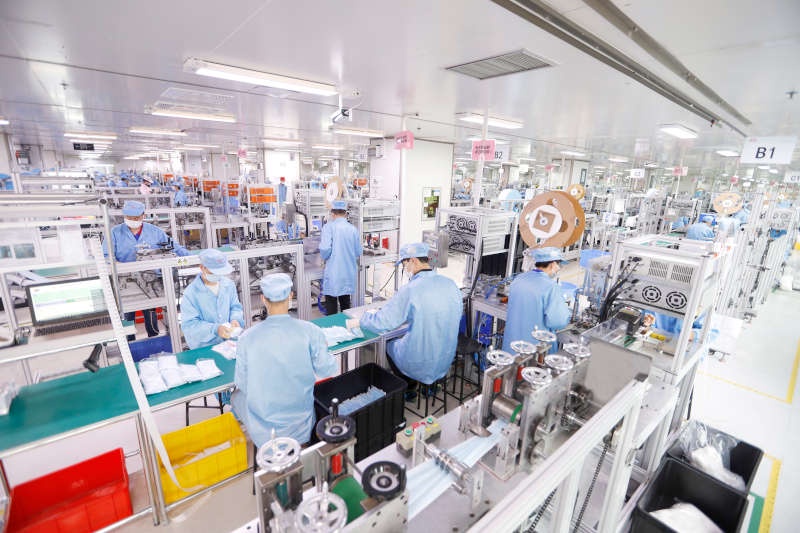
BYD now produces also face-masks. Giant plant created to tackle COVID-19 outbreak - Sustainable Bus
BYD has announced the creation of the world’s largest mass-produced face-mask production plant. The move by BYD comes as demand for hygiene products

Sustainable Bus (www.sustainable-bus.com)
Unlike the story you told, this was not an uphill battle task, but it was downhill: The requirements to make face masks are easy compared to what BYD regularly does.
-
@masek Counter-example: In early 2020, there was a lot of demand for FFP2 masks, exceeding production capacity by a large margin. BYD's management decided that they go into this business quickly, but had no experience whatsoever with FFP2 masks. They did have ample experience with batteries, and spare machines for just about anything you might need for battery or car production. And a huge team of skilled workers to reconfigure machinery of that kind.
They built machines to produce FFP2 masks within a week, and within months, they were the world's leading FFP2 mask producer. Actually, the machines they had were much higher quality than the machines they needed. They managed to assemble new face mask production machines at a rate of 5-10 new machines per day (!).
BYD now produces also face-masks. Giant plant created to tackle COVID-19 outbreak - Sustainable Bus
BYD has announced the creation of the world’s largest mass-produced face-mask production plant. The move by BYD comes as demand for hygiene products
Sustainable Bus (www.sustainable-bus.com)
Unlike the story you told, this was not an uphill battle task, but it was downhill: The requirements to make face masks are easy compared to what BYD regularly does.
@forthy42 Sometimes you can transfer KnowHow and in the end an even better product emerges. But I see enough cases where things go wrong.
Yesterday evening a friend was complaining: for their work they need measurement instruments. They have 30 year old ones which work. But they have only so many to go around. They ordered new ones. The original manufacturer has now three times in a row failed to deliver a functional one.
-
You know what company I hold a fiece grudge on? Analog Devices.
They've been gobbling most if not all of my second source suppliers for precision electronics circuits.
These days I rather spend weeks designing circuits from discrete parts, around wide operational ranges, and if I really have to put an IC in there, it's going to be a part that has hundreds of similar performing replacements.
@datenwolf @lobingera @masek "You know what company I hold a fiece grudge on? Analog Devices." That's very worrying because a huge swath of products is held together by their products! Audio, RF, SDR, etc., etc. My least-favourite is Qualcomm for many of the same reasons.
-
@datenwolf @lobingera @masek "You know what company I hold a fiece grudge on? Analog Devices." That's very worrying because a huge swath of products is held together by their products! Audio, RF, SDR, etc., etc. My least-favourite is Qualcomm for many of the same reasons.
Yes, I know. ADI's actions over the past decade (and a half) should have triggered several cartel regulation authorities (FTC, etc.) to spring into action.
ADI is already holding monopolies on several key component classes. There might be a couple of Chinese replacements in existence, but they're more or less invisible to the western markets.
The EU is asleep at the wheel. They should have incentivized creation of European counterparts decades ago.
-
What a lot of people do not understand is the fragility of supply chains.
Setup
Let us assume there is a part X that is used by a large number of other companies. It is not glamorous, it is not expensive, and nobody outside a small circle of specialists ever thinks about it. But it is needed. Without it, other products cannot be finished.
Everything is fine
Part X is made by a small company with a few dozen employees and a machine that is several decades old.
Everything runs smoothly. The company knows how to maintain the machine. They know how to operate it. They know its strange noises, its moods, its undocumented rituals. They know which lever needs a bit of persuasion on cold mornings and which replacement part must be machined by hand because nobody has made the original since 1987. They also know how to train new employees, because the knowledge still exists inside the company.
Crisis
Then, suddenly, a few large customers run into a crisis.
Orders slow down. The warehouses fill up with part X. Prices fall.
The company downsizes. Then it downsizes again. But nobody really notices, because stocks are still full. Customers are not yet affected. Purchasing departments can still get part X from inventory. Balance sheets still look fine. The problem has not yet reached the spreadsheet.
If this goes on for long enough, the company goes broke.
Again, nobody really notices. Stocks are still full. Some people may worry, but as long as no current production line is stopping and no quarterly number is visibly bleeding, nothing urgent is done.
The employees move on. They retire, change industries, start new careers. The old machine is sold for scrap. The building is repurposed. The knowledge evaporates.
Recovery
A few years later, demand picks up again.
The warehouses slowly empty. Stocks run low. People start ordering part X again, only to discover that nobody is offering it anymore.
Now someone decides to restart production.
The first thing they discover is that there is no machine. Building a new one would be prohibitively expensive, assuming anyone still knows how to build it properly. So they desperately search for an old one.
They get lucky. In a scrapyard, they find a machine that used to produce part X. It is rusted, incomplete, and dysfunctional. Naturally, they buy it.
Now they try to get it working again.
But there is another problem. There are no people left who know how to maintain it. So they hire someone who understands industrial maintenance in general, but has never worked on this specific machine. That person does their best. They improvise. They read old manuals. They reverse-engineer undocumented fixes. They keep the machine alive with skill, patience, and increasing amounts of despair.
But it breaks down every few hours. Output is abysmal.
Bottlenecks
And now that one poor maintenance person is overworked. They need help. But training help requires time, and the only person who can train others is the same person needed to keep the machine barely running. Every hour spent teaching is an hour not spent preventing the next failure.
Very few businesses survive this phase.
There is no institutional knowledge anymore. New people are hired, begin training, look at the state of the machine, the chaos of the process, and the constant emergency mode, and conclude that the business is doomed anyway. Then they quit.
Churn becomes terrible. Even if the company survives financially, it remains fragile. It is always just one or two people quitting away from disaster.
At the end the world decides it needs to get rid of part X as the supply is too fragile.
Summary
This is still very much simplified. The reality is more complex, more ugly.
And that is the part many people miss: a supply chain is not just warehouses, contracts, prices, and transport routes. It is also people, habits, obsolete machines, informal knowledge, and boring little skills that nobody values until they are gone.
@masek
A similar scenario. In happy days, the world came to depend on a particular part. Three companies in one country learned to make it better, faster and cheaper than anyone else. They competed, guaranteeing the lowest price. The world bought from them to their satisfaction.Then one day, in a fit of pique, one country applied huge tariffs, in hopes of moving production home. Soon the world had two standards and two prices. Everyone was worse off.
It's happening today in WiFi routers
-
@masek
A similar scenario. In happy days, the world came to depend on a particular part. Three companies in one country learned to make it better, faster and cheaper than anyone else. They competed, guaranteeing the lowest price. The world bought from them to their satisfaction.Then one day, in a fit of pique, one country applied huge tariffs, in hopes of moving production home. Soon the world had two standards and two prices. Everyone was worse off.
It's happening today in WiFi routers
@Stinson_108 Disturbances for supply systems are many: tariffs is one of them, pandemics are another, we also had natural disasters, political upheaval.
But I observe that we build every day longer, more complex supply chains and care less and less about redundancy.
This will cost us ...
-
What a lot of people do not understand is the fragility of supply chains.
Setup
Let us assume there is a part X that is used by a large number of other companies. It is not glamorous, it is not expensive, and nobody outside a small circle of specialists ever thinks about it. But it is needed. Without it, other products cannot be finished.
Everything is fine
Part X is made by a small company with a few dozen employees and a machine that is several decades old.
Everything runs smoothly. The company knows how to maintain the machine. They know how to operate it. They know its strange noises, its moods, its undocumented rituals. They know which lever needs a bit of persuasion on cold mornings and which replacement part must be machined by hand because nobody has made the original since 1987. They also know how to train new employees, because the knowledge still exists inside the company.
Crisis
Then, suddenly, a few large customers run into a crisis.
Orders slow down. The warehouses fill up with part X. Prices fall.
The company downsizes. Then it downsizes again. But nobody really notices, because stocks are still full. Customers are not yet affected. Purchasing departments can still get part X from inventory. Balance sheets still look fine. The problem has not yet reached the spreadsheet.
If this goes on for long enough, the company goes broke.
Again, nobody really notices. Stocks are still full. Some people may worry, but as long as no current production line is stopping and no quarterly number is visibly bleeding, nothing urgent is done.
The employees move on. They retire, change industries, start new careers. The old machine is sold for scrap. The building is repurposed. The knowledge evaporates.
Recovery
A few years later, demand picks up again.
The warehouses slowly empty. Stocks run low. People start ordering part X again, only to discover that nobody is offering it anymore.
Now someone decides to restart production.
The first thing they discover is that there is no machine. Building a new one would be prohibitively expensive, assuming anyone still knows how to build it properly. So they desperately search for an old one.
They get lucky. In a scrapyard, they find a machine that used to produce part X. It is rusted, incomplete, and dysfunctional. Naturally, they buy it.
Now they try to get it working again.
But there is another problem. There are no people left who know how to maintain it. So they hire someone who understands industrial maintenance in general, but has never worked on this specific machine. That person does their best. They improvise. They read old manuals. They reverse-engineer undocumented fixes. They keep the machine alive with skill, patience, and increasing amounts of despair.
But it breaks down every few hours. Output is abysmal.
Bottlenecks
And now that one poor maintenance person is overworked. They need help. But training help requires time, and the only person who can train others is the same person needed to keep the machine barely running. Every hour spent teaching is an hour not spent preventing the next failure.
Very few businesses survive this phase.
There is no institutional knowledge anymore. New people are hired, begin training, look at the state of the machine, the chaos of the process, and the constant emergency mode, and conclude that the business is doomed anyway. Then they quit.
Churn becomes terrible. Even if the company survives financially, it remains fragile. It is always just one or two people quitting away from disaster.
At the end the world decides it needs to get rid of part X as the supply is too fragile.
Summary
This is still very much simplified. The reality is more complex, more ugly.
And that is the part many people miss: a supply chain is not just warehouses, contracts, prices, and transport routes. It is also people, habits, obsolete machines, informal knowledge, and boring little skills that nobody values until they are gone.
@masek There are a lot of small Japanese companies like this.
-
What a lot of people do not understand is the fragility of supply chains.
Setup
Let us assume there is a part X that is used by a large number of other companies. It is not glamorous, it is not expensive, and nobody outside a small circle of specialists ever thinks about it. But it is needed. Without it, other products cannot be finished.
Everything is fine
Part X is made by a small company with a few dozen employees and a machine that is several decades old.
Everything runs smoothly. The company knows how to maintain the machine. They know how to operate it. They know its strange noises, its moods, its undocumented rituals. They know which lever needs a bit of persuasion on cold mornings and which replacement part must be machined by hand because nobody has made the original since 1987. They also know how to train new employees, because the knowledge still exists inside the company.
Crisis
Then, suddenly, a few large customers run into a crisis.
Orders slow down. The warehouses fill up with part X. Prices fall.
The company downsizes. Then it downsizes again. But nobody really notices, because stocks are still full. Customers are not yet affected. Purchasing departments can still get part X from inventory. Balance sheets still look fine. The problem has not yet reached the spreadsheet.
If this goes on for long enough, the company goes broke.
Again, nobody really notices. Stocks are still full. Some people may worry, but as long as no current production line is stopping and no quarterly number is visibly bleeding, nothing urgent is done.
The employees move on. They retire, change industries, start new careers. The old machine is sold for scrap. The building is repurposed. The knowledge evaporates.
Recovery
A few years later, demand picks up again.
The warehouses slowly empty. Stocks run low. People start ordering part X again, only to discover that nobody is offering it anymore.
Now someone decides to restart production.
The first thing they discover is that there is no machine. Building a new one would be prohibitively expensive, assuming anyone still knows how to build it properly. So they desperately search for an old one.
They get lucky. In a scrapyard, they find a machine that used to produce part X. It is rusted, incomplete, and dysfunctional. Naturally, they buy it.
Now they try to get it working again.
But there is another problem. There are no people left who know how to maintain it. So they hire someone who understands industrial maintenance in general, but has never worked on this specific machine. That person does their best. They improvise. They read old manuals. They reverse-engineer undocumented fixes. They keep the machine alive with skill, patience, and increasing amounts of despair.
But it breaks down every few hours. Output is abysmal.
Bottlenecks
And now that one poor maintenance person is overworked. They need help. But training help requires time, and the only person who can train others is the same person needed to keep the machine barely running. Every hour spent teaching is an hour not spent preventing the next failure.
Very few businesses survive this phase.
There is no institutional knowledge anymore. New people are hired, begin training, look at the state of the machine, the chaos of the process, and the constant emergency mode, and conclude that the business is doomed anyway. Then they quit.
Churn becomes terrible. Even if the company survives financially, it remains fragile. It is always just one or two people quitting away from disaster.
At the end the world decides it needs to get rid of part X as the supply is too fragile.
Summary
This is still very much simplified. The reality is more complex, more ugly.
And that is the part many people miss: a supply chain is not just warehouses, contracts, prices, and transport routes. It is also people, habits, obsolete machines, informal knowledge, and boring little skills that nobody values until they are gone.
Sounds a bit like the story of COBOL.
I wonder how many financial institutions still rely on COBOL somewhere in their systems and have nobody in-house who understands it?
Instead relying on outside contractors employing the few remaining and ageing COBOL specialists.
What happens when they finally retire and/or die?