Skip to content
  • Categories
  • Recent
  • Tags
  • Popular
  • World
  • Users
  • Groups
Skins
  • Light
  • Brite
  • Cerulean
  • Cosmo
  • Flatly
  • Journal
  • Litera
  • Lumen
  • Lux
  • Materia
  • Minty
  • Morph
  • Pulse
  • Sandstone
  • Simplex
  • Sketchy
  • Spacelab
  • United
  • Yeti
  • Zephyr
  • Dark
  • Cyborg
  • Darkly
  • Quartz
  • Slate
  • Solar
  • Superhero
  • Vapor

  • Default (Cyborg)
  • No Skin
Collapse
Brand Logo

CIRCLE WITH A DOT

  1. Home
  2. Uncategorized
  3. This semester, I'm teaching my class on System Administration / Internet Operations once again.

This semester, I'm teaching my class on System Administration / Internet Operations once again.

Scheduled Pinned Locked Moved Uncategorized
sysadmindevopssre
32 Posts 2 Posters 0 Views
  • Oldest to Newest
  • Newest to Oldest
  • Most Votes
Reply
  • Reply as topic
Log in to reply
This topic has been deleted. Only users with topic management privileges can see it.
  • jschauma@mstdn.socialJ jschauma@mstdn.social

    System Administration: Week 4: Package Management

    In this video, we continue our discussion of the difference and relationship between the operating system and so-called "add-on software". We conclude that in order to install and maintain all such software, we want to use a package manager, and illustrate common features by example of the 'dpkg', 'rpm', and #NetBSD's #pkgsrc tools.
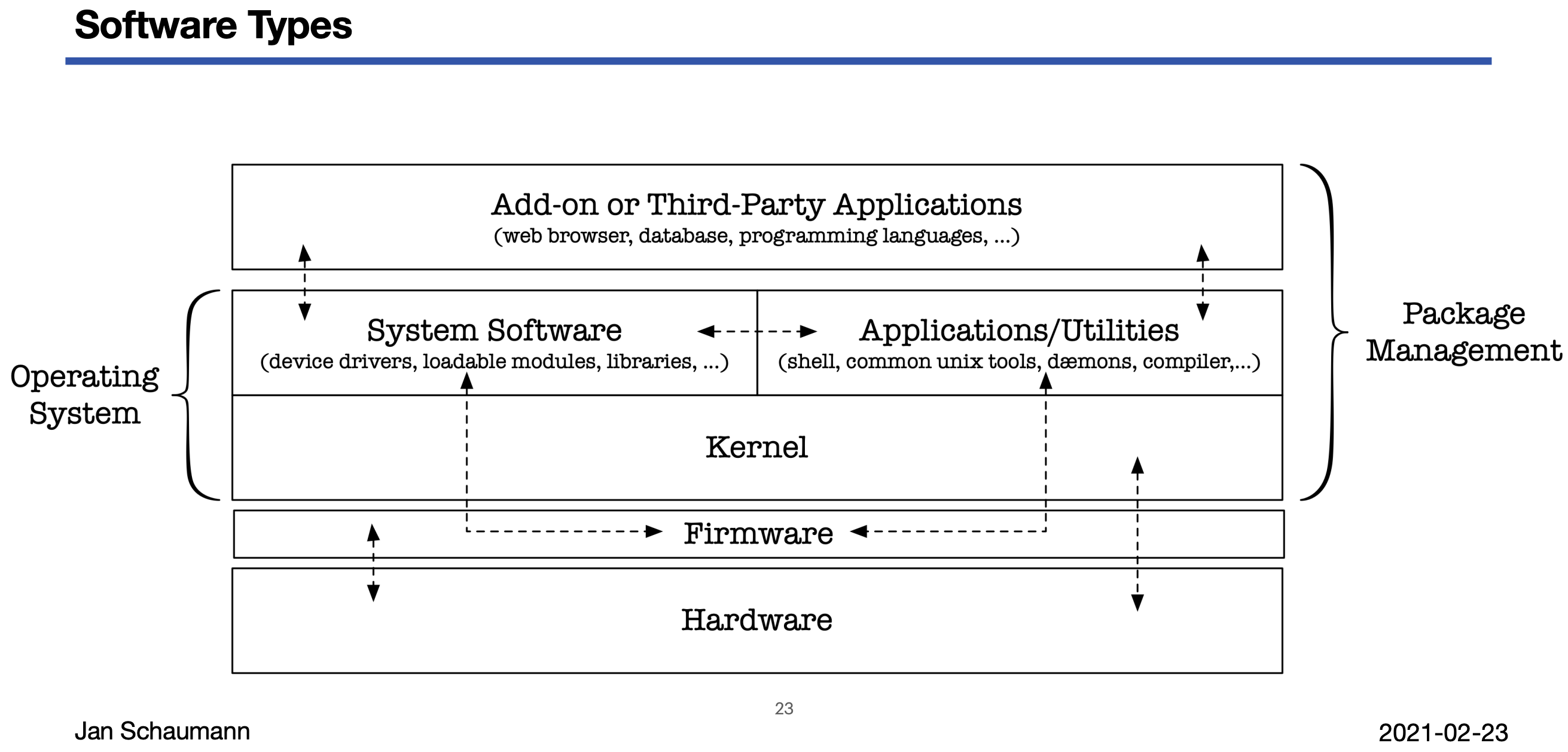
    https://youtu.be/dU66_sPjnXg

    #sysadmin #devops #sre

    Link Preview Image
    jschauma@mstdn.socialJ This user is from outside of this forum
    jschauma@mstdn.socialJ This user is from outside of this forum
    jschauma@mstdn.social
    wrote last edited by
    #22

    System Administration: Week 4: Package Management Pitfalls

    In this video, we discuss some of the problems with package managers, native language packaging solutions, and the implications of their use on dependency resolution, package integrity, and trust. We revisit "left-pad" and "dependency confusion" to illustrate some of these problems.

    https://youtu.be/R3zlbOND00Q

    #sysadmin #devops #sre

    jschauma@mstdn.socialJ 1 Reply Last reply
    0
    • jschauma@mstdn.socialJ jschauma@mstdn.social

      System Administration: Week 4: Package Management Pitfalls

      In this video, we discuss some of the problems with package managers, native language packaging solutions, and the implications of their use on dependency resolution, package integrity, and trust. We revisit "left-pad" and "dependency confusion" to illustrate some of these problems.

      https://youtu.be/R3zlbOND00Q

      #sysadmin #devops #sre

      jschauma@mstdn.socialJ This user is from outside of this forum
      jschauma@mstdn.socialJ This user is from outside of this forum
      jschauma@mstdn.social
      wrote last edited by
      #23

      System Administration: Week 5: Networking I: Layers

      In this video, we begin our longer discussion on the topic of "networking". We're using tcpdump(8) to capture a single TCP SYN packet and start looking at the MAC and IP information, teasing out each individual byte. And don't worry, we dunk on the OSI stack model as needed and popular these days.

      https://youtu.be/qYWkJ2KyRHU

      #sysadmin #devops #sre

      jschauma@mstdn.socialJ 1 Reply Last reply
      0
      • jschauma@mstdn.socialJ jschauma@mstdn.social

        System Administration: Week 5: Networking I: Layers

        In this video, we begin our longer discussion on the topic of "networking". We're using tcpdump(8) to capture a single TCP SYN packet and start looking at the MAC and IP information, teasing out each individual byte. And don't worry, we dunk on the OSI stack model as needed and popular these days.

        https://youtu.be/qYWkJ2KyRHU

        #sysadmin #devops #sre

        jschauma@mstdn.socialJ This user is from outside of this forum
        jschauma@mstdn.socialJ This user is from outside of this forum
        jschauma@mstdn.social
        wrote last edited by
        #24

        System Administration: Week 5: Networking I: IPv4 Basics & CIDR subnetting

        In this video, we cover the basics of the 32-bit IPv4 address and how we organize networks using Classless Inter-Domain Routing or CIDR subnetting. (Don't worry, we'll get to #IPv6 in the next video.)

        https://youtu.be/CxdN-TcpSk8

        #sysadmin #devops #sre

        jschauma@mstdn.socialJ 1 Reply Last reply
        0
        • jschauma@mstdn.socialJ jschauma@mstdn.social

          System Administration: Week 5: Networking I: IPv4 Basics & CIDR subnetting

          In this video, we cover the basics of the 32-bit IPv4 address and how we organize networks using Classless Inter-Domain Routing or CIDR subnetting. (Don't worry, we'll get to #IPv6 in the next video.)

          https://youtu.be/CxdN-TcpSk8

          #sysadmin #devops #sre

          jschauma@mstdn.socialJ This user is from outside of this forum
          jschauma@mstdn.socialJ This user is from outside of this forum
          jschauma@mstdn.social
          wrote last edited by
          #25

          System Administration: Week 5: Networking I: IPv6 Basics

          In this video, we get familiar with our Big Hero IPv6, looking at the structure of the IPv6 header and IPv6 address representations.

          Since we're using AWS #EC2, remember that we have instructions for how to set up a dual-stack VPC and subnet to launch your instances in:

          Link Preview Image
          Creating AWS IPv4/IPv6 Dual Stack EC2 Instances

          A quick summary of the AWS EC2 resources needed to create an IPv6-enabled or dualstack instance.

          favicon

          (www.netmeister.org)

          https://youtu.be/wZ5cmlIlP3I

          #sysadmin #devops #sre

          jschauma@mstdn.socialJ 1 Reply Last reply
          0
          • jschauma@mstdn.socialJ jschauma@mstdn.social

            System Administration: Week 5: Networking I: IPv6 Basics

            In this video, we get familiar with our Big Hero IPv6, looking at the structure of the IPv6 header and IPv6 address representations.

            Since we're using AWS #EC2, remember that we have instructions for how to set up a dual-stack VPC and subnet to launch your instances in:

            Link Preview Image
            Creating AWS IPv4/IPv6 Dual Stack EC2 Instances

            A quick summary of the AWS EC2 resources needed to create an IPv6-enabled or dualstack instance.

            favicon

            (www.netmeister.org)

            https://youtu.be/wZ5cmlIlP3I

            #sysadmin #devops #sre

            jschauma@mstdn.socialJ This user is from outside of this forum
            jschauma@mstdn.socialJ This user is from outside of this forum
            jschauma@mstdn.social
            wrote last edited by
            #26

            System Administration: Week 5: Networking I: IP Allocation & IPv4 Exhaustion

            Mommy, where do IP addresses come from? In this video, we discuss how IANA allocates IP addresses to the Regional Internet Registries and try to illustrate just how large the #IPv6 address space is.

            https://youtu.be/r2GXh8uUgWc

            #sysadmin #devops #sre

            jschauma@mstdn.socialJ 1 Reply Last reply
            0
            • jschauma@mstdn.socialJ jschauma@mstdn.social

              System Administration: Week 5: Networking I: IP Allocation & IPv4 Exhaustion

              Mommy, where do IP addresses come from? In this video, we discuss how IANA allocates IP addresses to the Regional Internet Registries and try to illustrate just how large the #IPv6 address space is.

              https://youtu.be/r2GXh8uUgWc

              #sysadmin #devops #sre

              jschauma@mstdn.socialJ This user is from outside of this forum
              jschauma@mstdn.socialJ This user is from outside of this forum
              jschauma@mstdn.social
              wrote last edited by
              #27

              System Administration: Week 5: Networking I:The Physical Internet

              In this video, we look at the physical structure of the internet, with a focus on submarine internet communications cables. Jumping from the bottom of the OSI stack all the way to Layer 9 ("political"), we then discuss how different countries use their political power to enforce internet blocks on their citizens, leading us to warrantless wiretapping in AT&T's room 641A.

              https://youtu.be/4YrHdD1uIxs

              #sysadmin #devops #sre

              jschauma@mstdn.socialJ 1 Reply Last reply
              0
              • jschauma@mstdn.socialJ jschauma@mstdn.social

                System Administration: Week 5: Networking I:The Physical Internet

                In this video, we look at the physical structure of the internet, with a focus on submarine internet communications cables. Jumping from the bottom of the OSI stack all the way to Layer 9 ("political"), we then discuss how different countries use their political power to enforce internet blocks on their citizens, leading us to warrantless wiretapping in AT&T's room 641A.

                https://youtu.be/4YrHdD1uIxs

                #sysadmin #devops #sre

                jschauma@mstdn.socialJ This user is from outside of this forum
                jschauma@mstdn.socialJ This user is from outside of this forum
                jschauma@mstdn.social
                wrote last edited by
                #28

                System Administration: Week 5: Networking I: A Network of Networks

                In this video, we look at how independent networks connect to one another, how Autonomous Systems numbers allow us to identify network operators, and how peering between independent ASs works.

                https://youtu.be/OOq7jGlhBjY

                #sysadmin #devops #sre

                jschauma@mstdn.socialJ 1 Reply Last reply
                0
                • jschauma@mstdn.socialJ jschauma@mstdn.social

                  System Administration: Week 5: Networking I: A Network of Networks

                  In this video, we look at how independent networks connect to one another, how Autonomous Systems numbers allow us to identify network operators, and how peering between independent ASs works.

                  https://youtu.be/OOq7jGlhBjY

                  #sysadmin #devops #sre

                  jschauma@mstdn.socialJ This user is from outside of this forum
                  jschauma@mstdn.socialJ This user is from outside of this forum
                  jschauma@mstdn.social
                  wrote last edited by
                  #29

                  System Administration: Week 6: Networking II: A Simple Request

                  In this video, we trace a simple HTTP request made via telnet to find out just how exactly our application knows how to connect to the remote server. In the process we learn about the ktrace(1) utility, as well as the nsswitch.conf(5), hosts(5), and resolv.conf(5) configuration files.

                  https://youtu.be/mw1YzFSYuwE

                  #sysadmin #devops #sre

                  paul_ipv6@infosec.exchangeP 1 Reply Last reply
                  0
                  • jschauma@mstdn.socialJ jschauma@mstdn.social

                    System Administration: Week 6: Networking II: A Simple Request

                    In this video, we trace a simple HTTP request made via telnet to find out just how exactly our application knows how to connect to the remote server. In the process we learn about the ktrace(1) utility, as well as the nsswitch.conf(5), hosts(5), and resolv.conf(5) configuration files.

                    https://youtu.be/mw1YzFSYuwE

                    #sysadmin #devops #sre

                    paul_ipv6@infosec.exchangeP This user is from outside of this forum
                    paul_ipv6@infosec.exchangeP This user is from outside of this forum
                    paul_ipv6@infosec.exchange
                    wrote last edited by
                    #30

                    @jschauma

                    ooh. the first peek down the rabbit hole that is DNS resolution. 🙂

                    jschauma@mstdn.socialJ 1 Reply Last reply
                    0
                    • paul_ipv6@infosec.exchangeP paul_ipv6@infosec.exchange

                      @jschauma

                      ooh. the first peek down the rabbit hole that is DNS resolution. 🙂

                      jschauma@mstdn.socialJ This user is from outside of this forum
                      jschauma@mstdn.socialJ This user is from outside of this forum
                      jschauma@mstdn.social
                      wrote last edited by
                      #31

                      @paul_ipv6 Yeah. Only on most Linux flavors these days that quickly goes sideways and straight into systemd. 🤮

                      paul_ipv6@infosec.exchangeP 1 Reply Last reply
                      0
                      • jschauma@mstdn.socialJ jschauma@mstdn.social

                        @paul_ipv6 Yeah. Only on most Linux flavors these days that quickly goes sideways and straight into systemd. 🤮

                        paul_ipv6@infosec.exchangeP This user is from outside of this forum
                        paul_ipv6@infosec.exchangeP This user is from outside of this forum
                        paul_ipv6@infosec.exchange
                        wrote last edited by
                        #32

                        @jschauma

                        yup. hence my "rabbit hole" description.

                        DoT/DoH, systemd-resolved, OS level caches in M$/OSX, lying walled garden proxies.

                        it's much like chess. you can learn the basic rules in an afternoon but still not really master it in a lifetime.

                        1 Reply Last reply
                        1
                        0
                        • R relay@relay.infosec.exchange shared this topic

                        Reply
                        • Reply as topic
                        Log in to reply
                        • Oldest to Newest
                        • Newest to Oldest
                        • Most Votes


                        • Login

                        • Login or register to search.
                        • First post
                          Last post
                        0
                        • Categories
                        • Recent
                        • Tags
                        • Popular
                        • World
                        • Users
                        • Groups