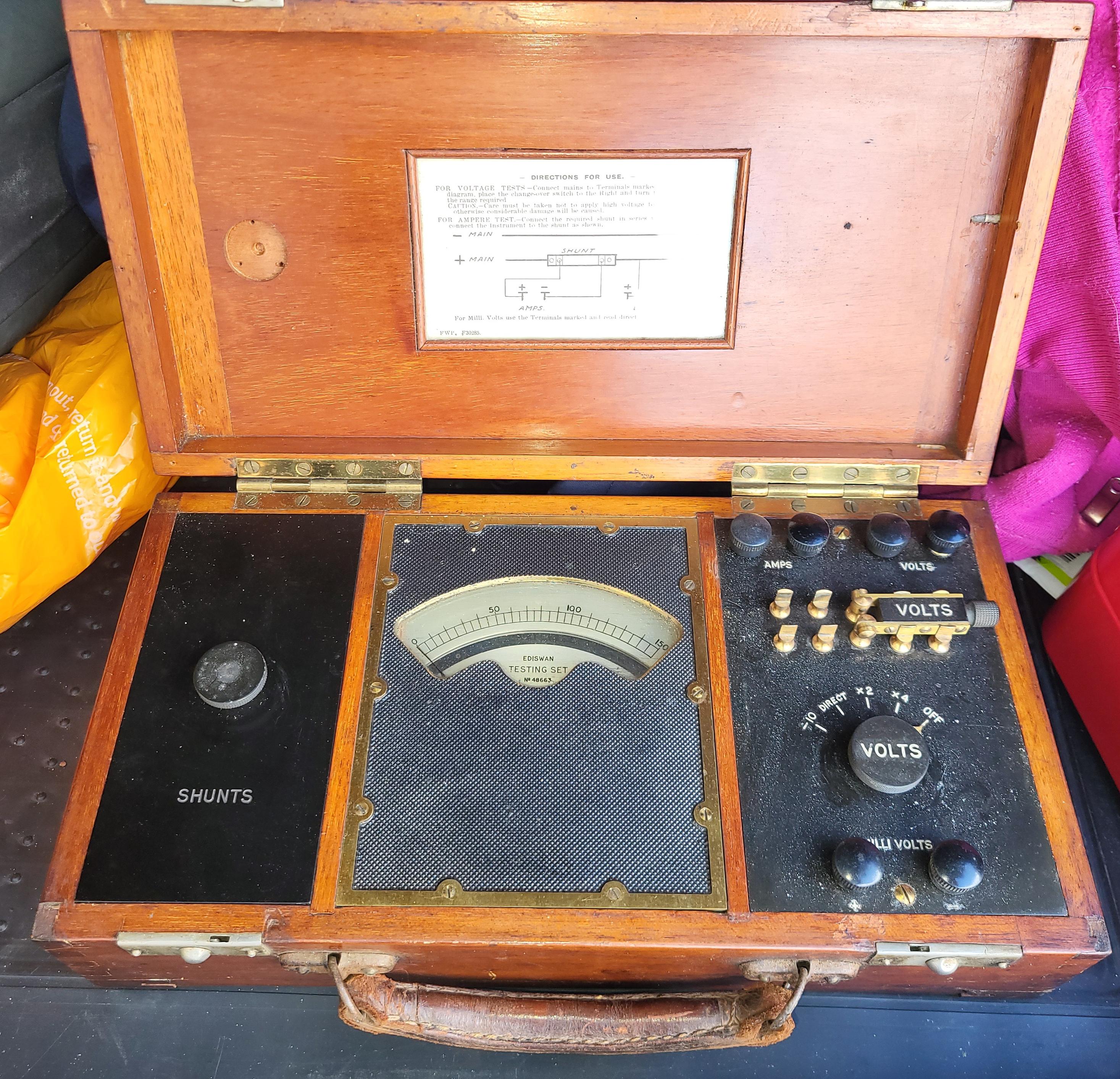
Went for breakfast this morning, and returned with one of those old fangled multimeters.
-
@Extelec helluva restaurant.
@retech Two different places, but they are within 25M of each other.
-
Went for breakfast this morning, and returned with one of those old fangled multimeters.
No shunts in the storage unfortunately. Will test later.
@Extelec
 considerable damage you say...
 -
Went for breakfast this morning, and returned with one of those old fangled multimeters.
No shunts in the storage unfortunately. Will test later.
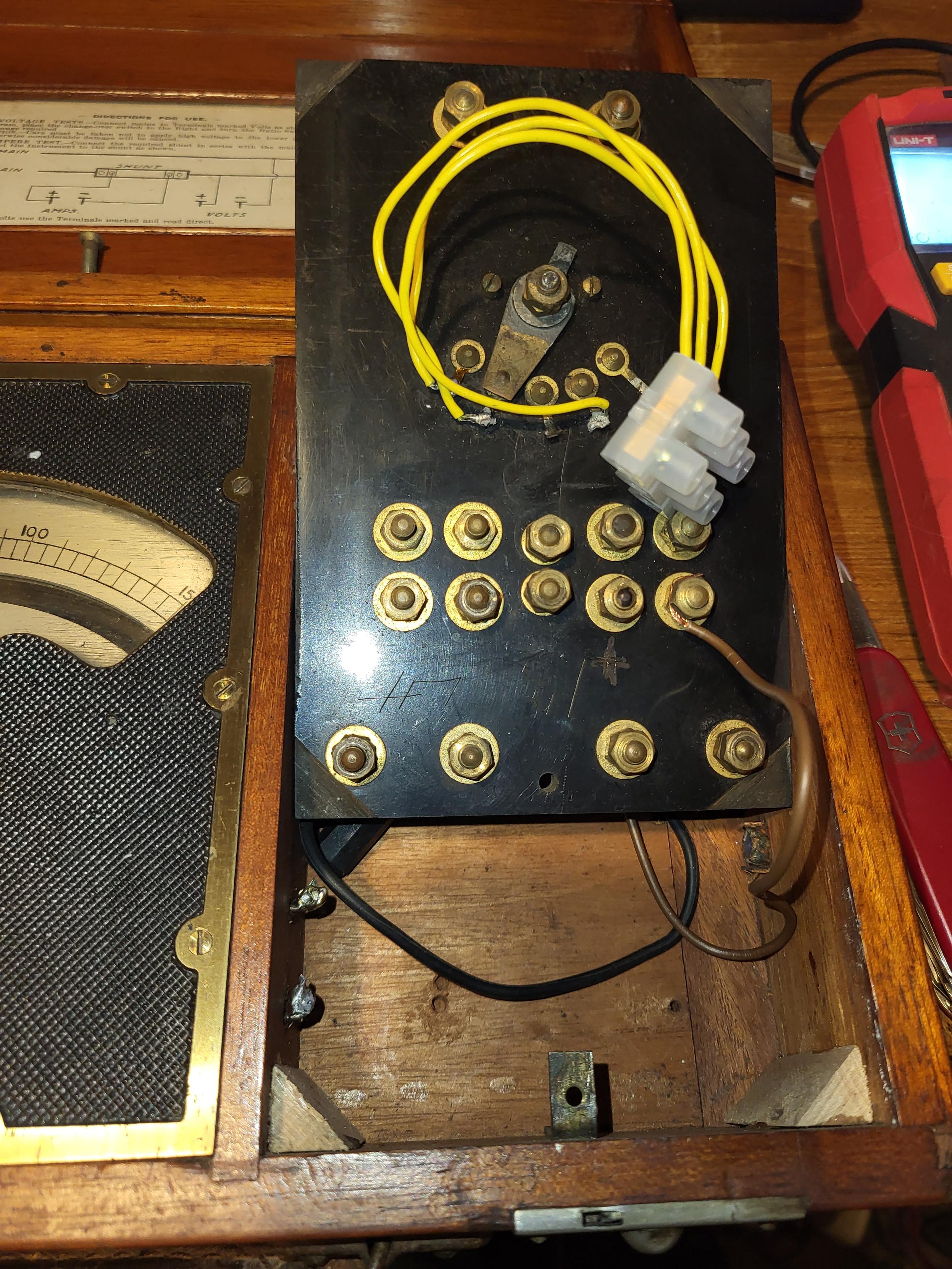
At first look, the insides are not what i expected... not at all...
-
At first look, the insides are not what i expected... not at all...
@Extelec Has someone been in there before you?

-
@Extelec Has someone been in there before you?
@snaprails Oh yes, with no idea what damage they were doing, by the looks of it.
-
At first look, the insides are not what i expected... not at all...
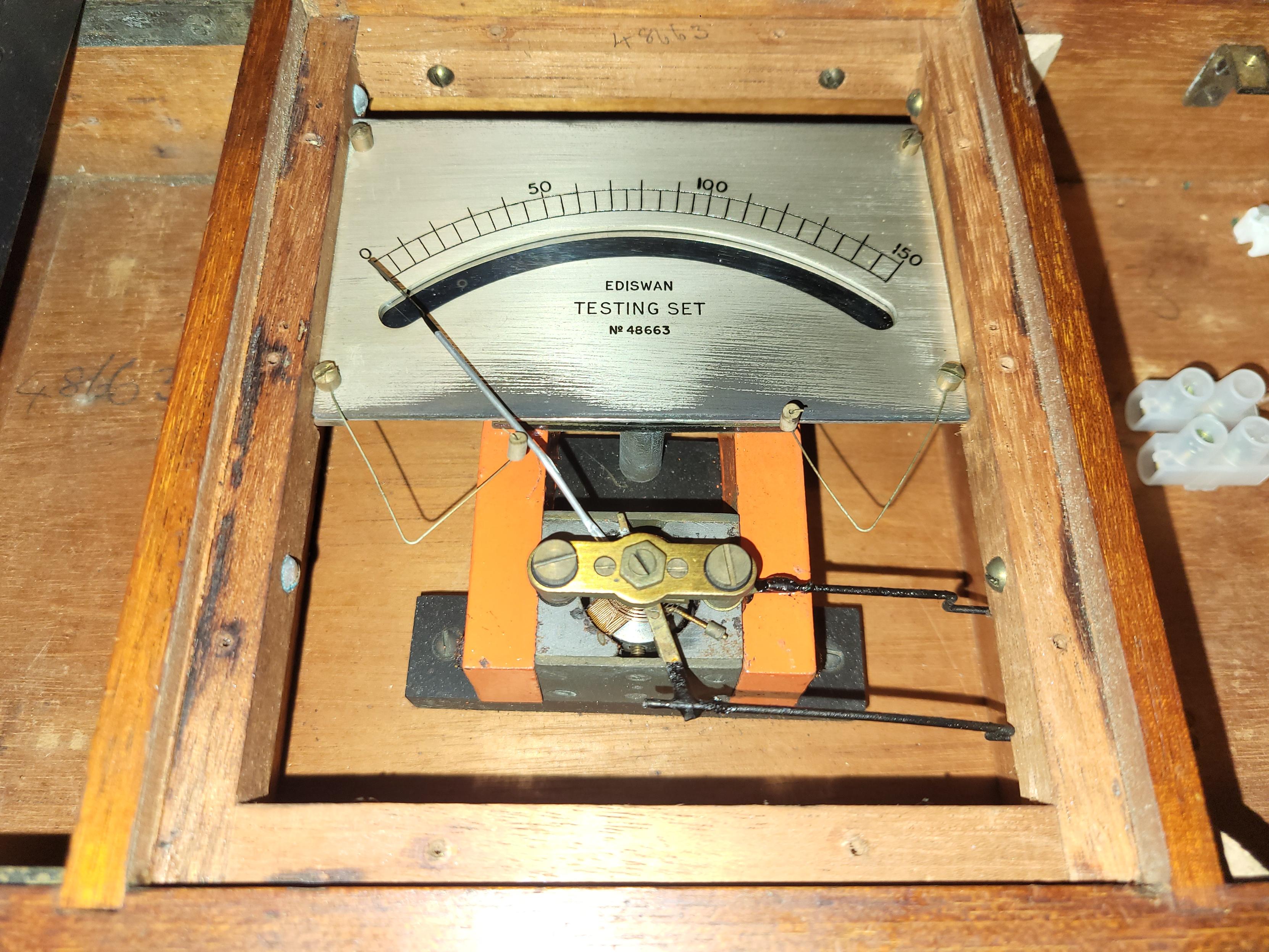
At least the meter looks untampered with, although not working and a dubiously low resistance.
-
At least the meter looks untampered with, although not working and a dubiously low resistance.
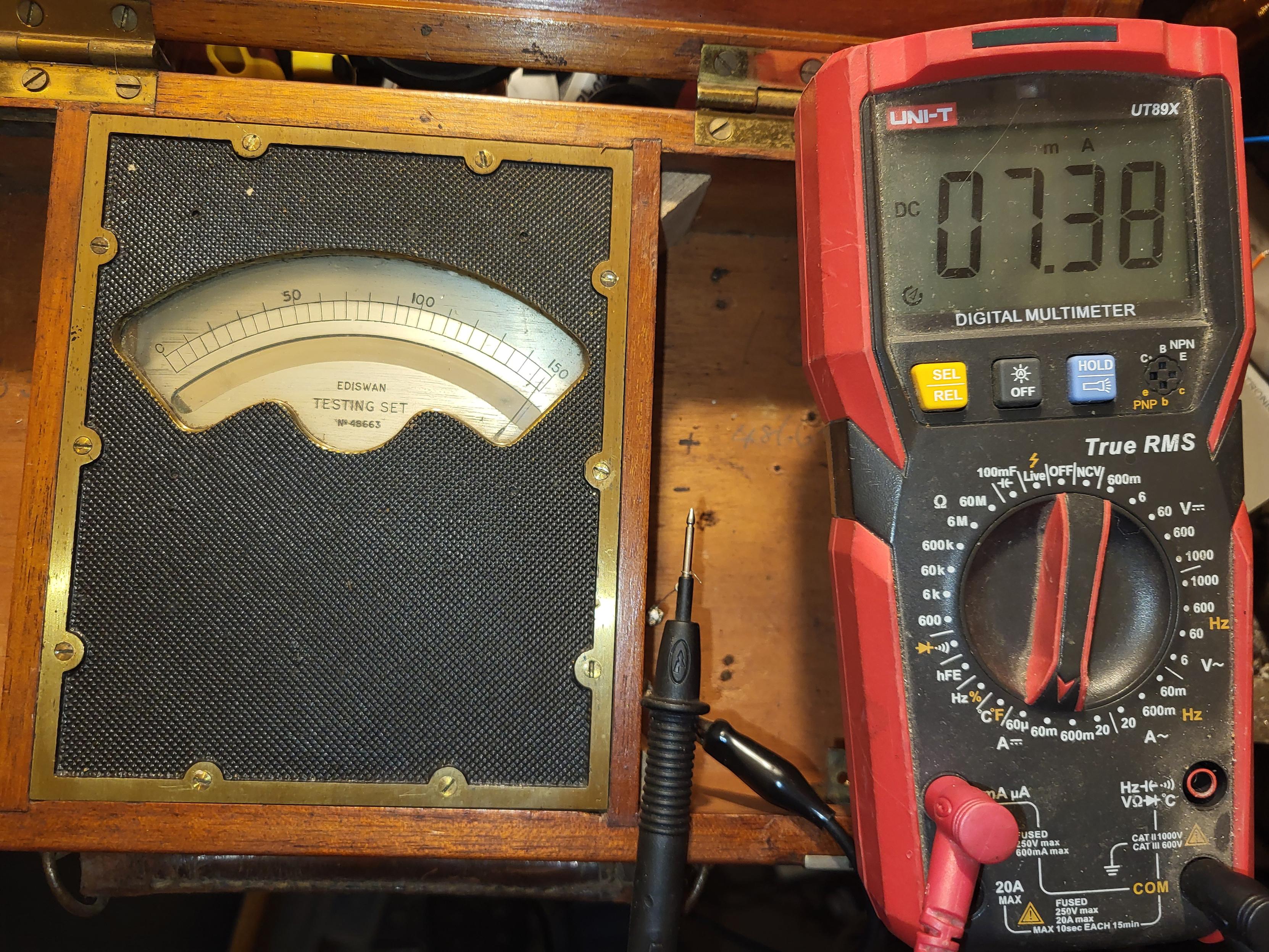
A bit of a clean and the meter works, 7.4mA for full scale. It does explain the low resistance. You forget how insensitive early meters were. I also suspect the magnets in the movement might not be what they once were.
-
At first look, the insides are not what i expected... not at all...
@Extelec oh no, vintage choc block


 ️
️ -
A bit of a clean and the meter works, 7.4mA for full scale. It does explain the low resistance. You forget how insensitive early meters were. I also suspect the magnets in the movement might not be what they once were.
I've worked out the Voltage scales.
Off
0-600v x4
0-300v x2
0-150v direct
0-15v /10
and 0-150mV for the Mili-volt connection.They should just be a matter of getting the right resistor values, and rewiring.
Current is a guess, but I'll go for 0-1.5A without shunt. As this will be a useful range, no other reason.
This could change, IF I get more information on the set.
-
@Extelec oh no, vintage choc block
️@hackhitchin Precisely ...
-
I've worked out the Voltage scales.
Off
0-600v x4
0-300v x2
0-150v direct
0-15v /10
and 0-150mV for the Mili-volt connection.They should just be a matter of getting the right resistor values, and rewiring.
Current is a guess, but I'll go for 0-1.5A without shunt. As this will be a useful range, no other reason.
This could change, IF I get more information on the set.
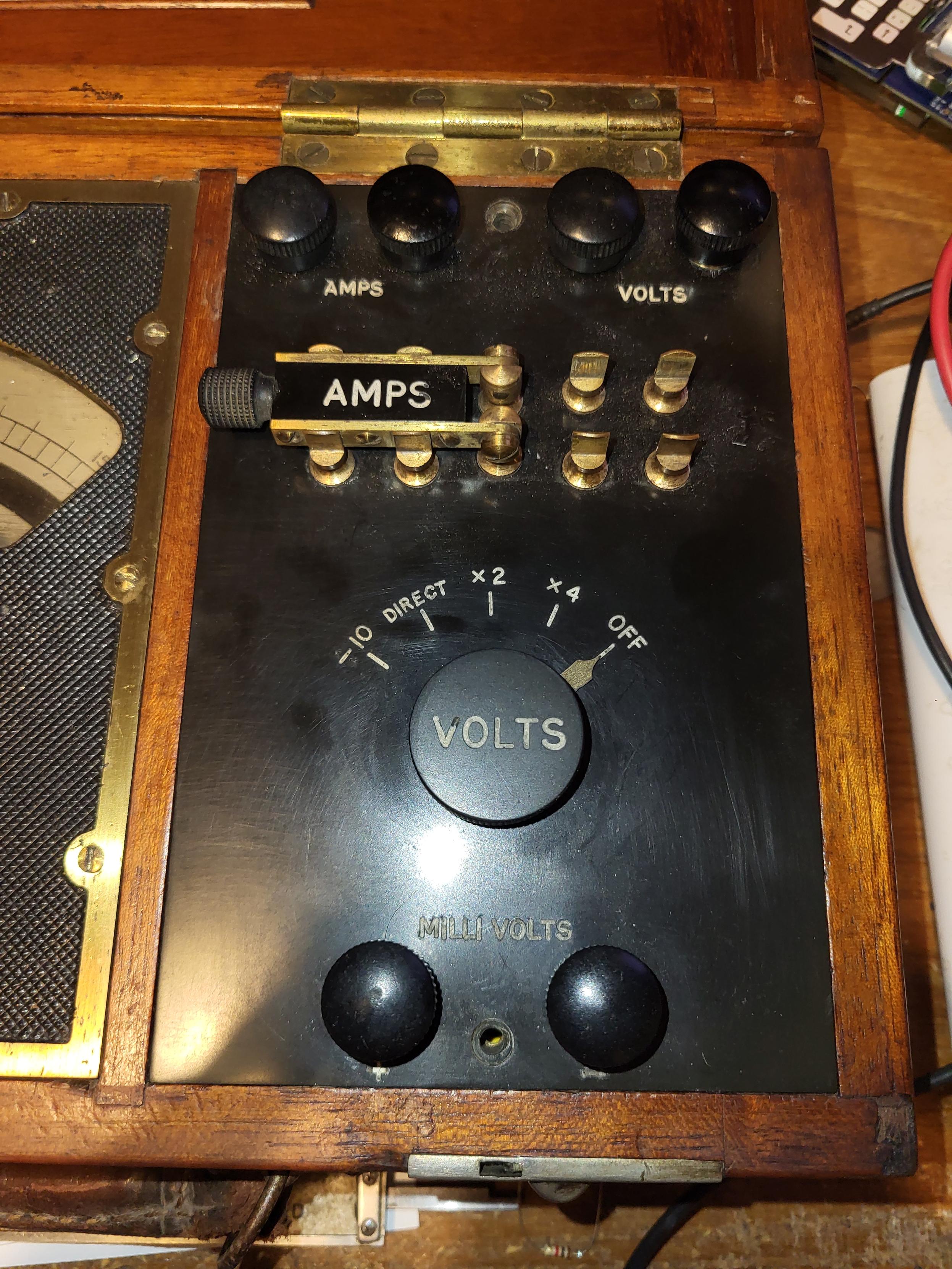
A rough plan for replacing the Innards of the meter.
Suggestions on appropriate (for its age) resistor types welcome.
As is any reference to this meters existence.
I know the company, I know it's not a transistor tester (I suspect valve era) , but the internet comes up blank.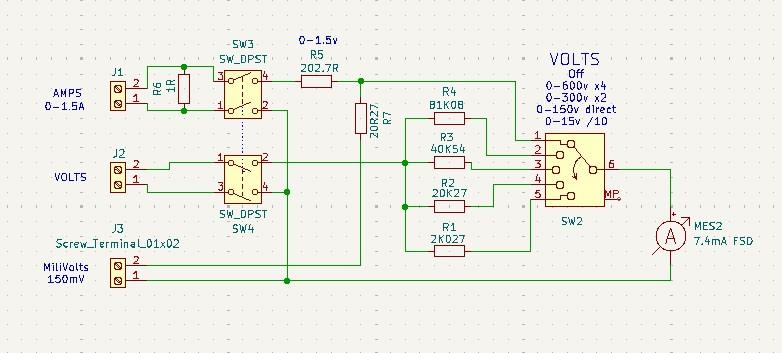
-
A rough plan for replacing the Innards of the meter.
Suggestions on appropriate (for its age) resistor types welcome.
As is any reference to this meters existence.
I know the company, I know it's not a transistor tester (I suspect valve era) , but the internet comes up blank.@Extelec hand-wound bobbin-type resistors, as in very old AVOs?
-
A rough plan for replacing the Innards of the meter.
Suggestions on appropriate (for its age) resistor types welcome.
As is any reference to this meters existence.
I know the company, I know it's not a transistor tester (I suspect valve era) , but the internet comes up blank.@Extelec
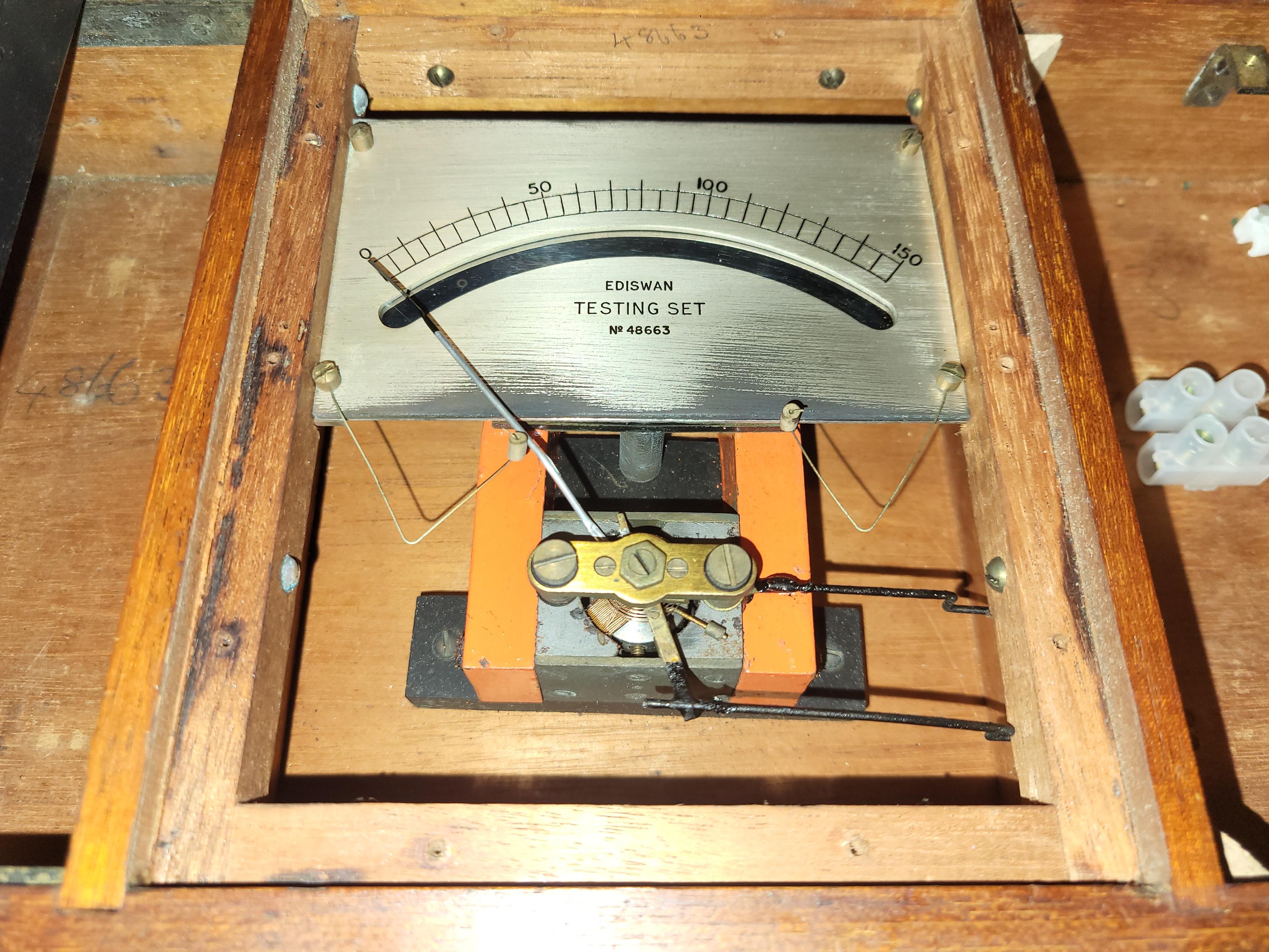
Does the outside of the case have any identification plates or disks? Looks like some of the ediswan instruments had a brass disk with a model number on them. -
@Extelec
Does the outside of the case have any identification plates or disks? Looks like some of the ediswan instruments had a brass disk with a model number on them.@bodluricon no not at all, the only reference is on the movement itself.
-
@bodluricon no not at all, the only reference is on the movement itself.
-
@bodluricon Thank you, great find!
Shame there isn't more info.
-
A rough plan for replacing the Innards of the meter.
Suggestions on appropriate (for its age) resistor types welcome.
As is any reference to this meters existence.
I know the company, I know it's not a transistor tester (I suspect valve era) , but the internet comes up blank.@Extelec I vaguely recall a bucket of water or oil used as a resistor for trams. The coil was raised from the bucket to go faster.
-
R relay@relay.mycrowd.ca shared this topic