I first saw the word “aphantasia” about a decade ago, and it was clear to me that it’s one of my mental traits, though I did still have questions about some things I can do.
-
Oh and I’ve always hated the kind of guided meditation that’s all about visualizing soothing imagery. I can remember sitting cross-legged in Girl Scouts with my eyes closed and being told to imagine flying over a green forest under a blue sky. I’m still irritated when I think of that!

@gannet i never understood that and i'm sad it took so many years for me to understand why
-
@gannet i never understood that and i'm sad it took so many years for me to understand why
@jgarfink me too!
-
@gannet this has me thinking... When I read something horrific and then imagine it I imagine it as a written scene? It's like my brain is writing/narrating a book. My thoughts are often verbal, talking to myself, is that not how most people do it?
-
@gannet I'm on the other end of whatever spectrum aphantasia is one end of, extremely vivid imagination, and I can't with most books. I am extremely grateful for the Celia Lake recommendation from you about four or five years ago, they rarely make me tense up. I'm also quick thinking and can imagine all the ways something can go wrong, so for instance breaking in to the villain's house/room always terrifies me. Don't doooo iiiiiit
I’ve seen the opposite end of the spectrum called hyperphantasia, just so you know.
Next time I come across a low stress book that’s well written, I’ll try to let you know. I’m so glad that Celia Lake’s books have worked well for you!
-
@gannet I cannot. When I read I just speak the words in my head.
I never considered I might have aphantasia because I can pull up memories of images in my head. So like I *can* see a picture? idk. Mostly my head is words.
-
@gannet I cannot. When I read I just speak the words in my head.
I never considered I might have aphantasia because I can pull up memories of images in my head. So like I *can* see a picture? idk. Mostly my head is words.
the thing I take from all this is that the conscious part of brains is even more variable than I would have guessed when I was younger
-
@mmezabet @gannet For further ADHD anecdata, I can hear entire songs in my head, but I struggle to visualize. I *can*, but it takes conscious effort and the pictures aren't clear or stable.
On the other hand, my brother (who also has ADHD) says that when he reads books, he "sees" it in his mind as detailed as if he were watching a movie. His memory of past events is also much more reliable than mine.
@emery @mmezabet @gannet more anecdata: have ADHD, very strong mental visualisation to the point where MrJane knows I'm figuring something out because I have "raptor eyes" - apparently they dart around like I'm looking at something in front of me when it's purely in my brainspace.
Can't remember faces well, but places/objects stick.
-
For me, it’s not that I have no mental imagery, but that it’s extremely vague when it exists. It is clear that images are stored somewhere in my brain, since I do recognize things and people on sight.
I am baffled that I dream in pictures at least some of the time. Maybe because my brain isn’t processing actual visual input?
I do have a strong “mind’s ear”, to the point where, if I’ve heard an author’s voice, I might hear them narrating the words when I read one of their books.
Anyway, it pleases me to learn that having a “mind’s ear” and visual dreams are things shared by some other aphantasics.
Also:
> A decade of work has left researchers convinced that aphantasia is a real phenomenon, but many are puzzled by how little it seems to affect behaviour. Behavioural tasks that are thought to depend on mental imagery don’t seem to be a problem for people with aphantasia. They perform relatively well on standard memory assessments and they seem to be able to rotate objects in their mind, to determine whether an object in one picture matches another presented from a different angle.
Yep! My feeling is that my brain knows what things look like; it’s just not projecting it in that mysterious location where other people see mental imagery. I mean, what the heck, how can some people both read a book and “see” what’s happening. Where does the imagery appear?
2/2
@gannet my experience is similar to yours. I can kind of picture a tiny portion of a described thing in incredibly low detail and without colour (or just the colour and I lose the object). My big exception is that when I catch myself in a cycle of particularly bad catastrophizing or flashbacks, I feel like I'm seeing everything in technicolor. I can't picture things deliberately, but unfortunately some reason that does come through!
-
@jgarfink I had a prolonged conversation with someone online who eventually was convinced that I was describing my reality instead of engaging in a weird prank. She had hyperphantasia and would “see” a detailed movie while reading a book!
My mother also has aphantasia.
Glad to share.
-
I first saw the word “aphantasia” about a decade ago, and it was clear to me that it’s one of my mental traits, though I did still have questions about some things I can do. This new article sums up the current research and has more specifics about the variations.
1/2
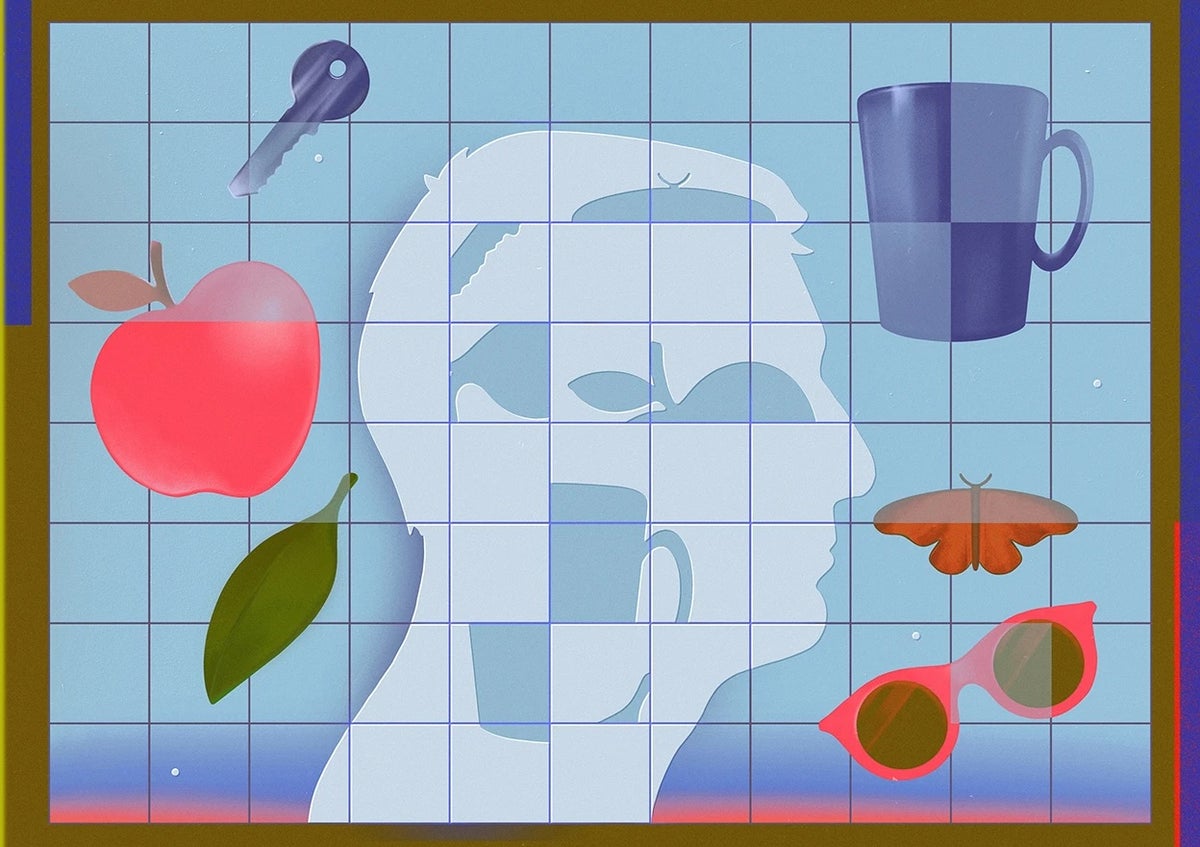
Many people don’t see mental images. The reason offers clues to consciousness
People with aphantasia have no mental imagery—and they’re offering brain scientists a window into consciousness
Scientific American (www.scientificamerican.com)
@gannet Check out Aphantasia Network, they've got a lot of stuff going.
I've been part of their studies and stuff for... nearly 10 years now. While it doesn't help me as such, it is interesting and can help when explaining it to others.Aphantasia Network - Understanding the Mind Without Mental Imagery
Join the global aphantasia community. Access research, resources, and connect with others who experience the world without mental imagery. Discover tools, studies, and support for aphantasia.
Aphantasia Network (aphantasia.com)
-
R relay@relay.an.exchange shared this topic