Skip to content
  • Categories
  • Recent
  • Tags
  • Popular
  • World
  • Users
  • Groups
Skins
  • Light
  • Brite
  • Cerulean
  • Cosmo
  • Flatly
  • Journal
  • Litera
  • Lumen
  • Lux
  • Materia
  • Minty
  • Morph
  • Pulse
  • Sandstone
  • Simplex
  • Sketchy
  • Spacelab
  • United
  • Yeti
  • Zephyr
  • Dark
  • Cyborg
  • Darkly
  • Quartz
  • Slate
  • Solar
  • Superhero
  • Vapor

  • Default (Cyborg)
  • No Skin
Collapse
Brand Logo

CIRCLE WITH A DOT

  1. Home
  2. Uncategorized
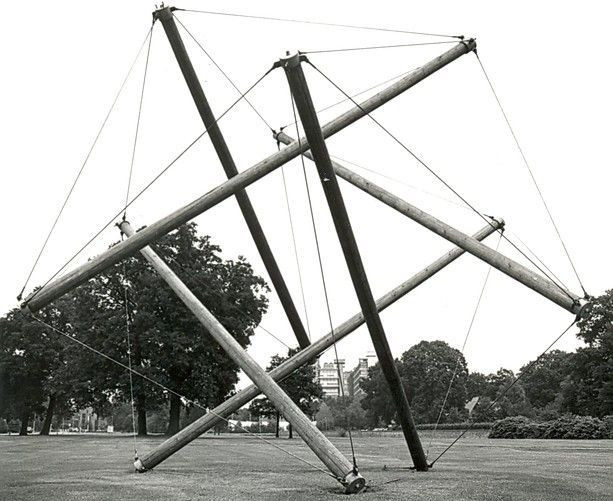
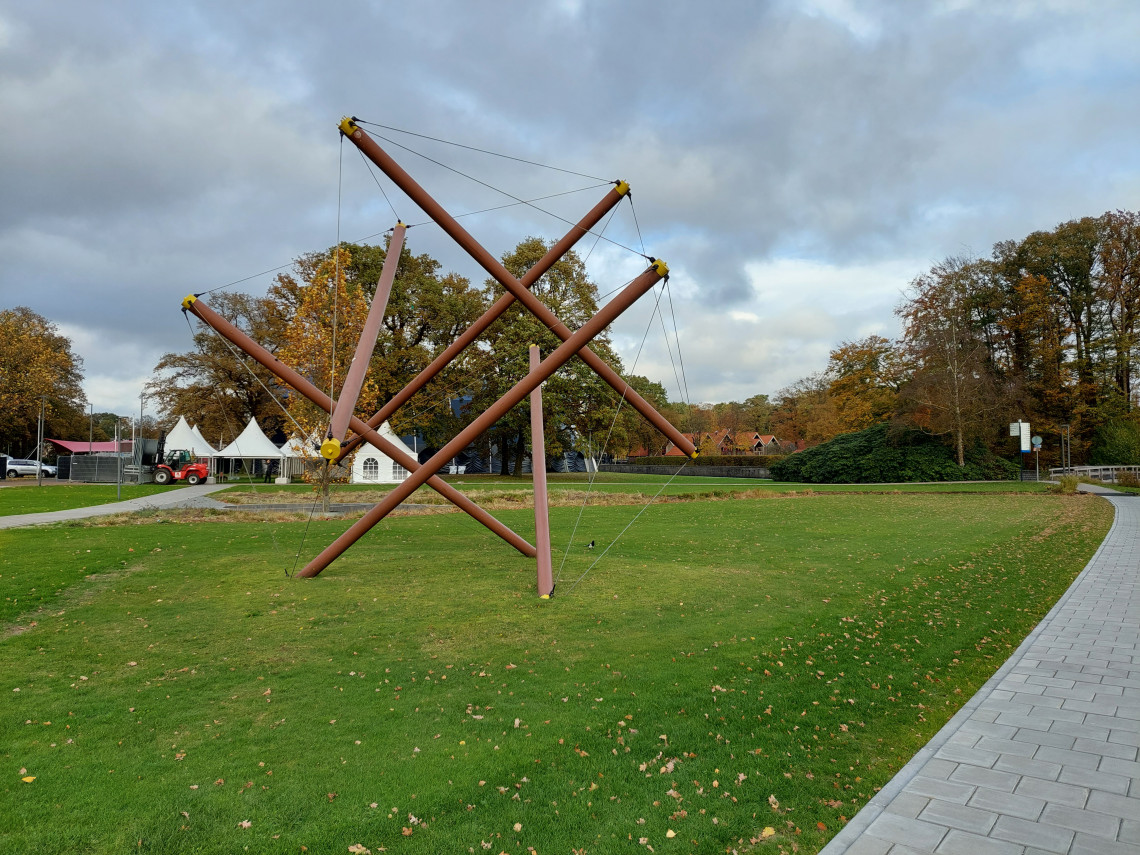
  3. TIL. In April 1974, in the middle of the night, a small group of conspirators secretly installed a large tensegrity icosahedron made from discarded telephone poles on the campus of Twente University in the Netherlands.

TIL. In April 1974, in the middle of the night, a small group of conspirators secretly installed a large tensegrity icosahedron made from discarded telephone poles on the campus of Twente University in the Netherlands.

Scheduled Pinned Locked Moved Uncategorized
16 Posts 8 Posters 47 Views
  • Oldest to Newest
  • Newest to Oldest
  • Most Votes
Reply
  • Reply as topic
Log in to reply
This topic has been deleted. Only users with topic management privileges can see it.
  • robinhouston@mathstodon.xyzR robinhouston@mathstodon.xyz

    TIL. In April 1974, in the middle of the night, a small group of conspirators secretly installed a large tensegrity icosahedron made from discarded telephone poles on the campus of Twente University in the Netherlands.

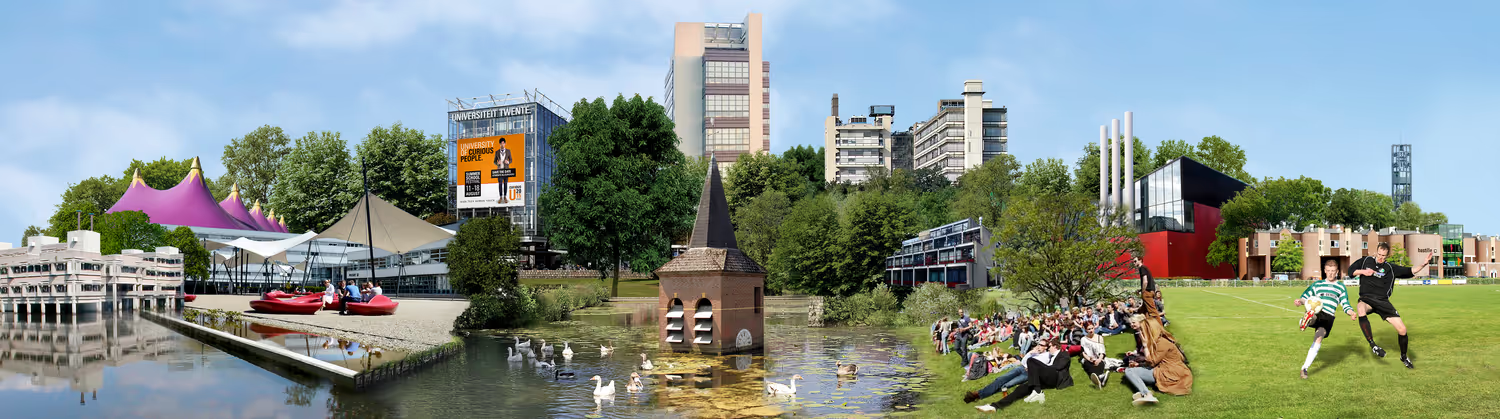
    It’s still there. People call it Het Ding (“the thing”).

    Link Preview Image
    Alumni website University of Twente

    favicon

    Universiteit Twente (www.utwente.nl)

    Link Preview Image
    waystation@sunny.gardenW This user is from outside of this forum
    waystation@sunny.gardenW This user is from outside of this forum
    waystation@sunny.garden
    wrote last edited by
    #2

    @robinhouston looks like the giants midway though Kal-toh

    1 Reply Last reply
    0
    • robinhouston@mathstodon.xyzR robinhouston@mathstodon.xyz

      TIL. In April 1974, in the middle of the night, a small group of conspirators secretly installed a large tensegrity icosahedron made from discarded telephone poles on the campus of Twente University in the Netherlands.

      It’s still there. People call it Het Ding (“the thing”).

      Link Preview Image
      Alumni website University of Twente

      favicon

      Universiteit Twente (www.utwente.nl)

      Link Preview Image
      flashmobofone@mstdn.socialF This user is from outside of this forum
      flashmobofone@mstdn.socialF This user is from outside of this forum
      flashmobofone@mstdn.social
      wrote last edited by
      #3

      @robinhouston That's rad.

      1 Reply Last reply
      0
      • robinhouston@mathstodon.xyzR robinhouston@mathstodon.xyz

        TIL. In April 1974, in the middle of the night, a small group of conspirators secretly installed a large tensegrity icosahedron made from discarded telephone poles on the campus of Twente University in the Netherlands.

        It’s still there. People call it Het Ding (“the thing”).

        Link Preview Image
        Alumni website University of Twente

        favicon

        Universiteit Twente (www.utwente.nl)

        Link Preview Image
        11011110@mathstodon.xyz1 This user is from outside of this forum
        11011110@mathstodon.xyz1 This user is from outside of this forum
        11011110@mathstodon.xyz
        wrote last edited by
        #4

        @robinhouston And it's had its own (Dutch) Wikipedia article since 2017: https://nl.wikipedia.org/wiki/Het_ding_(kunstwerk)

        robinhouston@mathstodon.xyzR 1 Reply Last reply
        0
        • 11011110@mathstodon.xyz1 11011110@mathstodon.xyz

          @robinhouston And it's had its own (Dutch) Wikipedia article since 2017: https://nl.wikipedia.org/wiki/Het_ding_(kunstwerk)

          robinhouston@mathstodon.xyzR This user is from outside of this forum
          robinhouston@mathstodon.xyzR This user is from outside of this forum
          robinhouston@mathstodon.xyz
          wrote last edited by
          #5

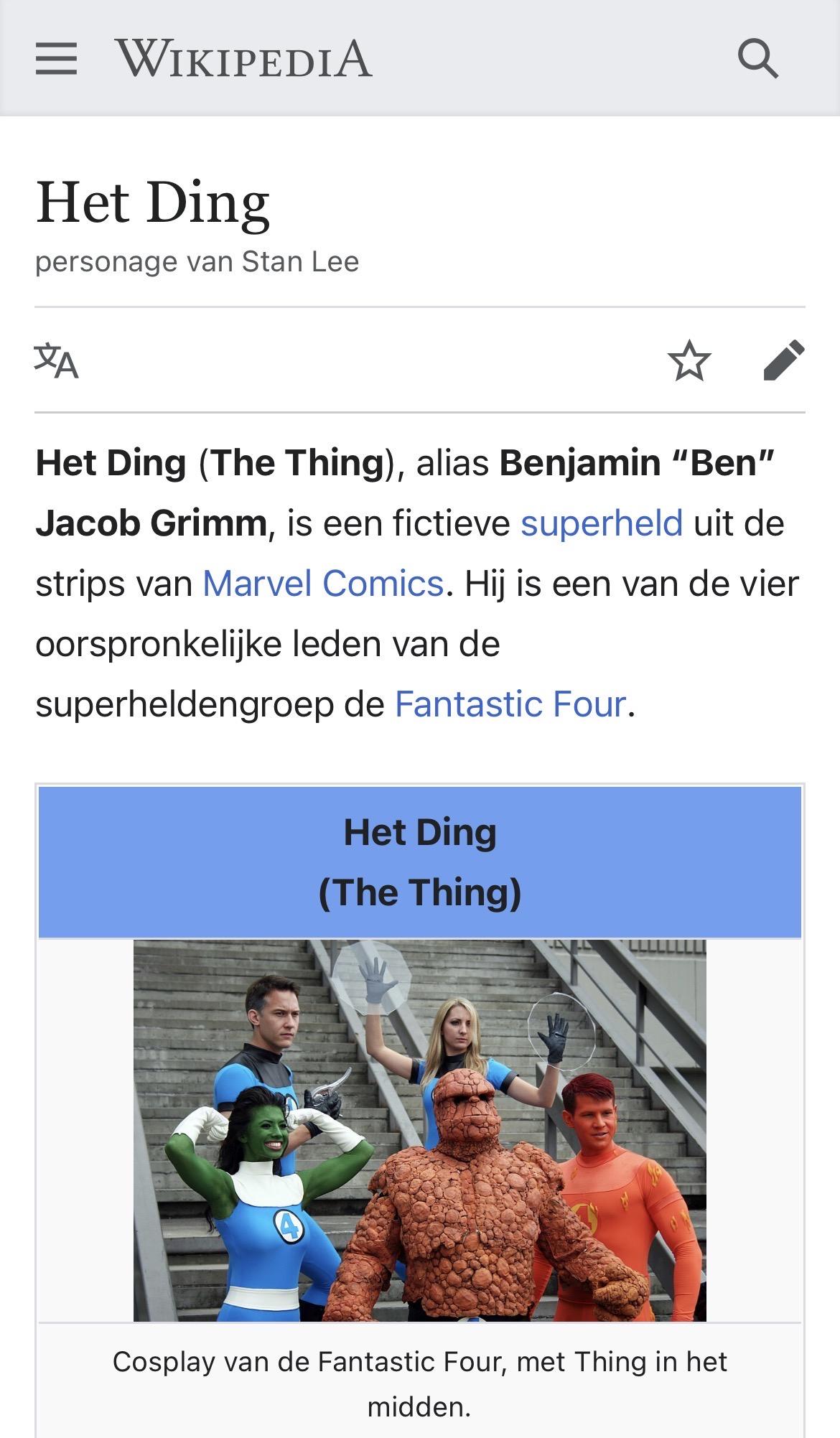
          @11011110 Not to be confused with

          Link Preview Image
          mrdk@mathstodon.xyzM 11011110@mathstodon.xyz1 2 Replies Last reply
          0
          • robinhouston@mathstodon.xyzR robinhouston@mathstodon.xyz

            @11011110 Not to be confused with

            Link Preview Image
            mrdk@mathstodon.xyzM This user is from outside of this forum
            mrdk@mathstodon.xyzM This user is from outside of this forum
            mrdk@mathstodon.xyz
            wrote last edited by
            #6

            @robinhouston @11011110 And not to be confused with still another Dutch “thing”: https://en.wikipedia.org/wiki/Hanny%27s_Voorwerp

            1 Reply Last reply
            0
            • robinhouston@mathstodon.xyzR robinhouston@mathstodon.xyz

              @11011110 Not to be confused with

              Link Preview Image
              11011110@mathstodon.xyz1 This user is from outside of this forum
              11011110@mathstodon.xyz1 This user is from outside of this forum
              11011110@mathstodon.xyz
              wrote last edited by
              #7

              @robinhouston Maybe those two are not to be confused, but now I'm confused by something else. The Wikipedia article (read in translation) says that it was mistakenly renovated in mirrored form. But the 6-bar tensegrity is not chiral? Do they maybe mean that it was placed on a different three pole ends than before?

              robinhouston@mathstodon.xyzR simontatham@hachyderm.ioS 2 Replies Last reply
              0
              • 11011110@mathstodon.xyz1 11011110@mathstodon.xyz

                @robinhouston Maybe those two are not to be confused, but now I'm confused by something else. The Wikipedia article (read in translation) says that it was mistakenly renovated in mirrored form. But the 6-bar tensegrity is not chiral? Do they maybe mean that it was placed on a different three pole ends than before?

                robinhouston@mathstodon.xyzR This user is from outside of this forum
                robinhouston@mathstodon.xyzR This user is from outside of this forum
                robinhouston@mathstodon.xyz
                wrote last edited by
                #8

                @11011110 I wonder if we can find before and after photos to compare.

                *Edit*: Yes, this article has comparison photos: https://www.utoday.nl/campus-life/74074/student-prank-and-artwork-het-ding-exists-50-years

                I can see why he called it ‘mirrored’ – the transformation applied is equivalent to reflection in a horizontal plane – though it is also equivalent to a rotation.

                1 Reply Last reply
                0
                • robinhouston@mathstodon.xyzR robinhouston@mathstodon.xyz

                  TIL. In April 1974, in the middle of the night, a small group of conspirators secretly installed a large tensegrity icosahedron made from discarded telephone poles on the campus of Twente University in the Netherlands.

                  It’s still there. People call it Het Ding (“the thing”).

                  Link Preview Image
                  Alumni website University of Twente

                  favicon

                  Universiteit Twente (www.utwente.nl)

                  Link Preview Image
                  robinhouston@mathstodon.xyzR This user is from outside of this forum
                  robinhouston@mathstodon.xyzR This user is from outside of this forum
                  robinhouston@mathstodon.xyz
                  wrote last edited by
                  #9

                  A funny detail, via @11011110:

                  In 2008, the university temporarily removed Het Ding for maintenance – and they accidentally put it back the other way up!

                  See before and after photos here, taken from https://www.utoday.nl/campus-life/74074/student-prank-and-artwork-het-ding-exists-50-years
                  Link Preview ImageLink Preview Image
                  1 Reply Last reply
                  0
                  • 11011110@mathstodon.xyz1 11011110@mathstodon.xyz

                    @robinhouston Maybe those two are not to be confused, but now I'm confused by something else. The Wikipedia article (read in translation) says that it was mistakenly renovated in mirrored form. But the 6-bar tensegrity is not chiral? Do they maybe mean that it was placed on a different three pole ends than before?

                    simontatham@hachyderm.ioS This user is from outside of this forum
                    simontatham@hachyderm.ioS This user is from outside of this forum
                    simontatham@hachyderm.io
                    wrote last edited by
                    #10

                    @11011110 @robinhouston I was even more confused when I read the Dutch Wikipedia article in Firefox's translation, because it said

                    "Together they form a twenty-plane with fourteen equilateral and six equilateral triangles."

                    That seemed like a strange way of saying "twenty equilateral triangles"! But reverting to the Dutch, it's actually using two different words, fourteen "gelijkbenige" and six "gelijkzijdige". According to Wiktionary, the first of those means "isosceles", not "equilateral". Firefox's translation made a goof.

                    So this is apparently not a _regular_ icosahedron. Does that affect the question of whether it's chiral, perhaps?

                    robinhouston@mathstodon.xyzR 1 Reply Last reply
                    0
                    • simontatham@hachyderm.ioS simontatham@hachyderm.io

                      @11011110 @robinhouston I was even more confused when I read the Dutch Wikipedia article in Firefox's translation, because it said

                      "Together they form a twenty-plane with fourteen equilateral and six equilateral triangles."

                      That seemed like a strange way of saying "twenty equilateral triangles"! But reverting to the Dutch, it's actually using two different words, fourteen "gelijkbenige" and six "gelijkzijdige". According to Wiktionary, the first of those means "isosceles", not "equilateral". Firefox's translation made a goof.

                      So this is apparently not a _regular_ icosahedron. Does that affect the question of whether it's chiral, perhaps?

                      robinhouston@mathstodon.xyzR This user is from outside of this forum
                      robinhouston@mathstodon.xyzR This user is from outside of this forum
                      robinhouston@mathstodon.xyz
                      wrote last edited by
                      #11

                      @simontatham I think the tensegrity has the same geometry as Jessen's icosahedron, which is not the same as a regular icosahedron but not chiral either.

                      robinhouston@mathstodon.xyzR simontatham@hachyderm.ioS 11011110@mathstodon.xyz1 3 Replies Last reply
                      0
                      • robinhouston@mathstodon.xyzR robinhouston@mathstodon.xyz

                        @simontatham I think the tensegrity has the same geometry as Jessen's icosahedron, which is not the same as a regular icosahedron but not chiral either.

                        robinhouston@mathstodon.xyzR This user is from outside of this forum
                        robinhouston@mathstodon.xyzR This user is from outside of this forum
                        robinhouston@mathstodon.xyz
                        wrote last edited by
                        #12

                        @simontatham Incidentally, if you read Jessen's paper he actually describes a multiparameter continuous family of orthogonal icosahedra, most of which *are* chiral – but everyone seems to have forgotten all of them apart from the simplest one.

                        1 Reply Last reply
                        0
                        • robinhouston@mathstodon.xyzR robinhouston@mathstodon.xyz

                          @simontatham I think the tensegrity has the same geometry as Jessen's icosahedron, which is not the same as a regular icosahedron but not chiral either.

                          simontatham@hachyderm.ioS This user is from outside of this forum
                          simontatham@hachyderm.ioS This user is from outside of this forum
                          simontatham@hachyderm.io
                          wrote last edited by
                          #13

                          @robinhouston that would explain why I couldn't quite see some of the icosahedron edges in the photos! I found it quite hard to work out what was going on, because the wires are so thin and often the same colour as the background.

                          I did remember a construction I'd seen in a Johnny Ball book as a child, in which you make a regular icosahedron by slotting three 1 × φ rectangular cards together and then connecting the 12 corners of the cards with string. If you changed the aspect ratio of those cards, that would also be a way to make an icosahedron with 14 isosceles faces and 6 equilateral which was still not chiral.

                          mjd@mathstodon.xyzM 1 Reply Last reply
                          0
                          • simontatham@hachyderm.ioS simontatham@hachyderm.io

                            @robinhouston that would explain why I couldn't quite see some of the icosahedron edges in the photos! I found it quite hard to work out what was going on, because the wires are so thin and often the same colour as the background.

                            I did remember a construction I'd seen in a Johnny Ball book as a child, in which you make a regular icosahedron by slotting three 1 × φ rectangular cards together and then connecting the 12 corners of the cards with string. If you changed the aspect ratio of those cards, that would also be a way to make an icosahedron with 14 isosceles faces and 6 equilateral which was still not chiral.

                            mjd@mathstodon.xyzM This user is from outside of this forum
                            mjd@mathstodon.xyzM This user is from outside of this forum
                            mjd@mathstodon.xyz
                            wrote last edited by
                            #14

                            @simontatham @robinhouston I want to know how they put it up in the first place. How does one get it off the ground? Are there special instructions? Is it wired together in a big heap, then raised up with ropes and pulleys like a marionette, and then the wires are tightened?

                            1 Reply Last reply
                            0
                            • robinhouston@mathstodon.xyzR robinhouston@mathstodon.xyz

                              @simontatham I think the tensegrity has the same geometry as Jessen's icosahedron, which is not the same as a regular icosahedron but not chiral either.

                              11011110@mathstodon.xyz1 This user is from outside of this forum
                              11011110@mathstodon.xyz1 This user is from outside of this forum
                              11011110@mathstodon.xyz
                              wrote last edited by
                              #15

                              @robinhouston @simontatham Yes, it is through editing the Wikipedia article https://en.wikipedia.org/wiki/Jessen%27s_icosahedron in 2021 that I learned about this sculpture

                              1 Reply Last reply
                              0
                              • robinhouston@mathstodon.xyzR robinhouston@mathstodon.xyz

                                TIL. In April 1974, in the middle of the night, a small group of conspirators secretly installed a large tensegrity icosahedron made from discarded telephone poles on the campus of Twente University in the Netherlands.

                                It’s still there. People call it Het Ding (“the thing”).

                                Link Preview Image
                                Alumni website University of Twente

                                favicon

                                Universiteit Twente (www.utwente.nl)

                                Link Preview Image
                                sylviafysica@scholar.socialS This user is from outside of this forum
                                sylviafysica@scholar.socialS This user is from outside of this forum
                                sylviafysica@scholar.social
                                wrote last edited by
                                #16

                                @robinhouston Cool, I know that thing, first saw it 19 years ago, and have recently seen it again - never knew it was prank though!

                                1 Reply Last reply
                                0
                                • R relay@relay.infosec.exchange shared this topic

                                Reply
                                • Reply as topic
                                Log in to reply
                                • Oldest to Newest
                                • Newest to Oldest
                                • Most Votes


                                • Login

                                • Login or register to search.
                                • First post
                                  Last post
                                0
                                • Categories
                                • Recent
                                • Tags
                                • Popular
                                • World
                                • Users
                                • Groups