Skip to content
  • Categories
  • Recent
  • Tags
  • Popular
  • World
  • Users
  • Groups
Skins
  • Light
  • Brite
  • Cerulean
  • Cosmo
  • Flatly
  • Journal
  • Litera
  • Lumen
  • Lux
  • Materia
  • Minty
  • Morph
  • Pulse
  • Sandstone
  • Simplex
  • Sketchy
  • Spacelab
  • United
  • Yeti
  • Zephyr
  • Dark
  • Cyborg
  • Darkly
  • Quartz
  • Slate
  • Solar
  • Superhero
  • Vapor

  • Default (Cyborg)
  • No Skin
Collapse
Brand Logo

CIRCLE WITH A DOT

  1. Home
  2. Uncategorized
  3. Don't make me regret this ...

Don't make me regret this ...

Scheduled Pinned Locked Moved Uncategorized
92 Posts 26 Posters 0 Views
  • Oldest to Newest
  • Newest to Oldest
  • Most Votes
Reply
  • Reply as topic
Log in to reply
This topic has been deleted. Only users with topic management privileges can see it.
  • antoinechambertloir@mathstodon.xyzA antoinechambertloir@mathstodon.xyz

    @e7_87 @ColinTheMathmo just lazily browsing Wikipedia's list of women in mathematics, I would suggest to look at the work of Yvonne Choquet-Bruhat, Nicole El Karoui, Shafi Goldwasser, Krystina Kuperberg, Olga Ladyzhenskaia, Dusa McDuff, Maryam Mirzakhani, Cathleen Morawetz, Ruth Moufang, Marina Ratner, Diana Shelstad, Vera Sós, Irene Stegun, Olga Taussky-Todd, Ulrike Tilman, Karen Uhlenbeck, Marie-France Vignéras, etc. For many of them, a Fields medal or a similar award would not have been inappropriate.

    colinthemathmo@mathstodon.xyzC This user is from outside of this forum
    colinthemathmo@mathstodon.xyzC This user is from outside of this forum
    colinthemathmo@mathstodon.xyz
    wrote last edited by
    #66

    @antoinechambertloir For the purposes of engaging younger students, a list of random people of whom they've never heard is possibly not the best thing to do. Yes, these are (potentially) important people to be remembered, but creating engagement in students is perhaps not going to be helped by such a list.

    This is hard. This is very hard, bordering on impossible. But I'm trying to connect things students have heard of with each other, and with new things they can learn about.

    Newton, the Great Plague, and the Great Fire of London is a well-known and well-established connection.

    Question: What was happening in Europe when Gauss was around? What music? What politicians? Who might he have met?

    For example, Gauss and Beethoven were contemporaries.

    That sort of thing.

    CC: @e7_87

    e7_87@mathstodon.xyzE antoinechambertloir@mathstodon.xyzA M 4 Replies Last reply
    0
    • psu_13@mathstodon.xyzP psu_13@mathstodon.xyz

      @ColinTheMathmo Noether?

      spacemagick@mastodon.socialS This user is from outside of this forum
      spacemagick@mastodon.socialS This user is from outside of this forum
      spacemagick@mastodon.social
      wrote last edited by
      #67

      @psu_13 @ColinTheMathmo
      Definitely. She who pointed out the connection between symmetry and conservation laws.
      #maths #physics

      1 Reply Last reply
      0
      • spacemagick@mastodon.socialS spacemagick@mastodon.social

        @ColinTheMathmo
        Oh, maybe about half of them, if we're lucky.
        😞

        colinthemathmo@mathstodon.xyzC This user is from outside of this forum
        colinthemathmo@mathstodon.xyzC This user is from outside of this forum
        colinthemathmo@mathstodon.xyz
        wrote last edited by
        #68

        @spacemagick I think you'd find that if you polled secondary school students in the UK, the average of the number of these they have heard of would hover around 0.1.

        I suspect most students will have heard of none of them.

        Some will know of Katherine Johnson because of the film, and for those who do computing, a small proportion would know of Hopper.

        spacemagick@mastodon.socialS 1 Reply Last reply
        0
        • colinthemathmo@mathstodon.xyzC colinthemathmo@mathstodon.xyz

          @spacemagick I think you'd find that if you polled secondary school students in the UK, the average of the number of these they have heard of would hover around 0.1.

          I suspect most students will have heard of none of them.

          Some will know of Katherine Johnson because of the film, and for those who do computing, a small proportion would know of Hopper.

          spacemagick@mastodon.socialS This user is from outside of this forum
          spacemagick@mastodon.socialS This user is from outside of this forum
          spacemagick@mastodon.social
          wrote last edited by
          #69

          @ColinTheMathmo
          There's a film? Didn't know that.
          🙂

          colinthemathmo@mathstodon.xyzC 1 Reply Last reply
          0
          • spacemagick@mastodon.socialS spacemagick@mastodon.social

            @ColinTheMathmo
            There's a film? Didn't know that.
            🙂

            colinthemathmo@mathstodon.xyzC This user is from outside of this forum
            colinthemathmo@mathstodon.xyzC This user is from outside of this forum
            colinthemathmo@mathstodon.xyz
            wrote last edited by
            #70

            @spacemagick I suspect from the smiley that you do know about the film "Hidden Figures"

            spacemagick@mastodon.socialS 1 Reply Last reply
            0
            • colinthemathmo@mathstodon.xyzC colinthemathmo@mathstodon.xyz

              @antoinechambertloir For the purposes of engaging younger students, a list of random people of whom they've never heard is possibly not the best thing to do. Yes, these are (potentially) important people to be remembered, but creating engagement in students is perhaps not going to be helped by such a list.

              This is hard. This is very hard, bordering on impossible. But I'm trying to connect things students have heard of with each other, and with new things they can learn about.

              Newton, the Great Plague, and the Great Fire of London is a well-known and well-established connection.

              Question: What was happening in Europe when Gauss was around? What music? What politicians? Who might he have met?

              For example, Gauss and Beethoven were contemporaries.

              That sort of thing.

              CC: @e7_87

              e7_87@mathstodon.xyzE This user is from outside of this forum
              e7_87@mathstodon.xyzE This user is from outside of this forum
              e7_87@mathstodon.xyz
              wrote last edited by
              #71

              @ColinTheMathmo @antoinechambertloir Feel bad; as a female math enthusiasts on the above list I only knew Dusa McDuff, Maryam Mirzakhani, Olga Taussky-Todd... And I believe I did read Vera Sós's wiki-bio...

              antoinechambertloir@mathstodon.xyzA 1 Reply Last reply
              0
              • colinthemathmo@mathstodon.xyzC colinthemathmo@mathstodon.xyz

                @antoinechambertloir For the purposes of engaging younger students, a list of random people of whom they've never heard is possibly not the best thing to do. Yes, these are (potentially) important people to be remembered, but creating engagement in students is perhaps not going to be helped by such a list.

                This is hard. This is very hard, bordering on impossible. But I'm trying to connect things students have heard of with each other, and with new things they can learn about.

                Newton, the Great Plague, and the Great Fire of London is a well-known and well-established connection.

                Question: What was happening in Europe when Gauss was around? What music? What politicians? Who might he have met?

                For example, Gauss and Beethoven were contemporaries.

                That sort of thing.

                CC: @e7_87

                antoinechambertloir@mathstodon.xyzA This user is from outside of this forum
                antoinechambertloir@mathstodon.xyzA This user is from outside of this forum
                antoinechambertloir@mathstodon.xyz
                wrote last edited by
                #72

                @ColinTheMathmo I was reacting to some sentence, earlier in the thread, by somebody else, that I read as “no woman has done notable things” and my — angry — answer was, “maybe learn what these women have done before saying such a thing.”

                colinthemathmo@mathstodon.xyzC 1 Reply Last reply
                0
                • spacemagick@mastodon.socialS spacemagick@mastodon.social

                  @ColinTheMathmo
                  Beatrice Shilling (aeronautics)
                  Janet Taylor (astronomy, navigation)
                  Rosalind_Franklin
                  Valentina Tereshkova
                  Dorothy Hodgkin
                  Tu Youyou (pharmaceutical chemist)
                  Baroness Ingrid Daubechies (JPEG)
                  Grace Hopper
                  Gladys Mae West (GPS)
                  Emmy Noether (symmetry)
                  Mary Cartwright (chaos theory)
                  Annie Scott Dill Maunder
                  Caroline Herschel
                  Gerty Theresa Cori (glycogen)
                  Williamina Fleming (astronomy)
                  Alice Augusta Ball (chemistry)
                  Katherine Johnson (orbital mechanics)

                  spacemagick@mastodon.socialS This user is from outside of this forum
                  spacemagick@mastodon.socialS This user is from outside of this forum
                  spacemagick@mastodon.social
                  wrote last edited by
                  #73

                  @ColinTheMathmo
                  Historically important though Valentina Tereshkova is, it's also worth noting that she was very much a political pawn in the space-race. The Soviets (like ALL politicians) generally only did morally good things in order to draw attention to themselves or away from their imagined enemies.

                  1 Reply Last reply
                  0
                  • e7_87@mathstodon.xyzE e7_87@mathstodon.xyz

                    @ColinTheMathmo @antoinechambertloir Feel bad; as a female math enthusiasts on the above list I only knew Dusa McDuff, Maryam Mirzakhani, Olga Taussky-Todd... And I believe I did read Vera Sós's wiki-bio...

                    antoinechambertloir@mathstodon.xyzA This user is from outside of this forum
                    antoinechambertloir@mathstodon.xyzA This user is from outside of this forum
                    antoinechambertloir@mathstodon.xyz
                    wrote last edited by
                    #74

                    @e7_87 @ColinTheMathmo there's no need to feel bad. There must be sociological reasons why women are not remembered. For example we value the final steps more than the elaboration of an invisible theory. Maybe that's why some brilliant women preferred doing that kind of things than exposing themselves. Have a look at Stegun's work. Spending a whole professional life maintaining tables of special functions which were used in all of applied math and engineering, before computer programs could make the job for everybody.

                    1 Reply Last reply
                    0
                    • scmbradley@mathstodon.xyzS scmbradley@mathstodon.xyz

                      @ColinTheMathmo for events rather than people: the reign of terror. Which explains why several famous French mathematicians and scientists died in 1794.

                      scmbradley@mathstodon.xyzS This user is from outside of this forum
                      scmbradley@mathstodon.xyzS This user is from outside of this forum
                      scmbradley@mathstodon.xyz
                      wrote last edited by
                      #75

                      @ColinTheMathmo
                      Gutenberg and his moveable type press (not the first, but extremely important an event nevertheless).
                      Luther and the 95 theses.
                      Columbus' voyages to the new world.
                      Arthur Conan Doyle.
                      Robert Louis Stevenson.
                      Charles Dickens.
                      Emily Bronte.
                      Jane Austen.
                      Mary Wallstonecraft.
                      Mary Shelley.

                      You could have indicators for longer eras. So for example, the height of the Aztec empire, various other civilisations in the Americas. Or for various influential dynasties in China.

                      scmbradley@mathstodon.xyzS 1 Reply Last reply
                      0
                      • colinthemathmo@mathstodon.xyzC colinthemathmo@mathstodon.xyz

                        @spacemagick I suspect from the smiley that you do know about the film "Hidden Figures"

                        spacemagick@mastodon.socialS This user is from outside of this forum
                        spacemagick@mastodon.socialS This user is from outside of this forum
                        spacemagick@mastodon.social
                        wrote last edited by
                        #76

                        @ColinTheMathmo
                        Now you mention it the title rings a bell. My maths/computing background probably makes me somewhat bias as to which people count as 'famous'/worthy of fame.

                        1 Reply Last reply
                        0
                        • scmbradley@mathstodon.xyzS scmbradley@mathstodon.xyz

                          @ColinTheMathmo
                          Gutenberg and his moveable type press (not the first, but extremely important an event nevertheless).
                          Luther and the 95 theses.
                          Columbus' voyages to the new world.
                          Arthur Conan Doyle.
                          Robert Louis Stevenson.
                          Charles Dickens.
                          Emily Bronte.
                          Jane Austen.
                          Mary Wallstonecraft.
                          Mary Shelley.

                          You could have indicators for longer eras. So for example, the height of the Aztec empire, various other civilisations in the Americas. Or for various influential dynasties in China.

                          scmbradley@mathstodon.xyzS This user is from outside of this forum
                          scmbradley@mathstodon.xyzS This user is from outside of this forum
                          scmbradley@mathstodon.xyz
                          wrote last edited by
                          #77

                          @ColinTheMathmo dates for when various countries were founded. A lot of them are surprisingly recent.

                          pettter@social.accum.seP 1 Reply Last reply
                          0
                          • colinthemathmo@mathstodon.xyzC colinthemathmo@mathstodon.xyz

                            @pascaline Good shout:

                            Melba Roy Mouton
                            Katherine Johnson
                            Dorothy Vaughan
                            Mary Jackson

                            But the problem becomes one of the timeline and database becoming "too complete", and hence "overly complex" and thereby effectively inaccessible.

                            But absolutely, if choices are to be made, these people should be close to the top.

                            pascaline@mastodon.nlP This user is from outside of this forum
                            pascaline@mastodon.nlP This user is from outside of this forum
                            pascaline@mastodon.nl
                            wrote last edited by
                            #78

                            @ColinTheMathmo

                            Yes, absolutely!

                            And also the more diverse the better, so doctors, analysts, mathematicians, and many more.

                            There was also Aletta Jacobs, the first woman in the Netherlands to attend a college, she became the first female physician, fought for women's rights, wanted to deregulate prostitution, and even founded the first birth control clinic. She was a hero!

                            1 Reply Last reply
                            0
                            • colinthemathmo@mathstodon.xyzC colinthemathmo@mathstodon.xyz

                              This list has mostly (but not entirely!) exactly them, but here are a few.

                              Which of your favourites are missing? In particular, what major historical events would school children know, to allow these to be put into some sort of historical context?

                              And yes, I am thinking of asking some school kids for "Famous Things".

                              Galileo
                              Nelson (Trafalgar)
                              Wellington (Waterloo)
                              Newton
                              Macchiavelli
                              Shakespeare
                              Pythagoras
                              Socrates
                              Plato
                              Aristotle
                              Alexander the Great
                              Archimedes
                              Al-Khwarizmi
                              Ibn Al-Haytham
                              Babbage
                              Turing
                              Omar Khayyam
                              Jabir Ibn Haiyan
                              Ramanujan

                              2/n

                              tristrambrelstaff@mathstodon.xyzT This user is from outside of this forum
                              tristrambrelstaff@mathstodon.xyzT This user is from outside of this forum
                              tristrambrelstaff@mathstodon.xyz
                              wrote last edited by
                              #79

                              @ColinTheMathmo
                              Margaret Elaine Hamilton (software team lead for the Apollo Guidance Computer)
                              Henrietta Swan Leavitt (Cepheid Period Luminosity Relationship)

                              1 Reply Last reply
                              0
                              • teakayb@mathstodon.xyzT teakayb@mathstodon.xyz

                                @ColinTheMathmo

                                I don't think I've seen anyone else mention him, but in terms of situating developments in maths alongside more well-known historical events, then... Shakespeare. Born in between publication of Robert Recorde's two important books that helped to embed an entirely new number system into British life, industry, and commerce. He and his own father would have learnt not just different algorithms for calculating in their respective school careers, but entirely different number _systems_, and there's evidence of Bill playing with this new-fangled system throughout his famous works.

                                karencampe@mathstodon.xyzK This user is from outside of this forum
                                karencampe@mathstodon.xyzK This user is from outside of this forum
                                karencampe@mathstodon.xyz
                                wrote last edited by
                                #80

                                @TeaKayB @ColinTheMathmo then of course Lewis Carroll.

                                1 Reply Last reply
                                0
                                • colinthemathmo@mathstodon.xyzC colinthemathmo@mathstodon.xyz

                                  @antoinechambertloir For the purposes of engaging younger students, a list of random people of whom they've never heard is possibly not the best thing to do. Yes, these are (potentially) important people to be remembered, but creating engagement in students is perhaps not going to be helped by such a list.

                                  This is hard. This is very hard, bordering on impossible. But I'm trying to connect things students have heard of with each other, and with new things they can learn about.

                                  Newton, the Great Plague, and the Great Fire of London is a well-known and well-established connection.

                                  Question: What was happening in Europe when Gauss was around? What music? What politicians? Who might he have met?

                                  For example, Gauss and Beethoven were contemporaries.

                                  That sort of thing.

                                  CC: @e7_87

                                  e7_87@mathstodon.xyzE This user is from outside of this forum
                                  e7_87@mathstodon.xyzE This user is from outside of this forum
                                  e7_87@mathstodon.xyz
                                  wrote last edited by
                                  #81

                                  @ColinTheMathmo @antoinechambertloir Colin, after reading ur replies, I guessed I understand what kinds of teaching materials you are trying to produce.

                                  As others mentioned, the story that Sophie Germain pretended as male to work on math, and her communications with Lagrange and /Gauss/, is a good choice.

                                  The life of Vera Rubin is also worth mentioning; her early career faced explicit sexism and she fought back. "Don't let anyone keep you down for silly reasons such as who you are. And don't worry about prizes and fame. The real prize is finding something new out there." What an encouraging quote! Also words disprise those scientists lost their integrity due to prize and fame.

                                  /Hilbert/'s problems have been important. And Julia Robinson (thanks Antoine). [wikipedia]" ... was not allowed to teach in the Mathematics Department at Berkeley after marrying Raphael M. Robinson in 1941, ", and she chose to teach in Statistics department and left research math for 5~6 year. And she did that work related to the 10th Problem after getting the opportunity of back to math! This is another female story worth telling.
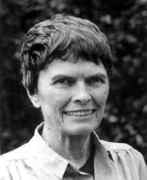
                                  Link Preview Image
                                  Julia Bowman Robinson - Biography

                                  Julia B Robinson worked on computability, decision problems and non-standard models of arithmetic.

                                  favicon

                                  Maths History (mathshistory.st-andrews.ac.uk)

                                  1 Reply Last reply
                                  0
                                  • colinthemathmo@mathstodon.xyzC colinthemathmo@mathstodon.xyz

                                    @suearcher This is part of the problem ... these people need to be better know, but even we need to look them up.

                                    suearcher@toot.walesS This user is from outside of this forum
                                    suearcher@toot.walesS This user is from outside of this forum
                                    suearcher@toot.wales
                                    wrote last edited by
                                    #82

                                    @ColinTheMathmo

                                    I'm guessing that many young people would be hard pressed to name any mathematicians (as opposed to scientists) so it's probably good if you can introduce them to a good proportion of male and female ones!

                                    1 Reply Last reply
                                    0
                                    • colinthemathmo@mathstodon.xyzC colinthemathmo@mathstodon.xyz

                                      Marie Curie
                                      Rosalind Franklin
                                      Ada Lovelace
                                      Cecilia Payne-Gaposchkin
                                      Jocelyn Bell Burnell

                                      3/n

                                      virtuosew@mathstodon.xyzV This user is from outside of this forum
                                      virtuosew@mathstodon.xyzV This user is from outside of this forum
                                      virtuosew@mathstodon.xyz
                                      wrote last edited by
                                      #83

                                      @ColinTheMathmo
                                      Hypatia
                                      Emilie du Chatelet
                                      Maria Lombardini Sirmen
                                      Lady Julian of Norwich
                                      Hildegard of Bingen

                                      1 Reply Last reply
                                      0
                                      • colinthemathmo@mathstodon.xyzC colinthemathmo@mathstodon.xyz

                                        @antoinechambertloir For the purposes of engaging younger students, a list of random people of whom they've never heard is possibly not the best thing to do. Yes, these are (potentially) important people to be remembered, but creating engagement in students is perhaps not going to be helped by such a list.

                                        This is hard. This is very hard, bordering on impossible. But I'm trying to connect things students have heard of with each other, and with new things they can learn about.

                                        Newton, the Great Plague, and the Great Fire of London is a well-known and well-established connection.

                                        Question: What was happening in Europe when Gauss was around? What music? What politicians? Who might he have met?

                                        For example, Gauss and Beethoven were contemporaries.

                                        That sort of thing.

                                        CC: @e7_87

                                        M This user is from outside of this forum
                                        M This user is from outside of this forum
                                        mathematicalsynesthesia@hachyderm.io
                                        wrote last edited by
                                        #84

                                        @ColinTheMathmo @antoinechambertloir @e7_87 as somebody else mentioned here and elsewhere, Sophie Germain would be a perfect example for what you are trying to do if you connect her to Gauss, and bring up questions about why she pretends to be a man (even if you question whether or not Gauss would have listened to her had he known she was a woman).

                                        I also think there is value in doing cross generational discussions (as I mentioned Pingala made discoveries that were replicated 1400 and 1800 years later by Fibonacci and Pascal) why is there attribution to Fibonacci and Pascal, and like Antoine has pointed out there are sociological reasons for this.

                                        There are parallels between the lives of Hypatia, Maria Gaetana Agnesi and Ada Lovelace, but then there are also extreme dissimilarities between their lives.

                                        You can mention Queen Dido and her solution to the isoperimetroc problem in the foundation of the city of Carthage. This connects to Virgil’s Aeneid.

                                        You can also compare the lives of Sofya Kolavskeya and Maria Chudnovsky where there are parallels (born in Russia/Soviet Union, both left the country to pursue a higher degree, both made groundbreaking advances to a problem that had been open for many years) yet they were born a little over one hundred years and the conditions for the recognition of mathematic talent amongst women had changed (their lives have been completely different in many other aspects).

                                        Somebody mentioned Ada Lovelace, her story has many connections to the beginnings of computer science, she was the daughter of Lord Byron, who was instrumental in the stories surrounding the creations of horror icons such as Dracula and Frankenstein’s monster.

                                        1 Reply Last reply
                                        0
                                        • antoinechambertloir@mathstodon.xyzA antoinechambertloir@mathstodon.xyz

                                          @ColinTheMathmo I was reacting to some sentence, earlier in the thread, by somebody else, that I read as “no woman has done notable things” and my — angry — answer was, “maybe learn what these women have done before saying such a thing.”

                                          colinthemathmo@mathstodon.xyzC This user is from outside of this forum
                                          colinthemathmo@mathstodon.xyzC This user is from outside of this forum
                                          colinthemathmo@mathstodon.xyz
                                          wrote last edited by
                                          #85

                                          @antoinechambertloir I must have missed ... who said "no woman has done notable things" ??

                                          Certainly I never said that ... where did you see it?

                                          I'm confused as to exactly what you are responding to. I, for one, know a lot of notable things done by amazing women.

                                          What is certainly true is that you have to dig quite hard to find them. They are there, but they are not as visible or celebrated.

                                          That's not the same as saying "no woman has done notable things."
                                          antoinechambertloir@mathstodon.xyzA 1 Reply Last reply
                                          0
                                          Reply
                                          • Reply as topic
                                          Log in to reply
                                          • Oldest to Newest
                                          • Newest to Oldest
                                          • Most Votes


                                          • Login

                                          • Login or register to search.
                                          • First post
                                            Last post
                                          0
                                          • Categories
                                          • Recent
                                          • Tags
                                          • Popular
                                          • World
                                          • Users
                                          • Groups