A more independent Europe means homegrown, affordable, and reliable energy.
-
A more independent Europe means homegrown, affordable, and reliable energy.
 So far: renewables and nuclear energy already make up over 70% of our electricity generation.
  Next: we are accelerating grid connections and storage so no clean power goes to waste.
  The future: we are launching a new electrification strategy this summer to make Europe more independent.
 We are moving away from expensive fossil fuels and toward a system that works for our people and the planet.
@EUCommission We need to make sure that there are enough connections between France and Spain
-
A more independent Europe means homegrown, affordable, and reliable energy.
So far: renewables and nuclear energy already make up over 70% of our electricity generation. Next: we are accelerating grid connections and storage so no clean power goes to waste. The future: we are launching a new electrification strategy this summer to make Europe more independent. We are moving away from expensive fossil fuels and toward a system that works for our people and the planet.
@EUCommission And nuclear energy is not homegrown. And by the way, far too expensive.
-
A more independent Europe means homegrown, affordable, and reliable energy.
So far: renewables and nuclear energy already make up over 70% of our electricity generation. Next: we are accelerating grid connections and storage so no clean power goes to waste. The future: we are launching a new electrification strategy this summer to make Europe more independent. We are moving away from expensive fossil fuels and toward a system that works for our people and the planet.
@EUCommission Better late than never, I guess.
-
A more independent Europe means homegrown, affordable, and reliable energy.
So far: renewables and nuclear energy already make up over 70% of our electricity generation. Next: we are accelerating grid connections and storage so no clean power goes to waste. The future: we are launching a new electrification strategy this summer to make Europe more independent. We are moving away from expensive fossil fuels and toward a system that works for our people and the planet.
@EUCommission Finally.
-
A more independent Europe means homegrown, affordable, and reliable energy.
So far: renewables and nuclear energy already make up over 70% of our electricity generation. Next: we are accelerating grid connections and storage so no clean power goes to waste. The future: we are launching a new electrification strategy this summer to make Europe more independent. We are moving away from expensive fossil fuels and toward a system that works for our people and the planet.
@EUCommission
Eventually, some time in the future we’ll have a unified European Army, but meanwhile we certainly need to rethink NATO.
Also rethink the Veto system. -
A more independent Europe means homegrown, affordable, and reliable energy.
So far: renewables and nuclear energy already make up over 70% of our electricity generation. Next: we are accelerating grid connections and storage so no clean power goes to waste. The future: we are launching a new electrification strategy this summer to make Europe more independent. We are moving away from expensive fossil fuels and toward a system that works for our people and the planet.
@EUCommission Kernenergie wo haben wir Uranvorkommen die tragfähig sind nirgends Kernenergie ist den Gegnern von Morgen einen Atomangriff ohne Atombombe zu ermöglichen.
mehr solar Wind Wasserkraft mehr Speicher ob Batterie oder Kinetisch oder oder oder das brauchen wir aber keine Kernenergie die Kurropitionenergiequelle seit Jahrzehnten.
-
A more independent Europe means homegrown, affordable, and reliable energy.
So far: renewables and nuclear energy already make up over 70% of our electricity generation. Next: we are accelerating grid connections and storage so no clean power goes to waste. The future: we are launching a new electrification strategy this summer to make Europe more independent. We are moving away from expensive fossil fuels and toward a system that works for our people and the planet.
"Homegrown" nuclear energy?
»#Russia, through state-owned #Rosatom controls a large share of the global nuclear fuel supply chain. The scale of this dominance is striking: Russia commands approximately 46% of global uranium enrichment capacity, 20% of conversion services, and serves as the primary supplier for VVER reactor types across the world including Central and Eastern Europe.
For the European Union specifically, the dependency statistics are sobering. In 2023, EU utilities sourced 23% of their uranium from Russia directly, with an additional 21% coming from Kazakhstan, where Russian companies hold significant stakes through Uranium One company. Russian companies provided 22% of conversion services and a remarkable 38% of enrichment services to EU utilities in 2023.« (emphasis added)
Fortunately, at least Germany has consigned this technology to the dustbin of history – and sadly, it can't do so with nuclear waste.
Finland is the only country of the #EU that has a final disposal site. A single one.
Go to hell with your greenwashing of "nuclear energy".

The EU is dependent on Russian nuclear fuel – but not for long
[et_pb_section fb_built=1 custom_padding_last_edited=on|phone _builder_version=4.27.3 _module_preset=default background_enable_color=off use_background_color_gradient=on background_color_gradient_stops=rgba(255,255,255,0) 0%|rgba(0,0,0,0.83) 100% background_image=https://hagueresearch.org/wp-content/uploads/2025/11/vecteezy_a-coal-power-plant-with-smoke-coming-out-of-the-top_70022023-scaled.jpg background_blend=color custom_padding=200px||125px||false|false custom_padding_tablet=200px||125px||false|false custom_padding_phone=150px||100px||false|false locked=off global_colors_info={}][et_pb_row make_equal=on _builder_version=4.24.1 _module_preset=default width=85% max_width=2560px global_colors_info={}][et_pb_column type=4_4 _builder_version=4.24.0 _module_preset=default custom_css_main_element=margin: auto; global_colors_info={}][et_pb_text _builder_version=4.27.3 _module_preset=default text_text_color=#FFFFFF header_text_color=#FFFFFF header_font_size=45px text_orientation=center hover_enabled=0 global_colors_info={} sticky_enabled=0]The EU is dependent on Russian nuclear fuel - but not for long November 2025[/et_pb_text][/et_pb_column][/et_pb_row][/et_pb_section][et_pb_section fb_built=1 _builder_version=4.24.1 _module_preset=default width=100% max_width=100% custom_margin=||||false|false custom_padding=35px||0px||false|false global_colors_info={}][et_pb_row column_structure=1_2,1_2 make_equal=on _builder_version=4.24.2 _module_preset=default width=60% width_tablet=60% width_phone=90% width_last_edited=on|desktop max_width=2560px module_alignment=center custom_margin=||||false|false custom_padding=0px||0px||true|false global_colors_info={}][et_pb_column type=1_2 _builder_version=4.24.1 _module_preset=default background_color=#FFFFFF custom_padding=||||false|false custom_css_main_element=margin: auto; border_radii=on|5px|5px|5px|5px global_colors_info={}][et_pb_blurb title=Matúš Mišík image=https://hagueresearch.org/wp-content/uploads/2024/06/1517416599290.jpeg icon_placement=left image_icon_width=100px _builder_version=4.27.3 _module_preset=default header_text_align=left header_font_size=24px body_text_align=left body_ul_text_align=left image_icon_custom_margin=||||false|false image_icon_custom_padding=||||false|false module_alignment=left custom_margin=|||0px|false|false custom_padding=|6.1%||0px|false|false custom_padding_tablet=|40%||0px|false|false custom_padding_phone=|0%||0px|false|false custom_padding_last_edited=on|phone border_radii_image=on|100px|100px|100px|100px border_width_all_image=3px border_color_all_image=#004cb2 locked=off global_colors_info={}]Department of Political Science, Comenius University Bratislava, Slovakia[/et_pb_blurb][/et_pb_column][et_pb_column type=1_2 _builder_version=4.27.3 _module_preset=default global_colors_info={}][et_pb_blurb title=Andrej Nosko image=https://hagueresearch.org/wp-content/uploads/2025/11/1673605646502.jpeg icon_placement=left image_icon_width=100px _builder_version=4.27.3 _module_preset=default header_text_align=left header_font_size=24px body_text_align=left body_ul_text_align=left image_icon_custom_margin=||||false|false image_icon_custom_padding=||||false|false module_alignment=left custom_margin=|||0px|false|false custom_padding=|9.3%||0px|false|false custom_padding_tablet=|40%||0px|false|false custom_padding_phone=|0%||0px|false|false custom_padding_last_edited=on|phone border_radii_image=on|100px|100px|100px|100px border_width_all_image=3px border_color_all_image=#004cb2 locked=off global_colors_info={}]Matej Bel University in Banská Bystrica, Slovakia[/et_pb_blurb][/et_pb_column][/et_pb_row][et_pb_row column_structure=1_2,1_2 make_equal=on _builder_version=4.24.2 _module_preset=default width=60% width_tablet=60% width_phone=90% width_last_edited=on|desktop max_width=2560px module_alignment=center custom_margin=||||false|false custom_padding=0px||0px||true|false global_colors_info={}][et_pb_column type=1_2 _builder_version=4.24.1 _module_preset=default background_color=#FFFFFF custom_padding=||||false|false custom_css_main_element=margin: auto; border_radii=on|5px|5px|5px|5px global_colors_info={}][/et_pb_column][et_pb_column type=1_2 _builder_version=4.24.1 _module_preset=default background_color=#FFFFFF custom_padding=||||false|false custom_css_main_element=margin: auto; border_radii=on|5px|5px|5px|5px global_colors_info={}][/et_pb_column][/et_pb_row][et_pb_row _builder_version=4.24.1 _module_preset=default width=60% width_tablet=60% width_phone=90% width_last_edited=on|phone global_colors_info={}][et_pb_column type=4_4 _builder_version=4.24.0 _module_preset=default global_colors_info={}][et_pb_text _builder_version=4.27.3 _module_preset=default global_colors_info={}]Together with a group of European researchers, we have co-authored an article on one of the most important issues in European energy security: the dependency on Russian nuclear fuel. Here we would like to offer a summary of our findings on this often-overlooked topic of significant policy relevance, particularly for Central and Eastern Europe. This text provides distilled policy dilemmas and recommendations to unpack the complexity of the sector and offers a basis to better understand it and navigates this often overlooked dependency. Europe's Hidden Energy Vulnerability: The Nuclear Fuel Dependency Crisis While the European Union has reduced its reliance on Russian fossil fuels following the 2022 invasion of Ukraine, a critical energy dependency remains largely overlooked by policymakers and the public: nuclear fuel, including the whole fuel cycle services. Despite representing a much smaller financial value compared to fossil fuel imports (EUR 1 billion vs. EUR 23 billion in 2024, respectively), Europe's dependence on Russian nuclear infrastructure poses unique strategic risk that could fundamentally undermine energy security for decades to come. It also presents a strategic vulnerability and basis for internal cohesion of the EU in the position to stop imports of Russian energy commodities. Moreover, the structure of this dependency shows more complexity than just a commodity. The Scale of Russian Nuclear Dominance Russia, through state-owned Rosatom, controls a large share of the global nuclear fuel supply chain. The scale of this dominance is striking: Russia commands approximately 46% of global uranium enrichment capacity, 20% of conversion services, and serves as the primary supplier for VVER reactor types across the world including Central and Eastern Europe. For the European Union specifically, the dependency statistics are sobering. In 2023, EU utilities sourced 23% of their uranium from Russia directly, with an additional 21% coming from Kazakhstan, where Russian companies hold significant stakes through Uranium One company. Russian companies provided 22% of conversion services and a remarkable 38% of enrichment services to EU utilities in 2023. The geographic concentration of these dependencies is particularly pronounced in Central and Eastern Europe. Countries like Slovakia, Hungary, and the Czech Republic find themselves in the most vulnerable position, as they operate Soviet-designed VVER reactors that were historically dependent on Russian fuel and services.[/et_pb_text][et_pb_image src=https://hagueresearch.org/wp-content/uploads/2025/10/medium-vecteezy_chess-pieces-arranged-strategically-with-a-backdrop-of-the_69821163_medium.jpg title_text=Chess Pieces Arranged Strategically With a Backdrop of the European Flag in an Indoor Setting. _builder_version=4.27.3 _module_preset=default global_colors_info={}][/et_pb_image][et_pb_text _builder_version=4.27.3 _module_preset=default global_colors_info={}]Photo Source: Vecteezy.com[/et_pb_text][et_pb_text _builder_version=4.27.3 _module_preset=default global_colors_info={}]The VVER-440 Challenge: A Ticking Clock Perhaps the most concerning vulnerability for the EU lies with older Soviet-designed VVER-440 reactors still operating across Central and Eastern Europe and Finland. These reactors present a unique challenge that distinguishes them from other nuclear dependencies: fuel supply alternatives are extremely limited, and production capacity for alternative fuels remains severely constrained. Unlike newer reactor designs where multiple fuel suppliers exist, VVER-440 reactors have historically depended almost exclusively on Russian fuel manufacturer TVEL. While Westinghouse has developed alternative fuel designs and signed contracts with several European operators, the company's production capacity remains insufficient to meet full regional demand if Russian supplies were suddenly cut off. Another alternative is Framatome production under the TVEL’s license. The stakes could not be higher for the affected countries. In Slovakia, VVER-440 reactors generate 62% of national electricity production. Hungary faces similar exposure, with these reactors providing 42% of the country's electrical power. An abrupt halt in Russian fuel deliveries could thus trigger serious electricity shortages across the region. Most VVER-440 units are expected to operate for 60 years, with lifetime potentially extending to 80 years. This means some of these reactors will require fuel supplies well into the 2060s, with the newest units in Slovak Mochovce even until 2100s, making the development of sustainable alternative supply chains a priority (the Hungarian Paks II will have a different type of Russian reactors). Nonetheless, given the fact that the numbers of VVER-440 reactors in Europe are shrinking, and only few additional ones outside Europe are under tight grip of Rosatom, there is only a diminishing commercial business case for these alternative fuels. Market Concentration Reveals Strategic Weaknesses Analysis using the Herfindahl-Hirschman Index (HHI), a standard measure of market concentration, reveals the extent of Europe's nuclear fuel vulnerabilities. The enrichment services market shows extreme concentration, with HHI values frequently exceeding 5,000, indicating a market dominated by essentially two players: EU companies and Russian providers. Conversion services show similarly concerning concentration levels, with HHI values often above 2,500, indicating a highly concentrated market susceptible to supply disruption or price manipulation. Even uranium supply, while somewhat more diversified, reaches HHI levels of 2,185, suggesting moderate concentration that could become problematic under stress. When considering potential Russian influence through Central Asian suppliers, the concentration becomes even more pronounced. If uranium production from Kazakhstan, Russia, and Uzbekistan is considered as effectively under Russian influence, the HHI for uranium supply jumps above 3,000, indicating a highly concentrated market vulnerable to coordinated action. The Path to Independence: A Realistic Timeline Despite these formidable challenges, the research demonstrates that full independence from Russian nuclear fuel services is technically achievable within a 2030-2035 timeframe, but success will require sustained political commitment and significant financial investment. The structure and concentration of the market, and the weak business case for alternative fuels is not likely to deliver results through competitive means alone, and a significant public involvement is required. Short-term Measures (1-3 Years) The immediate response must focus on a combination of technical means (uranium overfeeding), transport diversification, and management measures (strategic stockpiling) especially for VVER-440. EU utilities currently maintain approximately three years of uranium reserves, providing a crucial buffer period for implementing longer-term solutions. Uranium overfeeding presents a viable short-term strategy for reducing dependence on Russian enrichment services. By using more natural uranium and accepting higher waste levels, utilities can reduce their enrichment requirements by up to 25%, though this approach requires additional uranium supplies and comes with increased waste management costs. Diversifying transport routes for Central Asian uranium represents another immediate priority. Currently, most uranium from Kazakhstan and Uzbekistan travels through Russia via St. Petersburg, creating a potential chokepoint for European supplies. The Middle Corridor route through the Caspian Sea offers an alternative, though it requires infrastructure development and adds logistical complexity. Medium-term Solutions (3-7 Years) The medium-term strategy must focus on expanding Western production capacity across all fuel cycle services. Urenco, the European enrichment consortium, possesses the technical capability to significantly expand its operations, but requires long-term purchase agreements to justify the necessary investments. For VVER-440 fuel specifically, Westinghouse and Framatome are rapidly scaling up production capabilities. The EU-funded APIS and SAVE projects, each receiving EUR 10 million in support, are developing next-generation VVER-440 fuel designs that promise improved performance and reduced dependence on Russian specifications. Byproduct uranium recovery represents an underutilized resource that could provide significant supply diversification. For example, it has been estimated that US facilities could potentially recover enough uranium from phosphate processing to cover 10% of regional demand, with production possible within 2-3 years given appropriate investment incentives.[/et_pb_text][et_pb_text disabled_on=off|off|off _builder_version=4.27.3 _module_preset=default text_font=|700|on|||||| text_text_color=#004cb2 text_font_size=26px text_line_height=1.3em custom_padding=15px||15px||true|false global_colors_info={}]Europe can achieve nuclear fuel independence within a decade, but it requires immediate, coordinated investment and political commitment to expand domestic capabilities and reduce strategic vulnerabilities.[/et_pb_text][et_pb_text _builder_version=4.27.3 _module_preset=default global_colors_info={}]Long-term Independence (5-10 Years) Achieving complete independence requires developing comprehensive European nuclear fuel cycle capabilities. This includes reactivating dormant Western uranium mines, expanding conversion and enrichment facilities, and developing advanced fuel technologies including HALEU (High-Assay Low-Enriched Uranium) for next-generation reactors. Finland has already announced plans to produce 200 tons of uranium annually from 2026 as a byproduct of zinc and nickel production, demonstrating the potential for increased European uranium production. Similar initiatives could be expanded across the EU, though environmental and social considerations will require careful management. Economic Implications: Higher Costs but Manageable Impact The transition to nuclear fuel independence is possible, but will require involvement of public funding. While there is a risk that it could come with cost increases across all fuel cycle services, not addressing the market concentration of nuclear enrichment services also poses a risk of being subject to price manipulation, especially for enrichment and conversion services where Russian providers while they currently offer competitive pricing, an abuse of market power is possible. However, the impact of fuel cost on final electricity prices remains modest due to nuclear fuel's relatively small contribution to overall nuclear electricity costs. Nuclear fuel represents only 4% of the total cost of nuclear-generated electricity, meaning even substantial fuel price increases translate to minimal impact on consumer energy bills, this is an important argument especially in light of other energy sources. For nuclear plant operators, the picture is more complex. Fuel costs typically represent only a fraction of operating expenses, thus making fuel price increases a smaller concern for plant economics. However, this impact remains manageable with appropriate long-term planning and government support frameworks, including a strategic stockpile. The Ukrainian and Czech experience with Westinghouse fuel provides encouraging precedent: fuel switching can help reduce costs, demonstrating that alternatives can be both technically superior and economically competitive. Policy Imperatives and Strategic Recommendations Achieving nuclear fuel independence requires coordinated European action across multiple policy domains. Financial incentives through long-term purchase agreements are essential to stimulate private investment in enrichment and conversion facilities. These agreements must provide sufficient revenue certainty to justify the substantial capital investments required. Strategic stockpiling would provide additional security buffers and market stability during the transition period. The United States has already begun building a uranium reserve, and European policymakers should consider similar initiatives. Accelerated licensing processes for new fuel designs and production facilities are crucial for meeting the ambitious timeline required. Current regulatory frameworks, while ensuring safety, can create delays that undermine supply security objectives. Support for technology development programs, including continued EU funding for alternative fuel initiatives, will ensure European companies remain at the forefront of nuclear fuel innovation and can compete effectively in global markets. Strategic Context and Broader Implications The nuclear fuel dependency challenge illuminates broader lessons about energy security in an interconnected world. Even relatively small-volume, high-technology energy inputs can create strategic vulnerabilities that persist for decades due to the specialized nature of nuclear technology and lengthy investment cycles. Unlike fossil fuel dependencies that can be addressed through market mechanisms and alternative suppliers, nuclear fuel dependencies require coordinated long-term planning involving government, industry, and international partners. The technical complexity of nuclear fuel fabrication means that achieving true supply diversity requires sustained commitment over multiple political cycles Conclusion Europe stands at a critical juncture in nuclear fuel policy. The current dependency on Russian nuclear services represents both a significant strategic vulnerability and an opportunity to build a more resilient, independent energy infrastructure. The technical solutions exist, alternative suppliers are scaling up production, and the economic impact, while substantial, remains manageable. The window for achieving nuclear fuel independence by 2030-2035 is closing. Success requires immediate action on multiple fronts: expanding Western production capacity, developing alternative transport routes, supporting technology development, and providing the long-term financial commitments necessary to justify massive private investment. For Central and Eastern European countries operating Soviet-designed VVER reactors (especially VVER-440), the stakes are particularly high. These nations must balance the immediate need for energy security with the longer-term imperative of reducing strategic dependencies. The transition will not be without risks, but the alternative, continued reliance on an increasingly unpredictable supplier, poses even greater dangers. As nuclear power gains renewed attention as a crucial component of clean energy transitions, ensuring fuel supply security becomes not merely a geopolitical necessity, but a fundamental requirement for achieving climate objectives. The blueprint for nuclear fuel independence exists; what remains is the political will and sustained commitment to implement it effectively. Our research demonstrates that technical substitution is possible across all nuclear fuel cycle services, from uranium mining through fuel fabrication. However, the specialized nature of nuclear technology, regulatory requirements, and capital intensity mean that achieving independence requires coordinated action sustained over nearly a decade. The price of delay could be measured not only in continued strategic vulnerability, but in the potential derailment of nuclear power's contribution to European energy security and climate goals.[/et_pb_text][et_pb_text _builder_version=4.24.2 _module_preset=default custom_margin=50px||5px||false|false global_colors_info={}]Share this on social media[/et_pb_text][et_pb_text _builder_version=4.24.2 _module_preset=default global_colors_info={}][Sassy_Social_Share][/et_pb_text][/et_pb_column][/et_pb_row][/et_pb_section]

(hagueresearch.org)
-
"Homegrown" nuclear energy?
»#Russia, through state-owned #Rosatom controls a large share of the global nuclear fuel supply chain. The scale of this dominance is striking: Russia commands approximately 46% of global uranium enrichment capacity, 20% of conversion services, and serves as the primary supplier for VVER reactor types across the world including Central and Eastern Europe.
For the European Union specifically, the dependency statistics are sobering. In 2023, EU utilities sourced 23% of their uranium from Russia directly, with an additional 21% coming from Kazakhstan, where Russian companies hold significant stakes through Uranium One company. Russian companies provided 22% of conversion services and a remarkable 38% of enrichment services to EU utilities in 2023.« (emphasis added)
Fortunately, at least Germany has consigned this technology to the dustbin of history – and sadly, it can't do so with nuclear waste.
Finland is the only country of the #EU that has a final disposal site. A single one.
Go to hell with your greenwashing of "nuclear energy".
The EU is dependent on Russian nuclear fuel – but not for long
[et_pb_section fb_built=1 custom_padding_last_edited=on|phone _builder_version=4.27.3 _module_preset=default background_enable_color=off use_background_color_gradient=on background_color_gradient_stops=rgba(255,255,255,0) 0%|rgba(0,0,0,0.83) 100% background_image=https://hagueresearch.org/wp-content/uploads/2025/11/vecteezy_a-coal-power-plant-with-smoke-coming-out-of-the-top_70022023-scaled.jpg background_blend=color custom_padding=200px||125px||false|false custom_padding_tablet=200px||125px||false|false custom_padding_phone=150px||100px||false|false locked=off global_colors_info={}][et_pb_row make_equal=on _builder_version=4.24.1 _module_preset=default width=85% max_width=2560px global_colors_info={}][et_pb_column type=4_4 _builder_version=4.24.0 _module_preset=default custom_css_main_element=margin: auto; global_colors_info={}][et_pb_text _builder_version=4.27.3 _module_preset=default text_text_color=#FFFFFF header_text_color=#FFFFFF header_font_size=45px text_orientation=center hover_enabled=0 global_colors_info={} sticky_enabled=0]The EU is dependent on Russian nuclear fuel - but not for long November 2025[/et_pb_text][/et_pb_column][/et_pb_row][/et_pb_section][et_pb_section fb_built=1 _builder_version=4.24.1 _module_preset=default width=100% max_width=100% custom_margin=||||false|false custom_padding=35px||0px||false|false global_colors_info={}][et_pb_row column_structure=1_2,1_2 make_equal=on _builder_version=4.24.2 _module_preset=default width=60% width_tablet=60% width_phone=90% width_last_edited=on|desktop max_width=2560px module_alignment=center custom_margin=||||false|false custom_padding=0px||0px||true|false global_colors_info={}][et_pb_column type=1_2 _builder_version=4.24.1 _module_preset=default background_color=#FFFFFF custom_padding=||||false|false custom_css_main_element=margin: auto; border_radii=on|5px|5px|5px|5px global_colors_info={}][et_pb_blurb title=Matúš Mišík image=https://hagueresearch.org/wp-content/uploads/2024/06/1517416599290.jpeg icon_placement=left image_icon_width=100px _builder_version=4.27.3 _module_preset=default header_text_align=left header_font_size=24px body_text_align=left body_ul_text_align=left image_icon_custom_margin=||||false|false image_icon_custom_padding=||||false|false module_alignment=left custom_margin=|||0px|false|false custom_padding=|6.1%||0px|false|false custom_padding_tablet=|40%||0px|false|false custom_padding_phone=|0%||0px|false|false custom_padding_last_edited=on|phone border_radii_image=on|100px|100px|100px|100px border_width_all_image=3px border_color_all_image=#004cb2 locked=off global_colors_info={}]Department of Political Science, Comenius University Bratislava, Slovakia[/et_pb_blurb][/et_pb_column][et_pb_column type=1_2 _builder_version=4.27.3 _module_preset=default global_colors_info={}][et_pb_blurb title=Andrej Nosko image=https://hagueresearch.org/wp-content/uploads/2025/11/1673605646502.jpeg icon_placement=left image_icon_width=100px _builder_version=4.27.3 _module_preset=default header_text_align=left header_font_size=24px body_text_align=left body_ul_text_align=left image_icon_custom_margin=||||false|false image_icon_custom_padding=||||false|false module_alignment=left custom_margin=|||0px|false|false custom_padding=|9.3%||0px|false|false custom_padding_tablet=|40%||0px|false|false custom_padding_phone=|0%||0px|false|false custom_padding_last_edited=on|phone border_radii_image=on|100px|100px|100px|100px border_width_all_image=3px border_color_all_image=#004cb2 locked=off global_colors_info={}]Matej Bel University in Banská Bystrica, Slovakia[/et_pb_blurb][/et_pb_column][/et_pb_row][et_pb_row column_structure=1_2,1_2 make_equal=on _builder_version=4.24.2 _module_preset=default width=60% width_tablet=60% width_phone=90% width_last_edited=on|desktop max_width=2560px module_alignment=center custom_margin=||||false|false custom_padding=0px||0px||true|false global_colors_info={}][et_pb_column type=1_2 _builder_version=4.24.1 _module_preset=default background_color=#FFFFFF custom_padding=||||false|false custom_css_main_element=margin: auto; border_radii=on|5px|5px|5px|5px global_colors_info={}][/et_pb_column][et_pb_column type=1_2 _builder_version=4.24.1 _module_preset=default background_color=#FFFFFF custom_padding=||||false|false custom_css_main_element=margin: auto; border_radii=on|5px|5px|5px|5px global_colors_info={}][/et_pb_column][/et_pb_row][et_pb_row _builder_version=4.24.1 _module_preset=default width=60% width_tablet=60% width_phone=90% width_last_edited=on|phone global_colors_info={}][et_pb_column type=4_4 _builder_version=4.24.0 _module_preset=default global_colors_info={}][et_pb_text _builder_version=4.27.3 _module_preset=default global_colors_info={}]Together with a group of European researchers, we have co-authored an article on one of the most important issues in European energy security: the dependency on Russian nuclear fuel. Here we would like to offer a summary of our findings on this often-overlooked topic of significant policy relevance, particularly for Central and Eastern Europe. This text provides distilled policy dilemmas and recommendations to unpack the complexity of the sector and offers a basis to better understand it and navigates this often overlooked dependency. Europe's Hidden Energy Vulnerability: The Nuclear Fuel Dependency Crisis While the European Union has reduced its reliance on Russian fossil fuels following the 2022 invasion of Ukraine, a critical energy dependency remains largely overlooked by policymakers and the public: nuclear fuel, including the whole fuel cycle services. Despite representing a much smaller financial value compared to fossil fuel imports (EUR 1 billion vs. EUR 23 billion in 2024, respectively), Europe's dependence on Russian nuclear infrastructure poses unique strategic risk that could fundamentally undermine energy security for decades to come. It also presents a strategic vulnerability and basis for internal cohesion of the EU in the position to stop imports of Russian energy commodities. Moreover, the structure of this dependency shows more complexity than just a commodity. The Scale of Russian Nuclear Dominance Russia, through state-owned Rosatom, controls a large share of the global nuclear fuel supply chain. The scale of this dominance is striking: Russia commands approximately 46% of global uranium enrichment capacity, 20% of conversion services, and serves as the primary supplier for VVER reactor types across the world including Central and Eastern Europe. For the European Union specifically, the dependency statistics are sobering. In 2023, EU utilities sourced 23% of their uranium from Russia directly, with an additional 21% coming from Kazakhstan, where Russian companies hold significant stakes through Uranium One company. Russian companies provided 22% of conversion services and a remarkable 38% of enrichment services to EU utilities in 2023. The geographic concentration of these dependencies is particularly pronounced in Central and Eastern Europe. Countries like Slovakia, Hungary, and the Czech Republic find themselves in the most vulnerable position, as they operate Soviet-designed VVER reactors that were historically dependent on Russian fuel and services.[/et_pb_text][et_pb_image src=https://hagueresearch.org/wp-content/uploads/2025/10/medium-vecteezy_chess-pieces-arranged-strategically-with-a-backdrop-of-the_69821163_medium.jpg title_text=Chess Pieces Arranged Strategically With a Backdrop of the European Flag in an Indoor Setting. _builder_version=4.27.3 _module_preset=default global_colors_info={}][/et_pb_image][et_pb_text _builder_version=4.27.3 _module_preset=default global_colors_info={}]Photo Source: Vecteezy.com[/et_pb_text][et_pb_text _builder_version=4.27.3 _module_preset=default global_colors_info={}]The VVER-440 Challenge: A Ticking Clock Perhaps the most concerning vulnerability for the EU lies with older Soviet-designed VVER-440 reactors still operating across Central and Eastern Europe and Finland. These reactors present a unique challenge that distinguishes them from other nuclear dependencies: fuel supply alternatives are extremely limited, and production capacity for alternative fuels remains severely constrained. Unlike newer reactor designs where multiple fuel suppliers exist, VVER-440 reactors have historically depended almost exclusively on Russian fuel manufacturer TVEL. While Westinghouse has developed alternative fuel designs and signed contracts with several European operators, the company's production capacity remains insufficient to meet full regional demand if Russian supplies were suddenly cut off. Another alternative is Framatome production under the TVEL’s license. The stakes could not be higher for the affected countries. In Slovakia, VVER-440 reactors generate 62% of national electricity production. Hungary faces similar exposure, with these reactors providing 42% of the country's electrical power. An abrupt halt in Russian fuel deliveries could thus trigger serious electricity shortages across the region. Most VVER-440 units are expected to operate for 60 years, with lifetime potentially extending to 80 years. This means some of these reactors will require fuel supplies well into the 2060s, with the newest units in Slovak Mochovce even until 2100s, making the development of sustainable alternative supply chains a priority (the Hungarian Paks II will have a different type of Russian reactors). Nonetheless, given the fact that the numbers of VVER-440 reactors in Europe are shrinking, and only few additional ones outside Europe are under tight grip of Rosatom, there is only a diminishing commercial business case for these alternative fuels. Market Concentration Reveals Strategic Weaknesses Analysis using the Herfindahl-Hirschman Index (HHI), a standard measure of market concentration, reveals the extent of Europe's nuclear fuel vulnerabilities. The enrichment services market shows extreme concentration, with HHI values frequently exceeding 5,000, indicating a market dominated by essentially two players: EU companies and Russian providers. Conversion services show similarly concerning concentration levels, with HHI values often above 2,500, indicating a highly concentrated market susceptible to supply disruption or price manipulation. Even uranium supply, while somewhat more diversified, reaches HHI levels of 2,185, suggesting moderate concentration that could become problematic under stress. When considering potential Russian influence through Central Asian suppliers, the concentration becomes even more pronounced. If uranium production from Kazakhstan, Russia, and Uzbekistan is considered as effectively under Russian influence, the HHI for uranium supply jumps above 3,000, indicating a highly concentrated market vulnerable to coordinated action. The Path to Independence: A Realistic Timeline Despite these formidable challenges, the research demonstrates that full independence from Russian nuclear fuel services is technically achievable within a 2030-2035 timeframe, but success will require sustained political commitment and significant financial investment. The structure and concentration of the market, and the weak business case for alternative fuels is not likely to deliver results through competitive means alone, and a significant public involvement is required. Short-term Measures (1-3 Years) The immediate response must focus on a combination of technical means (uranium overfeeding), transport diversification, and management measures (strategic stockpiling) especially for VVER-440. EU utilities currently maintain approximately three years of uranium reserves, providing a crucial buffer period for implementing longer-term solutions. Uranium overfeeding presents a viable short-term strategy for reducing dependence on Russian enrichment services. By using more natural uranium and accepting higher waste levels, utilities can reduce their enrichment requirements by up to 25%, though this approach requires additional uranium supplies and comes with increased waste management costs. Diversifying transport routes for Central Asian uranium represents another immediate priority. Currently, most uranium from Kazakhstan and Uzbekistan travels through Russia via St. Petersburg, creating a potential chokepoint for European supplies. The Middle Corridor route through the Caspian Sea offers an alternative, though it requires infrastructure development and adds logistical complexity. Medium-term Solutions (3-7 Years) The medium-term strategy must focus on expanding Western production capacity across all fuel cycle services. Urenco, the European enrichment consortium, possesses the technical capability to significantly expand its operations, but requires long-term purchase agreements to justify the necessary investments. For VVER-440 fuel specifically, Westinghouse and Framatome are rapidly scaling up production capabilities. The EU-funded APIS and SAVE projects, each receiving EUR 10 million in support, are developing next-generation VVER-440 fuel designs that promise improved performance and reduced dependence on Russian specifications. Byproduct uranium recovery represents an underutilized resource that could provide significant supply diversification. For example, it has been estimated that US facilities could potentially recover enough uranium from phosphate processing to cover 10% of regional demand, with production possible within 2-3 years given appropriate investment incentives.[/et_pb_text][et_pb_text disabled_on=off|off|off _builder_version=4.27.3 _module_preset=default text_font=|700|on|||||| text_text_color=#004cb2 text_font_size=26px text_line_height=1.3em custom_padding=15px||15px||true|false global_colors_info={}]Europe can achieve nuclear fuel independence within a decade, but it requires immediate, coordinated investment and political commitment to expand domestic capabilities and reduce strategic vulnerabilities.[/et_pb_text][et_pb_text _builder_version=4.27.3 _module_preset=default global_colors_info={}]Long-term Independence (5-10 Years) Achieving complete independence requires developing comprehensive European nuclear fuel cycle capabilities. This includes reactivating dormant Western uranium mines, expanding conversion and enrichment facilities, and developing advanced fuel technologies including HALEU (High-Assay Low-Enriched Uranium) for next-generation reactors. Finland has already announced plans to produce 200 tons of uranium annually from 2026 as a byproduct of zinc and nickel production, demonstrating the potential for increased European uranium production. Similar initiatives could be expanded across the EU, though environmental and social considerations will require careful management. Economic Implications: Higher Costs but Manageable Impact The transition to nuclear fuel independence is possible, but will require involvement of public funding. While there is a risk that it could come with cost increases across all fuel cycle services, not addressing the market concentration of nuclear enrichment services also poses a risk of being subject to price manipulation, especially for enrichment and conversion services where Russian providers while they currently offer competitive pricing, an abuse of market power is possible. However, the impact of fuel cost on final electricity prices remains modest due to nuclear fuel's relatively small contribution to overall nuclear electricity costs. Nuclear fuel represents only 4% of the total cost of nuclear-generated electricity, meaning even substantial fuel price increases translate to minimal impact on consumer energy bills, this is an important argument especially in light of other energy sources. For nuclear plant operators, the picture is more complex. Fuel costs typically represent only a fraction of operating expenses, thus making fuel price increases a smaller concern for plant economics. However, this impact remains manageable with appropriate long-term planning and government support frameworks, including a strategic stockpile. The Ukrainian and Czech experience with Westinghouse fuel provides encouraging precedent: fuel switching can help reduce costs, demonstrating that alternatives can be both technically superior and economically competitive. Policy Imperatives and Strategic Recommendations Achieving nuclear fuel independence requires coordinated European action across multiple policy domains. Financial incentives through long-term purchase agreements are essential to stimulate private investment in enrichment and conversion facilities. These agreements must provide sufficient revenue certainty to justify the substantial capital investments required. Strategic stockpiling would provide additional security buffers and market stability during the transition period. The United States has already begun building a uranium reserve, and European policymakers should consider similar initiatives. Accelerated licensing processes for new fuel designs and production facilities are crucial for meeting the ambitious timeline required. Current regulatory frameworks, while ensuring safety, can create delays that undermine supply security objectives. Support for technology development programs, including continued EU funding for alternative fuel initiatives, will ensure European companies remain at the forefront of nuclear fuel innovation and can compete effectively in global markets. Strategic Context and Broader Implications The nuclear fuel dependency challenge illuminates broader lessons about energy security in an interconnected world. Even relatively small-volume, high-technology energy inputs can create strategic vulnerabilities that persist for decades due to the specialized nature of nuclear technology and lengthy investment cycles. Unlike fossil fuel dependencies that can be addressed through market mechanisms and alternative suppliers, nuclear fuel dependencies require coordinated long-term planning involving government, industry, and international partners. The technical complexity of nuclear fuel fabrication means that achieving true supply diversity requires sustained commitment over multiple political cycles Conclusion Europe stands at a critical juncture in nuclear fuel policy. The current dependency on Russian nuclear services represents both a significant strategic vulnerability and an opportunity to build a more resilient, independent energy infrastructure. The technical solutions exist, alternative suppliers are scaling up production, and the economic impact, while substantial, remains manageable. The window for achieving nuclear fuel independence by 2030-2035 is closing. Success requires immediate action on multiple fronts: expanding Western production capacity, developing alternative transport routes, supporting technology development, and providing the long-term financial commitments necessary to justify massive private investment. For Central and Eastern European countries operating Soviet-designed VVER reactors (especially VVER-440), the stakes are particularly high. These nations must balance the immediate need for energy security with the longer-term imperative of reducing strategic dependencies. The transition will not be without risks, but the alternative, continued reliance on an increasingly unpredictable supplier, poses even greater dangers. As nuclear power gains renewed attention as a crucial component of clean energy transitions, ensuring fuel supply security becomes not merely a geopolitical necessity, but a fundamental requirement for achieving climate objectives. The blueprint for nuclear fuel independence exists; what remains is the political will and sustained commitment to implement it effectively. Our research demonstrates that technical substitution is possible across all nuclear fuel cycle services, from uranium mining through fuel fabrication. However, the specialized nature of nuclear technology, regulatory requirements, and capital intensity mean that achieving independence requires coordinated action sustained over nearly a decade. The price of delay could be measured not only in continued strategic vulnerability, but in the potential derailment of nuclear power's contribution to European energy security and climate goals.[/et_pb_text][et_pb_text _builder_version=4.24.2 _module_preset=default custom_margin=50px||5px||false|false global_colors_info={}]Share this on social media[/et_pb_text][et_pb_text _builder_version=4.24.2 _module_preset=default global_colors_info={}][Sassy_Social_Share][/et_pb_text][/et_pb_column][/et_pb_row][/et_pb_section]
(hagueresearch.org)
@katzenberger @EUCommission still better than fossil fuels
-
A more independent Europe means homegrown, affordable, and reliable energy.
So far: renewables and nuclear energy already make up over 70% of our electricity generation. Next: we are accelerating grid connections and storage so no clean power goes to waste. The future: we are launching a new electrification strategy this summer to make Europe more independent. We are moving away from expensive fossil fuels and toward a system that works for our people and the planet.
@EUCommission Bookmarking to read the German bros comments later, I'm sure they're being totally normal about this one.

-
R relay@relay.an.exchange shared this topic
-
A more independent Europe means homegrown, affordable, and reliable energy.
So far: renewables and nuclear energy already make up over 70% of our electricity generation. Next: we are accelerating grid connections and storage so no clean power goes to waste. The future: we are launching a new electrification strategy this summer to make Europe more independent. We are moving away from expensive fossil fuels and toward a system that works for our people and the planet.
@EUCommission Here's one way to go about it. https://www.bbc.com/news/articles/cewzg77k721o
-
@EUCommission And nuclear energy is not homegrown. And by the way, far too expensive.
-
A more independent Europe means homegrown, affordable, and reliable energy.
So far: renewables and nuclear energy already make up over 70% of our electricity generation. Next: we are accelerating grid connections and storage so no clean power goes to waste. The future: we are launching a new electrification strategy this summer to make Europe more independent. We are moving away from expensive fossil fuels and toward a system that works for our people and the planet.
German solar boom saves nine LNG cargoes to ease Iran war shock
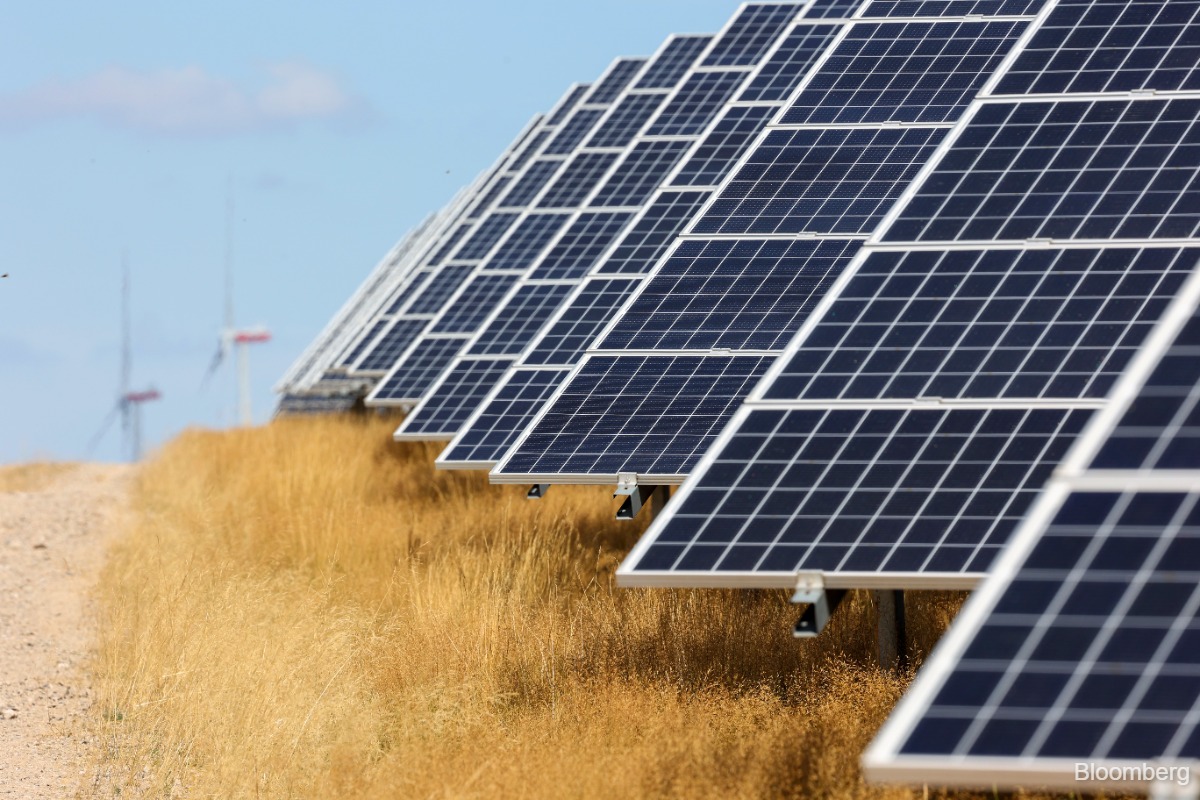
German solar boom saves nine LNG cargoes to ease Iran war shock
German solar power generation is set to surge this summer, helping to shield Europe from some Iran war fallout as it curbs demand for liquefied natural gas imports.

The Edge Malaysia (theedgemalaysia.com)
-
R relay@relay.publicsquare.global shared this topic