I’ve said it before, but it needs repeating: We already have all the knowledge and technology we need to make an ecological society.
-
@benlockwood Not sure I understand. It seems to me that knowledge of what is needed without the technology to accomplish it is not that useful. It is a start though.
I don’t even think we really know what levels are sustainable. We have guesses but all we really know is that current levels are most certainly not sustainable.
@btschumy @benlockwood - How true. The Dooms Day clock show globally very close to the apex. If Global warming continues the clock cannot be reversed. Are we stuck with the dangers of Fossil Fuel. Who knows.
-
I’ve said it before, but it needs repeating: We already have all the knowledge and technology we need to make an ecological society. It is our political and economic structures that prevent it. The quest for unlimited growth and accumulation exploits both people and our environment.
-
@benlockwood I agree with your sentiment but not necessarily with the facts. For example, we don’t have the technology to make cement without using fossil fuels. Same for metals needed for electrification. All our large machinery runs on diesel fuels and there is no technology to electrify them.
We do have the technology to do better than we currently are but it is not clear if that will be good enough.
@btschumy @benlockwood
We absolutely do have the technology for those things already, it would just be "more expensive" in the sense that the long-term costs of fossil fuels are all externalized.There are certainly a few things we don't have the technology for yet, but mostly in synthetic chemistry, and the amount of fossil fuels used for that is a tiny fraction of global consumption.
The hardest problem would be weaning off of industrial agriculture.
-
@benlockwood I agree with your sentiment but not necessarily with the facts. For example, we don’t have the technology to make cement without using fossil fuels. Same for metals needed for electrification. All our large machinery runs on diesel fuels and there is no technology to electrify them.
We do have the technology to do better than we currently are but it is not clear if that will be good enough.
The technology for metal processing exists. Sweden has demonstrated fossil fuel free steel production, from processing the ore to iron and then on to steel. A commercial plant is under construction.
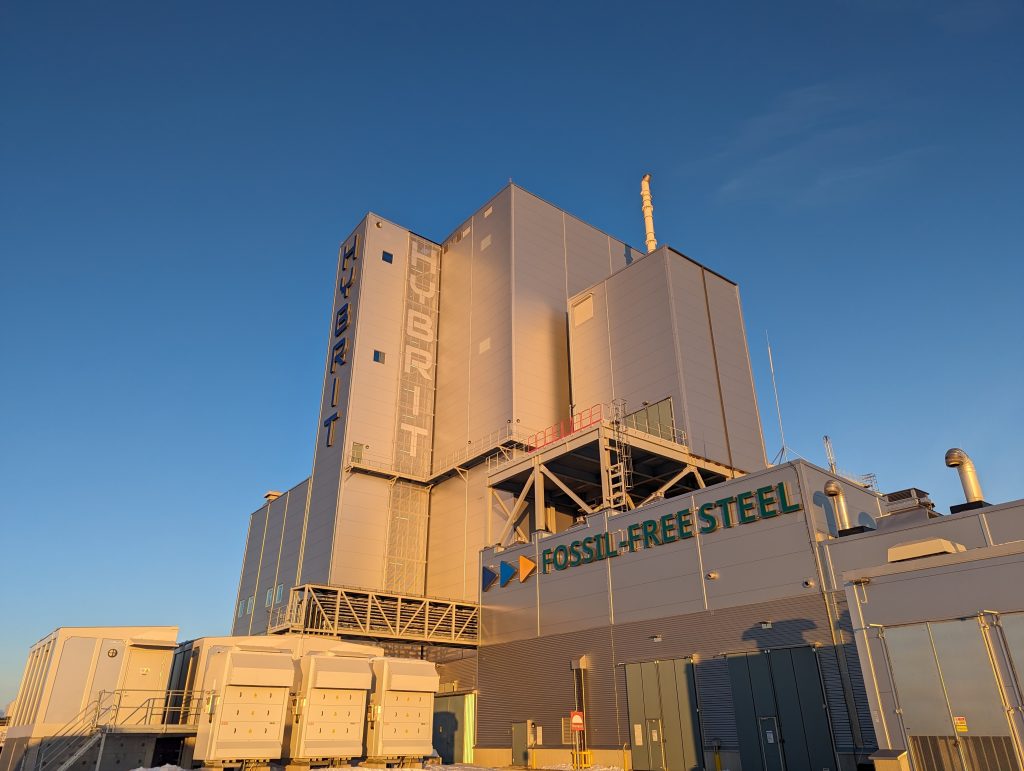
HYBRIT: Six years of research paves the way for fossil-free iron and steel production on an industrial scale - Hybrit
The HYBRIT initiative now presents the results of six years of research in a final report to the Swedish Energy Agency. The report shows that direct reduced iron produced with the HYBRIT process has superior characteristics compared to iron produced with fossil fuels. HYBRIT has applied for and received several patents based on the successful ...

Hybrit (www.hybritdevelopment.se)
Most other metals can similarly be produced with effectively zero CO2 emissions.
I would agree that cement is a bigger problem but the science is progressing.
-
@btschumy @benlockwood
We absolutely do have the technology for those things already, it would just be "more expensive" in the sense that the long-term costs of fossil fuels are all externalized.There are certainly a few things we don't have the technology for yet, but mostly in synthetic chemistry, and the amount of fossil fuels used for that is a tiny fraction of global consumption.
The hardest problem would be weaning off of industrial agriculture.
@australopithecus @benlockwood We might have the technology “in the lab” but we don’t have it at scale. To ramp up would be very expensive (as you said) but it would also take time, time that we really don’t have.
-
@australopithecus @benlockwood We might have the technology “in the lab” but we don’t have it at scale. To ramp up would be very expensive (as you said) but it would also take time, time that we really don’t have.
@btschumy @benlockwood
Oh yeah, you mean we don't have the infrastructure in place. That's true, but it's also something we can and should start fixing whenever we want. China, for example, is already years ahead of everyone else on this with their huge solar fields. And sodium ion batteries are finally at a point where they're practical, especially for bulk grid storage of power. -
I’ve said it before, but it needs repeating: We already have all the knowledge and technology we need to make an ecological society. It is our political and economic structures that prevent it. The quest for unlimited growth and accumulation exploits both people and our environment.
@benlockwood And the media endlessly trotting out the importance of the bloody economy and growth - so often that it gets normalised. The repeat simple message that Hitler used.
The economy principally serves those who really do not need 'more'.
Bhutan government have a better idea - happiness of the people is their number 1 priority.
-
I’ve said it before, but it needs repeating: We already have all the knowledge and technology we need to make an ecological society. It is our political and economic structures that prevent it. The quest for unlimited growth and accumulation exploits both people and our environment.
@benlockwood market economies are a wicked problem politicians treat as an engineering problem. Until that changes any runaway consequences will remain unaddressed.
-
I’ve said it before, but it needs repeating: We already have all the knowledge and technology we need to make an ecological society. It is our political and economic structures that prevent it. The quest for unlimited growth and accumulation exploits both people and our environment.
if we had the will, we could find a way
This Green Concrete Is Made From Urine: German Scientists Recreate Sandstone Texture Using Waste in Eco-Tech Breakthrough
https://www.sustainability-times.com/research/this-green-concrete-is-made-from-urine-german-scientists-recreate-sandstone-texture-using-waste-in-eco-tech-breakthrough/ -
@benlockwood
It's our sociology as well; we seem to be both supporters and victims of an advertising-driven consumption and growth philosophy. Cradle to grave planning and circular economies don't seem to get much support from the common folk.we also have a global political system that tolerates genocide a a means of controlling the supply of "useful" resources, and a lobby system that maintains the fossil fuel industry
-
@btschumy @benlockwood - How true. The Dooms Day clock show globally very close to the apex. If Global warming continues the clock cannot be reversed. Are we stuck with the dangers of Fossil Fuel. Who knows.
-
@benlockwood Not sure I understand. It seems to me that knowledge of what is needed without the technology to accomplish it is not that useful. It is a start though.
I don’t even think we really know what levels are sustainable. We have guesses but all we really know is that current levels are most certainly not sustainable.
Here you go.
"How much growth is required to achieve good lives for all? Insights from needs-based analysis"
Provisioning decent living standards (DLS) for 8.5 billion people would require only 30% of current global resource and energy use, leaving a substantial surplus for additional consumption, public luxury, scientific advancement, and other social investments.
-
@benlockwood I agree with your sentiment but not necessarily with the facts. For example, we don’t have the technology to make cement without using fossil fuels. Same for metals needed for electrification. All our large machinery runs on diesel fuels and there is no technology to electrify them.
We do have the technology to do better than we currently are but it is not clear if that will be good enough.
Ah, but we *do* have the technology to recycle cement.
So there you have it.

Cement recycling method could help solve one of the world's biggest climate challenges
Researchers have developed a method to produce very low emission concrete at scale -- an innovation that could be transformative in the transition to net zero. The method, which the researchers say is 'an absolute miracle', uses the electrically-powered arc furnaces used for steel recycling to simultaneously recycle cement, the carbon-hungry component of concrete.
ScienceDaily (www.sciencedaily.com)
-
I’ve said it before, but it needs repeating: We already have all the knowledge and technology we need to make an ecological society. It is our political and economic structures that prevent it. The quest for unlimited growth and accumulation exploits both people and our environment.
@benlockwood
optimising for efficiency could easily make a system far better than the current intentionally destroying the world, but even a well-run billions-of-people world would be ecological disaster
say you eliminate meat from the global diet, shut down all the pointless gpus and asics, consolidate travel and mass-introduce hydrogen as fuel or whatever, what you have left is still an agricultural system using like a quarter of earth's arable land, fed by a non-replenishing water table and fertilisers derived from fossil fuels and giant-mess mining, and still reliant on pesticides and "tech" and power grid (the former greatly diminished, but the latter ramping up to unprecedented levels) that require their own mines to dewater and planet-encircling supply chains (moving away from lithium to less power dense alternatives where that density doesn't matter can help but). eliminating poisonous fertiliser and pesticide runoff at least might be possible by a move to indoor farming, but that does require knowledge and technologies we haven't worked out yet, and it's still not enough to reach what i'd think of as an "ecological society". people are just now talking about steel production without coke, and similar innovations would be necessary in thousands of other places in supply chains (e.g. working without animal byproducts in industry) that might be easy, difficult, or currently impossible but would anyways need time and effort not yet put in -
I’ve said it before, but it needs repeating: We already have all the knowledge and technology we need to make an ecological society. It is our political and economic structures that prevent it. The quest for unlimited growth and accumulation exploits both people and our environment.
@benlockwood
How can we create the political and economic structures that support our ecological society? -
Ah, but we *do* have the technology to recycle cement.
So there you have it.
Cement recycling method could help solve one of the world's biggest climate challenges
Researchers have developed a method to produce very low emission concrete at scale -- an innovation that could be transformative in the transition to net zero. The method, which the researchers say is 'an absolute miracle', uses the electrically-powered arc furnaces used for steel recycling to simultaneously recycle cement, the carbon-hungry component of concrete.
ScienceDaily (www.sciencedaily.com)
@johnzajac @benlockwood That is potentially promising. Let me know when it is out of the research phase and can be used at scale.
-
Here you go.
"How much growth is required to achieve good lives for all? Insights from needs-based analysis"
Provisioning decent living standards (DLS) for 8.5 billion people would require only 30% of current global resource and energy use, leaving a substantial surplus for additional consumption, public luxury, scientific advancement, and other social investments.
@kzodasnowman @benlockwood Not sure about “leaving a substantial surplus for additional consumption, public luxury, scientific advancement, and other social investments”. Most analyses I’ve seen say we need to reduce consumption to around 30% of current levels just to avoid exceeding planetary boundaries. Not sure that there is much of a surplus.
-
R relay@relay.infosec.exchange shared this topic