Skip to content
  • Categories
  • Recent
  • Tags
  • Popular
  • World
  • Users
  • Groups
Skins
  • Light
  • Brite
  • Cerulean
  • Cosmo
  • Flatly
  • Journal
  • Litera
  • Lumen
  • Lux
  • Materia
  • Minty
  • Morph
  • Pulse
  • Sandstone
  • Simplex
  • Sketchy
  • Spacelab
  • United
  • Yeti
  • Zephyr
  • Dark
  • Cyborg
  • Darkly
  • Quartz
  • Slate
  • Solar
  • Superhero
  • Vapor

  • Default (Cyborg)
  • No Skin
Collapse
Brand Logo

CIRCLE WITH A DOT

  1. Home
  2. Uncategorized
  3. This is a ten minute exposure of a comet, specifically R3 PanSTARRS.

This is a ten minute exposure of a comet, specifically R3 PanSTARRS.
Scheduled Pinned Locked Moved Uncategorized
satellitetrailsapod
13 Posts 9 Posters 0 Views
  • Oldest to Newest
  • Newest to Oldest
  • Most Votes
Reply
  • Reply as topic
Log in to reply
This topic has been deleted. Only users with topic management privileges can see it.
  • boblefridge@mastodon.nzB boblefridge@mastodon.nz

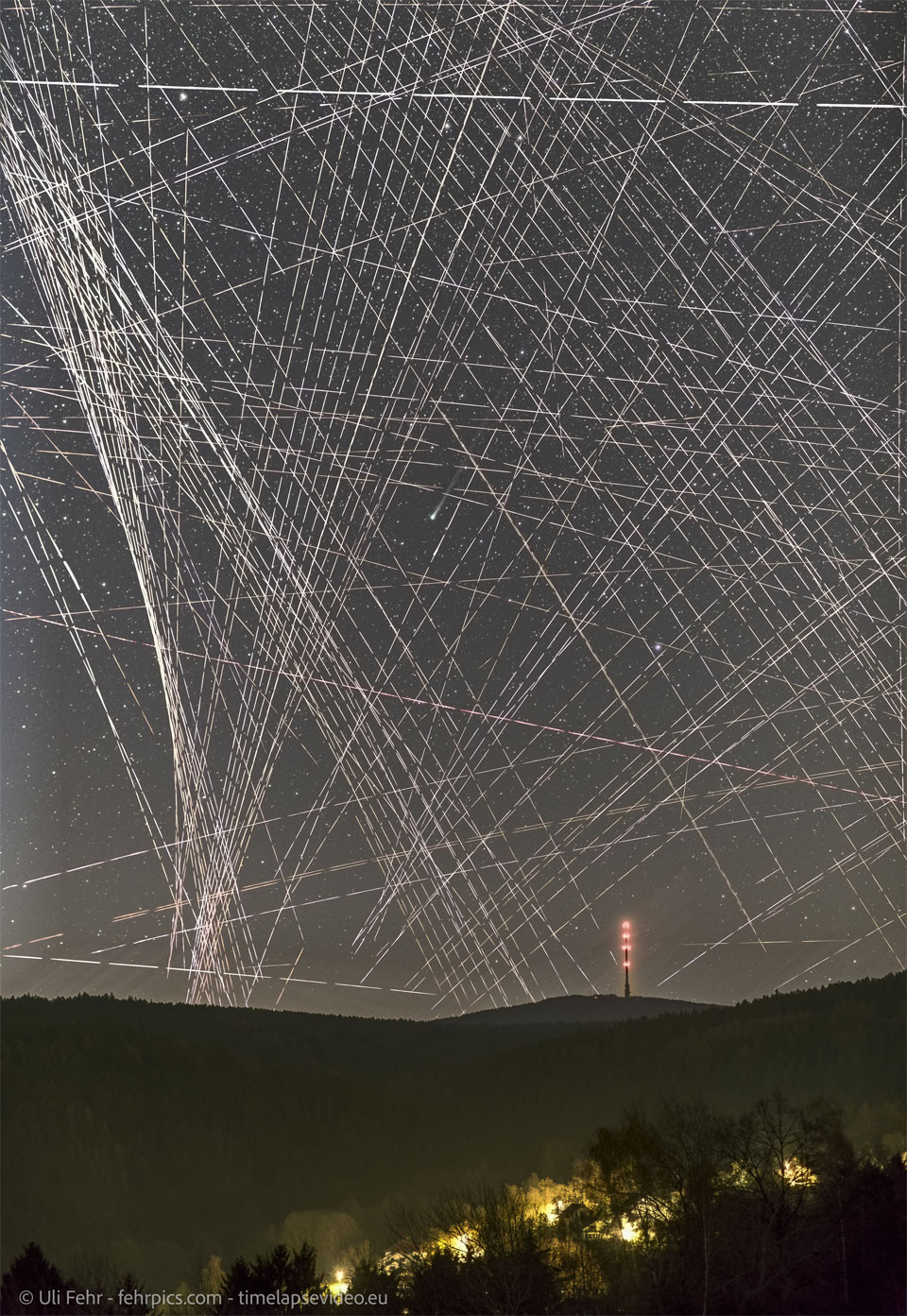
    This is a ten minute exposure of a comet, specifically R3 PanSTARRS. Look at the utter mess Musk and his buddies are making of our night sky, and they're only getting started. There are currently around 10,000 Starlink satellites in space. Musk wants to increase that number to one million.

    Follow @sundogplanets for up to date info on satellite pollution and some charming goat news.

    Photo by Uli Fehr -- via APOD
    Link Preview Image
    APOD: 2026 April 27 – Comet R3 PanSTARRS Behind Satellite Trails

    A different astronomy and space science related image is featured each day, along with a brief explanation.

    favicon

    (apod.nasa.gov)

    #SatelliteTrails #APOD

    circus_maximus@social.anoxinon.deC This user is from outside of this forum
    circus_maximus@social.anoxinon.deC This user is from outside of this forum
    circus_maximus@social.anoxinon.de
    wrote last edited by
    #3

    @BobLefridge @sundogplanets

    Humming "I wear my sunglasses at night ..."

    Joking aside: Would there be a noticeable (in terms of global warming) increase having Musk's wet dream of 1 Million AI datacenters in the sky?

    sundogplanets@mastodon.socialS 1 Reply Last reply
    0
    • boblefridge@mastodon.nzB boblefridge@mastodon.nz

      This is a ten minute exposure of a comet, specifically R3 PanSTARRS. Look at the utter mess Musk and his buddies are making of our night sky, and they're only getting started. There are currently around 10,000 Starlink satellites in space. Musk wants to increase that number to one million.

      Follow @sundogplanets for up to date info on satellite pollution and some charming goat news.

      Photo by Uli Fehr -- via APOD

      Link Preview Image
      APOD: 2026 April 27 – Comet R3 PanSTARRS Behind Satellite Trails

      A different astronomy and space science related image is featured each day, along with a brief explanation.

      favicon

      (apod.nasa.gov)

      #SatelliteTrails #APOD

      srvanderplas@datavis.socialS This user is from outside of this forum
      srvanderplas@datavis.socialS This user is from outside of this forum
      srvanderplas@datavis.social
      wrote last edited by
      #4

      @BobLefridge @sundogplanets Ugh. Long exposure photos are my favorite. It figures Musk and the other technobros would ruin that along with my job (prof, I hate grading AI slop) and the environment too.

      1 Reply Last reply
      0
      • circus_maximus@social.anoxinon.deC circus_maximus@social.anoxinon.de

        @BobLefridge @sundogplanets

        Humming "I wear my sunglasses at night ..."

        Joking aside: Would there be a noticeable (in terms of global warming) increase having Musk's wet dream of 1 Million AI datacenters in the sky?

        sundogplanets@mastodon.socialS This user is from outside of this forum
        sundogplanets@mastodon.socialS This user is from outside of this forum
        sundogplanets@mastodon.social
        wrote last edited by
        #5

        @circus_maximus @BobLefridge Probably ozone depletion: https://theconversation.com/a-new-space-race-could-turn-our-atmosphere-into-a-crematorium-for-satellites-276366

        circus_maximus@social.anoxinon.deC 1 Reply Last reply
        0
        • R relay@relay.mycrowd.ca shared this topic
        • boblefridge@mastodon.nzB boblefridge@mastodon.nz

          This is a ten minute exposure of a comet, specifically R3 PanSTARRS. Look at the utter mess Musk and his buddies are making of our night sky, and they're only getting started. There are currently around 10,000 Starlink satellites in space. Musk wants to increase that number to one million.

          Follow @sundogplanets for up to date info on satellite pollution and some charming goat news.

          Photo by Uli Fehr -- via APOD

          Link Preview Image
          APOD: 2026 April 27 – Comet R3 PanSTARRS Behind Satellite Trails

          A different astronomy and space science related image is featured each day, along with a brief explanation.

          favicon

          (apod.nasa.gov)

          #SatelliteTrails #APOD

          1420mhz@mastodon.social1 This user is from outside of this forum
          1420mhz@mastodon.social1 This user is from outside of this forum
          1420mhz@mastodon.social
          wrote last edited by
          #6

          @BobLefridge @sundogplanets
          Yes, and also imagine trying to track NEOs and get a heads up on a possible impactor, in this lattice mess.

          1 Reply Last reply
          0
          • boblefridge@mastodon.nzB boblefridge@mastodon.nz

            This is a ten minute exposure of a comet, specifically R3 PanSTARRS. Look at the utter mess Musk and his buddies are making of our night sky, and they're only getting started. There are currently around 10,000 Starlink satellites in space. Musk wants to increase that number to one million.

            Follow @sundogplanets for up to date info on satellite pollution and some charming goat news.

            Photo by Uli Fehr -- via APOD

            Link Preview Image
            APOD: 2026 April 27 – Comet R3 PanSTARRS Behind Satellite Trails

            A different astronomy and space science related image is featured each day, along with a brief explanation.

            favicon

            (apod.nasa.gov)

            #SatelliteTrails #APOD

            mist@chaosfurs.socialM This user is from outside of this forum
            mist@chaosfurs.socialM This user is from outside of this forum
            mist@chaosfurs.social
            wrote last edited by
            #7

            @BobLefridge @sundogplanets why are the satelite lines dashed?

            leafgreen@mastodon.socialL 1 Reply Last reply
            0
            • sundogplanets@mastodon.socialS sundogplanets@mastodon.social

              @circus_maximus @BobLefridge Probably ozone depletion: https://theconversation.com/a-new-space-race-could-turn-our-atmosphere-into-a-crematorium-for-satellites-276366

              circus_maximus@social.anoxinon.deC This user is from outside of this forum
              circus_maximus@social.anoxinon.deC This user is from outside of this forum
              circus_maximus@social.anoxinon.de
              wrote last edited by
              #8

              @sundogplanets @BobLefridge thank you sam for sharing!

              So if I get it correctly the significant part is the remainders of the satellites when they burn up upon their re-entry in the upper atmosphere and then then that could (would/will?) remain there?

              1 Reply Last reply
              0
              • boblefridge@mastodon.nzB boblefridge@mastodon.nz

                This is a ten minute exposure of a comet, specifically R3 PanSTARRS. Look at the utter mess Musk and his buddies are making of our night sky, and they're only getting started. There are currently around 10,000 Starlink satellites in space. Musk wants to increase that number to one million.

                Follow @sundogplanets for up to date info on satellite pollution and some charming goat news.

                Photo by Uli Fehr -- via APOD

                Link Preview Image
                APOD: 2026 April 27 – Comet R3 PanSTARRS Behind Satellite Trails

                A different astronomy and space science related image is featured each day, along with a brief explanation.

                favicon

                (apod.nasa.gov)

                #SatelliteTrails #APOD

                kimlockhartga@beige.partyK This user is from outside of this forum
                kimlockhartga@beige.partyK This user is from outside of this forum
                kimlockhartga@beige.party
                wrote last edited by
                #9

                @BobLefridge @sundogplanets No one should have a claim on any part of the sky above us.

                1 Reply Last reply
                0
                • mist@chaosfurs.socialM mist@chaosfurs.social

                  @BobLefridge @sundogplanets why are the satelite lines dashed?

                  leafgreen@mastodon.socialL This user is from outside of this forum
                  leafgreen@mastodon.socialL This user is from outside of this forum
                  leafgreen@mastodon.social
                  wrote last edited by
                  #10

                  @mist Great question! As I understand it, the light would be coming from reflected sunlight, not an onboard light source. If that's the case, I would expect any periodic darkness to result from a rotation that prevents reflection on a regular cycle; however, wouldn't these satellites need to be locked from rotating in order to function?
                  @BobLefridge @sundogplanets

                  mist@chaosfurs.socialM 1 Reply Last reply
                  0
                  • leafgreen@mastodon.socialL leafgreen@mastodon.social

                    @mist Great question! As I understand it, the light would be coming from reflected sunlight, not an onboard light source. If that's the case, I would expect any periodic darkness to result from a rotation that prevents reflection on a regular cycle; however, wouldn't these satellites need to be locked from rotating in order to function?
                    @BobLefridge @sundogplanets

                    mist@chaosfurs.socialM This user is from outside of this forum
                    mist@chaosfurs.socialM This user is from outside of this forum
                    mist@chaosfurs.social
                    wrote last edited by
                    #11

                    @leafgreen @BobLefridge @sundogplanets they are locked, their antennas need to point at earth after all.
                    my first instinct was triggering a "but that would be insane": it's not dashed, but each dash in its own satellite, with multiple satellites in the same orbit. BUT THAT WOULD BE AN INSANE AMOUNT OF SATELITES.
                    so please tell me what is actually going on here. 😄

                    sundogplanets@mastodon.socialS 1 Reply Last reply
                    0
                    • mist@chaosfurs.socialM mist@chaosfurs.social

                      @leafgreen @BobLefridge @sundogplanets they are locked, their antennas need to point at earth after all.
                      my first instinct was triggering a "but that would be insane": it's not dashed, but each dash in its own satellite, with multiple satellites in the same orbit. BUT THAT WOULD BE AN INSANE AMOUNT OF SATELITES.
                      so please tell me what is actually going on here. 😄

                      sundogplanets@mastodon.socialS This user is from outside of this forum
                      sundogplanets@mastodon.socialS This user is from outside of this forum
                      sundogplanets@mastodon.social
                      wrote last edited by
                      #12

                      @mist @leafgreen @BobLefridge It's probably many shorter exposures added together, and the gaps are the reset time between exposures

                      mist@chaosfurs.socialM 1 Reply Last reply
                      0
                      • sundogplanets@mastodon.socialS sundogplanets@mastodon.social

                        @mist @leafgreen @BobLefridge It's probably many shorter exposures added together, and the gaps are the reset time between exposures

                        mist@chaosfurs.socialM This user is from outside of this forum
                        mist@chaosfurs.socialM This user is from outside of this forum
                        mist@chaosfurs.social
                        wrote last edited by
                        #13

                        @sundogplanets @leafgreen @BobLefridge that sounds reasonable

                        1 Reply Last reply
                        1
                        0
                        • R relay@relay.infosec.exchange shared this topic

                        Reply
                        • Reply as topic
                        Log in to reply
                        • Oldest to Newest
                        • Newest to Oldest
                        • Most Votes


                        • Login

                        • Login or register to search.
                        • First post
                          Last post
                        0
                        • Categories
                        • Recent
                        • Tags
                        • Popular
                        • World
                        • Users
                        • Groups