Skip to content
  • Categories
  • Recent
  • Tags
  • Popular
  • World
  • Users
  • Groups
Skins
  • Light
  • Brite
  • Cerulean
  • Cosmo
  • Flatly
  • Journal
  • Litera
  • Lumen
  • Lux
  • Materia
  • Minty
  • Morph
  • Pulse
  • Sandstone
  • Simplex
  • Sketchy
  • Spacelab
  • United
  • Yeti
  • Zephyr
  • Dark
  • Cyborg
  • Darkly
  • Quartz
  • Slate
  • Solar
  • Superhero
  • Vapor

  • Default (Cyborg)
  • No Skin
Collapse
Brand Logo

CIRCLE WITH A DOT

  1. Home
  2. Uncategorized
  3. New #MathArt sculptures: reaction-diffusion Truchet tilings of the sphere!

New #MathArt sculptures: reaction-diffusion Truchet tilings of the sphere!

Scheduled Pinned Locked Moved Uncategorized
mathart
20 Posts 4 Posters 40 Views
  • Oldest to Newest
  • Newest to Oldest
  • Most Votes
Reply
  • Reply as topic
Log in to reply
This topic has been deleted. Only users with topic management privileges can see it.
  • matt_zucker@mastodon.socialM This user is from outside of this forum
    matt_zucker@mastodon.socialM This user is from outside of this forum
    matt_zucker@mastodon.social
    wrote last edited by
    #1

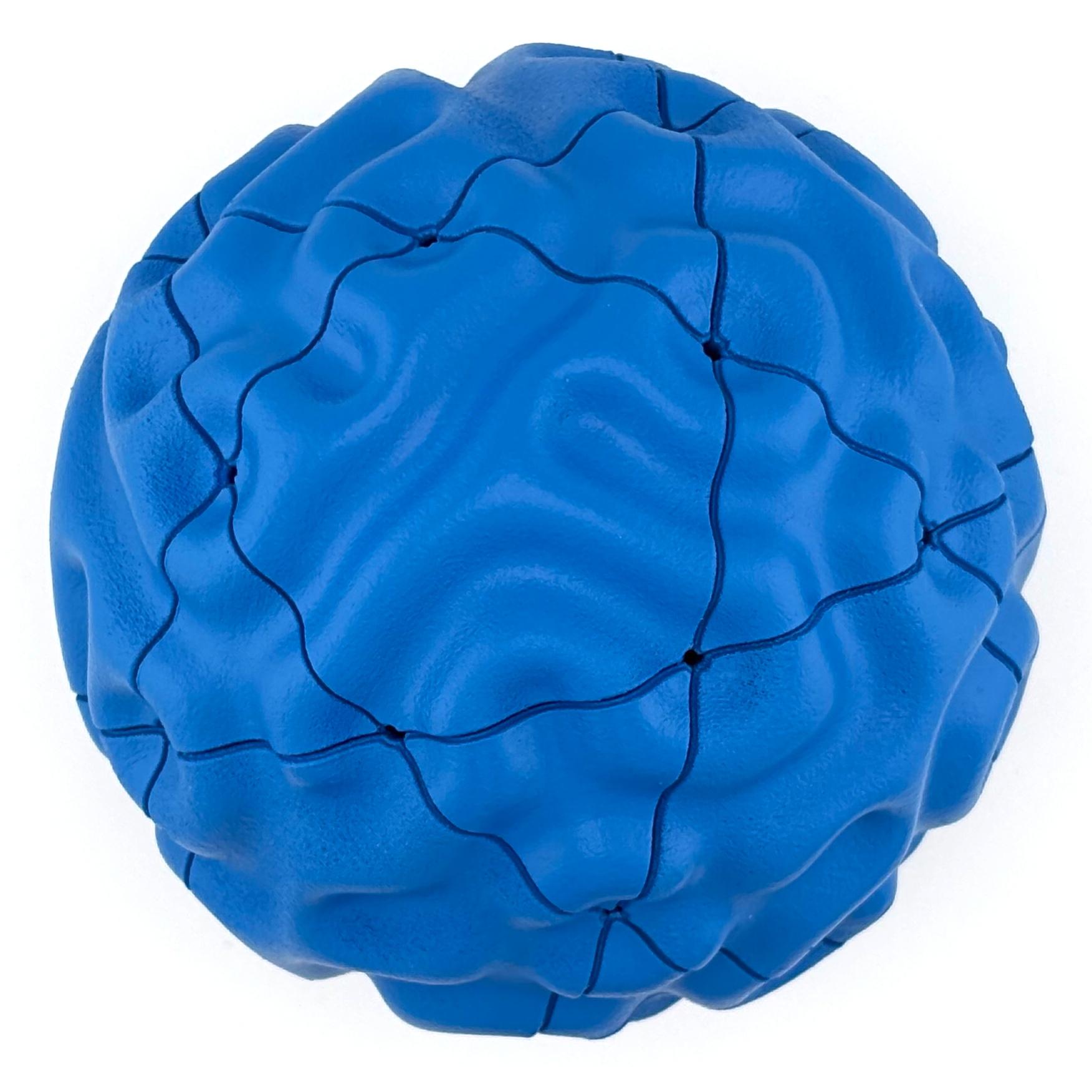
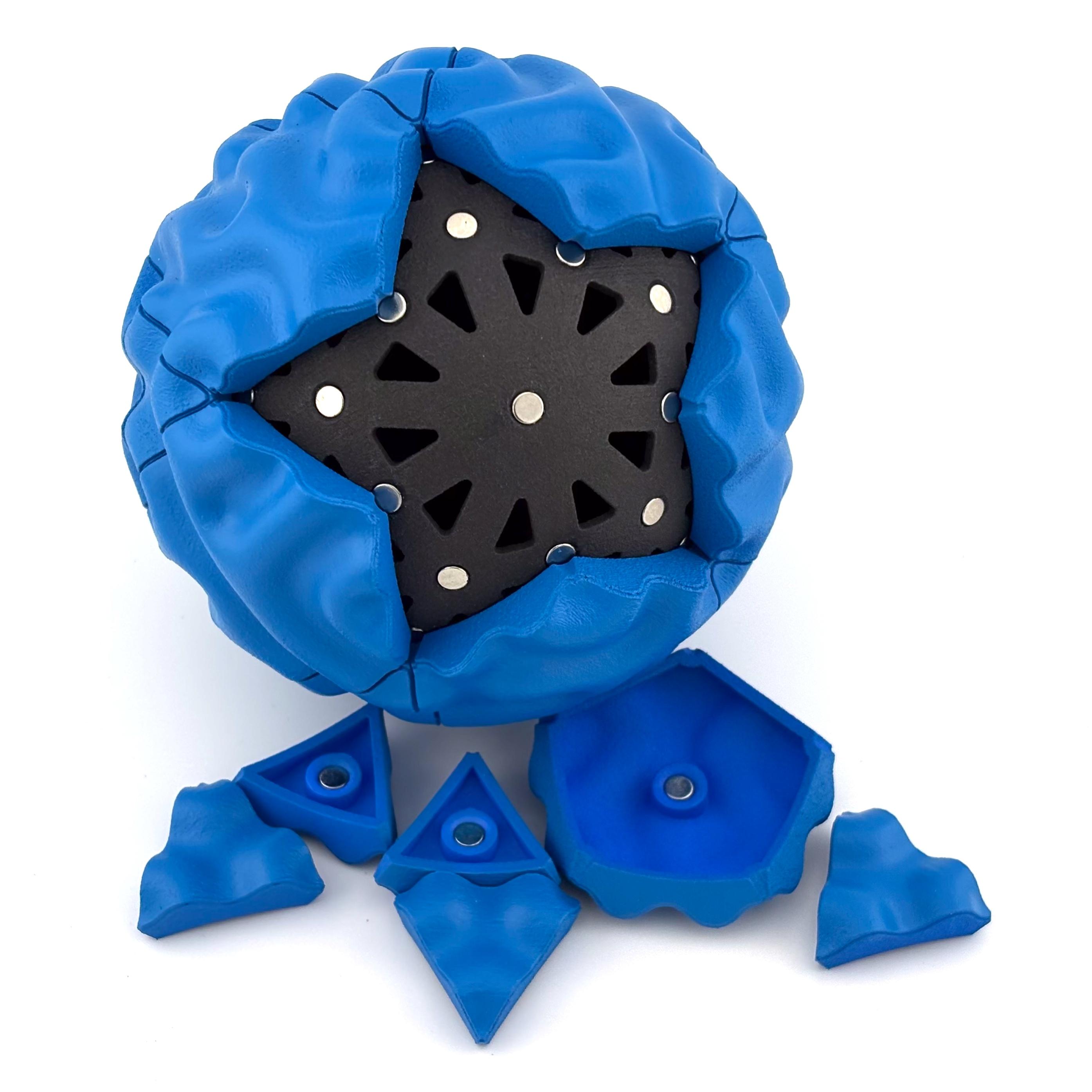
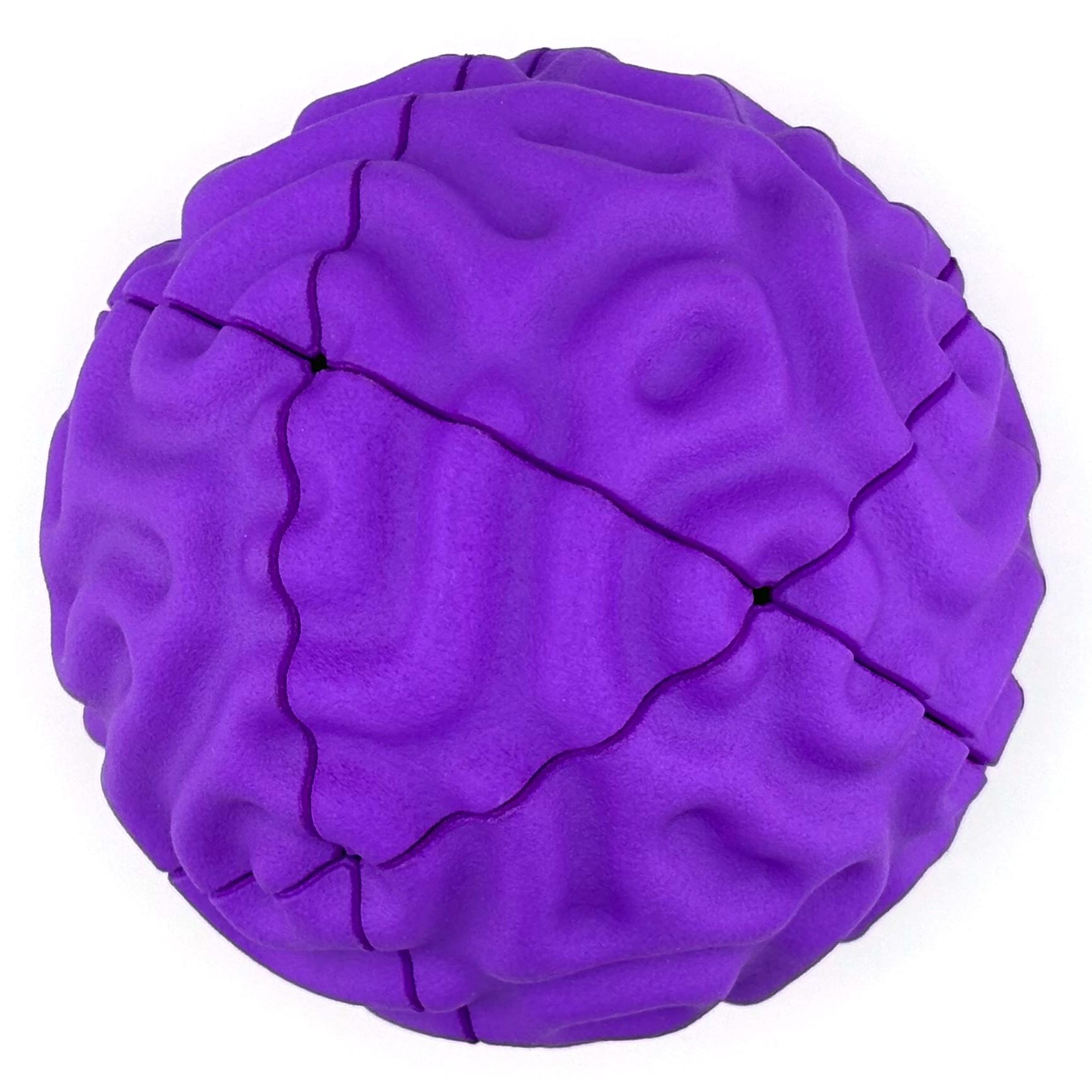
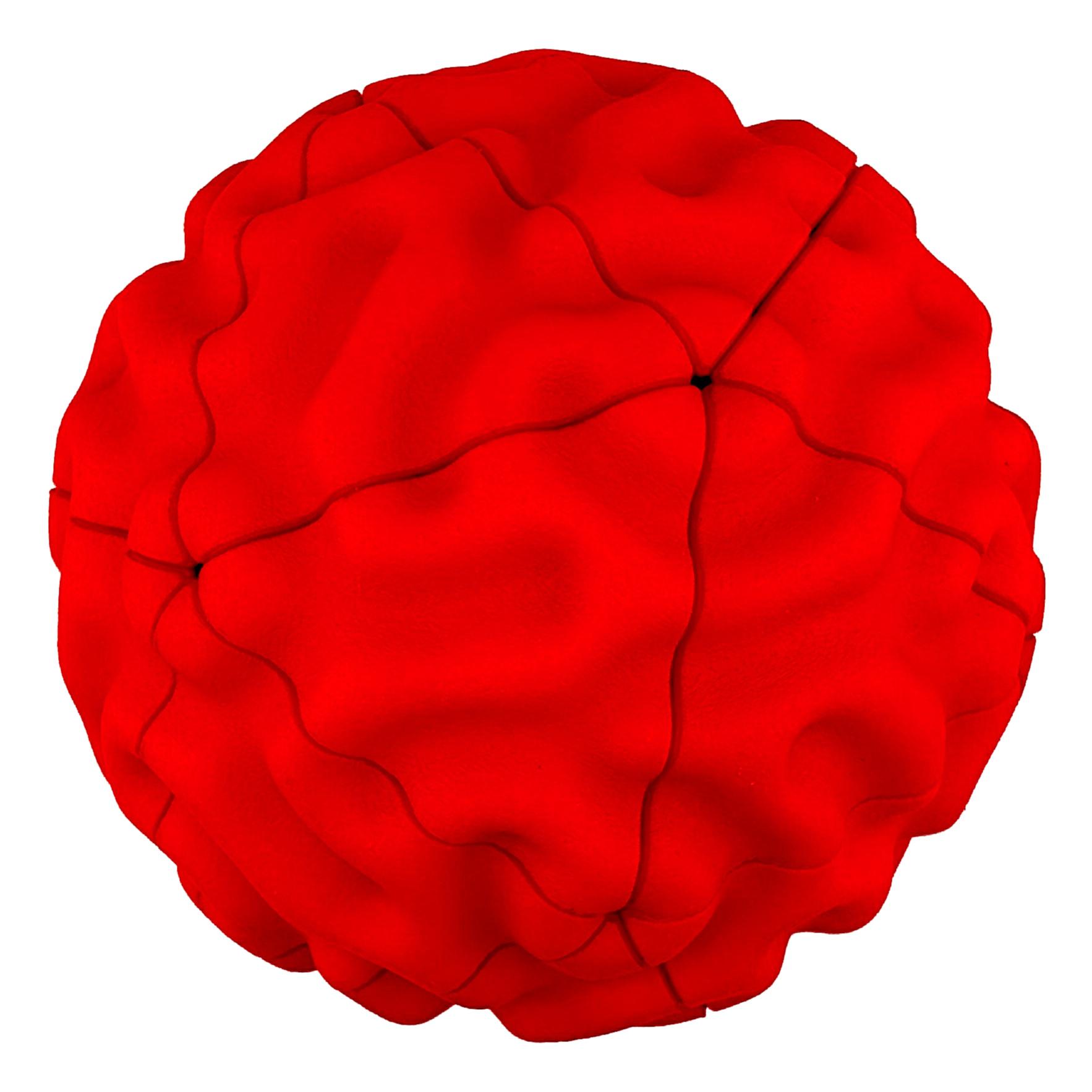
    New #MathArt sculptures: reaction-diffusion Truchet tilings of the sphere! These are made from 3D-printed nylon and each individual tile can be removed/replaced.

    If you think these look cool or interesting, stick around to learn a little bit about how they were made and the math behind them... 🧵
    Link Preview ImageLink Preview ImageLink Preview ImageLink Preview Image
    matt_zucker@mastodon.socialM christianp@mathstodon.xyzC ngons@mathstodon.xyzN 3 Replies Last reply
    1
    0
    • matt_zucker@mastodon.socialM matt_zucker@mastodon.social

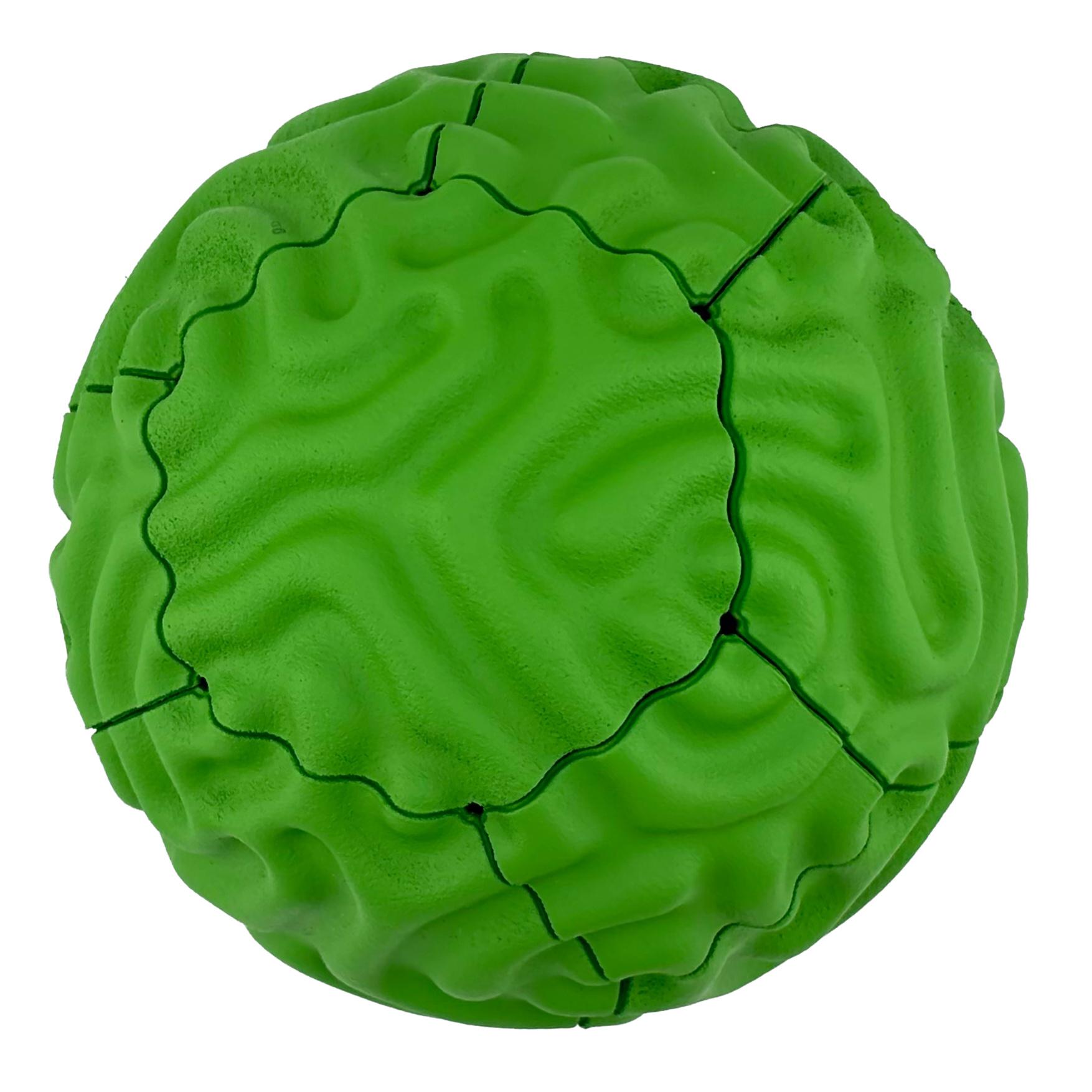
      New #MathArt sculptures: reaction-diffusion Truchet tilings of the sphere! These are made from 3D-printed nylon and each individual tile can be removed/replaced.

      If you think these look cool or interesting, stick around to learn a little bit about how they were made and the math behind them... 🧵
      Link Preview ImageLink Preview ImageLink Preview ImageLink Preview Image
      matt_zucker@mastodon.socialM This user is from outside of this forum
      matt_zucker@mastodon.socialM This user is from outside of this forum
      matt_zucker@mastodon.social
      wrote last edited by
      #2

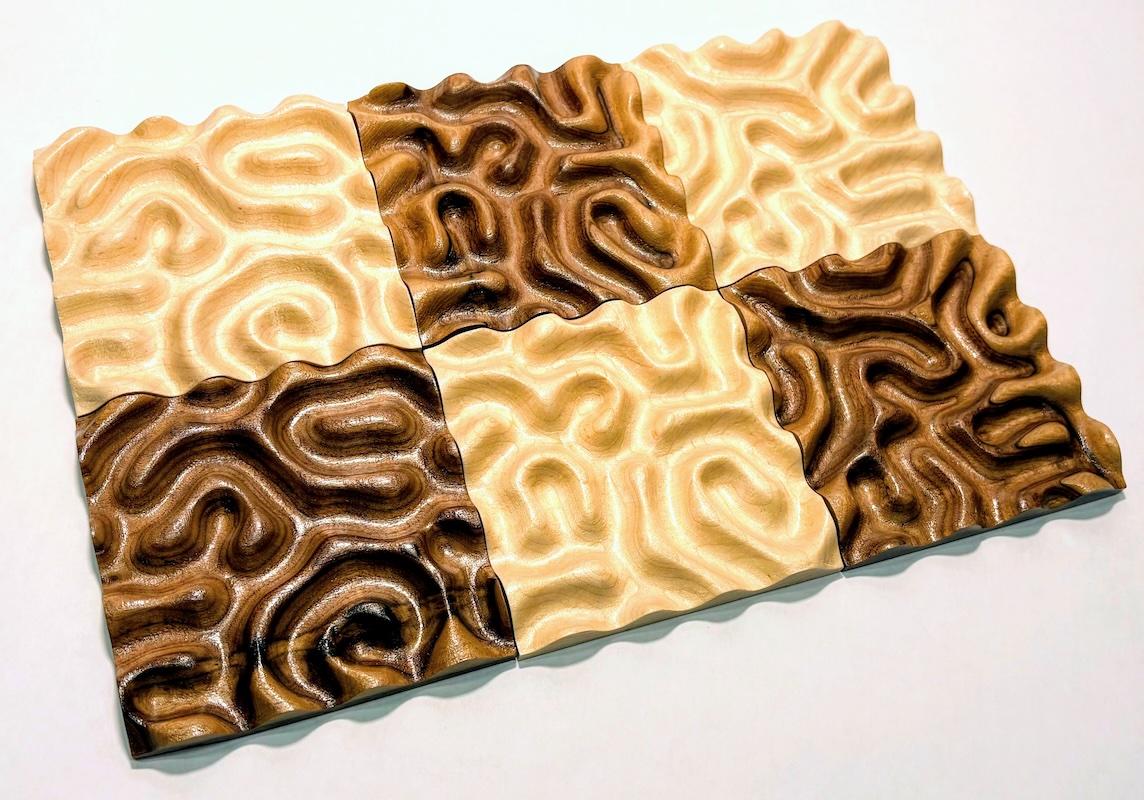
      Oh, and here are some planar variants I made, too. The left one is CNC-machined walnut and maple, because it seemed like a really cool idea before I realized exactly how much hand-sanding would be involved (too much, it was too much sanding). The right one is 3D-printed nylon.

      Link Preview ImageLink Preview Image
      matt_zucker@mastodon.socialM 1 Reply Last reply
      0
      • matt_zucker@mastodon.socialM matt_zucker@mastodon.social

        Oh, and here are some planar variants I made, too. The left one is CNC-machined walnut and maple, because it seemed like a really cool idea before I realized exactly how much hand-sanding would be involved (too much, it was too much sanding). The right one is 3D-printed nylon.

        Link Preview ImageLink Preview Image
        matt_zucker@mastodon.socialM This user is from outside of this forum
        matt_zucker@mastodon.socialM This user is from outside of this forum
        matt_zucker@mastodon.social
        wrote last edited by
        #3

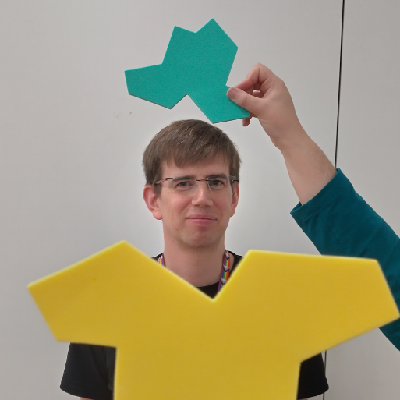
        "Truchet tiling" means that that each tile can be rotated in place or swapped with another of the same shape without breaking up the pattern.

        To get this you need the tiles' edges to all be identical and mirror-symmetric. This is not obvious at first glance when looking at the overall tiling, IMO.

        Link Preview ImageLink Preview Image
        matt_zucker@mastodon.socialM 1 Reply Last reply
        0
        • matt_zucker@mastodon.socialM matt_zucker@mastodon.social

          "Truchet tiling" means that that each tile can be rotated in place or swapped with another of the same shape without breaking up the pattern.

          To get this you need the tiles' edges to all be identical and mirror-symmetric. This is not obvious at first glance when looking at the overall tiling, IMO.

          Link Preview ImageLink Preview Image
          matt_zucker@mastodon.socialM This user is from outside of this forum
          matt_zucker@mastodon.socialM This user is from outside of this forum
          matt_zucker@mastodon.social
          wrote last edited by
          #4

          RE: https://mastodon.social/@matt_zucker/114389429207956266

          (BTW if these orbs look familiar, maybe you saw the thread I posted about a year ago about similar work I did.)

          matt_zucker@mastodon.socialM 1 Reply Last reply
          0
          • matt_zucker@mastodon.socialM matt_zucker@mastodon.social

            RE: https://mastodon.social/@matt_zucker/114389429207956266

            (BTW if these orbs look familiar, maybe you saw the thread I posted about a year ago about similar work I did.)

            matt_zucker@mastodon.socialM This user is from outside of this forum
            matt_zucker@mastodon.socialM This user is from outside of this forum
            matt_zucker@mastodon.social
            wrote last edited by
            #5

            OK, so what's "reaction-diffusion" then? In brief, it's a mathematical model of a chemical reaction that produces patterns similar to many found in nature. For more info, see https://www.karlsims.com/rd.html and/or https://mrob.com/pub/comp/xmorphia/index.html.

            matt_zucker@mastodon.socialM 1 Reply Last reply
            0
            • matt_zucker@mastodon.socialM matt_zucker@mastodon.social

              OK, so what's "reaction-diffusion" then? In brief, it's a mathematical model of a chemical reaction that produces patterns similar to many found in nature. For more info, see https://www.karlsims.com/rd.html and/or https://mrob.com/pub/comp/xmorphia/index.html.

              matt_zucker@mastodon.socialM This user is from outside of this forum
              matt_zucker@mastodon.socialM This user is from outside of this forum
              matt_zucker@mastodon.social
              wrote last edited by
              #6

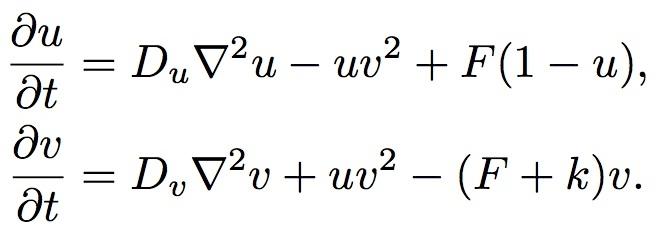
              Making reaction-diffusion patterns amounts to solving a system of partial differential equations (PDEs) – the Gray-Scott model – that describe the simulated chemical reaction. The formula might look like Greek, but it's not too exotic from a math/coding standpoint.

              Link Preview Image
              matt_zucker@mastodon.socialM 1 Reply Last reply
              0
              • matt_zucker@mastodon.socialM matt_zucker@mastodon.social

                Making reaction-diffusion patterns amounts to solving a system of partial differential equations (PDEs) – the Gray-Scott model – that describe the simulated chemical reaction. The formula might look like Greek, but it's not too exotic from a math/coding standpoint.

                Link Preview Image
                matt_zucker@mastodon.socialM This user is from outside of this forum
                matt_zucker@mastodon.socialM This user is from outside of this forum
                matt_zucker@mastodon.social
                wrote last edited by
                #7

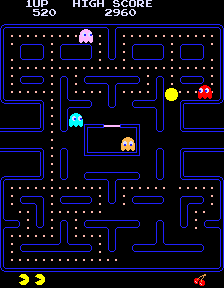
                Making RD patterns that tile like wallpaper is easy – apply periodic boundary conditions (PBCs, https://en.wikipedia.org/wiki/Periodic_boundary_conditions) when solving the PDEs.

                PBCs are like the old-school Pac-Man arcade game: crossing the left side of the "screen" warps you to the right side, and ditto for top/bottom.

                Link Preview Image
                matt_zucker@mastodon.socialM 1 Reply Last reply
                0
                • matt_zucker@mastodon.socialM matt_zucker@mastodon.social

                  Making RD patterns that tile like wallpaper is easy – apply periodic boundary conditions (PBCs, https://en.wikipedia.org/wiki/Periodic_boundary_conditions) when solving the PDEs.

                  PBCs are like the old-school Pac-Man arcade game: crossing the left side of the "screen" warps you to the right side, and ditto for top/bottom.

                  Link Preview Image
                  matt_zucker@mastodon.socialM This user is from outside of this forum
                  matt_zucker@mastodon.socialM This user is from outside of this forum
                  matt_zucker@mastodon.social
                  wrote last edited by
                  #8

                  More interesting RD tilings are possible. Recently, Vladimir Bulatov has been making some really cool patterns with his SymSim software – check it out at https://symmhub.github.io/SymmHub/apps/symsim/gray_scott/index.html.

                  matt_zucker@mastodon.socialM 1 Reply Last reply
                  0
                  • matt_zucker@mastodon.socialM matt_zucker@mastodon.social

                    More interesting RD tilings are possible. Recently, Vladimir Bulatov has been making some really cool patterns with his SymSim software – check it out at https://symmhub.github.io/SymmHub/apps/symsim/gray_scott/index.html.

                    matt_zucker@mastodon.socialM This user is from outside of this forum
                    matt_zucker@mastodon.socialM This user is from outside of this forum
                    matt_zucker@mastodon.social
                    wrote last edited by
                    #9

                    But until I started this project, I don't think anyone was daft enough to make reaction-diffusion Truchet tiles that match up no matter how you reorient them.

                    The central trick is to solve the Gray-Scott PDEs on an unusual topological domain that collapses all of the edges into a single segment.

                    matt_zucker@mastodon.socialM 1 Reply Last reply
                    0
                    • matt_zucker@mastodon.socialM matt_zucker@mastodon.social

                      But until I started this project, I don't think anyone was daft enough to make reaction-diffusion Truchet tiles that match up no matter how you reorient them.

                      The central trick is to solve the Gray-Scott PDEs on an unusual topological domain that collapses all of the edges into a single segment.

                      matt_zucker@mastodon.socialM This user is from outside of this forum
                      matt_zucker@mastodon.socialM This user is from outside of this forum
                      matt_zucker@mastodon.social
                      wrote last edited by
                      #10

                      Here's what it looks like, starting with a square sheet (a). First, fold it into quarters (b), then fold diagonally to put all of the boundary edges on top of each other (c). Finally, glue all of the edges together (d).

                      matt_zucker@mastodon.socialM 1 Reply Last reply
                      0
                      • matt_zucker@mastodon.socialM matt_zucker@mastodon.social

                        Here's what it looks like, starting with a square sheet (a). First, fold it into quarters (b), then fold diagonally to put all of the boundary edges on top of each other (c). Finally, glue all of the edges together (d).

                        matt_zucker@mastodon.socialM This user is from outside of this forum
                        matt_zucker@mastodon.socialM This user is from outside of this forum
                        matt_zucker@mastodon.social
                        wrote last edited by
                        #11

                        Now all four corners of the square are mathematically considered to be the same point, as are any set of points along a boundary edge that are all the same distance away from the corner.

                        BTW when solving the PDEs, we don't consider the effects of the folds, just the "glue".

                        matt_zucker@mastodon.socialM 1 Reply Last reply
                        0
                        • matt_zucker@mastodon.socialM matt_zucker@mastodon.social

                          Now all four corners of the square are mathematically considered to be the same point, as are any set of points along a boundary edge that are all the same distance away from the corner.

                          BTW when solving the PDEs, we don't consider the effects of the folds, just the "glue".

                          matt_zucker@mastodon.socialM This user is from outside of this forum
                          matt_zucker@mastodon.socialM This user is from outside of this forum
                          matt_zucker@mastodon.social
                          wrote last edited by
                          #12

                          Want more than one tile design? NP, just glue together multiple sheets along their shared edge.

                          If you look closely at the wooden tiles you'll see there are three distinct tile designs. And here are two different icosahedron tilings, one with a single tile design, and one with every tile unique.

                          matt_zucker@mastodon.socialM 1 Reply Last reply
                          0
                          • matt_zucker@mastodon.socialM matt_zucker@mastodon.social

                            Want more than one tile design? NP, just glue together multiple sheets along their shared edge.

                            If you look closely at the wooden tiles you'll see there are three distinct tile designs. And here are two different icosahedron tilings, one with a single tile design, and one with every tile unique.

                            matt_zucker@mastodon.socialM This user is from outside of this forum
                            matt_zucker@mastodon.socialM This user is from outside of this forum
                            matt_zucker@mastodon.social
                            wrote last edited by
                            #13

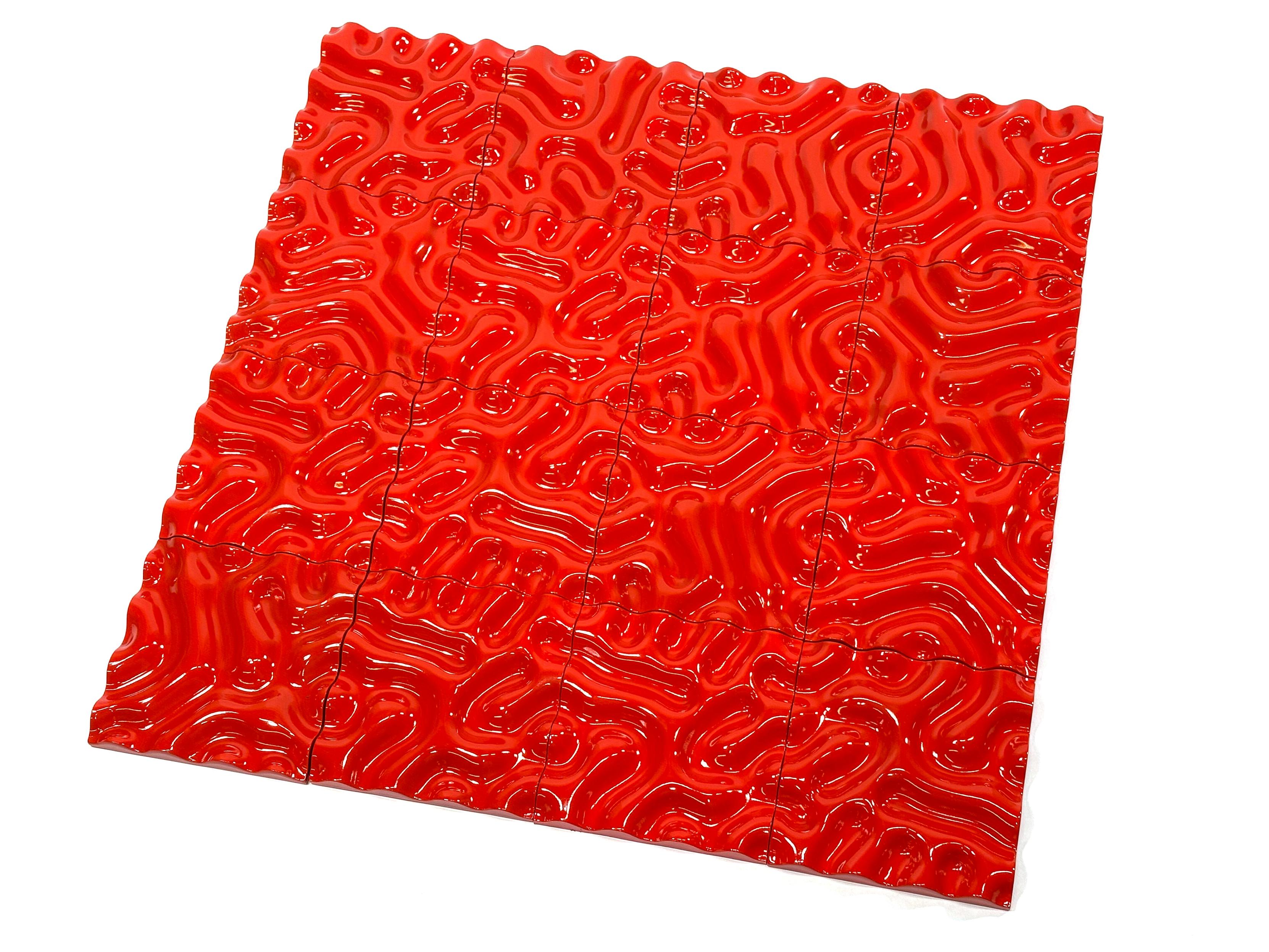
                            You can definitely play with symmetry when laying out the tiles. Here's those same red plastic tiles from before, and again after re-arranging to make a composition with 90° rotational symmetry.

                            How many unique tile designs do you see here? (Hint, it's the same in both images.)

                            matt_zucker@mastodon.socialM 1 Reply Last reply
                            0
                            • matt_zucker@mastodon.socialM matt_zucker@mastodon.social

                              You can definitely play with symmetry when laying out the tiles. Here's those same red plastic tiles from before, and again after re-arranging to make a composition with 90° rotational symmetry.

                              How many unique tile designs do you see here? (Hint, it's the same in both images.)

                              matt_zucker@mastodon.socialM This user is from outside of this forum
                              matt_zucker@mastodon.socialM This user is from outside of this forum
                              matt_zucker@mastodon.social
                              wrote last edited by
                              #14

                              I had to write a homemade finite element method (FEM, https://en.wikipedia.org/wiki/Finite_element_method) solver to simulate the Gray-Scott model on this weirdo domain.

                              FEM solvers tend to throw up their hands and quit when you point them at non-manifold geometry like the folded and glued square, but I hollered at mine until it started behaving.

                              matt_zucker@mastodon.socialM 1 Reply Last reply
                              0
                              • matt_zucker@mastodon.socialM matt_zucker@mastodon.social

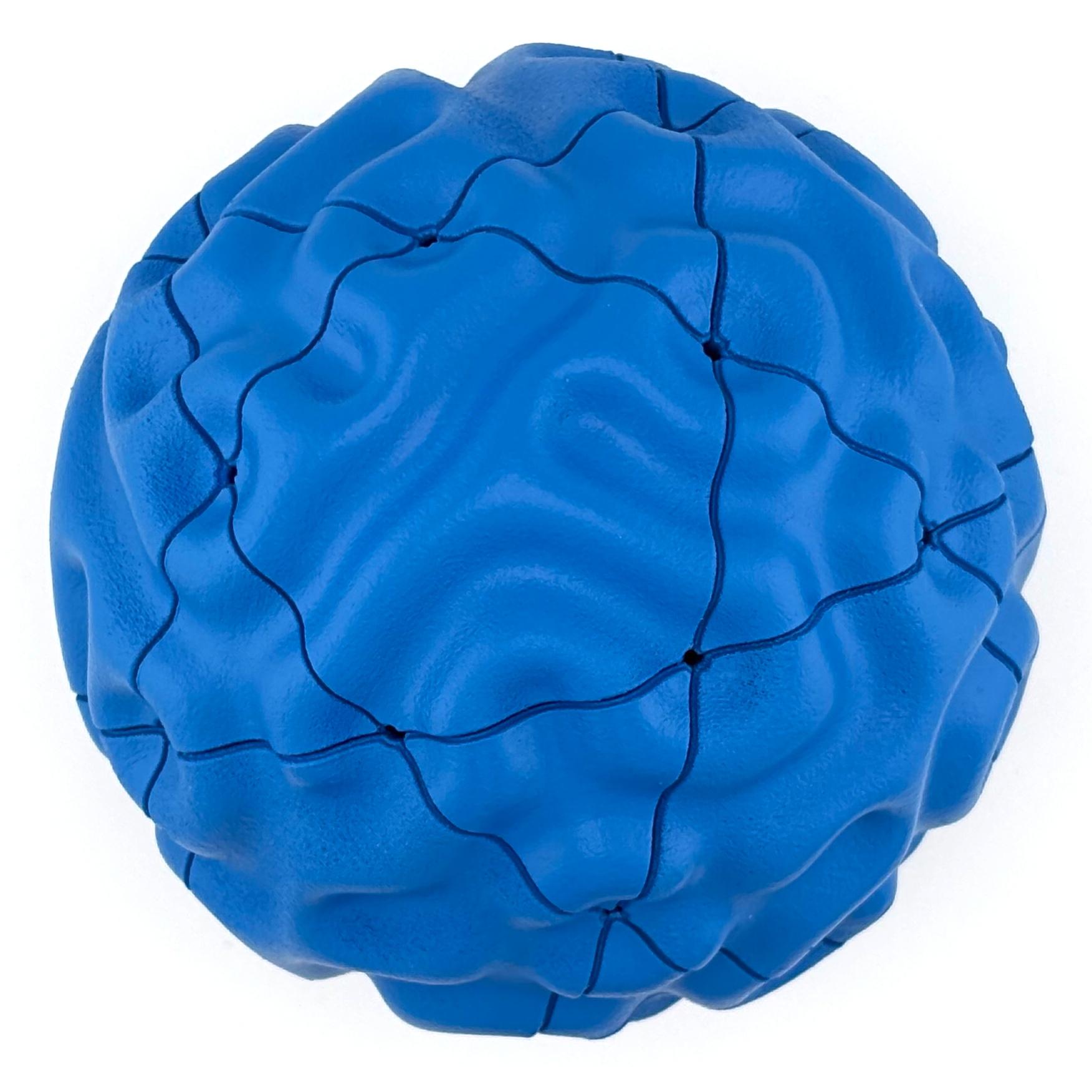
                                New #MathArt sculptures: reaction-diffusion Truchet tilings of the sphere! These are made from 3D-printed nylon and each individual tile can be removed/replaced.

                                If you think these look cool or interesting, stick around to learn a little bit about how they were made and the math behind them... 🧵
                                Link Preview ImageLink Preview ImageLink Preview ImageLink Preview Image
                                christianp@mathstodon.xyzC This user is from outside of this forum
                                christianp@mathstodon.xyzC This user is from outside of this forum
                                christianp@mathstodon.xyz
                                wrote last edited by
                                #15

                                @matt_zucker I am in awe!

                                1 Reply Last reply
                                0
                                • matt_zucker@mastodon.socialM matt_zucker@mastodon.social

                                  I had to write a homemade finite element method (FEM, https://en.wikipedia.org/wiki/Finite_element_method) solver to simulate the Gray-Scott model on this weirdo domain.

                                  FEM solvers tend to throw up their hands and quit when you point them at non-manifold geometry like the folded and glued square, but I hollered at mine until it started behaving.

                                  matt_zucker@mastodon.socialM This user is from outside of this forum
                                  matt_zucker@mastodon.socialM This user is from outside of this forum
                                  matt_zucker@mastodon.social
                                  wrote last edited by
                                  #16

                                  And after a few extra hacks to mitigate some unpleasant visual artifacts, it all Just Works™.

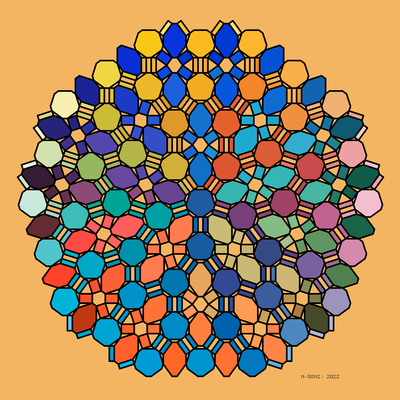
                                  Of course I wrote an academic paper with all of the gory details – look for it in the upcoming Bridges 2026 conference proceedings. Here's a figure that gives a taste of what the software does.

                                  matt_zucker@mastodon.socialM 1 Reply Last reply
                                  0
                                  • matt_zucker@mastodon.socialM matt_zucker@mastodon.social

                                    New #MathArt sculptures: reaction-diffusion Truchet tilings of the sphere! These are made from 3D-printed nylon and each individual tile can be removed/replaced.

                                    If you think these look cool or interesting, stick around to learn a little bit about how they were made and the math behind them... 🧵

                                    Link Preview ImageLink Preview ImageLink Preview ImageLink Preview Image
                                    ngons@mathstodon.xyzN This user is from outside of this forum
                                    ngons@mathstodon.xyzN This user is from outside of this forum
                                    ngons@mathstodon.xyz
                                    wrote last edited by
                                    #17

                                    @matt_zucker cool

                                    1 Reply Last reply
                                    0
                                    • matt_zucker@mastodon.socialM matt_zucker@mastodon.social

                                      And after a few extra hacks to mitigate some unpleasant visual artifacts, it all Just Works™.

                                      Of course I wrote an academic paper with all of the gory details – look for it in the upcoming Bridges 2026 conference proceedings. Here's a figure that gives a taste of what the software does.

                                      matt_zucker@mastodon.socialM This user is from outside of this forum
                                      matt_zucker@mastodon.socialM This user is from outside of this forum
                                      matt_zucker@mastodon.social
                                      wrote last edited by
                                      #18

                                      The wooden tiles were exhibited previously at the 2026 JMM art exhibition, and I just learned that the spherical tilings and red squares were accepted for the art exhibition at Bridges Galway 2026 from August 5-8: https://www.bridgesmathart.org/b2026/

                                      Come check them out if you're in the neighborhood!

                                      matt_zucker@mastodon.socialM 1 Reply Last reply
                                      0
                                      • matt_zucker@mastodon.socialM matt_zucker@mastodon.social

                                        The wooden tiles were exhibited previously at the 2026 JMM art exhibition, and I just learned that the spherical tilings and red squares were accepted for the art exhibition at Bridges Galway 2026 from August 5-8: https://www.bridgesmathart.org/b2026/

                                        Come check them out if you're in the neighborhood!

                                        matt_zucker@mastodon.socialM This user is from outside of this forum
                                        matt_zucker@mastodon.socialM This user is from outside of this forum
                                        matt_zucker@mastodon.social
                                        wrote last edited by
                                        #19

                                        If you liked this thread, check out my very infrequently-updated coding blog at https://mzucker.github.io/ for other #MathArt projects and miscellaneous tinkering.

                                        And feel free to reply with questions – I'll do my best to answer them here.

                                        jannem@fosstodon.orgJ 1 Reply Last reply
                                        0
                                        • matt_zucker@mastodon.socialM matt_zucker@mastodon.social

                                          If you liked this thread, check out my very infrequently-updated coding blog at https://mzucker.github.io/ for other #MathArt projects and miscellaneous tinkering.

                                          And feel free to reply with questions – I'll do my best to answer them here.

                                          jannem@fosstodon.orgJ This user is from outside of this forum
                                          jannem@fosstodon.orgJ This user is from outside of this forum
                                          jannem@fosstodon.org
                                          wrote last edited by
                                          #20

                                          @matt_zucker
                                          So to test my understanding, in order to make them tileable you have to define - for one tile - a surface where all three or four edges loop back on each other (torus geometry for four edges). And for multiple patterns you need multiple surfaces that still all share the same single edge.

                                          Now, it should matter which way they're flipped. Is there more than one way to arrange the flips of the common edges? Or there is only the one?

                                          1 Reply Last reply
                                          0
                                          • System shared this topic
                                          Reply
                                          • Reply as topic
                                          Log in to reply
                                          • Oldest to Newest
                                          • Newest to Oldest
                                          • Most Votes


                                          • Login

                                          • Login or register to search.
                                          • First post
                                            Last post
                                          0
                                          • Categories
                                          • Recent
                                          • Tags
                                          • Popular
                                          • World
                                          • Users
                                          • Groups