<Don't worry Juan Carlos, giant Earth in the sky can't hurt you, it's not real, you can write this thread>
-
<Don't worry Juan Carlos, giant Earth in the sky can't hurt you, it's not real, you can write this thread>
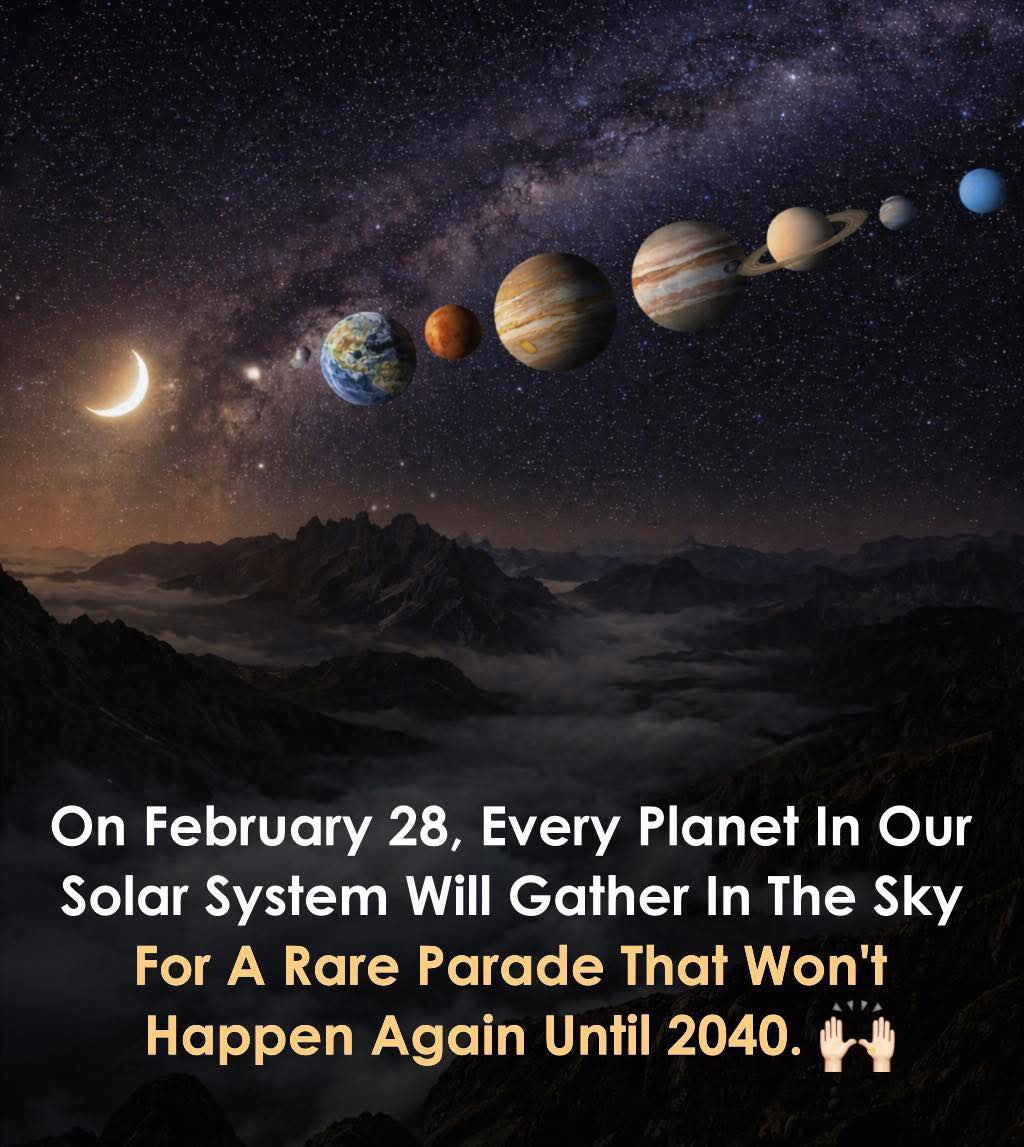
Ok, let's ignore for a moment the ridiculously oversized planets, the fact that one of them is the Earth for some reason, the bonus Jupiter, the transparent Moon...
Let's unpack whether there's any truth to this planet parade that's making the rounds on #SocialMedia .
1/
-
<Don't worry Juan Carlos, giant Earth in the sky can't hurt you, it's not real, you can write this thread>
Ok, let's ignore for a moment the ridiculously oversized planets, the fact that one of them is the Earth for some reason, the bonus Jupiter, the transparent Moon...
Let's unpack whether there's any truth to this planet parade that's making the rounds on #SocialMedia .
1/
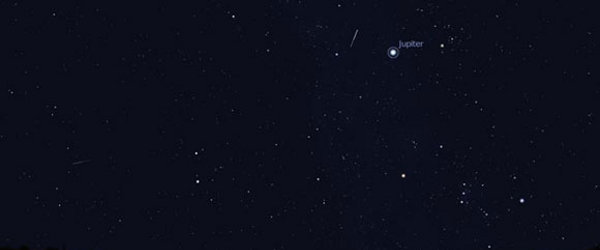
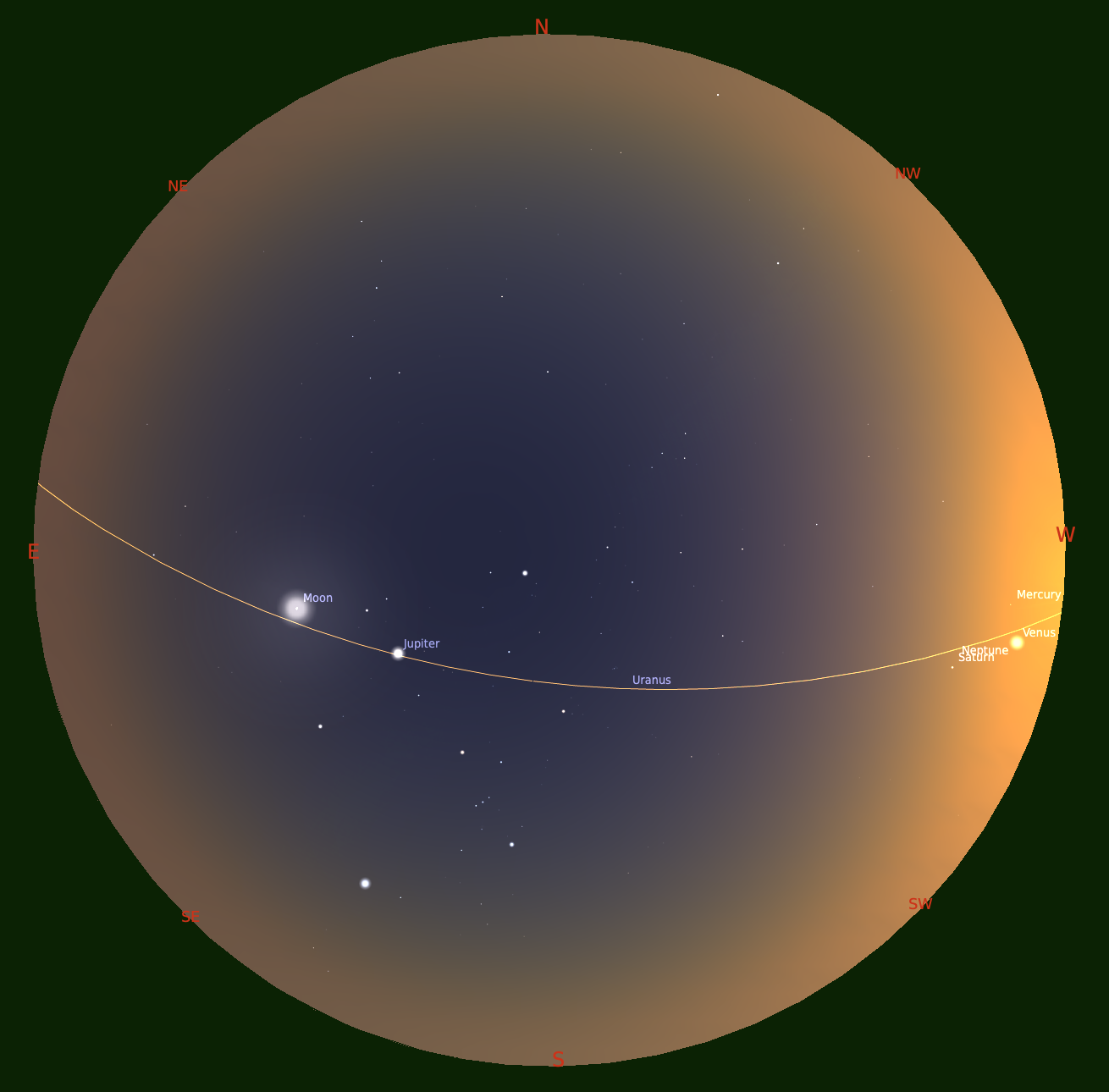
Here's a Stellarium screenshot showing how the planets will actually look like shortly after sunset. The size of their discs just represents how bright they appear, not their actual size.
Note that I've labeled Uranus and Neptune just so you know where they are on the sky, but you won't see them. Even on a dark moonless night you wouldn't be able to see them with the naked eye, they're too faint. And Mars is below the horizon.
Stellarium Astronomy Software
Stellarium is a planetarium software that shows exactly what you see when you look up at the stars. It's easy to use, and free.
(stellarium.org)
2/
-
Here's a Stellarium screenshot showing how the planets will actually look like shortly after sunset. The size of their discs just represents how bright they appear, not their actual size.
Note that I've labeled Uranus and Neptune just so you know where they are on the sky, but you won't see them. Even on a dark moonless night you wouldn't be able to see them with the naked eye, they're too faint. And Mars is below the horizon.
Stellarium Astronomy Software
Stellarium is a planetarium software that shows exactly what you see when you look up at the stars. It's easy to use, and free.
(stellarium.org)
2/
Fine, so the planets won't look huge, but at least it's rare that they're aligned, right?
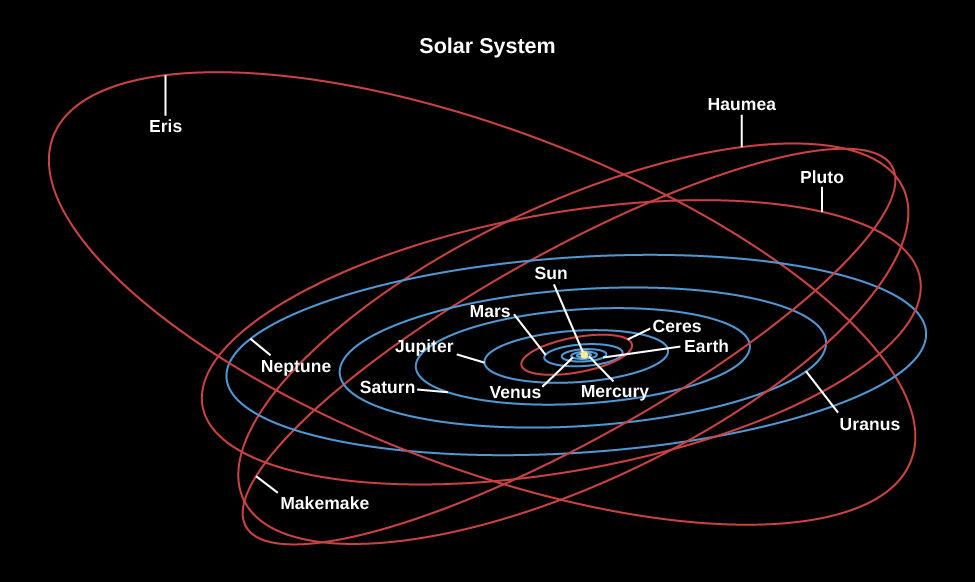
Quite the opposite! Planets orbit the Sun more or less in the same plane, give or take a few degrees; see the blue ellipses below. So from any planet all the other ones always look aligned on the sky.
If they suddenly weren't aligned, then THAT would be news. Very bad news.
 OpenStax
3/
-
Fine, so the planets won't look huge, but at least it's rare that they're aligned, right?
Quite the opposite! Planets orbit the Sun more or less in the same plane, give or take a few degrees; see the blue ellipses below. So from any planet all the other ones always look aligned on the sky.
If they suddenly weren't aligned, then THAT would be news. Very bad news.
OpenStax3/
Jeez, ok, so the planets always look aligned, but surely it's not common to see so many of them at once, right?
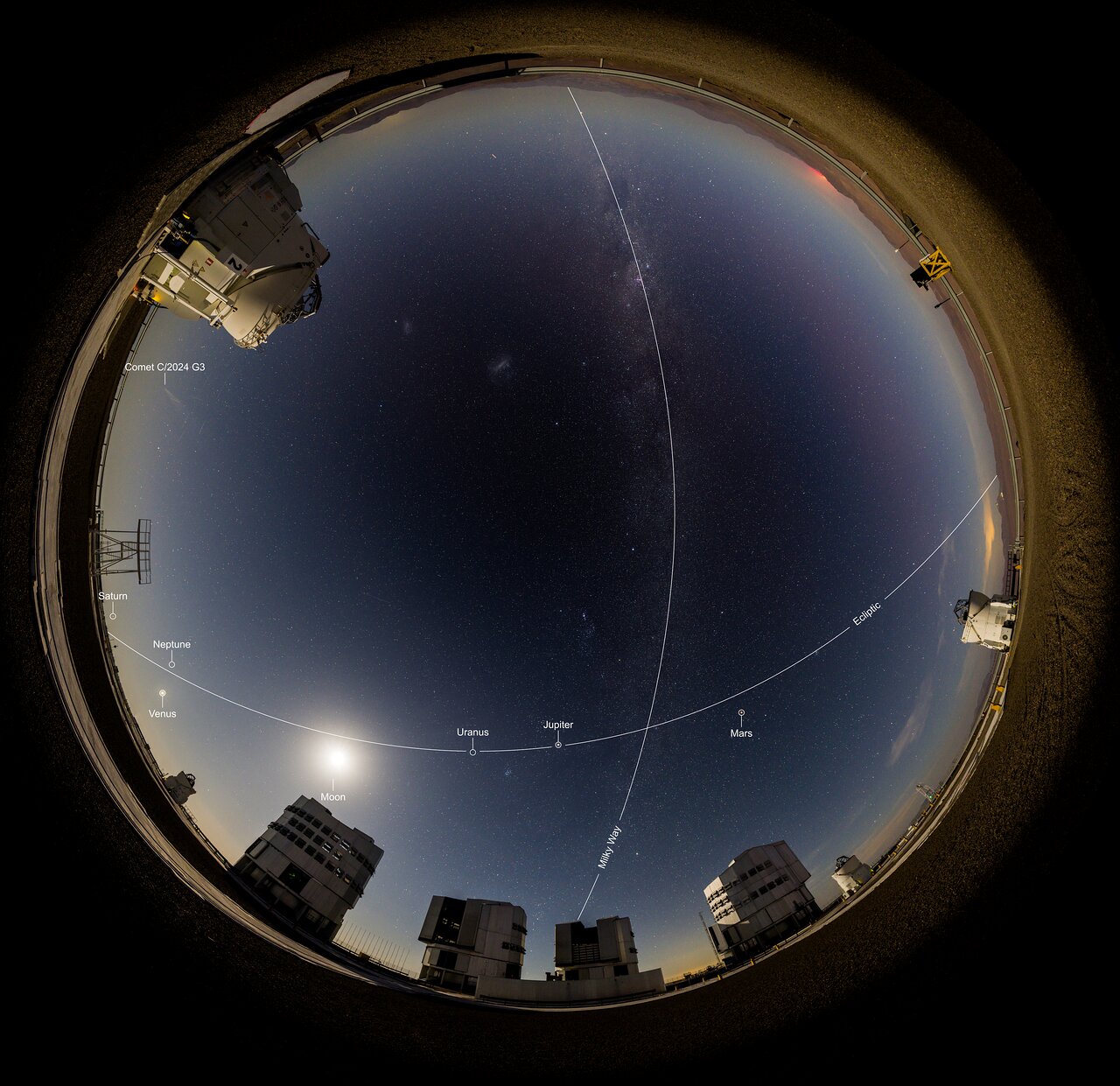
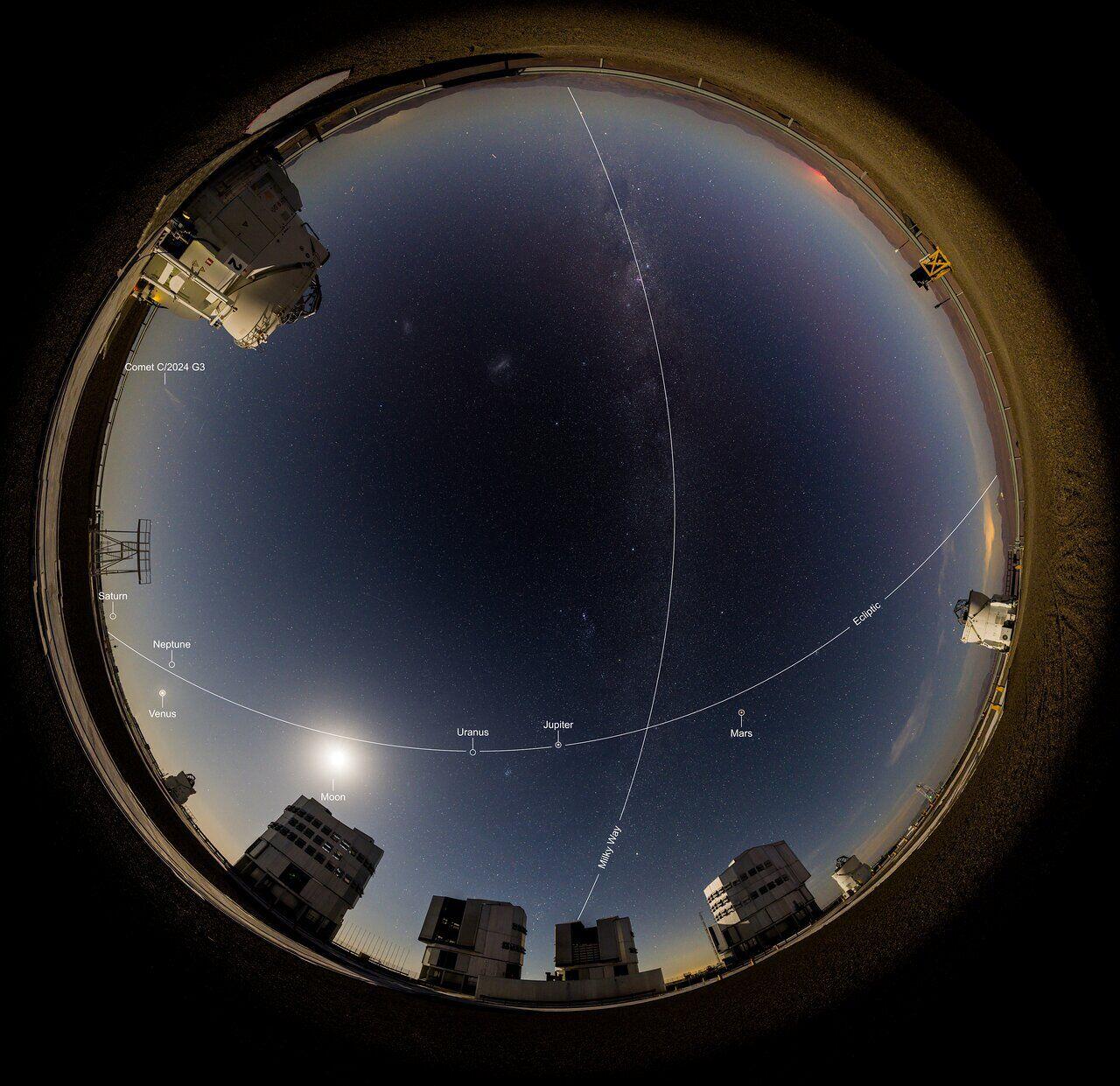
It's not uncommon! Here's a photograph taken last year from ESO's Paranal Observatory in Chile, showing 6 planets, the Moon and a comet above the Very Large Telescope.
B.Haeussler/ESO4/
-
Jeez, ok, so the planets always look aligned, but surely it's not common to see so many of them at once, right?
It's not uncommon! Here's a photograph taken last year from ESO's Paranal Observatory in Chile, showing 6 planets, the Moon and a comet above the Very Large Telescope.
B.Haeussler/ESO4/
In case you've noticed this in the images above: yes, the Moon also orbits roughly within the same plane, so it appears more or less aligned with the planets and the Sun.
This means that the Moon can block our view of the planets ("occultations", very cool to photograph with a telescope).
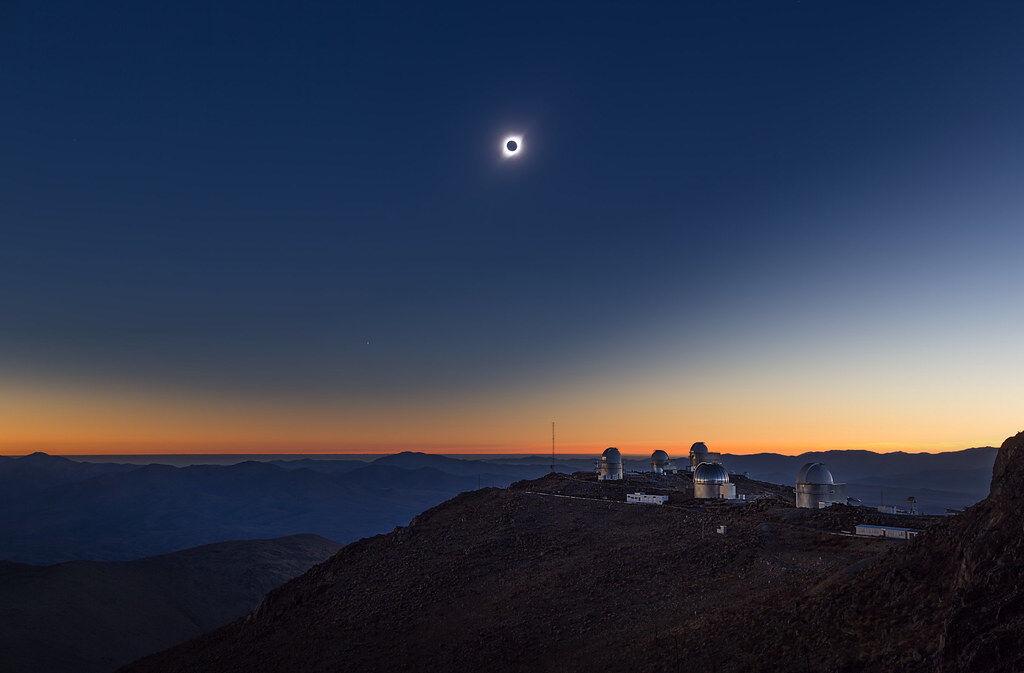
And when it blocks the Sun, well, that's an unforgettable experience, like this solar eclipse I photographed from ESO's La Silla Observatory in Chile in 2019. The dot close to the horizon is Venus.
5/
-
<Don't worry Juan Carlos, giant Earth in the sky can't hurt you, it's not real, you can write this thread>
Ok, let's ignore for a moment the ridiculously oversized planets, the fact that one of them is the Earth for some reason, the bonus Jupiter, the transparent Moon...
Let's unpack whether there's any truth to this planet parade that's making the rounds on #SocialMedia .
1/
-
In case you've noticed this in the images above: yes, the Moon also orbits roughly within the same plane, so it appears more or less aligned with the planets and the Sun.
This means that the Moon can block our view of the planets ("occultations", very cool to photograph with a telescope).
And when it blocks the Sun, well, that's an unforgettable experience, like this solar eclipse I photographed from ESO's La Silla Observatory in Chile in 2019. The dot close to the horizon is Venus.
5/
Don't let this grumpy rant deter you from going out and enjoying the view though! But with so much disinformation going rampant on social media, it’s important to set realistic expectations.
Finally, since I’ve mentioned Stellarium in this thread, I have to re-share the post below.
6/6
Juan Carlos Muñoz (@astro_jcm@mastodon.online)
Attached: 1 image Your periodic reminder that Stellarium is an amazing planetarium tool. Free, #OpenSource and very easy to use. There are desktop apps, mobile apps and a web version. https://stellarium.org/ #astronomy #foss #science

Mastodon (mastodon.online)
-
<Don't worry Juan Carlos, giant Earth in the sky can't hurt you, it's not real, you can write this thread>
Ok, let's ignore for a moment the ridiculously oversized planets, the fact that one of them is the Earth for some reason, the bonus Jupiter, the transparent Moon...
Let's unpack whether there's any truth to this planet parade that's making the rounds on #SocialMedia .
1/
@astro_jcm Gotta love Jupiter and not-quite Jupiter next to one another!
-
@astro_jcm Gotta love Jupiter and not-quite Jupiter next to one another!
@benknispel "What about second Jupiter?"
-
R relay@relay.mycrowd.ca shared this topicR relay@relay.an.exchange shared this topic