Skip to content
  • Categories
  • Recent
  • Tags
  • Popular
  • World
  • Users
  • Groups
Skins
  • Light
  • Brite
  • Cerulean
  • Cosmo
  • Flatly
  • Journal
  • Litera
  • Lumen
  • Lux
  • Materia
  • Minty
  • Morph
  • Pulse
  • Sandstone
  • Simplex
  • Sketchy
  • Spacelab
  • United
  • Yeti
  • Zephyr
  • Dark
  • Cyborg
  • Darkly
  • Quartz
  • Slate
  • Solar
  • Superhero
  • Vapor

  • Default (Cyborg)
  • No Skin
Collapse
Brand Logo

CIRCLE WITH A DOT

  1. Home
  2. Uncategorized
  3. When pavement ants (the little reddish brown ants you see in sidewalk cracks) have intra-species war they use the concept of a one-to-one correspondence to determine who has a larger army.

When pavement ants (the little reddish brown ants you see in sidewalk cracks) have intra-species war they use the concept of a one-to-one correspondence to determine who has a larger army.

Scheduled Pinned Locked Moved Uncategorized
22 Posts 13 Posters 0 Views
  • Oldest to Newest
  • Newest to Oldest
  • Most Votes
Reply
  • Reply as topic
Log in to reply
This topic has been deleted. Only users with topic management privileges can see it.
  • futurebird@sauropods.winF futurebird@sauropods.win

    @michaelgemar

    The purpose of these battles... what initiates and ends them, is unknown. There are some theories. The simple one is that the winners take over some of the foraging territory of the losers, but observations don't totally support this.

    Another idea is that it's all about heated patches of sidewalk. The space under the warm rock is ideal for raising alates and the battles occur in the lead up to nuptial flights. The ants take over the heated nesting spot under the battlefield.

    michaelgemar@cosocial.caM This user is from outside of this forum
    michaelgemar@cosocial.caM This user is from outside of this forum
    michaelgemar@cosocial.ca
    wrote last edited by
    #13

    @futurebird So we don’t know what the consequences of winning/losing actually are?

    I really find these ants astounding — they live in urban settings, in the hard-packed dirt under concrete slabs, and they seem to thrive.

    1 Reply Last reply
    0
    • futurebird@sauropods.winF futurebird@sauropods.win

      When pavement ants (the little reddish brown ants you see in sidewalk cracks) have intra-species war they use the concept of a one-to-one correspondence to determine who has a larger army.

      Ants pair off locking jaws with another ant of similar size.

      Any leftover ants from the larger colony will gang up two on one against the other colony.

      Then based on things only ants know either they all go home OR one colony overwhelms the other.

      But most of the time only a few ants die.

      oldclumsy_nowmad@mastodon.socialO This user is from outside of this forum
      oldclumsy_nowmad@mastodon.socialO This user is from outside of this forum
      oldclumsy_nowmad@mastodon.social
      wrote last edited by
      #14

      @futurebird

      Maybe we Homo saps could learn a thing or two from them. We could size the "enemy" up (before declaring war or Special Military Operations), by square dancing with them.

      1 Reply Last reply
      0
      • futurebird@sauropods.winF futurebird@sauropods.win

        @michaelgemar

        The purpose of these battles... what initiates and ends them, is unknown. There are some theories. The simple one is that the winners take over some of the foraging territory of the losers, but observations don't totally support this.

        Another idea is that it's all about heated patches of sidewalk. The space under the warm rock is ideal for raising alates and the battles occur in the lead up to nuptial flights. The ants take over the heated nesting spot under the battlefield.

        tattie@eldritch.cafeT This user is from outside of this forum
        tattie@eldritch.cafeT This user is from outside of this forum
        tattie@eldritch.cafe
        wrote last edited by
        #15

        @futurebird anty matters, I guess
        @michaelgemar

        1 Reply Last reply
        0
        • futurebird@sauropods.winF futurebird@sauropods.win

          @michaelgemar

          The purpose of these battles... what initiates and ends them, is unknown. There are some theories. The simple one is that the winners take over some of the foraging territory of the losers, but observations don't totally support this.

          Another idea is that it's all about heated patches of sidewalk. The space under the warm rock is ideal for raising alates and the battles occur in the lead up to nuptial flights. The ants take over the heated nesting spot under the battlefield.

          lienrag@mastodon.tedomum.netL This user is from outside of this forum
          lienrag@mastodon.tedomum.netL This user is from outside of this forum
          lienrag@mastodon.tedomum.net
          wrote last edited by
          #16

          @futurebird
          Note that you haven't answered @michaelgemar 's question.
          What do you mean by "one colony overwhelms the other" ?
          What happens exactly when this happens ?

          futurebird@sauropods.winF 2 Replies Last reply
          0
          • lienrag@mastodon.tedomum.netL lienrag@mastodon.tedomum.net

            @futurebird
            Note that you haven't answered @michaelgemar 's question.
            What do you mean by "one colony overwhelms the other" ?
            What happens exactly when this happens ?

            futurebird@sauropods.winF This user is from outside of this forum
            futurebird@sauropods.winF This user is from outside of this forum
            futurebird@sauropods.win
            wrote last edited by
            #17

            @lienrag @michaelgemar

            They take their nesting space and probably steal a bunch of their larvae if the colony can't run away. They may kill the queen ... or they might just keep her. This species has both single queen and multi-queen colonies and we don't understand why they sometimes tolerate it. (but in other cases every "extra" queen is murdered.)

            klara@drupal.communityK 1 Reply Last reply
            0
            • futurebird@sauropods.winF futurebird@sauropods.win

              @lienrag @michaelgemar

              They take their nesting space and probably steal a bunch of their larvae if the colony can't run away. They may kill the queen ... or they might just keep her. This species has both single queen and multi-queen colonies and we don't understand why they sometimes tolerate it. (but in other cases every "extra" queen is murdered.)

              klara@drupal.communityK This user is from outside of this forum
              klara@drupal.communityK This user is from outside of this forum
              klara@drupal.community
              wrote last edited by
              #18

              @futurebird @lienrag @michaelgemar Thank you for the full documentary. I hope you don’t mind if I heard that in "Attenborough"

              1 Reply Last reply
              0
              • lienrag@mastodon.tedomum.netL lienrag@mastodon.tedomum.net

                @futurebird
                Note that you haven't answered @michaelgemar 's question.
                What do you mean by "one colony overwhelms the other" ?
                What happens exactly when this happens ?

                futurebird@sauropods.winF This user is from outside of this forum
                futurebird@sauropods.winF This user is from outside of this forum
                futurebird@sauropods.win
                wrote last edited by
                #19

                @lienrag @michaelgemar

                I mean... a big part of the problem is we need to study them more. But they are not destructive pests, they are just successful in urban environments, but they rarely enter human homes and mostly make things better by cleaning up trash and suppressing more annoying invasive pests. So there isn't funding to study them I think?

                michaelgemar@cosocial.caM 1 Reply Last reply
                0
                • futurebird@sauropods.winF futurebird@sauropods.win

                  The ants can't just tell each other the size of their armies, also even if they could the enemy might lie!

                  So they all pair off holding each other's mandibles and beating the other ant on the head with her antennae.

                  If there are only a few unpaired ants that means war would be a bad idea and so they just skip it.

                  kaisla@eliitin-some.fiK This user is from outside of this forum
                  kaisla@eliitin-some.fiK This user is from outside of this forum
                  kaisla@eliitin-some.fi
                  wrote last edited by
                  #20

                  @futurebird I bet they feel very nervous locking off with a stranger waiting to see if the battle starts or if everyone decides skip it

                  1 Reply Last reply
                  0
                  • futurebird@sauropods.winF futurebird@sauropods.win

                    @lienrag @michaelgemar

                    I mean... a big part of the problem is we need to study them more. But they are not destructive pests, they are just successful in urban environments, but they rarely enter human homes and mostly make things better by cleaning up trash and suppressing more annoying invasive pests. So there isn't funding to study them I think?

                    michaelgemar@cosocial.caM This user is from outside of this forum
                    michaelgemar@cosocial.caM This user is from outside of this forum
                    michaelgemar@cosocial.ca
                    wrote last edited by
                    #21

                    @futurebird @lienrag That’s a real shame — they’re so common I would think it would be relatively cheap to study them (at least “in the field”) compared to more exotic species. And given their potential role in the urban ecology, they seem important to understand.

                    1 Reply Last reply
                    0
                    • falcennial@mastodon.socialF This user is from outside of this forum
                      falcennial@mastodon.socialF This user is from outside of this forum
                      falcennial@mastodon.social
                      wrote last edited by
                      #22

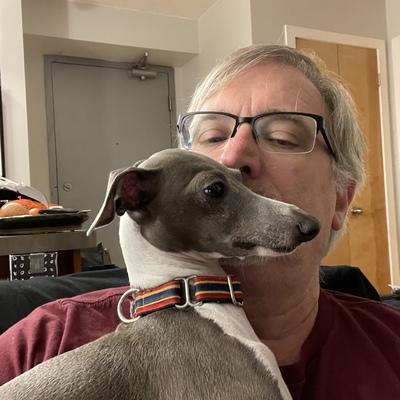
                      @thegarbagebird @futurebird real talk
                      1 Reply Last reply
                      0
                      Reply
                      • Reply as topic
                      Log in to reply
                      • Oldest to Newest
                      • Newest to Oldest
                      • Most Votes


                      • Login

                      • Login or register to search.
                      • First post
                        Last post
                      0
                      • Categories
                      • Recent
                      • Tags
                      • Popular
                      • World
                      • Users
                      • Groups