Dear Benjamin Franklin
-
Dear Benjamin Franklin
I have travelled back in time from 2026 to tell you that we’re still not certain exactly how lighting works.
There are relativistic electrons and gamma rays involved, maybe positrons, and (possibly extragalactic) cosmic rays.
But it’s complicated, and we’re still thrashing out the details.
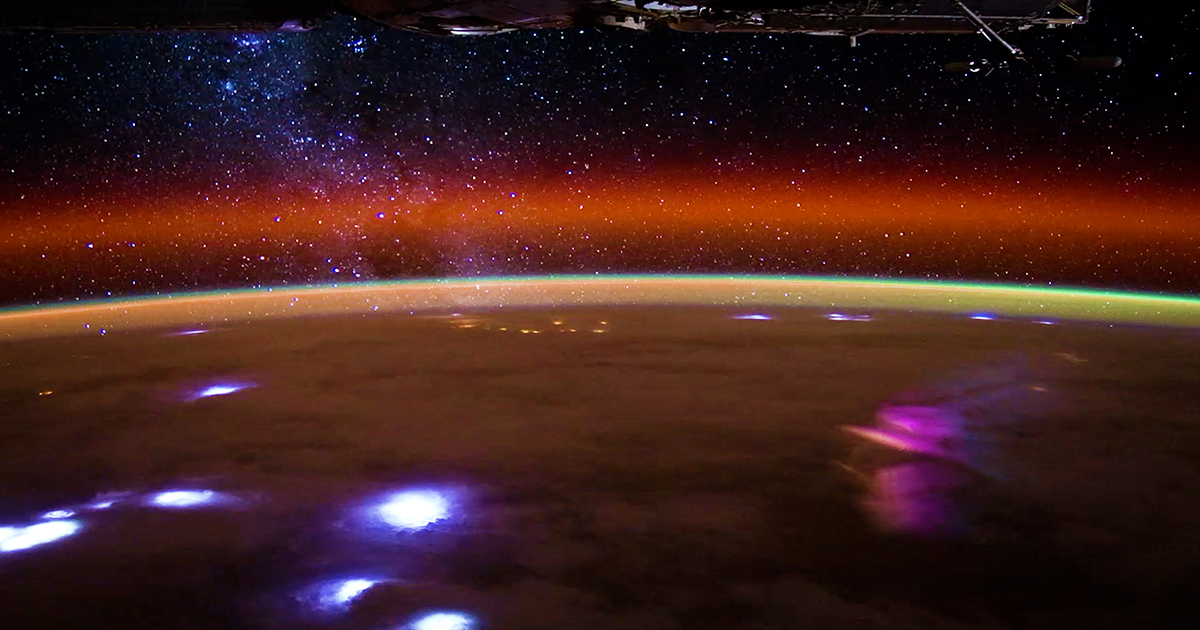
What Causes Lightning? The Answer Keeps Getting More Interesting. | Quanta Magazine
Armed with a slew of new instruments, physicists are closing in on one of nature’s oldest mysteries — and finding that storm clouds are seething with violent and unexpected phenomena.

Quanta Magazine (www.quantamagazine.org)
-
Dear Benjamin Franklin
I have travelled back in time from 2026 to tell you that we’re still not certain exactly how lighting works.
There are relativistic electrons and gamma rays involved, maybe positrons, and (possibly extragalactic) cosmic rays.
But it’s complicated, and we’re still thrashing out the details.
What Causes Lightning? The Answer Keeps Getting More Interesting. | Quanta Magazine
Armed with a slew of new instruments, physicists are closing in on one of nature’s oldest mysteries — and finding that storm clouds are seething with violent and unexpected phenomena.
Quanta Magazine (www.quantamagazine.org)
Shocking.
-
Dear Benjamin Franklin
I have travelled back in time from 2026 to tell you that we’re still not certain exactly how lighting works.
There are relativistic electrons and gamma rays involved, maybe positrons, and (possibly extragalactic) cosmic rays.
But it’s complicated, and we’re still thrashing out the details.
What Causes Lightning? The Answer Keeps Getting More Interesting. | Quanta Magazine
Armed with a slew of new instruments, physicists are closing in on one of nature’s oldest mysteries — and finding that storm clouds are seething with violent and unexpected phenomena.
Quanta Magazine (www.quantamagazine.org)
@gregeganSF this ties back in to a couple of articles that I spotted the other day because, lightning actually produces nitrogen that becomes fertilizer for the ground...
Shaula Evans (@ShaulaEvans@zirk.us)
"Gardeners often refer to snow as nature’s fertilizer. But why? Like rain, snow captures nitrogen, sulphur and other trace elements as it falls through the air. Unlike rain which can quickly run off the soil surface, the snow slowly releases these nutrients into the soil as it melts. This gives the plants a much needed boost at the start of spring." I am fascinated to learn this! https://bokashiliving.com/discover-how-snow-helps-your-garden/ #Snow #Gardening

zirkus (zirk.us)
Joe Wynne 🌻🚗⛰️ (@joewynne@mindly.social)
📰 Mangroves clean up $8.7 billion of nitrogen pollution annually, per study. Nitrogen pollution is a known problem in agriculture, other human activities, and wreaks havoc in aquatic ecosystems. ➕ Add this to mangroves being valuable carbon sinks, coastal defense against storm surges, a buffer against erosion, among other benefits. https://www.livescience.com/planet-earth/plants/mangroves-clean-up-usd8-7-billion-of-nitrogen-pollution-every-year-study-finds #SolarPunkSunday #Environment #Conservation #Pollution #Biodiversity #Mangroves #CoastalConservation

Mindly.Social (mindly.social)
-
 Z zak@infosec.exchange shared this topic