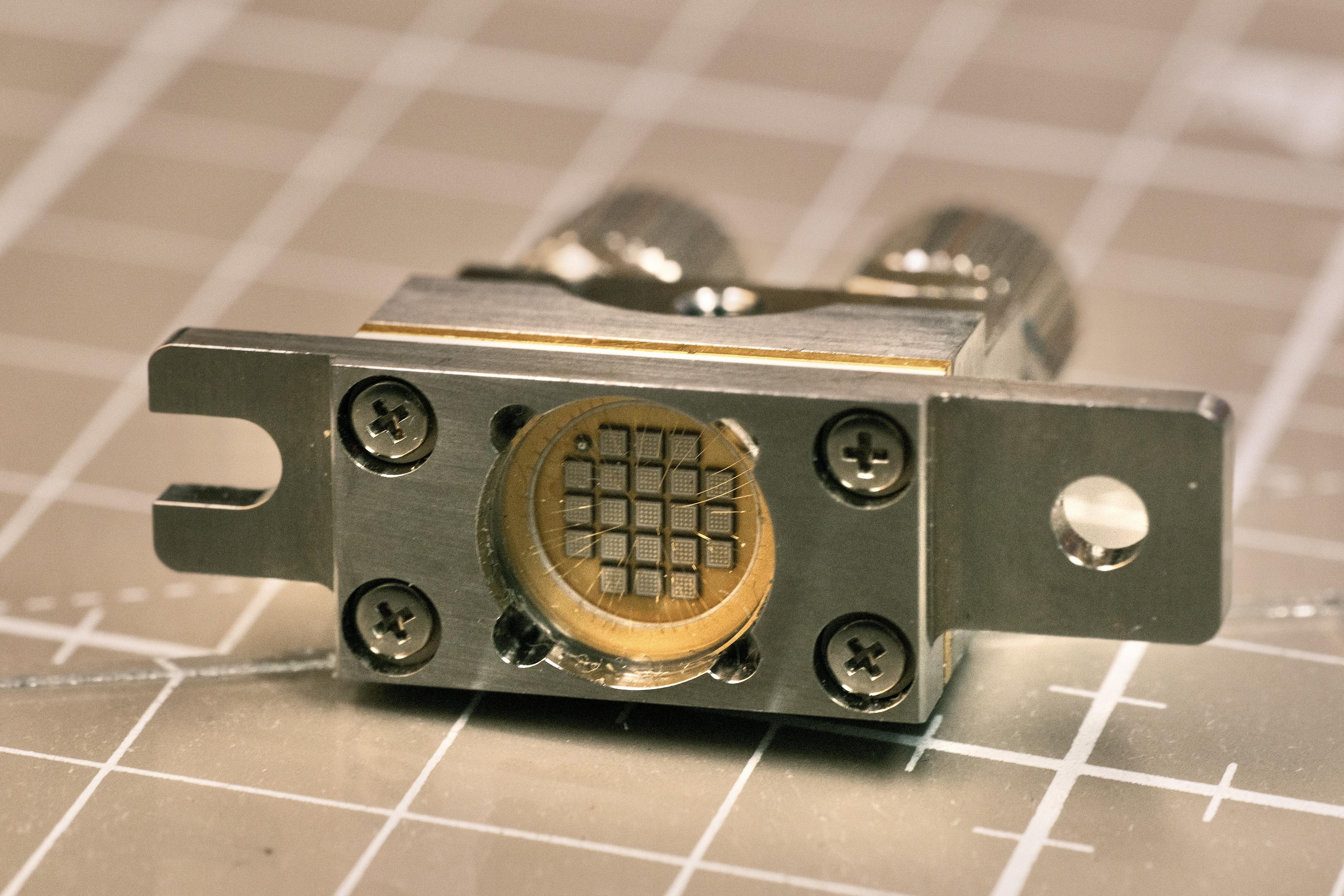
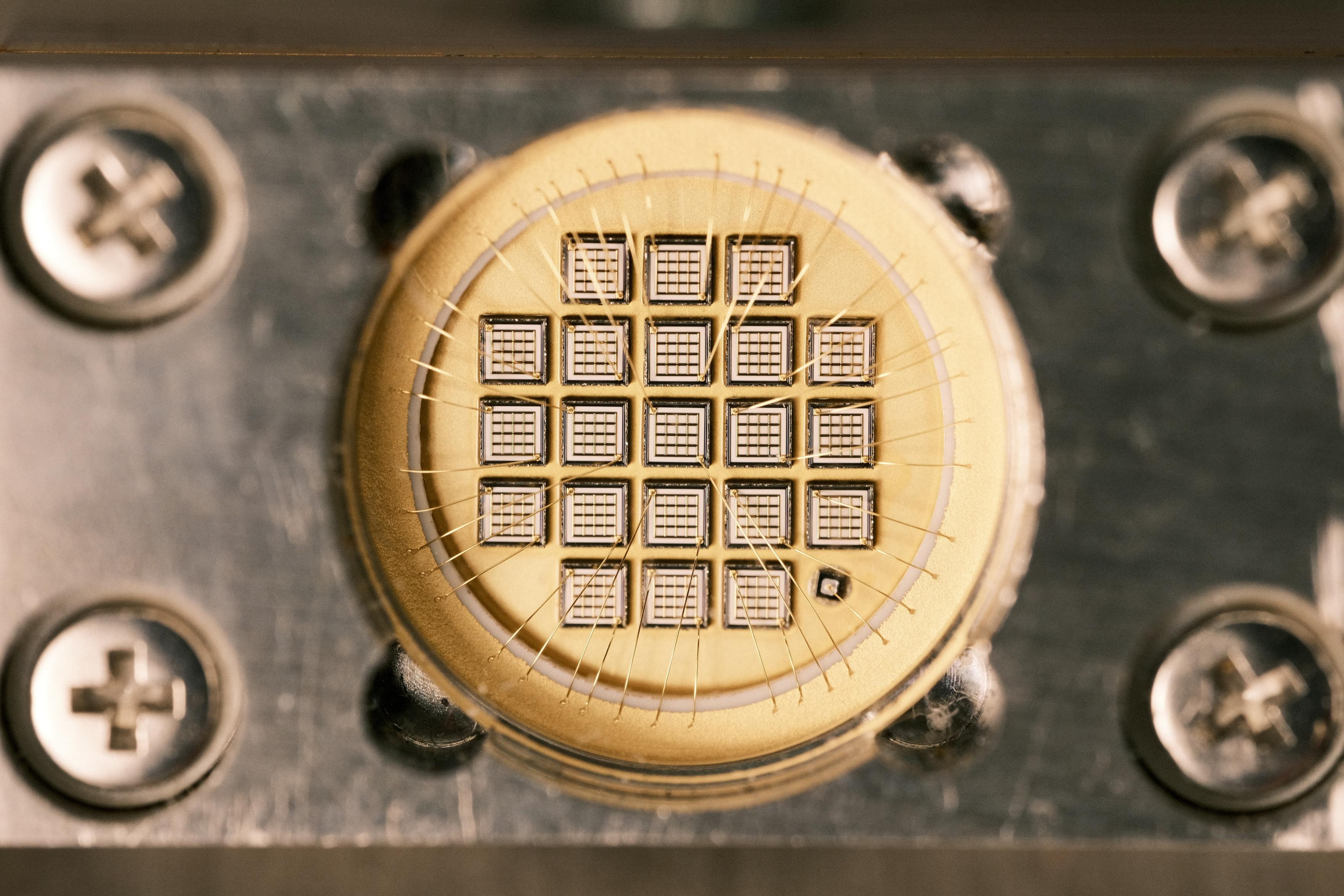
on today's installment of parts that terrify me:
-
@janamarie It's a little USB powered spectrometer, if you're able to give me some level of commitment that it will get used I can probably install the drivers on my laptop and shove it in my suitcase.
@janamarie (you'd have to provide some way to power it as I won't be able to bring a lab supply with me, too big/heavy)
-
@janamarie It's a little USB powered spectrometer, if you're able to give me some level of commitment that it will get used I can probably install the drivers on my laptop and shove it in my suitcase.
@azonenberg ooh, I will think about it and come back to you!! Thanks
-
@janamarie (you'd have to provide some way to power it as I won't be able to bring a lab supply with me, too big/heavy)
@janamarie It would be cool to meet another cool German nerd either way... right now possible options are evening of Saturday March 21, any time Sunday the 22nd, and Monday the 23rd before about lunchtime.
I have several other possible meetups I'm trying to pack into Sunday (none actually scheduled yet) but don't have anything lined up for Sat/Mon right now
-
on today's installment of parts that terrify me:
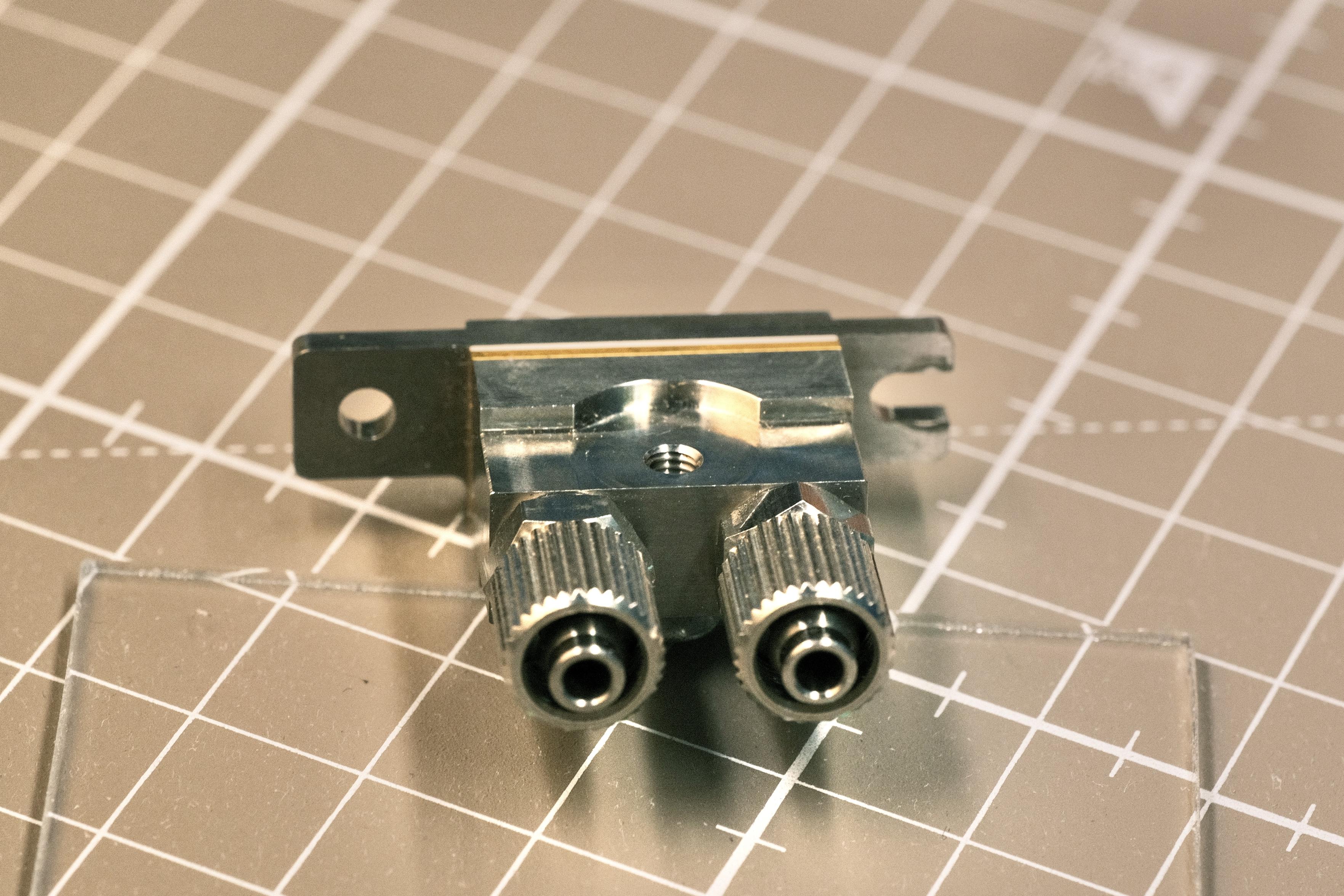
I don't actually know much about this LED, but it's certainly a very strong, possibly ultra low wavelength UV led. The incredibly clear cover-glass and the fact that the dies are water-cooled give off an eerie vibe.
I’m actually scared of figuring out the output power and wavelength by hooking it up to a lab supply. Anyone who knows what specs this could have? What part no it could be?
@janamarie find a supply that supports very low current, low enough that even at 100% efficiency UV-C wouldn't hurt you.
at this low current the LED will be very close to it's photon energy / unit charge so voltage is colour after appropriate conversion (e·U = h·c/ where e=electron charge, U = LED voltage, h = planck constant, wavelength) -
@janamarie find a supply that supports very low current, low enough that even at 100% efficiency UV-C wouldn't hurt you.
at this low current the LED will be very close to it's photon energy / unit charge so voltage is colour after appropriate conversion (e·U = h·c/ where e=electron charge, U = LED voltage, h = planck constant, wavelength)@janamarie oh, and to spell out what I implied: run the LED with this extremely low current limit, let the voltage go

-
@janamarie oh, and to spell out what I implied: run the LED with this extremely low current limit, let the voltage go
@janamarie this is a variation of a "Gymnasium"(DE) physics experiment that shows light is quantised btw: when it's already shown that electric current is quantised and light of a specific colour "can't" be produced with current below some voltage, it follows that light is also quantised.
(and I'm putting "can't" in quotation marks here since incandescent lamps can do that) -
@Mecrisp oooh!! The die configuration is exactly the same
@janamarie Could you add a photo of the electrical connection of the module? It seems as if the power LED array is accompanied by either a photo diode for power or reflection monitoring, or maybe a small, possibly visible wavelength LED for alignment/indication. This would require at least three separate connections.
You could shine bright sunlight or your handy EPROM eraser into the block and measure the voltages across the pins to get hints.
-
@janamarie Could you add a photo of the electrical connection of the module? It seems as if the power LED array is accompanied by either a photo diode for power or reflection monitoring, or maybe a small, possibly visible wavelength LED for alignment/indication. This would require at least three separate connections.
You could shine bright sunlight or your handy EPROM eraser into the block and measure the voltages across the pins to get hints.
@janamarie This might help determining the pinout:
https://www.lasersam.org/sam/laserdio.htm#diodct1 -
@janamarie Could you add a photo of the electrical connection of the module? It seems as if the power LED array is accompanied by either a photo diode for power or reflection monitoring, or maybe a small, possibly visible wavelength LED for alignment/indication. This would require at least three separate connections.
You could shine bright sunlight or your handy EPROM eraser into the block and measure the voltages across the pins to get hints.
@Mecrisp all electrical connections are visible in the image, see the white ceramic plate? It cuts the casing in two, both halves are a terminal
-
@janamarie It would be cool to meet another cool German nerd either way... right now possible options are evening of Saturday March 21, any time Sunday the 22nd, and Monday the 23rd before about lunchtime.
I have several other possible meetups I'm trying to pack into Sunday (none actually scheduled yet) but don't have anything lined up for Sat/Mon right now
@azonenberg @janamarie
I guess you'll see me at embo++ then? -
@Mecrisp all electrical connections are visible in the image, see the white ceramic plate? It cuts the casing in two, both halves are a terminal
@janamarie Thanks! With your hint, I see it. Two connections, then? Maybe the extra die in the corner serves to safely dissipate electrostatics?
-
@janamarie Thanks! With your hint, I see it. Two connections, then? Maybe the extra die in the corner serves to safely dissipate electrostatics?
@Mecrisp yea, I would think so
-
@janamarie Thanks! With your hint, I see it. Two connections, then? Maybe the extra die in the corner serves to safely dissipate electrostatics?
@janamarie If the extra dot in the corner is a plain simple silicon diode, you could excite it using a red laser pointer.
-
@azonenberg @janamarie
I guess you'll see me at embo++ then?@PeterSommerlad @janamarie wrong conference I'm speaking at https://harris2026.mpi-sp.org/
But if you're in the area and want to say hi, by all means
-
@janamarie If the extra dot in the corner is a plain simple silicon diode, you could excite it using a red laser pointer.
-
@janamarie If the extra dot in the corner is a plain simple silicon diode, you could excite it using a red laser pointer.
@Mecrisp ooh, will try that in a bit
-
@Mecrisp ooh, will try that in a bit
@janamarie Good luck! The one for static protection will be reverse biased, so you get at least an hint for the polarity of the array by measuring the voltages when shining on the extra die.
-
another glamour shot, I should do a focus stack! Also this device is both tiny and way too large at the same time, it’s also quite heavy!
@janamarie @bimmer Wonder what it tastes like?

-
@janamarie @bimmer Wonder what it tastes like?
@catsalad @janamarie my money's on 9V battery but milder
-
on today's installment of parts that terrify me:
I don't actually know much about this LED, but it's certainly a very strong, possibly ultra low wavelength UV led. The incredibly clear cover-glass and the fact that the dies are water-cooled give off an eerie vibe.
I’m actually scared of figuring out the output power and wavelength by hooking it up to a lab supply. Anyone who knows what specs this could have? What part no it could be?
@janamarie
As a wild guess, could be the LED for a LED-pumped Nd:YAG fiber laser. Never actually cracked one open but the construction, water-cooling, and general vibes are all about right.