Wow.
-
@graydon @cstross Biden was working in that direction. Many of his economic programs were very good. He got no credit for them and the public complained that his good economy was bad.
Meantime, I intend to keep nagging people about slavery in China because it looks very much like we are heading for a global renewables market with slavery at its base. I regret to say that slavery seems to be making a comeback in many forms and many places.

Xinjiang: Slavery and Solar Panels
In Xinjiang, western China, the polysilicon that is used the in the inexpensive photovoltaic panels that have become so widespread is manufa...
(adviceunasked.blogspot.com)
https://adviceunasked.blogspot.com/2026/02/slavery-and-solar-panels-bibliography.html
-
@ravenonthill @cstross At the Main Street level, and below, it was a bad economy. (Elite consensus to refuse to pay for labour is a real thing, and probably not fixable short of running the guillotines round the clock for a year.)
Saying "Argh, slave labour! unclean!" is correct, but wildly unhelpful. (Narrative of helplessness, supports fossil carbon "solar bad, actually" narratives, etc.)
"We should make these ourselves in ethical ways", perhaps helpful.
@graydon @cstross That's the vulgar Marxist explanation but employment was up, wages were up and had risen most for the people at the lowest wages levels, there was better funded healthcare. Except for shelter costs, it was the best economy in a generation for lower and middle income people. And maybe shelter costs swung public sentiment or maybe people just were reacting to the previous economy; it's still being studied. But it was a very good economy.
-
@cstross Just on a practical basis, you can improve the field drainage and water storage with the equipment used to install the panels. Double win.
@BashStKid @cstross
Some farms locally could do with roofs and gutters over parts of their fields, flooding reduced yield, sometimes to zero, and damaged soil. And roads.
Later, drought occurred. Now, leading half the rain off the field doesn't inevitably assuage a later drought, but one might hope to put some in an aquifer.
And half might not be enough - it was _very_ wet.But.
-
RE: https://horche.demkontinuum.de/display/2196d4ee-7669-dbc1-1f9e-200464952498
Wow.
In addition to this, apparently farm yields INCREASE if you mix ground-dwelling crops with overhead PV panels, which provide shade/humidity traps for the plants and livestock.
@cstross not just in the desert, also in temperate regions like France:
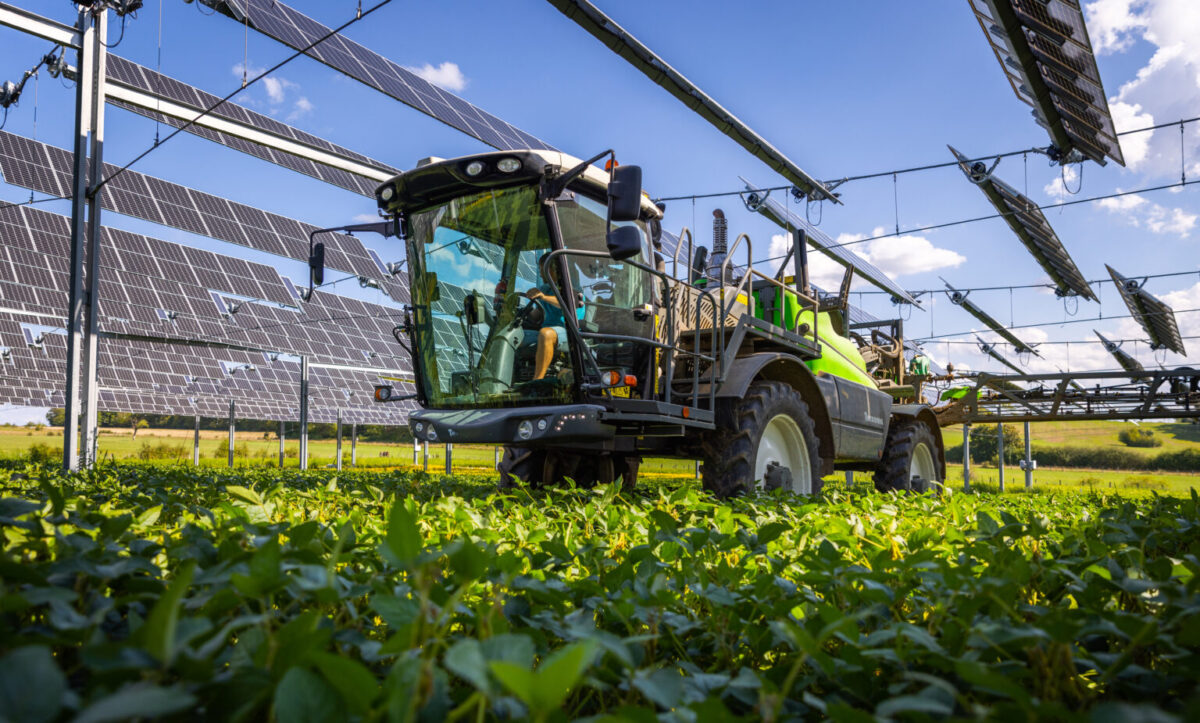
France agrivoltaics trials show early crop and livestock gains
Data from agrivoltaic canopy trials in France, developed by energy producer TSE and the French National Research Institute for Agriculture, Food and the Environment (INRAE), indicate measurable temperature, water-balance, and yield effects that reinforce the role of managed agrivoltaics in farm-level climate adaptation.
pv magazine International (www.pv-magazine.com)
-
@graydon @cstross That's the vulgar Marxist explanation but employment was up, wages were up and had risen most for the people at the lowest wages levels, there was better funded healthcare. Except for shelter costs, it was the best economy in a generation for lower and middle income people. And maybe shelter costs swung public sentiment or maybe people just were reacting to the previous economy; it's still being studied. But it was a very good economy.
@graydon @cstross I think we need to keep talking about slave labor. And, yes, we should absolutely propose alternatives but we need to keep talking about it. The slave system in the United States was not abolished because of economic inefficiency; it was abolished because the slave holders were trying to spread it and because northerners were horrified by the reality of slavery.
-
System shared this topic
-
@graydon @cstross I think we need to keep talking about slave labor. And, yes, we should absolutely propose alternatives but we need to keep talking about it. The slave system in the United States was not abolished because of economic inefficiency; it was abolished because the slave holders were trying to spread it and because northerners were horrified by the reality of slavery.
@ravenonthill @cstross The US attempt to abolish the slave system did not work (it failed, completely) in the case of the US Civil War, which is why the US slave system is run by government entities in forced labour institutions called prisons. Such attempts generally can't work because we live in a system under selection, not a moral universe.
Effective opposition to slavery has to combine greater distribution of agency and greater power (including economic). Otherwise is gets crushed.
-
RE: https://horche.demkontinuum.de/display/2196d4ee-7669-dbc1-1f9e-200464952498
Wow.
In addition to this, apparently farm yields INCREASE if you mix ground-dwelling crops with overhead PV panels, which provide shade/humidity traps for the plants and livestock.
@cstross I was watching a video about this in China desert, and kind of by accident, they found that the panels provide a place for dew to condense.
Then it runs down the panel and that causes enough dew drops to concentrate in one spot to irrigate the base of the panel for plants to grow.
Without the panels the drew had no where to condense and when it didn't accumulate enough drops to sustain plants.
Kind of an interesting side effect
-
RE: https://horche.demkontinuum.de/display/2196d4ee-7669-dbc1-1f9e-200464952498
Wow.
In addition to this, apparently farm yields INCREASE if you mix ground-dwelling crops with overhead PV panels, which provide shade/humidity traps for the plants and livestock.
@cstross it's nice to know our species might survive after all.
-
@cstross Here's the link to the 2024 article cited in that piece. It's all theoretical, based on solar panels that absorb nearly 100% of the sun's heat (many are reflective), require moisture to be present in the atmosphere, and in some instances can adversely impact other regions' ecosystems. https://www.science.org/content/article/massive-solar-farms-could-provoke-rainclouds-desert
@JamesWNeal @cstross yeah you do not want 100% absorption, you want as much heat rejection as possible because panels produce more power when they're cooler.
It's an interesting concept but certainly not something being deployed at scale now. The image is probably slop or an unrelated stock photo.
-
@BashStKid @cstross
Some farms locally could do with roofs and gutters over parts of their fields, flooding reduced yield, sometimes to zero, and damaged soil. And roads.
Later, drought occurred. Now, leading half the rain off the field doesn't inevitably assuage a later drought, but one might hope to put some in an aquifer.
And half might not be enough - it was _very_ wet.But.
-
RE: https://horche.demkontinuum.de/display/2196d4ee-7669-dbc1-1f9e-200464952498
Wow.
In addition to this, apparently farm yields INCREASE if you mix ground-dwelling crops with overhead PV panels, which provide shade/humidity traps for the plants and livestock.
@cstross This honestly sounds almost like terraforming?
-
@ravenonthill @cstross The US attempt to abolish the slave system did not work (it failed, completely) in the case of the US Civil War, which is why the US slave system is run by government entities in forced labour institutions called prisons. Such attempts generally can't work because we live in a system under selection, not a moral universe.
Effective opposition to slavery has to combine greater distribution of agency and greater power (including economic). Otherwise is gets crushed.
@graydon @cstross please. The Civil War ended chattel slavery. Jim Crow was awful but slaves got legal rights, their marriages were respected by law, their children and spouses could not be sold at the whim of a master. Through the 20th century the position of Blacks in the United States improved, though there has also been backsliding. No, racism is not done. But rejecting all progress because it's not complete is vulgar Marxism.
-
@graydon @cstross please. The Civil War ended chattel slavery. Jim Crow was awful but slaves got legal rights, their marriages were respected by law, their children and spouses could not be sold at the whim of a master. Through the 20th century the position of Blacks in the United States improved, though there has also been backsliding. No, racism is not done. But rejecting all progress because it's not complete is vulgar Marxism.
@graydon @cstross that is also one of the arguments China uses to excuse their expanding slave system. And it is expanding. They've gone from polysilicon and plant fibers (yes, cotton) to all kinds of car parts and especially parts for those electric cars that are doing so well in international markets.
The US founders thought that slavery was going to wither on the vine, then the cotton gin was invented. I fear the sudden global push for renewables may work similarly in China.
-
@cstross This honestly sounds almost like terraforming?
-
RE: https://horche.demkontinuum.de/display/2196d4ee-7669-dbc1-1f9e-200464952498
Wow.
In addition to this, apparently farm yields INCREASE if you mix ground-dwelling crops with overhead PV panels, which provide shade/humidity traps for the plants and livestock.
@cstross Meanwhile there's a whole lot of people trying to convince us that solar farms cause heat under the panels and it just doesn't compute how they come to that conclusion.
-
@cstross Meanwhile there's a whole lot of people trying to convince us that solar farms cause heat under the panels and it just doesn't compute how they come to that conclusion.
-
@cstross If only the polysilicon in many of them was not made by slaves.
@ravenonthill
"We should improve society somewhat."
https://thenib.com/mister-gotcha/
@cstross -
-
@cstross not just in the desert, also in temperate regions like France:
France agrivoltaics trials show early crop and livestock gains
Data from agrivoltaic canopy trials in France, developed by energy producer TSE and the French National Research Institute for Agriculture, Food and the Environment (INRAE), indicate measurable temperature, water-balance, and yield effects that reinforce the role of managed agrivoltaics in farm-level climate adaptation.
pv magazine International (www.pv-magazine.com)
What most people don't realise, is that photosynthesis was an optimum temperature range. That range changes, between species, based on anatomy.
-
@futuresprog I think their argument is based in the idea that we have more humidity here, so in Australia having moisture under the panels would be a welcome thing but here it has the potential to create an environment that supports facial eczema spores.
I mean that sounds within the realms of possibility but also very much like reckons and not something that will have been studied.
A far bigger danger for facial eczema is generally higher temps and wetter summers from climate change.