New #blog post: Changing The Way I Track Solar Value
-
New #blog post: Changing The Way I Track Solar Value
We originally invested in a #solar install in the hope that it'd reduce our energy bills.
Over the last few years I've tracked savings by using the real-time cost of our current #electricity tariff.
The problem is, we *wouldn't* be on that tariff if we didn't have a battery, so isn't a great expression of the savings we're deriving.
I've switched to using the average prices of a Fixed price tariff instead.
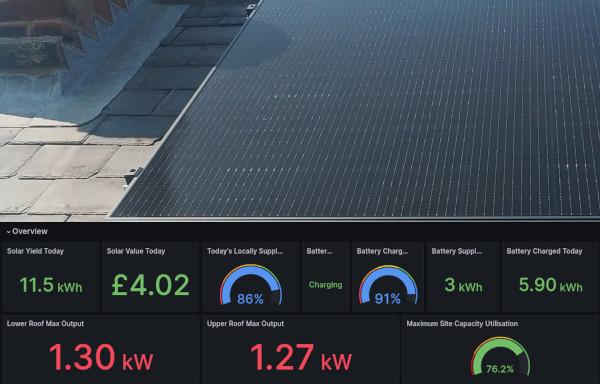
Changing The Way I Calculate Solar Value
A post describing how (and why) I'm changing the way that I calculate the savings that our solar install generates.

www.bentasker.co.uk (www.bentasker.co.uk)
-
New #blog post: Changing The Way I Track Solar Value
We originally invested in a #solar install in the hope that it'd reduce our energy bills.
Over the last few years I've tracked savings by using the real-time cost of our current #electricity tariff.
The problem is, we *wouldn't* be on that tariff if we didn't have a battery, so isn't a great expression of the savings we're deriving.
I've switched to using the average prices of a Fixed price tariff instead.
Changing The Way I Calculate Solar Value
A post describing how (and why) I'm changing the way that I calculate the savings that our solar install generates.
www.bentasker.co.uk (www.bentasker.co.uk)
@ben nice to see that done
It is surprisingly hard to calculate savings based on counterfactuals
Any behavioural changes also complicate things (eg I have had the heating on today because it's free - but I might not have lit the old gas boiler)
With the battery if you have backup power that also has a value in addition to a saving.
-
@ben nice to see that done
It is surprisingly hard to calculate savings based on counterfactuals
Any behavioural changes also complicate things (eg I have had the heating on today because it's free - but I might not have lit the old gas boiler)
With the battery if you have backup power that also has a value in addition to a saving.
@sean Yes! behavioural changes are another huge element - we probably wouldn't have the hot tub if we didn't have solar, for example.
The other rabbit hole that I didn't go too far down is the positive financial implications of solar/battery allowing us to be on Agile - we've bought about 22 MWh from the grid since the install, and each kWh cost around that (much lower) weighted average, so there are savings that won't even appear in the solar generation stats.
-
R relay@relay.infosec.exchange shared this topic
-
@sean Yes! behavioural changes are another huge element - we probably wouldn't have the hot tub if we didn't have solar, for example.
The other rabbit hole that I didn't go too far down is the positive financial implications of solar/battery allowing us to be on Agile - we've bought about 22 MWh from the grid since the install, and each kWh cost around that (much lower) weighted average, so there are savings that won't even appear in the solar generation stats.
@sean Actually... that got me wondering.
Averaging over the 4 years we get:
weighted price: 7.5435/kWh
fixed: 26.315/kWhConsumption: 22806 kWh
So
fixed cost: 22806 * 26.315 = 600139.89
- weighed: 22806 * 7.5435 = 172037.061
-------------------------------------------------------------------
428102.829So it's probably saved us about a grand a year

-
@sean Yes! behavioural changes are another huge element - we probably wouldn't have the hot tub if we didn't have solar, for example.
The other rabbit hole that I didn't go too far down is the positive financial implications of solar/battery allowing us to be on Agile - we've bought about 22 MWh from the grid since the install, and each kWh cost around that (much lower) weighted average, so there are savings that won't even appear in the solar generation stats.
@ben where I give up is things like how much goes to the EV - where it saves a much greater amount on petrol
and a solar diverter for the immersion heater. The hot water is free but replaces heat pump use which is 4x as efficient. (This only makes financial sense because the old feed in tarrif I'm on doesn't meter export)
and I haven't been nearly as diligent as you collecting all the data
-
@sean Yes! behavioural changes are another huge element - we probably wouldn't have the hot tub if we didn't have solar, for example.
The other rabbit hole that I didn't go too far down is the positive financial implications of solar/battery allowing us to be on Agile - we've bought about 22 MWh from the grid since the install, and each kWh cost around that (much lower) weighted average, so there are savings that won't even appear in the solar generation stats.
@ben @sean is Agile actually a good tariff if you have a battery? When Agile is cheap, it tends to be cheap all day (reducing the benefit of being able to stick cheap energy in the battery to use later in the day when it would be expensive). I had decided that Intelligent Octopus Go would be best - guaranteed cheap power every night, and the more expensive daytime rate doesn't matter because you have a battery.
-
@ben @sean is Agile actually a good tariff if you have a battery? When Agile is cheap, it tends to be cheap all day (reducing the benefit of being able to stick cheap energy in the battery to use later in the day when it would be expensive). I had decided that Intelligent Octopus Go would be best - guaranteed cheap power every night, and the more expensive daytime rate doesn't matter because you have a battery.
-
@ben @sean is Agile actually a good tariff if you have a battery? When Agile is cheap, it tends to be cheap all day (reducing the benefit of being able to stick cheap energy in the battery to use later in the day when it would be expensive). I had decided that Intelligent Octopus Go would be best - guaranteed cheap power every night, and the more expensive daytime rate doesn't matter because you have a battery.
@steve @sean I think it depends on the size of your battery vs your usage.
Looks like Go is 33p during the day, so to beat Agile, my battery would need to cover our usage between 05:30 - 00:30. Realistically, it might cover a quarter of that.
What Go gives you though, is consistency - rather than dynamically load shifting, you can effectively build a routine, whereas with Agile I only find out when's cheap (if at all) the day before