
I'm an astronomer, and I teach at a Catholic college (though I'm not religious myself).
-
@grb090423 In the early days of the Christianity, the Easter date could be determined in Rome, and just, effectively, mailed to wherever there were Christian congregations. But by the late 400s / early 500s, the Roman Empire was in such a delapidated state that reliable mailing started to be an increasing problem, so various offline methods for the Easter determination were considered. The officially adopted one was eventually based on an algorithm developed by one Dionysios Exiguus, or Dennis the Geek, potentially partly because of its another important benefit: it allowed the steps to be unambiguously independently verified, and mistakes caught. (There were a couple of embarrassing mistakes in some Easter tables that the early Popes published. Big scandals in their days, because holidays were Serious Business. Literally.)
You are educating me! I can definitely say TIL.
Dennis the geek... Is that real?!
Do you know so much about this because you have studied it?
-
RE: https://telescoper.blog/2026/04/03/finding-easter/
I'm an astronomer, and I teach at a Catholic college (though I'm not religious myself).
I had absolutely no idea how complicated the date of Easter is. Wow.
Thanks for illuminating this!
I remembered from childhood education that the date of Easter was determined by some mysterious calculus, performed in some faraway place by some select cognoscenti using some ancient methodology that little boys in the backwoods of North Carolina will never be able to master. I also learned that I should not waste time on things I can't influence and don't care enough to understand. Now I just look at the calendar and the problem is solved!
-
You are educating me! I can definitely say TIL.
Dennis the geek... Is that real?!
Do you know so much about this because you have studied it?
It's sort-of real.

Dionysios was once a popular Greek name, derived from the name of the ancient Greek deity of drinking and being merry. The modern English Dennis is an adaptation of it, the same way a lot of modern English names are adaptations of Greek names poularised by Christianity's spread. This particular Dionysios was a monk known for being small and humble ('Exiguus' literally means 'Humble'), and, well, also for enjoying computing things. Hence, I submit that 'the Geek' is a defensible translation of his Greek nickname.

I know these things because Knuth's The Art of Computer Programming includes a passage about the Computus, as an example of an early elaborate algorithm, and, being an #ADHD kid, I promptly descended into the rabbit-hole.
-
@grb090423 In the early days of the Christianity, the Easter date could be determined in Rome, and just, effectively, mailed to wherever there were Christian congregations. But by the late 400s / early 500s, the Roman Empire was in such a delapidated state that reliable mailing started to be an increasing problem, so various offline methods for the Easter determination were considered. The officially adopted one was eventually based on an algorithm developed by one Dionysios Exiguus, or Dennis the Geek, potentially partly because of its another important benefit: it allowed the steps to be unambiguously independently verified, and mistakes caught. (There were a couple of embarrassing mistakes in some Easter tables that the early Popes published. Big scandals in their days, because holidays were Serious Business. Literally.)
@riley @grb090423 @sundogplanets I didn't know he was called Dennis (sorry).
Anyway, thanks for sharing.
-
It's sort-of real.
Dionysios was once a popular Greek name, derived from the name of the ancient Greek deity of drinking and being merry. The modern English Dennis is an adaptation of it, the same way a lot of modern English names are adaptations of Greek names poularised by Christianity's spread. This particular Dionysios was a monk known for being small and humble ('Exiguus' literally means 'Humble'), and, well, also for enjoying computing things. Hence, I submit that 'the Geek' is a defensible translation of his Greek nickname.
I know these things because Knuth's The Art of Computer Programming includes a passage about the Computus, as an example of an early elaborate algorithm, and, being an #ADHD kid, I promptly descended into the rabbit-hole.
This is great!
And I agree, Dennis the Geek should absolutely be accepted


Thanks so much for widening my knowledge today! I didn't know any of this
-
RE: https://telescoper.blog/2026/04/03/finding-easter/
I'm an astronomer, and I teach at a Catholic college (though I'm not religious myself).
I had absolutely no idea how complicated the date of Easter is. Wow.
@sundogplanets The date. The bunnies. The eggs. The rising from the dead. It would be a challenge to make Easter less Christian than it already is.
-
RE: https://telescoper.blog/2026/04/03/finding-easter/
I'm an astronomer, and I teach at a Catholic college (though I'm not religious myself).
I had absolutely no idea how complicated the date of Easter is. Wow.
@sundogplanets What shocks me most of all is how the dude was born at Christmas and they nailed him to a cross 4 months later.
-
RE: https://telescoper.blog/2026/04/03/finding-easter/
I'm an astronomer, and I teach at a Catholic college (though I'm not religious myself).
I had absolutely no idea how complicated the date of Easter is. Wow.
@sundogplanets first sunday after first full moon after 25th march ... Easter is a holy day for procrastinators
 I'm not religious either, I think I learned that in my 40s
 -
@grb090423 Backwards compatibility. It's tied to a Jewish holiday, and the Jewish lunisolar calendar is built radically differently from the solar-dominant Roman calendars that grew dominant in the Christian parts of Europe.
@riley @grb090423 @sundogplanets
Though it doesn't always (nearly) coincide with Pesach.
-
@sundogplanets What shocks me most of all is how the dude was born at Christmas and they nailed him to a cross 4 months later.
@rozeboosje
Growth hormones /j
@sundogplanets -
@rozeboosje
Growth hormones /j
@sundogplanets -
Thanks for illuminating this!
I remembered from childhood education that the date of Easter was determined by some mysterious calculus, performed in some faraway place by some select cognoscenti using some ancient methodology that little boys in the backwoods of North Carolina will never be able to master. I also learned that I should not waste time on things I can't influence and don't care enough to understand. Now I just look at the calendar and the problem is solved!
@oldclumsy_nowmad @sundogplanets My grandmother had something called the Book of Common Prayer (Church of England) and it was all spelled out in the back of there.
-
RE: https://telescoper.blog/2026/04/03/finding-easter/
I'm an astronomer, and I teach at a Catholic college (though I'm not religious myself).
I had absolutely no idea how complicated the date of Easter is. Wow.
@sundogplanets Hilda of Whitby says "hold my beer"
"Bede present[s] the synod as a victory for the Roman party...[but doubted their use in Rome]. He produced his own version based on the Alexandrian tables, as amended by Dionysius...in his De Temporibus (703) and in more detail in his De Temporum Ratione (716–25). The Bedan tables came to be accepted in the British Isles and the Carolingian Empire in the ninth century and in Rome in the tenth."
https://en.wikipedia.org/wiki/Synod_of_Whitby -
@psneeze Oh, and there's a famous book by Isaac Asimov in which 'Computer' is a job title for humans, and not even by clever pun: The End of Eternity. In it, The Eternity is an organisation for manipulating Teh One Timeline, and it employs people known as Computers to figure out which way the timeline should be manipulated. Computers as we know them are notoriously missing from throughout the book (except, possibly, a seldom-referenced hand-held device that might be interpreted more like a PDA or a calculator), which kind of makes sense, because the book came out in 1955, when the early ancestors of our kind of computers were exotic experimental mathematics things that militaries sometimes gave maths departments a lot of money for.
-
@psneeze Oh, and there's a famous book by Isaac Asimov in which 'Computer' is a job title for humans, and not even by clever pun: The End of Eternity. In it, The Eternity is an organisation for manipulating Teh One Timeline, and it employs people known as Computers to figure out which way the timeline should be manipulated. Computers as we know them are notoriously missing from throughout the book (except, possibly, a seldom-referenced hand-held device that might be interpreted more like a PDA or a calculator), which kind of makes sense, because the book came out in 1955, when the early ancestors of our kind of computers were exotic experimental mathematics things that militaries sometimes gave maths departments a lot of money for.
@riley Computers is what NASA called the mathematicians (mainly women) who did the calculations for space flight so I suppose Asimov was influenced by that. @sundogplanets
-
@psneeze Oh, and there's a famous book by Isaac Asimov in which 'Computer' is a job title for humans, and not even by clever pun: The End of Eternity. In it, The Eternity is an organisation for manipulating Teh One Timeline, and it employs people known as Computers to figure out which way the timeline should be manipulated. Computers as we know them are notoriously missing from throughout the book (except, possibly, a seldom-referenced hand-held device that might be interpreted more like a PDA or a calculator), which kind of makes sense, because the book came out in 1955, when the early ancestors of our kind of computers were exotic experimental mathematics things that militaries sometimes gave maths departments a lot of money for.
@psneeze I don't know for sure, but Asimov's inspiration might have been the Manhattan Project's practice of arranging human 'computers' into systolic arrays to perform complex simulations before the time of automatic computers and spreadsheets. Reportedly, these computers could use mechanic calculators, though.
The Manhattan Project's practice might, in turn, be derived from the New Deal initiative of the "Mathematical Tables Project", which employed unemployed office clerks and tasked them to 'compute' look-up tables for a bunch of useful transcendental functions. Importantly, the Tables Project was relatively public from the beginning; the Manhattan Project, obviously, was very, very classified, in order to properly ensure that only Russian spies would know exactly what was going on in it. But ten years after the war, the organisational lessons of the project might possibly have started to seep out of the military.
-
@riley Computers is what NASA called the mathematicians (mainly women) who did the calculations for space flight so I suppose Asimov was influenced by that. @sundogplanets
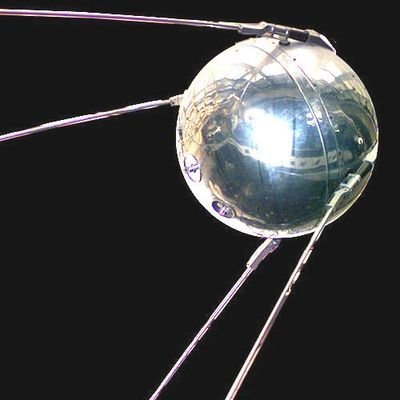
@psneeze There was no NASA in 1955. It was still two years until the Sputnik Moment that caused NASA to be established.
-
@psneeze There was no NASA in 1955. It was still two years until the Sputnik Moment that caused NASA to be established.
@riley Maybe I'm confusing it with the NACA. @sundogplanets
-
@psneeze There was no NASA in 1955. It was still two years until the Sputnik Moment that caused NASA to be established.
Incidentally, a major plot twist of the book is that future humans find it to be a problem that the early Eternity's meddlement didn't let Terrans develop space travel technologies.
-
@riley Maybe I'm confusing it with the NACA. @sundogplanets
@psneeze Maybe. I don't know for sure, but NACA would probably have been into some fancy fluid dynamics calculations by its latter years, and a systolic array of human computers is a feasible way of doing it.













 Yes!
Yes!