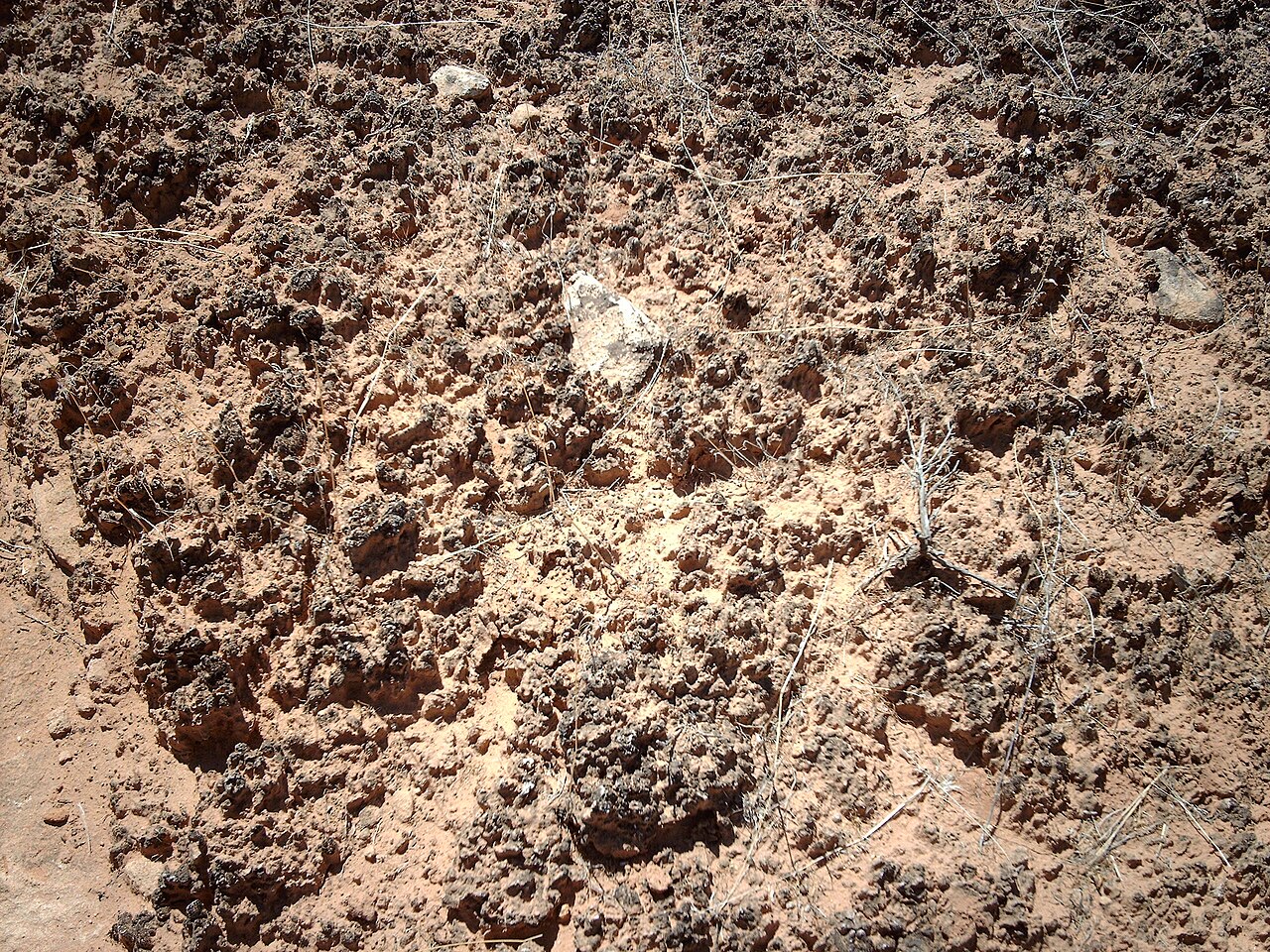
Chinese researchers sprayed cyanobacteria onto desert sand and turned it into stable soil in just 10 months.
-
Chinese researchers sprayed cyanobacteria onto desert sand and turned it into stable soil in just 10 months. Cyanobacteria oozes sticky sugars that glue loose grains of sand into a crust that’s tough enough to cut wind erosion and trap water — and then those bacteria photosynthesize, leaving behind organic matter, and pull nitrogen from the air, converting it into fertilizer. Drop seeds into the soil 10-16 months later and they’re very happy. https://timesofindia.indiatimes.com/science/chinese-researchers-turn-desert-sand-into-fertile-soil-in-just-10-months-using-cyanobacteria/articleshow/130391558.cms
#ShareGoodNewsToo -
@adapalmer But what about the cyanobacteria toxin? Does it get taken up by the new crops?
@nosrednayduj @adapalmer this is the first step in soil crust formation, which happens naturally in arid ecosystems and is the first step towards colonizing soil with life! Biological soil crust is super ecologically important, but fragile and easily damaged.
Scientists have been working really hard on trying to figure out how to start restoring soil crusts and it’s cool to see them come so far that it can be used like this.
This is my favourite lab doing soil crust work

Who we are
As a lab that studies soils and soil organisms, we are keenly aware of the intricate balance of life and interactions that guides ecosystem function. Soils provide the foundation for all life in...
DIRT LAB (dirtlab.weebly.com)
Re: cyanotoxins: Cyanobacteria growing in soil are different kinds of cyanobacteria than the ones in water, different Cyanobacteria make different toxins, and they make those toxins in response to different environmental conditions. I don’t think all cyanobacteria even make toxins?
Soil crusts aren’t my area of expertise, but soil scientists do study how different conditions affect toxin production and the role of those toxins in the (ecological) community.
As far as I’m aware, any health risks to humans from cyanotoxins in soil crust come from disturbing or harming the soil crust so that it aerosolizes and blows around.
If this technique is used to restore degraded areas, then it’s more likely to reduce exposure to cyanotoxins by stabilizing the soil surface.
-
Chinese researchers sprayed cyanobacteria onto desert sand and turned it into stable soil in just 10 months. Cyanobacteria oozes sticky sugars that glue loose grains of sand into a crust that’s tough enough to cut wind erosion and trap water — and then those bacteria photosynthesize, leaving behind organic matter, and pull nitrogen from the air, converting it into fertilizer. Drop seeds into the soil 10-16 months later and they’re very happy. https://timesofindia.indiatimes.com/science/chinese-researchers-turn-desert-sand-into-fertile-soil-in-just-10-months-using-cyanobacteria/articleshow/130391558.cms
#ShareGoodNewsToo@adapalmer I've got plenty of this stuff in my aquarium every few months if any researchers need some fresh cyanobacteria for these experiments

-
@JosephMeyer these are algae being held, not any Cyanobacteria @adapalmer
-
Chinese researchers sprayed cyanobacteria onto desert sand and turned it into stable soil in just 10 months. Cyanobacteria oozes sticky sugars that glue loose grains of sand into a crust that’s tough enough to cut wind erosion and trap water — and then those bacteria photosynthesize, leaving behind organic matter, and pull nitrogen from the air, converting it into fertilizer. Drop seeds into the soil 10-16 months later and they’re very happy. https://timesofindia.indiatimes.com/science/chinese-researchers-turn-desert-sand-into-fertile-soil-in-just-10-months-using-cyanobacteria/articleshow/130391558.cms
#ShareGoodNewsToo@adapalmer
It's there a more authoritative source than timesofindia? Also, there must be a reason why the area became a desert. As long as it's not resolved, it will become desert again. I'm quite sceptical for now. -
One of the second things I noticed (before I fell asleep) is this was written by AI!
-
Chinese researchers sprayed cyanobacteria onto desert sand and turned it into stable soil in just 10 months. Cyanobacteria oozes sticky sugars that glue loose grains of sand into a crust that’s tough enough to cut wind erosion and trap water — and then those bacteria photosynthesize, leaving behind organic matter, and pull nitrogen from the air, converting it into fertilizer. Drop seeds into the soil 10-16 months later and they’re very happy. https://timesofindia.indiatimes.com/science/chinese-researchers-turn-desert-sand-into-fertile-soil-in-just-10-months-using-cyanobacteria/articleshow/130391558.cms
#ShareGoodNewsToo@adapalmer anyone have a link to the research article?
closest i could find is https://www.sciencedirect.com/science/article/pii/S0038071719303293 and it seems to be from 2020
-
Chinese researchers sprayed cyanobacteria onto desert sand and turned it into stable soil in just 10 months. Cyanobacteria oozes sticky sugars that glue loose grains of sand into a crust that’s tough enough to cut wind erosion and trap water — and then those bacteria photosynthesize, leaving behind organic matter, and pull nitrogen from the air, converting it into fertilizer. Drop seeds into the soil 10-16 months later and they’re very happy. https://timesofindia.indiatimes.com/science/chinese-researchers-turn-desert-sand-into-fertile-soil-in-just-10-months-using-cyanobacteria/articleshow/130391558.cms
#ShareGoodNewsToo@adapalmer If it works so well, why did they need an AI generated picture to show the results?
-
Chinese researchers sprayed cyanobacteria onto desert sand and turned it into stable soil in just 10 months. Cyanobacteria oozes sticky sugars that glue loose grains of sand into a crust that’s tough enough to cut wind erosion and trap water — and then those bacteria photosynthesize, leaving behind organic matter, and pull nitrogen from the air, converting it into fertilizer. Drop seeds into the soil 10-16 months later and they’re very happy. https://timesofindia.indiatimes.com/science/chinese-researchers-turn-desert-sand-into-fertile-soil-in-just-10-months-using-cyanobacteria/articleshow/130391558.cms
#ShareGoodNewsToo@adapalmer
No reference and a machine generated image? Hm…
-
@AlexanderVI He hated the idea, which is why he portrayed it negatively from GEoD onward (green Arrakis produced people like Siona who were too soft and complacent and concerned for frivolities like civil liberties). Herbert venerated people suffering in harsh environments because in his mind that is how superior people were produced.
Democracy is ultimately about stakeholding; which walks of life are considered to have legitimate concerns in society (i.e. all walks of life). That there isn't a drop of democracy in 20k years of Dune's timeline should be a big red flag for fans. Herbert revered mafia-like and despotic social structures like the Bene Gesserit and the throne.
-
@JosephMeyer these are algae being held, not any Cyanobacteria @adapalmer
@carl No. Here is an article about Nostoc, cyanobacteria once thought to be blue-green algae.
-
Chinese researchers sprayed cyanobacteria onto desert sand and turned it into stable soil in just 10 months. Cyanobacteria oozes sticky sugars that glue loose grains of sand into a crust that’s tough enough to cut wind erosion and trap water — and then those bacteria photosynthesize, leaving behind organic matter, and pull nitrogen from the air, converting it into fertilizer. Drop seeds into the soil 10-16 months later and they’re very happy. https://timesofindia.indiatimes.com/science/chinese-researchers-turn-desert-sand-into-fertile-soil-in-just-10-months-using-cyanobacteria/articleshow/130391558.cms
#ShareGoodNewsToo@adapalmer
This is FANTASTIC!!!