Skip to content
  • Categories
  • Recent
  • Tags
  • Popular
  • World
  • Users
  • Groups
Skins
  • Light
  • Brite
  • Cerulean
  • Cosmo
  • Flatly
  • Journal
  • Litera
  • Lumen
  • Lux
  • Materia
  • Minty
  • Morph
  • Pulse
  • Sandstone
  • Simplex
  • Sketchy
  • Spacelab
  • United
  • Yeti
  • Zephyr
  • Dark
  • Cyborg
  • Darkly
  • Quartz
  • Slate
  • Solar
  • Superhero
  • Vapor

  • Default (Cyborg)
  • No Skin
Collapse
Brand Logo

CIRCLE WITH A DOT

  1. Home
  2. Uncategorized
  3. Comet C/2025 R3 (PanSTARRS) is now putting on a show, visible low in the predawn sky, with binoculars or telescope.
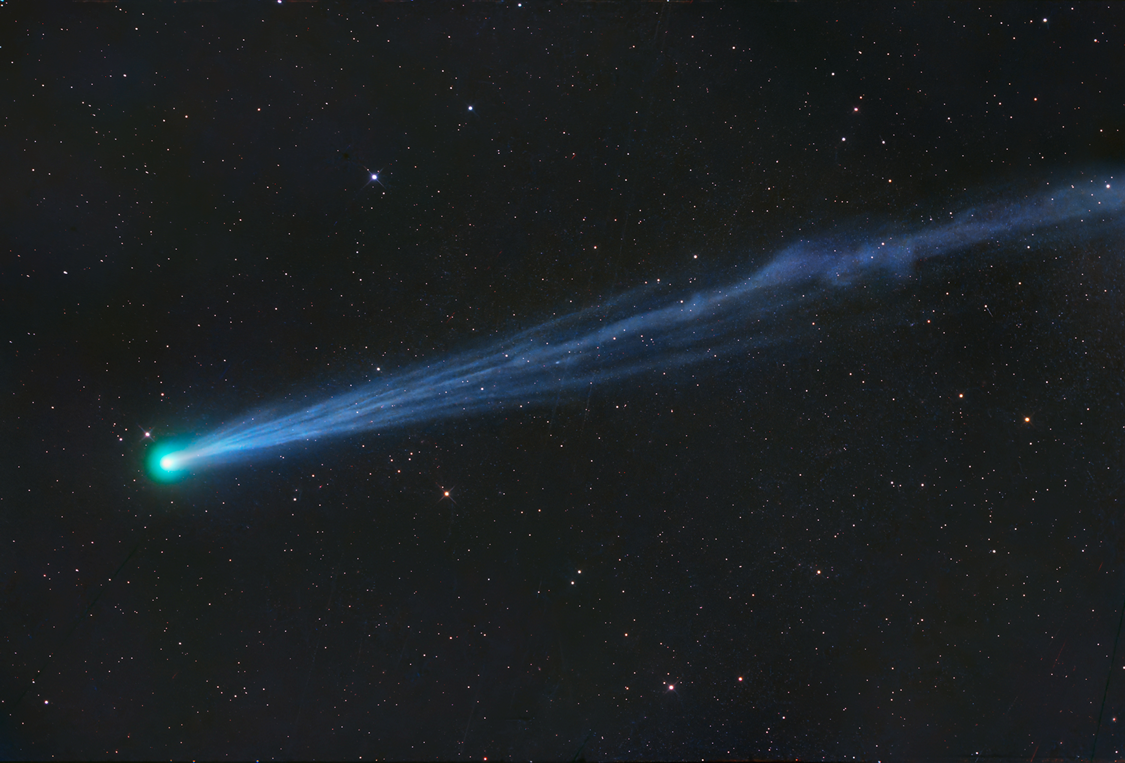
Comet C/2025 R3 (PanSTARRS) is now putting on a show, visible low in the predawn sky, with binoculars or telescope.

Scheduled Pinned Locked Moved Uncategorized
35 Posts 16 Posters 1 Views
  • Oldest to Newest
  • Newest to Oldest
  • Most Votes
Reply
  • Reply as topic
Log in to reply
This topic has been deleted. Only users with topic management privileges can see it.
  • akasci@fosstodon.orgA akasci@fosstodon.org

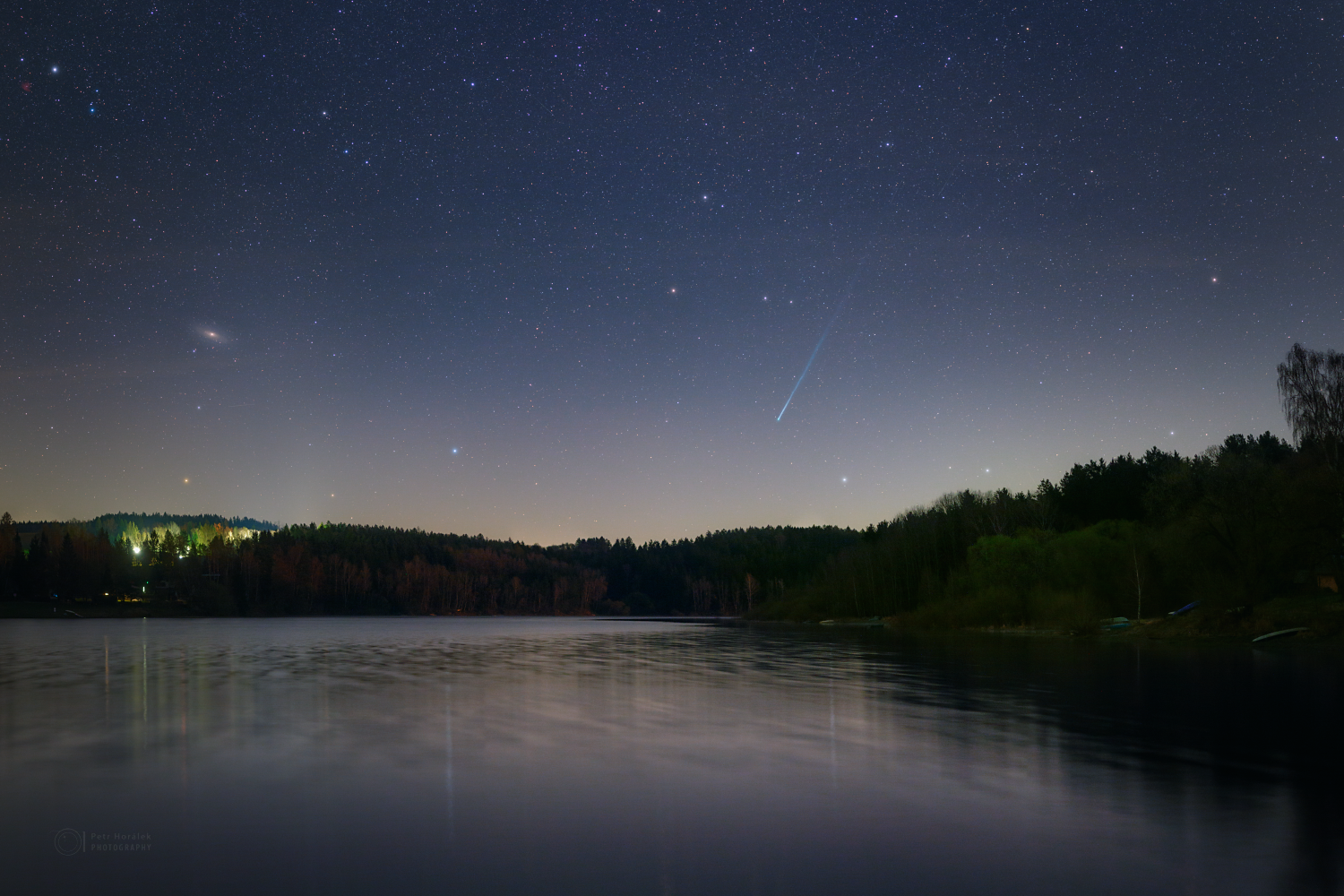
    Comet C/2025 R3 (PanSTARRS) artistically captured by astrophotographer Petr Horálek over the Seč Lake, Czech Republic.

    The Andromeda Galaxy can be seen on the left in this pic taken just before dawn.

    https://www.petrhoralek.com/?p=26091
    Check out Petr's other works at https://www.petrhoralek.com/ and
    https://www.instagram.com/petrhoralek/?hl=en
    5/n
    Link Preview Image
    akasci@fosstodon.orgA This user is from outside of this forum
    akasci@fosstodon.orgA This user is from outside of this forum
    akasci@fosstodon.org
    wrote on last edited by
    #11

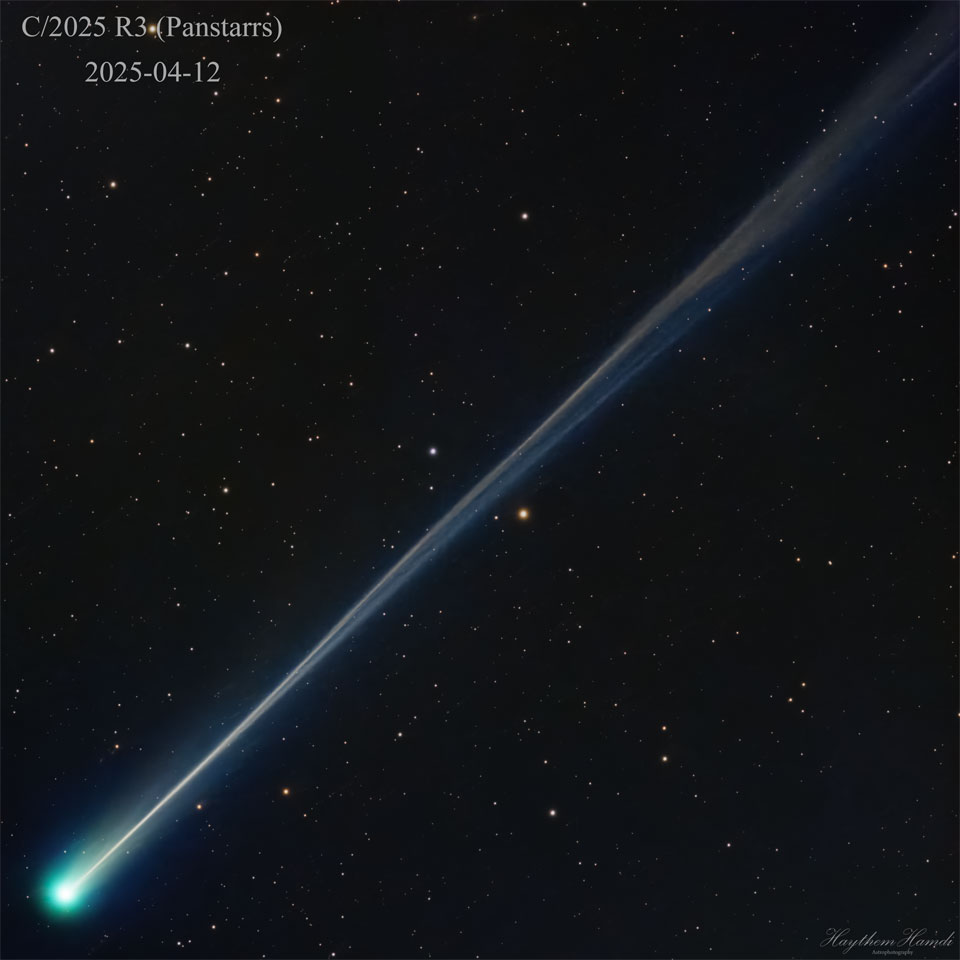
    Comet C/2025 R3 (PanSTARRS) is featured in today's NASA APOD.

    This image was taken by astrophotographer Haythem Hamdi, in Rhode Island, USA, on April 12. It captures the comet’s glowing coma and flowing tail shaped by the solar wind. Haythem used an Askar 80PHQ refractor and reducer to get a wide field of view for framing the long tail.

    https://apod.nasa.gov/apod/ap260414.html
    https://www.instagram.com/hamdi_astrophotography/
    Image Credit & Copyright: Haythem Hamdi
    6/n
    Link Preview Image
    akasci@fosstodon.orgA 1 Reply Last reply
    0
    • akasci@fosstodon.orgA akasci@fosstodon.org

      Comet C/2025 R3 (PanSTARRS) is featured in today's NASA APOD.

      This image was taken by astrophotographer Haythem Hamdi, in Rhode Island, USA, on April 12. It captures the comet’s glowing coma and flowing tail shaped by the solar wind. Haythem used an Askar 80PHQ refractor and reducer to get a wide field of view for framing the long tail.

      https://apod.nasa.gov/apod/ap260414.html
      https://www.instagram.com/hamdi_astrophotography/
      Image Credit & Copyright: Haythem Hamdi
      6/n

      Link Preview Image
      akasci@fosstodon.orgA This user is from outside of this forum
      akasci@fosstodon.orgA This user is from outside of this forum
      akasci@fosstodon.org
      wrote on last edited by
      #12

      Check out this earlier thread on why the coma of most comets, including that of Comet C/2025 R3 (PanSTARRS), glows green.

      “Look deep into nature, and then you will understand everything better.”
      ― Albert Einstein

      https://fosstodon.org/@AkaSci/112252445899850627
      7/n

      akasci@fosstodon.orgA 1 Reply Last reply
      0
      • akasci@fosstodon.orgA akasci@fosstodon.org

        Check out this earlier thread on why the coma of most comets, including that of Comet C/2025 R3 (PanSTARRS), glows green.

        “Look deep into nature, and then you will understand everything better.”
        ― Albert Einstein

        https://fosstodon.org/@AkaSci/112252445899850627
        7/n

        akasci@fosstodon.orgA This user is from outside of this forum
        akasci@fosstodon.orgA This user is from outside of this forum
        akasci@fosstodon.org
        wrote on last edited by
        #13

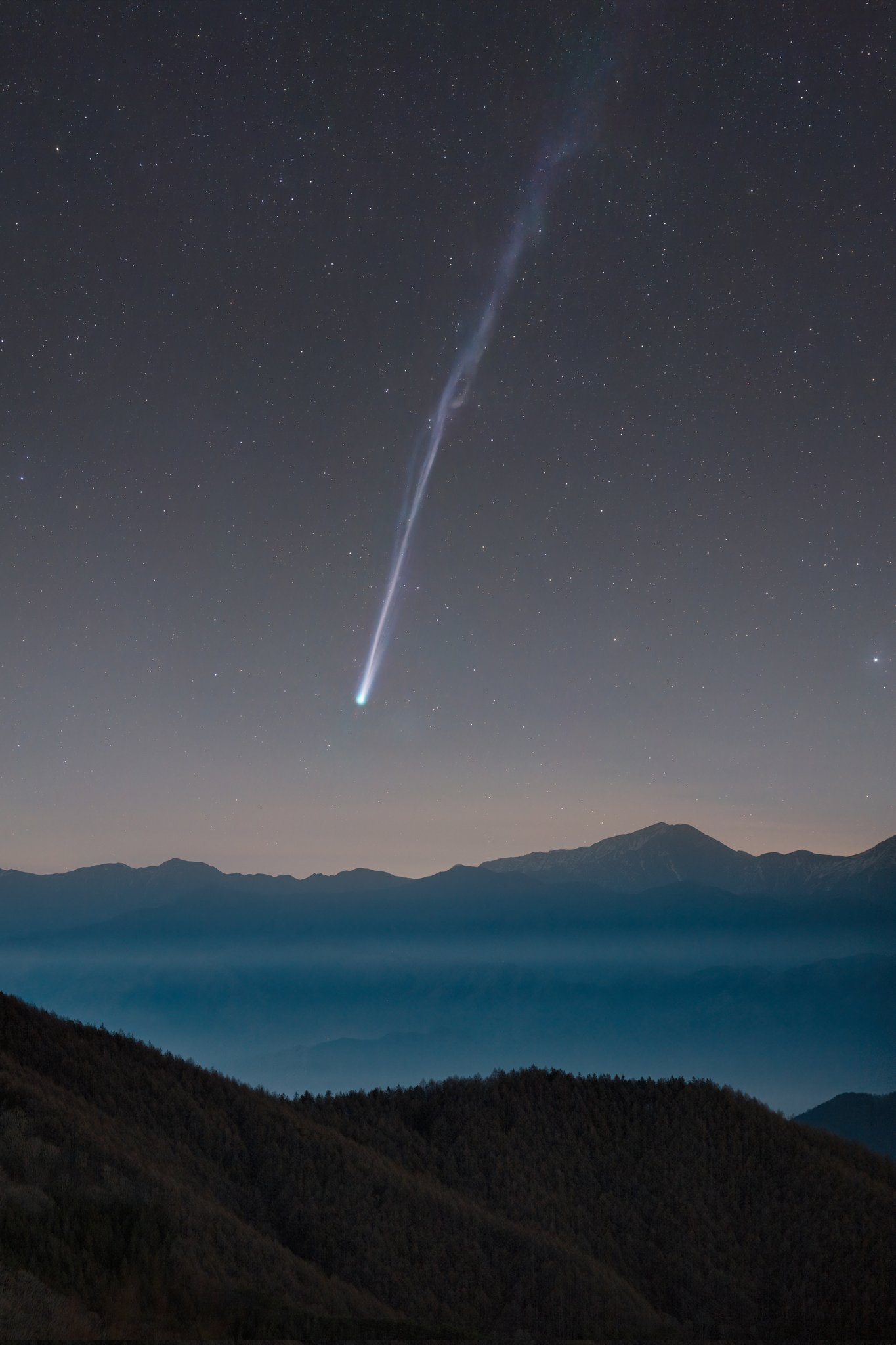
        Comet C/2025 R3 (PanSTARRS) with its long wispy tail looming over the misty mountains of Nagano Prefecture, Hiratani Village, Japan.

        Date: April 13, 2026
        Camera: Canon EOS 6D Mark II
        Lens: Samyang 135mm f/2.0
        Setting : ISO400
        60sx40shots

        https://www.instagram.com/zoe_zoe0718
        Credit: Zoe
        8/n
        Link Preview Image
        akasci@fosstodon.orgA 1 Reply Last reply
        0
        • akasci@fosstodon.orgA akasci@fosstodon.org

          Comet C/2025 R3 (PanSTARRS) with its long wispy tail looming over the misty mountains of Nagano Prefecture, Hiratani Village, Japan.

          Date: April 13, 2026
          Camera: Canon EOS 6D Mark II
          Lens: Samyang 135mm f/2.0
          Setting : ISO400
          60sx40shots

          https://www.instagram.com/zoe_zoe0718
          Credit: Zoe
          8/n

          Link Preview Image
          akasci@fosstodon.orgA This user is from outside of this forum
          akasci@fosstodon.orgA This user is from outside of this forum
          akasci@fosstodon.org
          wrote last edited by
          #14

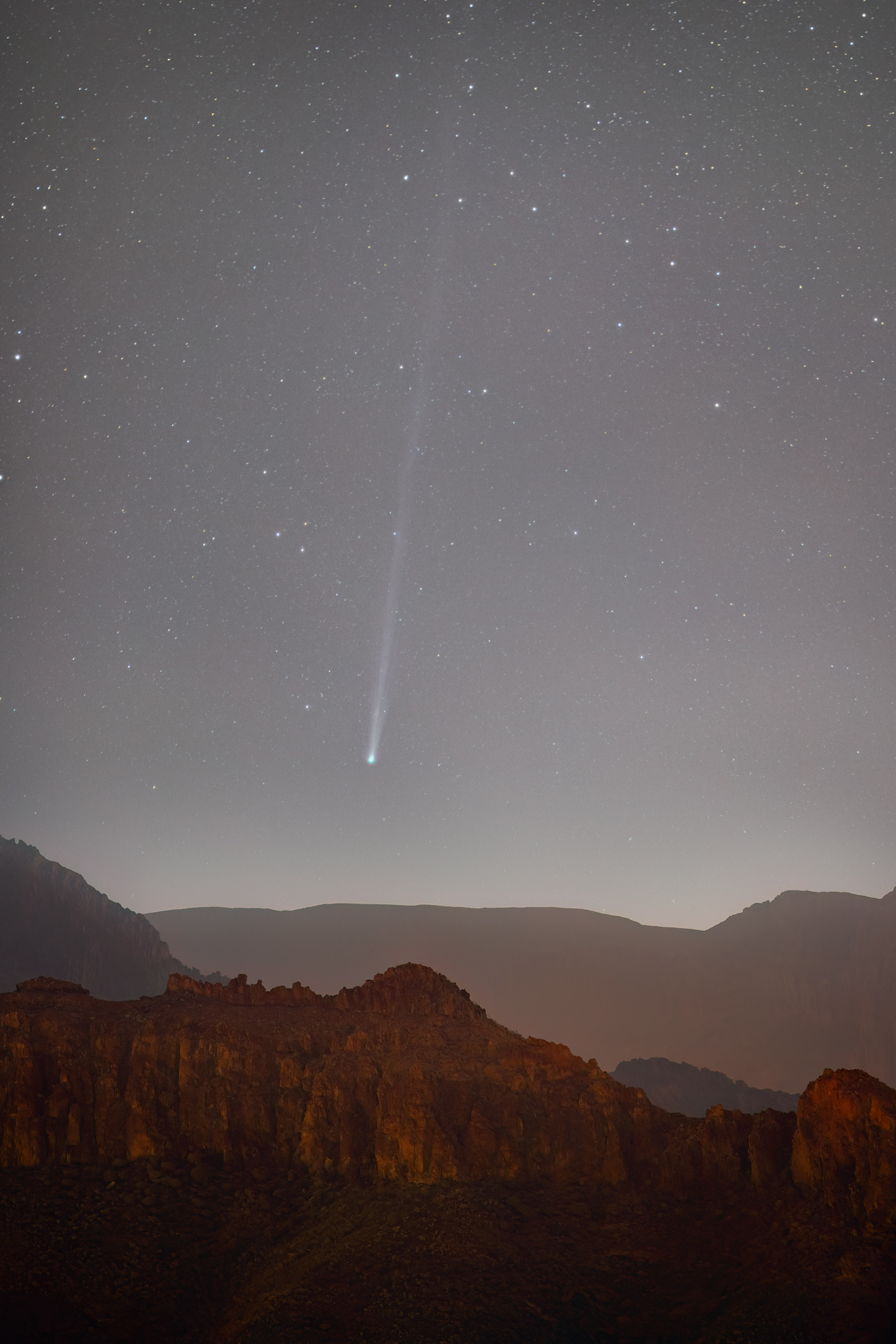
          This beautiful image of Comet C/2025 R3 (PanSTARRS) was taken by astrophotographer Marina Prol, early morning on April 14th, from Ayagaures viewpoint in the southern part of Gran Canaria.

          https://spaceweathergallery2.com/indiv_upload.php?upload_id=232320
          https://www.marinaprol.com/astroandnightscapes
          9/n
          Link Preview Image
          akasci@fosstodon.orgA 1 Reply Last reply
          0
          • akasci@fosstodon.orgA akasci@fosstodon.org

            This beautiful image of Comet C/2025 R3 (PanSTARRS) was taken by astrophotographer Marina Prol, early morning on April 14th, from Ayagaures viewpoint in the southern part of Gran Canaria.

            https://spaceweathergallery2.com/indiv_upload.php?upload_id=232320
            https://www.marinaprol.com/astroandnightscapes
            9/n

            Link Preview Image
            akasci@fosstodon.orgA This user is from outside of this forum
            akasci@fosstodon.orgA This user is from outside of this forum
            akasci@fosstodon.org
            wrote last edited by
            #15

            Post #10 got disconnected from the thread. This is one way to reconnect it and continue the thread.

            https://fosstodon.org/@AkaSci/116421250979446601
            10/n

            akasci@fosstodon.orgA 1 Reply Last reply
            0
            • akasci@fosstodon.orgA akasci@fosstodon.org

              Post #10 got disconnected from the thread. This is one way to reconnect it and continue the thread.

              https://fosstodon.org/@AkaSci/116421250979446601
              10/n

              akasci@fosstodon.orgA This user is from outside of this forum
              akasci@fosstodon.orgA This user is from outside of this forum
              akasci@fosstodon.org
              wrote last edited by
              #16

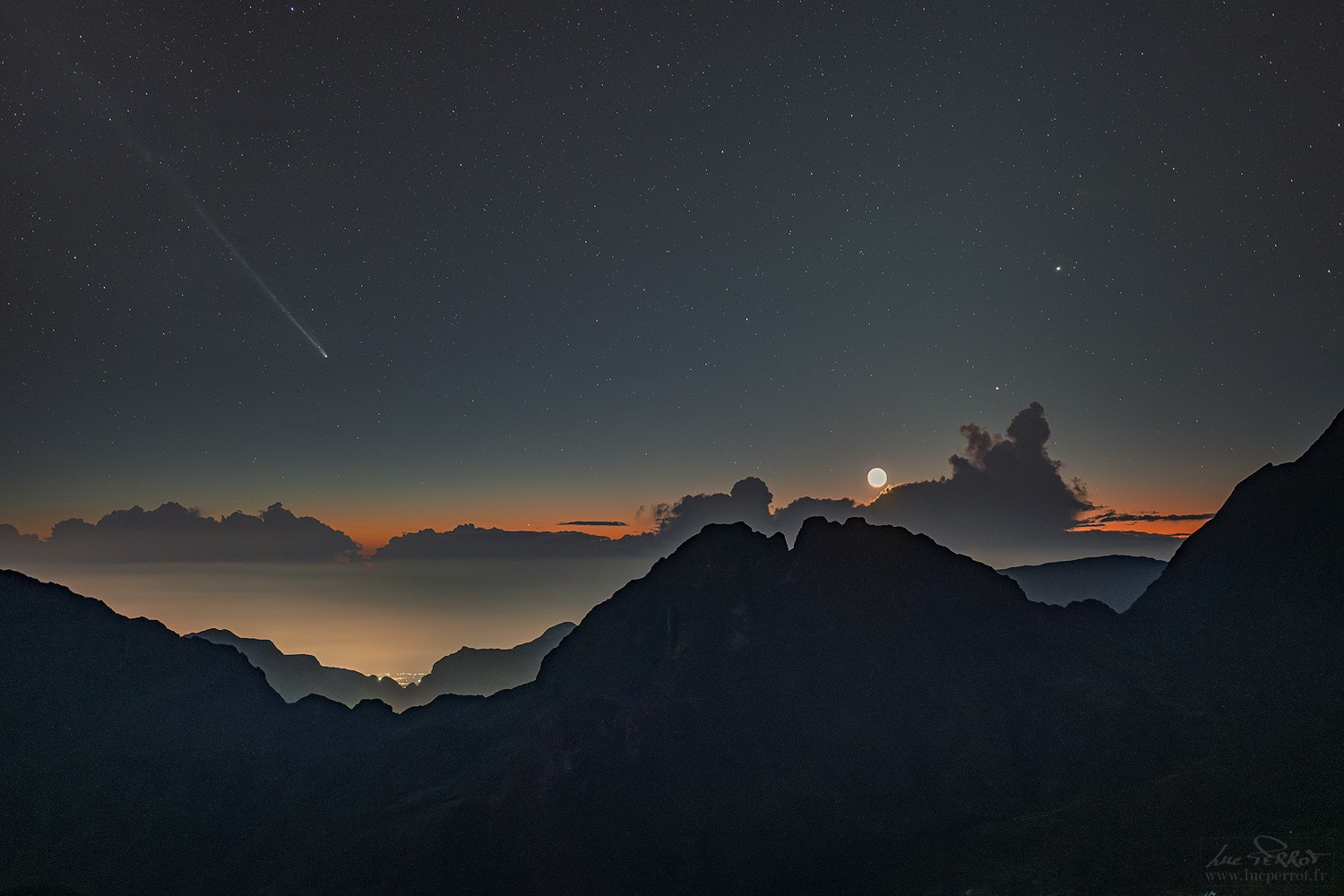
              Comet C/2025 R3 beautifully captured by astrophotographer Luc Perrot on April 16 from a volcanic peak overlooking France's Reunion Island, located in the Southern hemisphere, east of Madagascar.

              Featured on NASA APOD on April 18.

              https://apod.nasa.gov/apod/ap260418.html
              Check out Luc's other works at https://www.lucperrot.fr/
              11/n
              Link Preview Image
              akasci@fosstodon.orgA 1 Reply Last reply
              1
              0
              • R relay@relay.infosec.exchange shared this topic
              • akasci@fosstodon.orgA akasci@fosstodon.org

                Comet C/2025 R3 beautifully captured by astrophotographer Luc Perrot on April 16 from a volcanic peak overlooking France's Reunion Island, located in the Southern hemisphere, east of Madagascar.

                Featured on NASA APOD on April 18.

                https://apod.nasa.gov/apod/ap260418.html
                Check out Luc's other works at https://www.lucperrot.fr/
                11/n

                Link Preview Image
                akasci@fosstodon.orgA This user is from outside of this forum
                akasci@fosstodon.orgA This user is from outside of this forum
                akasci@fosstodon.org
                wrote last edited by
                #17

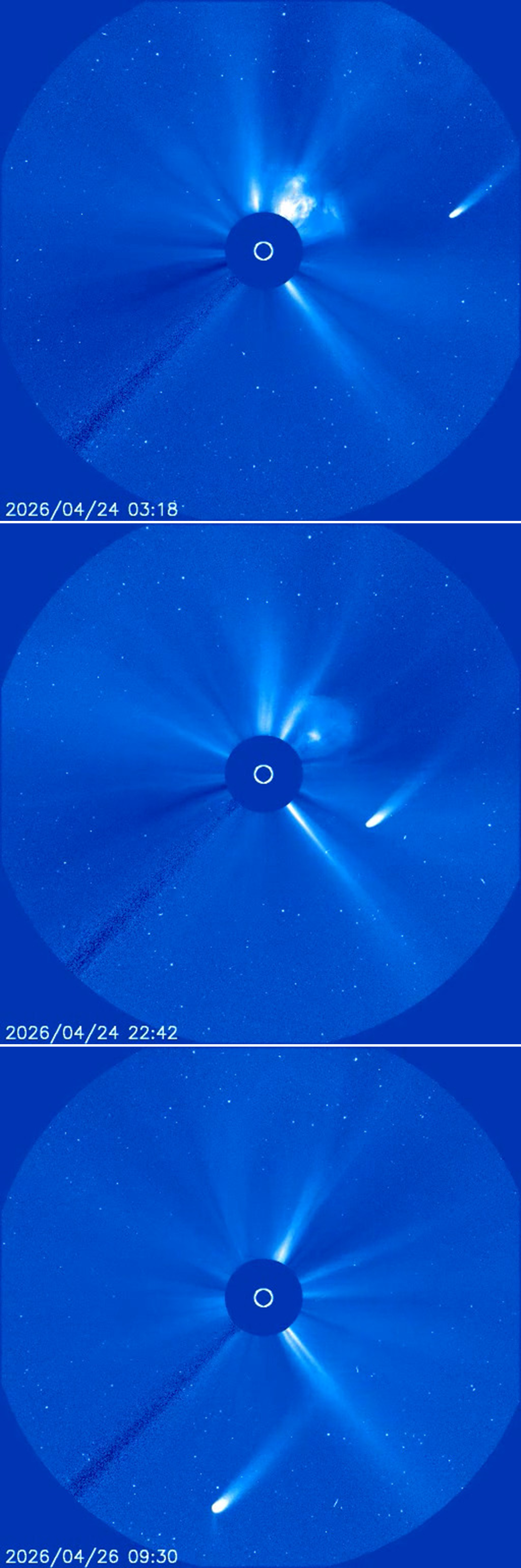
                Looks like Comet C/2025 R3 (PanSTARRS) survived its trip around the Sun and is now on its return trip out of the Solar System.

                The comet makes its closest approach to Earth today.

                These are images captured by the ESA/NASA Solar and Heliospheric Observatory (SOHO) LASCO C3 instrument.

                LASCO = Large Angle and Spectrometric COronagraph.

                Animation at https://soho.nascom.nasa.gov/data/realtime/mpeg/
                12/n
                Link Preview Image
                akasci@fosstodon.orgA ewen@social.ewenbell.comE adamshostack@infosec.exchangeA 4 Replies Last reply
                0
                • akasci@fosstodon.orgA akasci@fosstodon.org

                  Looks like Comet C/2025 R3 (PanSTARRS) survived its trip around the Sun and is now on its return trip out of the Solar System.

                  The comet makes its closest approach to Earth today.

                  These are images captured by the ESA/NASA Solar and Heliospheric Observatory (SOHO) LASCO C3 instrument.

                  LASCO = Large Angle and Spectrometric COronagraph.

                  Animation at https://soho.nascom.nasa.gov/data/realtime/mpeg/
                  12/n

                  Link Preview Image
                  akasci@fosstodon.orgA This user is from outside of this forum
                  akasci@fosstodon.orgA This user is from outside of this forum
                  akasci@fosstodon.org
                  wrote last edited by
                  #18

                  Video from ESA/NASA Solar and Heliospheric Observatory (SOHO) LASCO C3 with comet C/2025 R3 (PanSTARRS) in its field of view, uploaded to YouTube by Bum-Suk Yeom (염범석).

                  https://www.youtube.com/watch?v=LVGQv62DvnQ
                  13/n

                  1 Reply Last reply
                  0
                  • akasci@fosstodon.orgA akasci@fosstodon.org

                    Looks like Comet C/2025 R3 (PanSTARRS) survived its trip around the Sun and is now on its return trip out of the Solar System.

                    The comet makes its closest approach to Earth today.

                    These are images captured by the ESA/NASA Solar and Heliospheric Observatory (SOHO) LASCO C3 instrument.

                    LASCO = Large Angle and Spectrometric COronagraph.

                    Animation at https://soho.nascom.nasa.gov/data/realtime/mpeg/
                    12/n

                    Link Preview Image
                    ewen@social.ewenbell.comE This user is from outside of this forum
                    ewen@social.ewenbell.comE This user is from outside of this forum
                    ewen@social.ewenbell.com
                    wrote last edited by
                    #19
                    @AkaSci

                    How cool are those images though! It's like watching a solar system printed onto a CDrom 🙂
                    1 Reply Last reply
                    0
                    • akasci@fosstodon.orgA akasci@fosstodon.org

                      Looks like Comet C/2025 R3 (PanSTARRS) survived its trip around the Sun and is now on its return trip out of the Solar System.

                      The comet makes its closest approach to Earth today.

                      These are images captured by the ESA/NASA Solar and Heliospheric Observatory (SOHO) LASCO C3 instrument.

                      LASCO = Large Angle and Spectrometric COronagraph.

                      Animation at https://soho.nascom.nasa.gov/data/realtime/mpeg/
                      12/n

                      Link Preview Image
                      akasci@fosstodon.orgA This user is from outside of this forum
                      akasci@fosstodon.orgA This user is from outside of this forum
                      akasci@fosstodon.org
                      wrote last edited by
                      #20

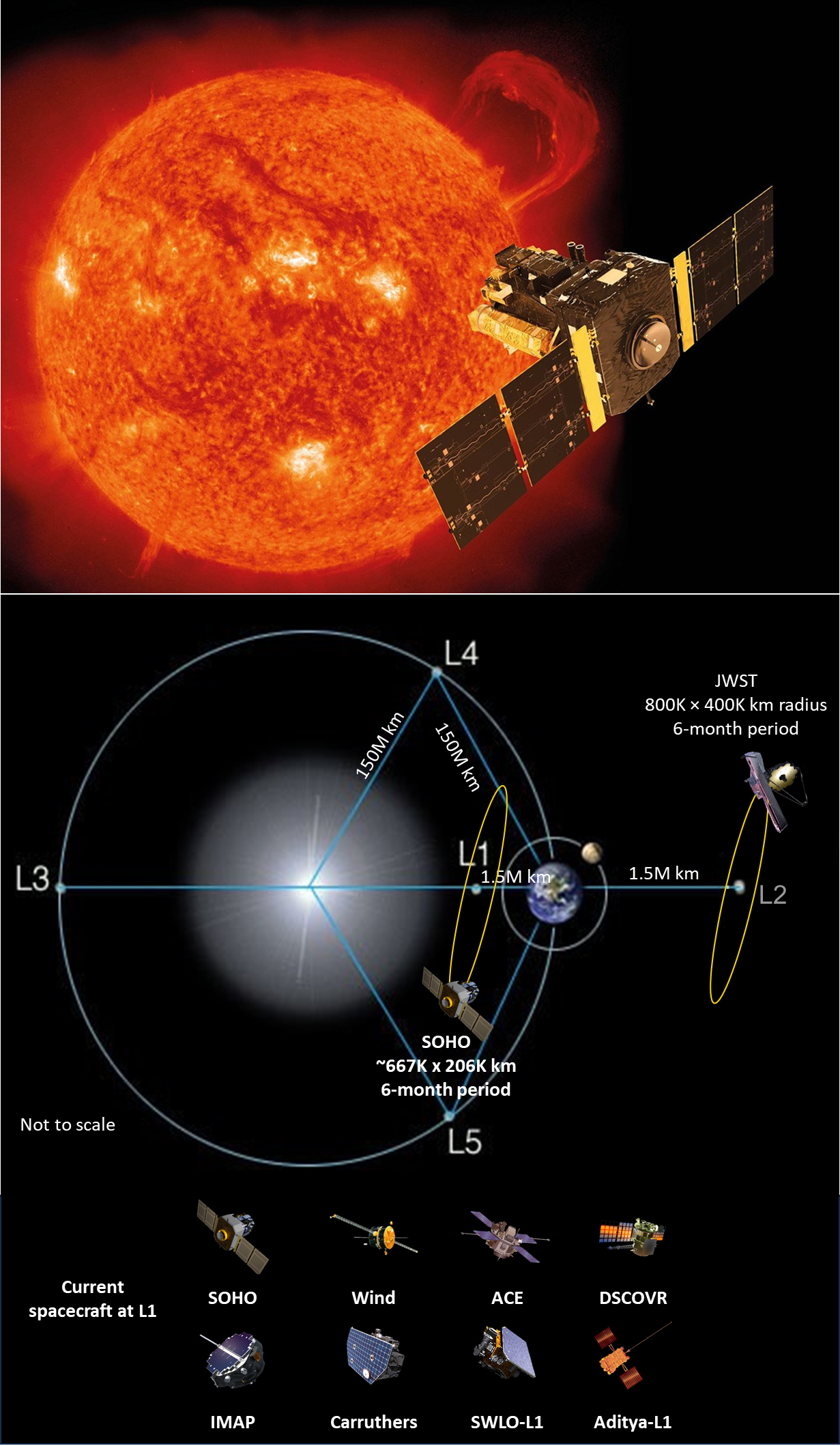
                      The ESA/NASA Solar and Heliospheric Observatory (SOHO), launched on Dec. 2, 1995, has been studying the Sun for over 30 years, from its perch in a Halo orbit around the Sun-Earth Lagrange point L1.

                      With its 12 instruments, SOHO allows scientists to study the Sun’s internal structure and dynamics, the chromosphere, the corona, and solar particles. It has discovered over 5,000 comets.

                      https://science.nasa.gov/mission/soho/
                      https://en.wikipedia.org/wiki/Solar_and_Heliospheric_Observatory
                      13/n
                      Link Preview Image
                      akasci@fosstodon.orgA 1 Reply Last reply
                      0
                      • akasci@fosstodon.orgA akasci@fosstodon.org

                        Looks like Comet C/2025 R3 (PanSTARRS) survived its trip around the Sun and is now on its return trip out of the Solar System.

                        The comet makes its closest approach to Earth today.

                        These are images captured by the ESA/NASA Solar and Heliospheric Observatory (SOHO) LASCO C3 instrument.

                        LASCO = Large Angle and Spectrometric COronagraph.

                        Animation at https://soho.nascom.nasa.gov/data/realtime/mpeg/
                        12/n

                        Link Preview Image
                        adamshostack@infosec.exchangeA This user is from outside of this forum
                        adamshostack@infosec.exchangeA This user is from outside of this forum
                        adamshostack@infosec.exchange
                        wrote last edited by
                        #21

                        @AkaSci I’ve been busy, hadn’t tracked it, but this looks like decent info on how to try to see it: https://starwalk.space/en/news/comet-c2025-r3-panstarrs

                        1 Reply Last reply
                        0
                        • akasci@fosstodon.orgA akasci@fosstodon.org

                          The ESA/NASA Solar and Heliospheric Observatory (SOHO), launched on Dec. 2, 1995, has been studying the Sun for over 30 years, from its perch in a Halo orbit around the Sun-Earth Lagrange point L1.

                          With its 12 instruments, SOHO allows scientists to study the Sun’s internal structure and dynamics, the chromosphere, the corona, and solar particles. It has discovered over 5,000 comets.

                          https://science.nasa.gov/mission/soho/
                          https://en.wikipedia.org/wiki/Solar_and_Heliospheric_Observatory
                          13/n

                          Link Preview Image
                          akasci@fosstodon.orgA This user is from outside of this forum
                          akasci@fosstodon.orgA This user is from outside of this forum
                          akasci@fosstodon.org
                          wrote last edited by
                          #22

                          The horror! The horror!

                          How billionaires, one in particular, are destroying the night sky and astronomy.

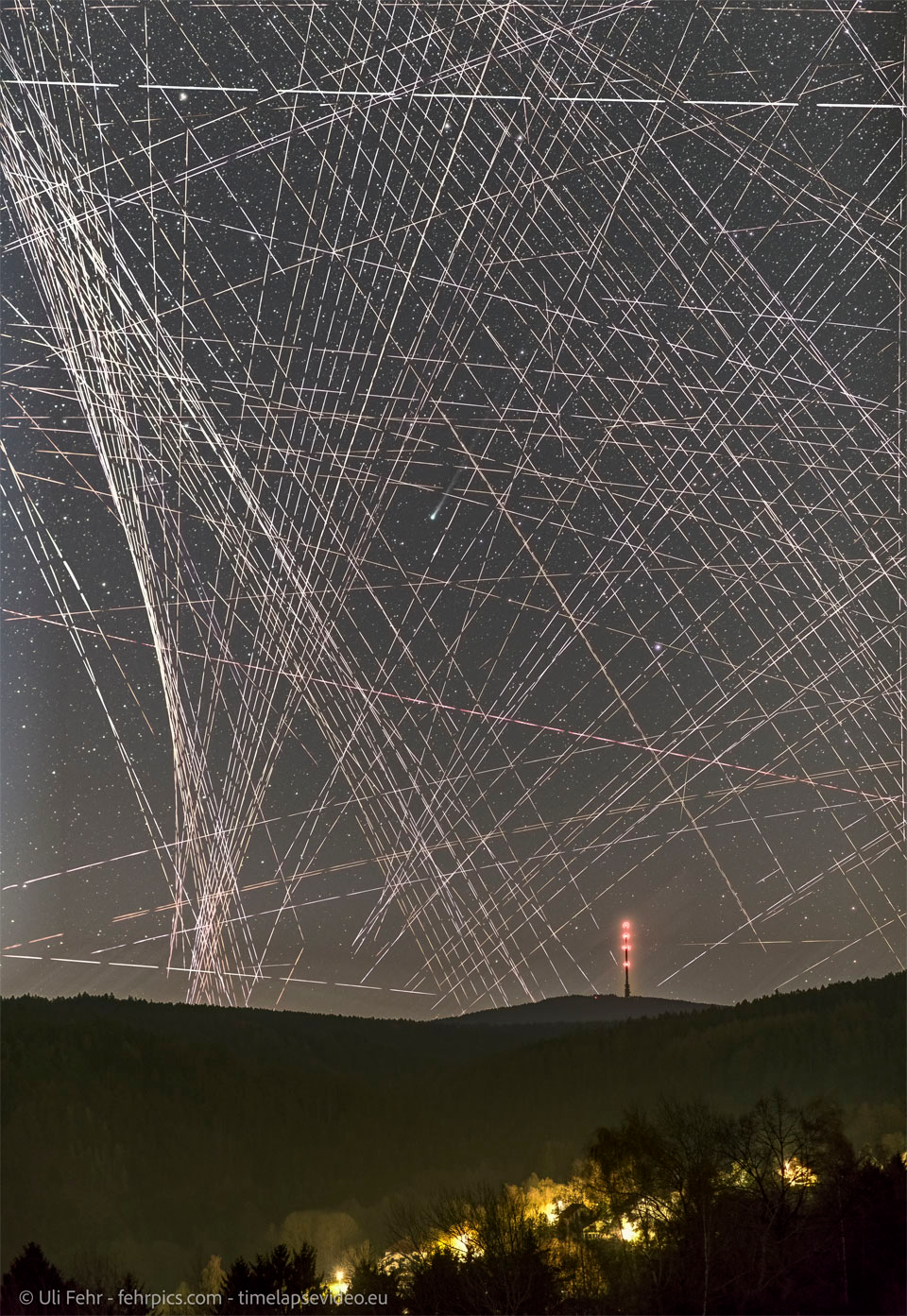
                          This is a pic of Comet C/2025 R3 (PanSTARRS), trapped in a celestial cage of light streaks formed by LEO satellites racing across the sky in this 10-minute exposure image.

                          This is with ~10,000 orbiting satellites. Now, imagine a million of them, each with a solar array ~10x larger.
                          😡 🛰️
                          https://apod.nasa.gov/apod/ap260427.html
                          Image Credit & Copyright: Uli Fehr
                          14/n

                          Link Preview Image
                          kevinrns@mstdn.socialK huntingdon@mstdn.socialH Z jigmedatse@social.jigmedatse.comJ kigelia@mastodon.onlineK 8 Replies Last reply
                          1
                          0
                          • akasci@fosstodon.orgA akasci@fosstodon.org

                            The horror! The horror!

                            How billionaires, one in particular, are destroying the night sky and astronomy.

                            This is a pic of Comet C/2025 R3 (PanSTARRS), trapped in a celestial cage of light streaks formed by LEO satellites racing across the sky in this 10-minute exposure image.

                            This is with ~10,000 orbiting satellites. Now, imagine a million of them, each with a solar array ~10x larger.
                            😡 🛰️
                            https://apod.nasa.gov/apod/ap260427.html
                            Image Credit & Copyright: Uli Fehr
                            14/n
                            Link Preview Image
                            kevinrns@mstdn.socialK This user is from outside of this forum
                            kevinrns@mstdn.socialK This user is from outside of this forum
                            kevinrns@mstdn.social
                            wrote last edited by
                            #23

                            @AkaSci

                            Stop Prison Earth.

                            1 Reply Last reply
                            0
                            • akasci@fosstodon.orgA akasci@fosstodon.org

                              The horror! The horror!

                              How billionaires, one in particular, are destroying the night sky and astronomy.

                              This is a pic of Comet C/2025 R3 (PanSTARRS), trapped in a celestial cage of light streaks formed by LEO satellites racing across the sky in this 10-minute exposure image.

                              This is with ~10,000 orbiting satellites. Now, imagine a million of them, each with a solar array ~10x larger.
                              😡 🛰️
                              https://apod.nasa.gov/apod/ap260427.html
                              Image Credit & Copyright: Uli Fehr
                              14/n

                              Link Preview Image
                              huntingdon@mstdn.socialH This user is from outside of this forum
                              huntingdon@mstdn.socialH This user is from outside of this forum
                              huntingdon@mstdn.social
                              wrote last edited by
                              #24

                              @AkaSci

                              The Tholian web. If only it were Elmo caught in interdimensional space, we'd all breathe easier.

                              1 Reply Last reply
                              0
                              • akasci@fosstodon.orgA akasci@fosstodon.org

                                The horror! The horror!

                                How billionaires, one in particular, are destroying the night sky and astronomy.

                                This is a pic of Comet C/2025 R3 (PanSTARRS), trapped in a celestial cage of light streaks formed by LEO satellites racing across the sky in this 10-minute exposure image.

                                This is with ~10,000 orbiting satellites. Now, imagine a million of them, each with a solar array ~10x larger.
                                😡 🛰️
                                https://apod.nasa.gov/apod/ap260427.html
                                Image Credit & Copyright: Uli Fehr
                                14/n

                                Link Preview Image
                                Z This user is from outside of this forum
                                Z This user is from outside of this forum
                                zieglarnatta@mastodon.social
                                wrote last edited by
                                #25

                                Right now, starlink has the most, but Leo is catching up. Imagine the scene where Wally & Eve punching through the dead satellite field with their rocket? We're already there. 🤬😤😡
                                https://satellitemap.space/

                                1 Reply Last reply
                                0
                                • akasci@fosstodon.orgA akasci@fosstodon.org

                                  The horror! The horror!

                                  How billionaires, one in particular, are destroying the night sky and astronomy.

                                  This is a pic of Comet C/2025 R3 (PanSTARRS), trapped in a celestial cage of light streaks formed by LEO satellites racing across the sky in this 10-minute exposure image.

                                  This is with ~10,000 orbiting satellites. Now, imagine a million of them, each with a solar array ~10x larger.
                                  😡 🛰️
                                  https://apod.nasa.gov/apod/ap260427.html
                                  Image Credit & Copyright: Uli Fehr
                                  14/n

                                  Link Preview Image
                                  jigmedatse@social.jigmedatse.comJ This user is from outside of this forum
                                  jigmedatse@social.jigmedatse.comJ This user is from outside of this forum
                                  jigmedatse@social.jigmedatse.com
                                  wrote last edited by
                                  #26

                                  @AkaSci Impressive, and unwelcome...

                                  1 Reply Last reply
                                  0
                                  • akasci@fosstodon.orgA akasci@fosstodon.org

                                    The horror! The horror!

                                    How billionaires, one in particular, are destroying the night sky and astronomy.

                                    This is a pic of Comet C/2025 R3 (PanSTARRS), trapped in a celestial cage of light streaks formed by LEO satellites racing across the sky in this 10-minute exposure image.

                                    This is with ~10,000 orbiting satellites. Now, imagine a million of them, each with a solar array ~10x larger.
                                    😡 🛰️
                                    https://apod.nasa.gov/apod/ap260427.html
                                    Image Credit & Copyright: Uli Fehr
                                    14/n

                                    Link Preview Image
                                    kigelia@mastodon.onlineK This user is from outside of this forum
                                    kigelia@mastodon.onlineK This user is from outside of this forum
                                    kigelia@mastodon.online
                                    wrote last edited by
                                    #27

                                    @AkaSci that is a great and saddening picture.

                                    I love seeing people’s long exposure pictures of the night sky. Seems like those sort of images are going to become a thing of the past.

                                    Although I am sure some AI company will offer a tool to strip the satellite tracks away. Thus annoying me a little bit more.

                                    1 Reply Last reply
                                    0
                                    • akasci@fosstodon.orgA akasci@fosstodon.org

                                      The horror! The horror!

                                      How billionaires, one in particular, are destroying the night sky and astronomy.

                                      This is a pic of Comet C/2025 R3 (PanSTARRS), trapped in a celestial cage of light streaks formed by LEO satellites racing across the sky in this 10-minute exposure image.

                                      This is with ~10,000 orbiting satellites. Now, imagine a million of them, each with a solar array ~10x larger.
                                      😡 🛰️
                                      https://apod.nasa.gov/apod/ap260427.html
                                      Image Credit & Copyright: Uli Fehr
                                      14/n

                                      Link Preview Image
                                      kassander@norden.socialK This user is from outside of this forum
                                      kassander@norden.socialK This user is from outside of this forum
                                      kassander@norden.social
                                      wrote last edited by
                                      #28

                                      @AkaSci They could just turn off these lights!? 🤨

                                      saskboy@mastodon.ccS 1 Reply Last reply
                                      0
                                      • kassander@norden.socialK kassander@norden.social

                                        @AkaSci They could just turn off these lights!? 🤨

                                        saskboy@mastodon.ccS This user is from outside of this forum
                                        saskboy@mastodon.ccS This user is from outside of this forum
                                        saskboy@mastodon.cc
                                        wrote last edited by
                                        #29

                                        @kassander @AkaSci it's reflected sunlight.

                                        1 Reply Last reply
                                        0
                                        • akasci@fosstodon.orgA akasci@fosstodon.org

                                          The horror! The horror!

                                          How billionaires, one in particular, are destroying the night sky and astronomy.

                                          This is a pic of Comet C/2025 R3 (PanSTARRS), trapped in a celestial cage of light streaks formed by LEO satellites racing across the sky in this 10-minute exposure image.

                                          This is with ~10,000 orbiting satellites. Now, imagine a million of them, each with a solar array ~10x larger.
                                          😡 🛰️
                                          https://apod.nasa.gov/apod/ap260427.html
                                          Image Credit & Copyright: Uli Fehr
                                          14/n

                                          Link Preview Image
                                          zenie@piaille.frZ This user is from outside of this forum
                                          zenie@piaille.frZ This user is from outside of this forum
                                          zenie@piaille.fr
                                          wrote last edited by
                                          #30

                                          @AkaSci I have recently moved to where I can see the night sky. The first thing I noticed was the frequency of satellites. It is disturbing.

                                          Most people in the world cannot see the night sky.

                                          1 Reply Last reply
                                          0
                                          • R relay@relay.publicsquare.global shared this topic
                                          Reply
                                          • Reply as topic
                                          Log in to reply
                                          • Oldest to Newest
                                          • Newest to Oldest
                                          • Most Votes


                                          • Login

                                          • Login or register to search.
                                          • First post
                                            Last post
                                          0
                                          • Categories
                                          • Recent
                                          • Tags
                                          • Popular
                                          • World
                                          • Users
                                          • Groups