Skip to content
  • Categories
  • Recent
  • Tags
  • Popular
  • World
  • Users
  • Groups
Skins
  • Light
  • Brite
  • Cerulean
  • Cosmo
  • Flatly
  • Journal
  • Litera
  • Lumen
  • Lux
  • Materia
  • Minty
  • Morph
  • Pulse
  • Sandstone
  • Simplex
  • Sketchy
  • Spacelab
  • United
  • Yeti
  • Zephyr
  • Dark
  • Cyborg
  • Darkly
  • Quartz
  • Slate
  • Solar
  • Superhero
  • Vapor

  • Default (Cyborg)
  • No Skin
Collapse
Brand Logo

CIRCLE WITH A DOT

  1. Home
  2. Uncategorized
  3. Can't find any info on the status of the TACHELES 6U CubeSat from Germany, deployed by Artemis II.

Can't find any info on the status of the TACHELES 6U CubeSat from Germany, deployed by Artemis II.

Scheduled Pinned Locked Moved Uncategorized
19 Posts 7 Posters 0 Views
  • Oldest to Newest
  • Newest to Oldest
  • Most Votes
Reply
  • Reply as topic
Log in to reply
This topic has been deleted. Only users with topic management privileges can see it.
  • akasci@fosstodon.orgA akasci@fosstodon.org

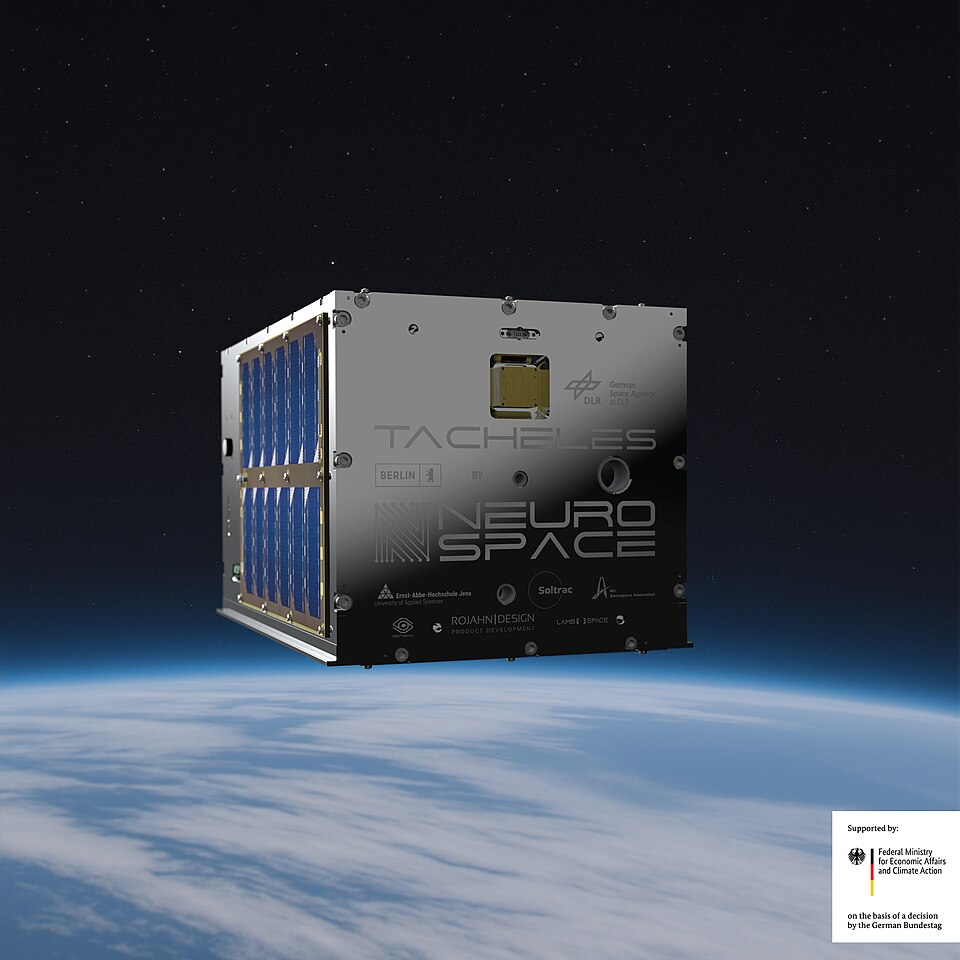
    Can't find any info on the status of the TACHELES 6U CubeSat from Germany, deployed by Artemis II. Except that it is in a 156.4 x 70,254.4 km elliptical inclined orbit.

    The satellite is designed to test the effect of radiation on electronics for lunar rovers being built by the German company NEUROSPACE.

    The name comes from the German Tacheles, "straight talk," which is itself derived from Yiddish תּכלית (takhles, 'purpose, result').

    @markmccaughrean @cosmos4u
    https://www.neuro-space.de/portfolio-collections/missions/project-title-5
    60/n
    Link Preview Image
    akasci@fosstodon.orgA This user is from outside of this forum
    akasci@fosstodon.orgA This user is from outside of this forum
    akasci@fosstodon.org
    wrote last edited by
    #2

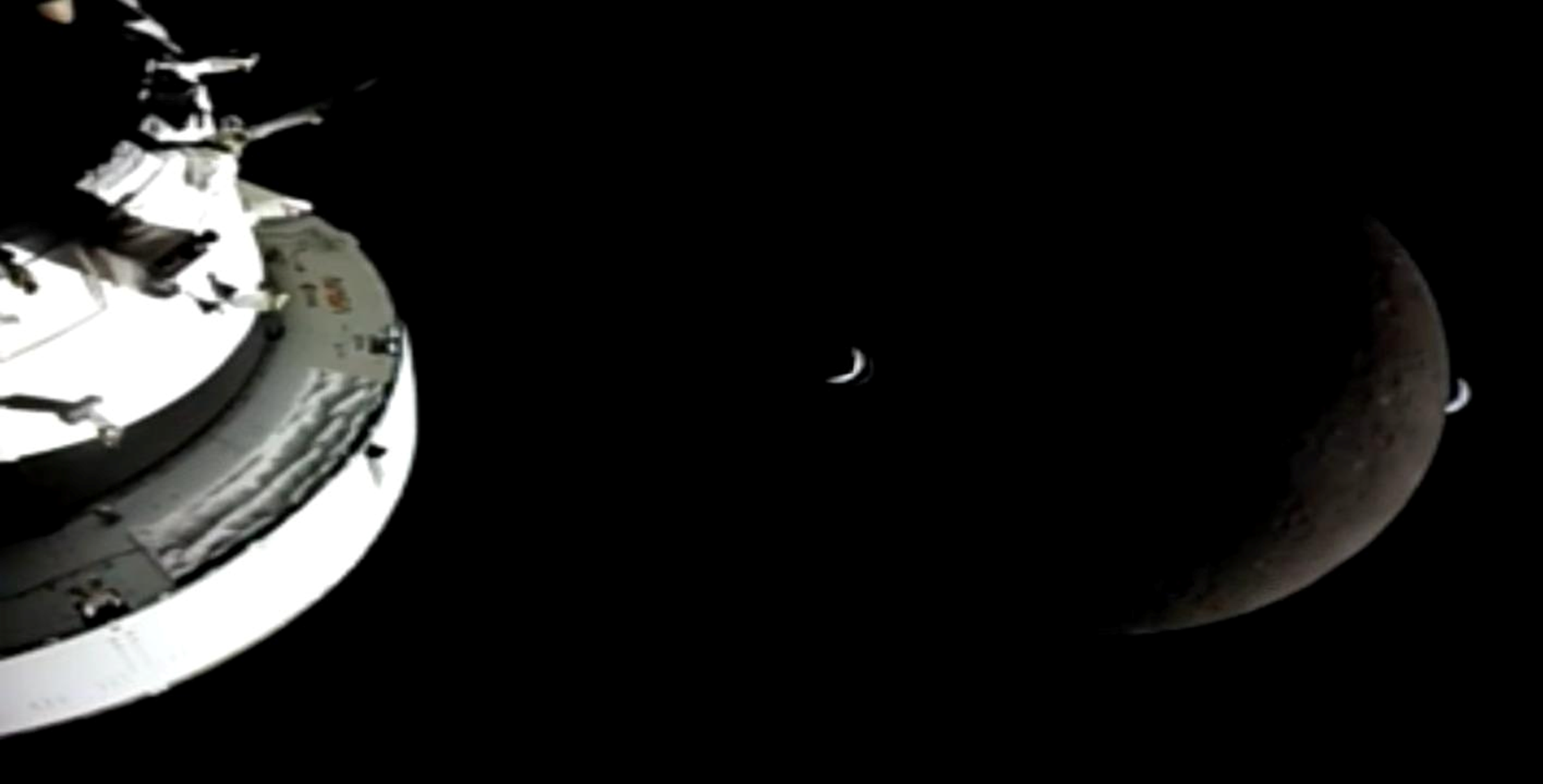
    Earth-set and Earth-rise over the Moon as observed by Artemis II astronauts last night.

    This is a simple composite of two images taken about 45 minutes apart. Earth-rise is on the left.

    Source: https://www.youtube.com/watch?v=6RwfNBtepa4
    61/n
    Link Preview Image
    akasci@fosstodon.orgA 1 Reply Last reply
    0
    • akasci@fosstodon.orgA akasci@fosstodon.org

      Earth-set and Earth-rise over the Moon as observed by Artemis II astronauts last night.

      This is a simple composite of two images taken about 45 minutes apart. Earth-rise is on the left.

      Source: https://www.youtube.com/watch?v=6RwfNBtepa4
      61/n

      Link Preview Image
      akasci@fosstodon.orgA This user is from outside of this forum
      akasci@fosstodon.orgA This user is from outside of this forum
      akasci@fosstodon.org
      wrote last edited by
      #3

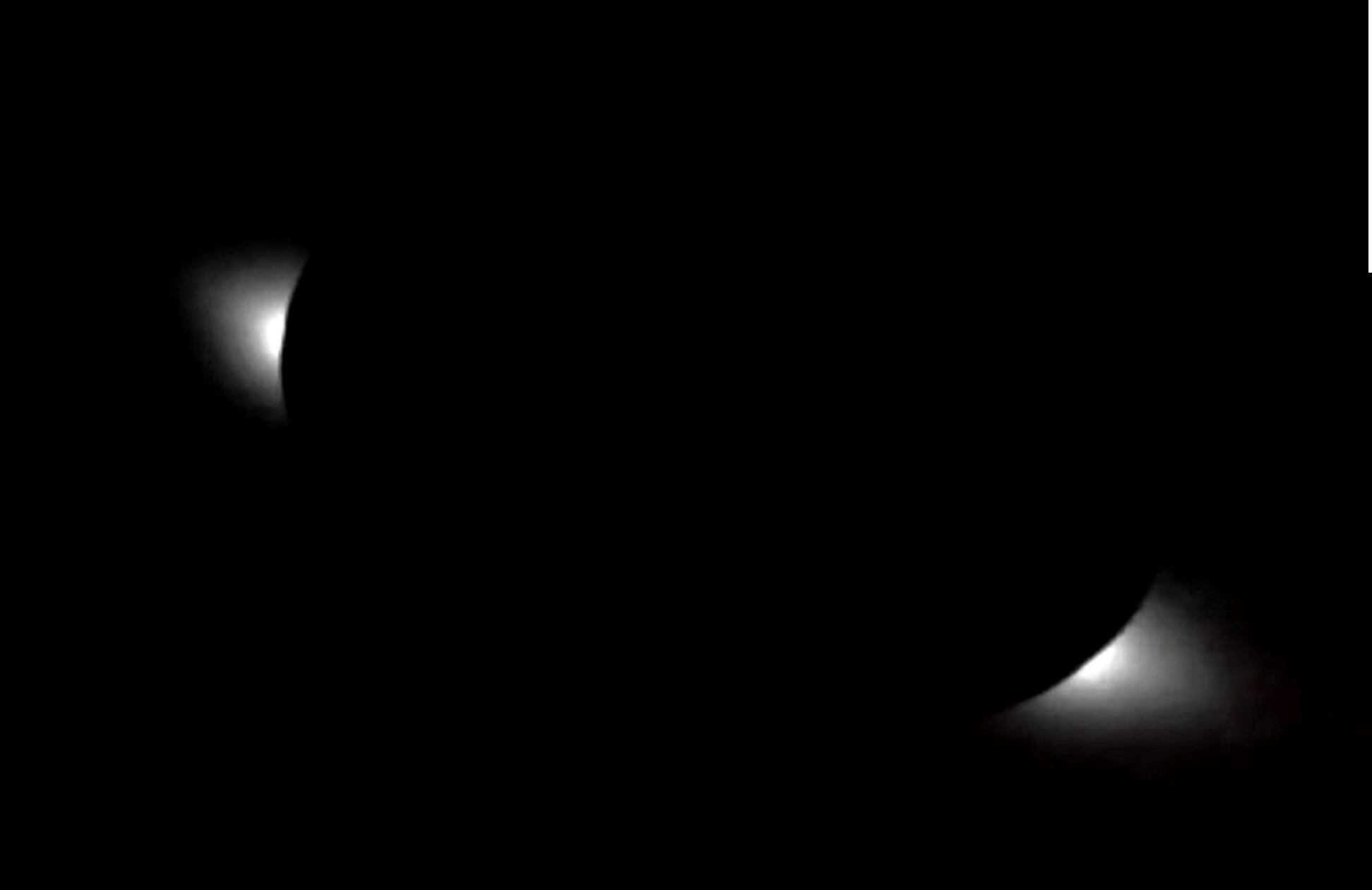
      Sun-set and Sun-rise across the Moon as observed by Artemis II astronauts last night.

      This is a simple composite of two images taken about 45 minutes apart around the solar eclipse. Sun-rise is on the left.

      Source: https://www.youtube.com/watch?v=6RwfNBtepa4
      62/n
      Link Preview Image
      akasci@fosstodon.orgA 1 Reply Last reply
      0
      • akasci@fosstodon.orgA akasci@fosstodon.org

        Sun-set and Sun-rise across the Moon as observed by Artemis II astronauts last night.

        This is a simple composite of two images taken about 45 minutes apart around the solar eclipse. Sun-rise is on the left.

        Source: https://www.youtube.com/watch?v=6RwfNBtepa4
        62/n

        Link Preview Image
        akasci@fosstodon.orgA This user is from outside of this forum
        akasci@fosstodon.orgA This user is from outside of this forum
        akasci@fosstodon.org
        wrote last edited by
        #4

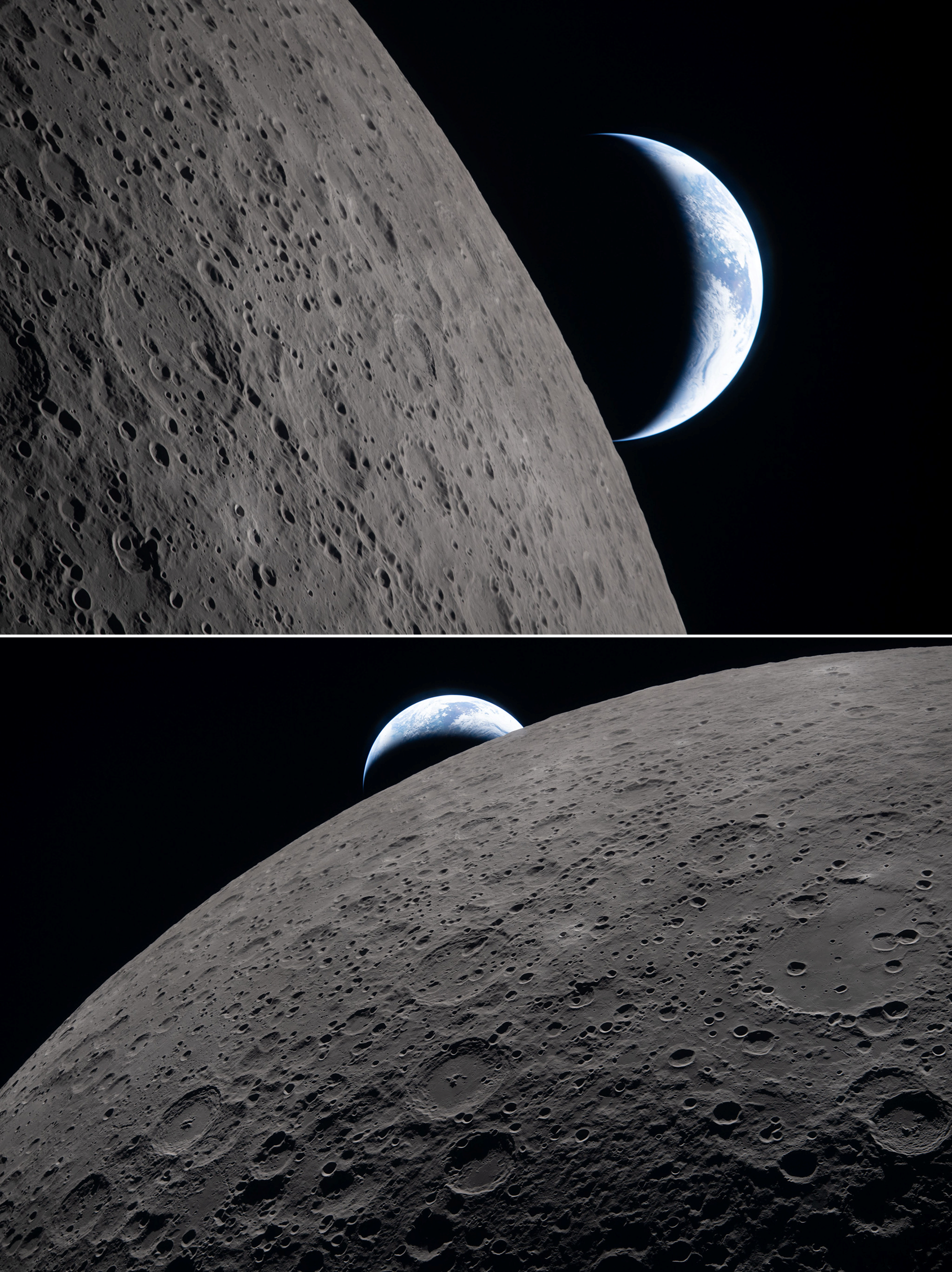
        Hi-res Earth-set images captured using the Nikon D5 camera by astronauts aboard the Artemis II Orion spacecraft last night around 22:41 UTC.

        EXIF data at https://www.flickr.com/photos/nasa2explore/55193180468/ and https://www.flickr.com/photos/nasa2explore/55193178333/
        More images at https://www.flickr.com/photos/nasa2explore/with/55193462360
        63/n
        Link Preview Image
        flun1tr4z3p4m@mas.toF akasci@fosstodon.orgA the_turtle@mastodon.sdf.orgT seiz@mastodon.socialS 4 Replies Last reply
        2
        0
        • akasci@fosstodon.orgA akasci@fosstodon.org

          Hi-res Earth-set images captured using the Nikon D5 camera by astronauts aboard the Artemis II Orion spacecraft last night around 22:41 UTC.

          EXIF data at https://www.flickr.com/photos/nasa2explore/55193180468/ and https://www.flickr.com/photos/nasa2explore/55193178333/
          More images at https://www.flickr.com/photos/nasa2explore/with/55193462360
          63/n

          Link Preview Image
          flun1tr4z3p4m@mas.toF This user is from outside of this forum
          flun1tr4z3p4m@mas.toF This user is from outside of this forum
          flun1tr4z3p4m@mas.to
          wrote last edited by
          #5

          @AkaSci beautiful shots ❤️

          1 Reply Last reply
          0
          • akasci@fosstodon.orgA akasci@fosstodon.org

            Hi-res Earth-set images captured using the Nikon D5 camera by astronauts aboard the Artemis II Orion spacecraft last night around 22:41 UTC.

            EXIF data at https://www.flickr.com/photos/nasa2explore/55193180468/ and https://www.flickr.com/photos/nasa2explore/55193178333/
            More images at https://www.flickr.com/photos/nasa2explore/with/55193462360
            63/n

            Link Preview Image
            akasci@fosstodon.orgA This user is from outside of this forum
            akasci@fosstodon.orgA This user is from outside of this forum
            akasci@fosstodon.org
            wrote last edited by
            #6

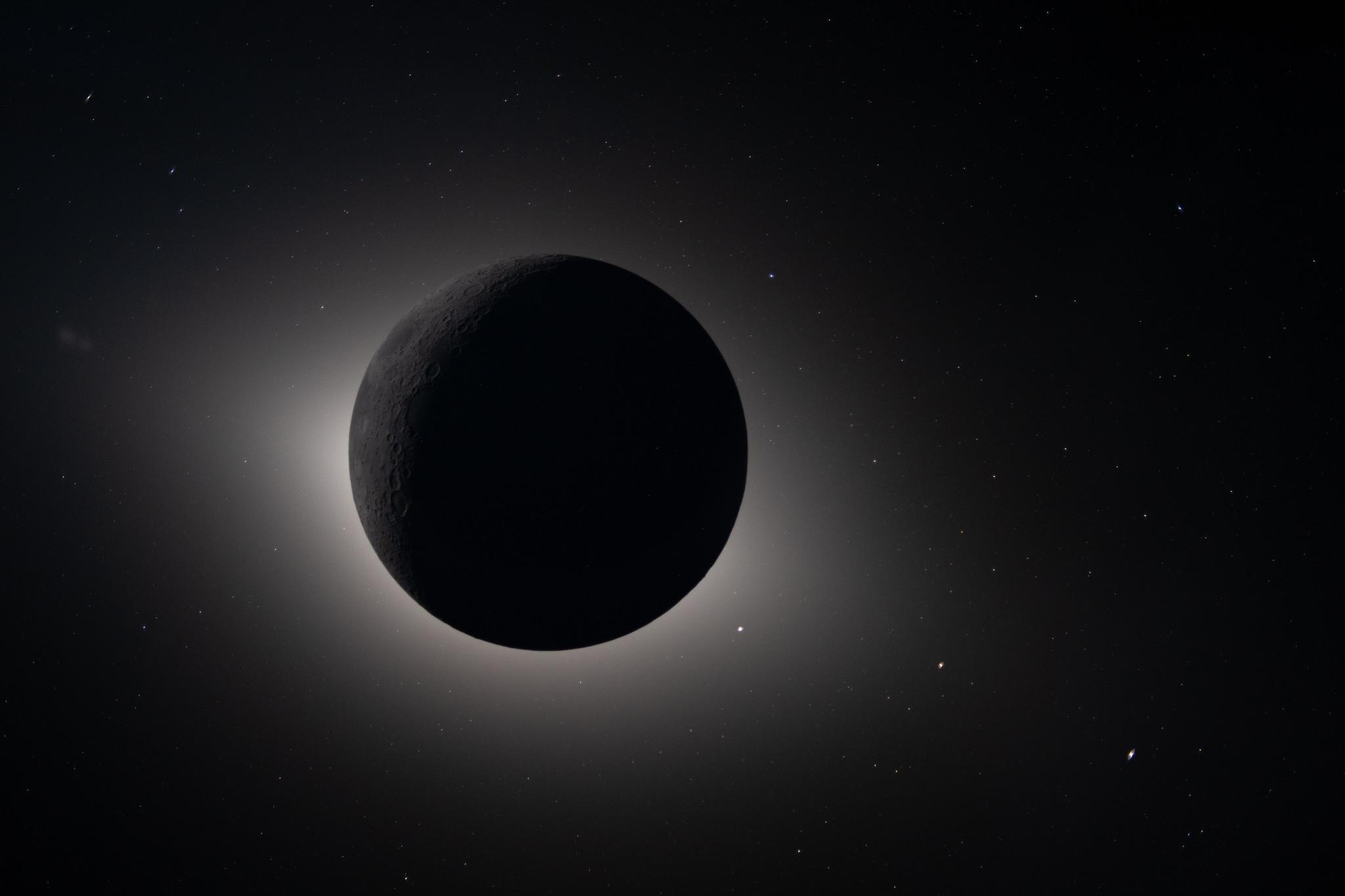
            A fascinating image of the Moon's far side during the total solar eclipse, as seen last night by Artemis II astronauts around 01:06:19 UTC.

            The Sun's corona forms a glowing halo around the dark lunar disk, revealing details of the Sun’s outer atmosphere typically hidden by its brightness.

            The left side of the moon is dimly lit up by Earth-shine, light reflected off the Earth, which is located off the frame in the distance on the left side.

            https://www.flickr.com/photos/nasa2explore/55193054741/
            https://www.flickr.com/photos/nasa2explore/
            64/n
            Link Preview Image
            ericfielding@mastodon.socialE cosmos4u@scicomm.xyzC akasci@fosstodon.orgA 3 Replies Last reply
            0
            • R relay@relay.infosec.exchange shared this topic
              R relay@relay.mycrowd.ca shared this topic
            • akasci@fosstodon.orgA akasci@fosstodon.org

              A fascinating image of the Moon's far side during the total solar eclipse, as seen last night by Artemis II astronauts around 01:06:19 UTC.

              The Sun's corona forms a glowing halo around the dark lunar disk, revealing details of the Sun’s outer atmosphere typically hidden by its brightness.

              The left side of the moon is dimly lit up by Earth-shine, light reflected off the Earth, which is located off the frame in the distance on the left side.

              https://www.flickr.com/photos/nasa2explore/55193054741/
              https://www.flickr.com/photos/nasa2explore/
              64/n

              Link Preview Image
              ericfielding@mastodon.socialE This user is from outside of this forum
              ericfielding@mastodon.socialE This user is from outside of this forum
              ericfielding@mastodon.social
              wrote last edited by
              #7

              @AkaSci What three planets are visible to the lower right of the Moon?

              akasci@fosstodon.orgA 1 Reply Last reply
              0
              • ericfielding@mastodon.socialE ericfielding@mastodon.social

                @AkaSci What three planets are visible to the lower right of the Moon?

                akasci@fosstodon.orgA This user is from outside of this forum
                akasci@fosstodon.orgA This user is from outside of this forum
                akasci@fosstodon.org
                wrote last edited by
                #8

                @EricFielding
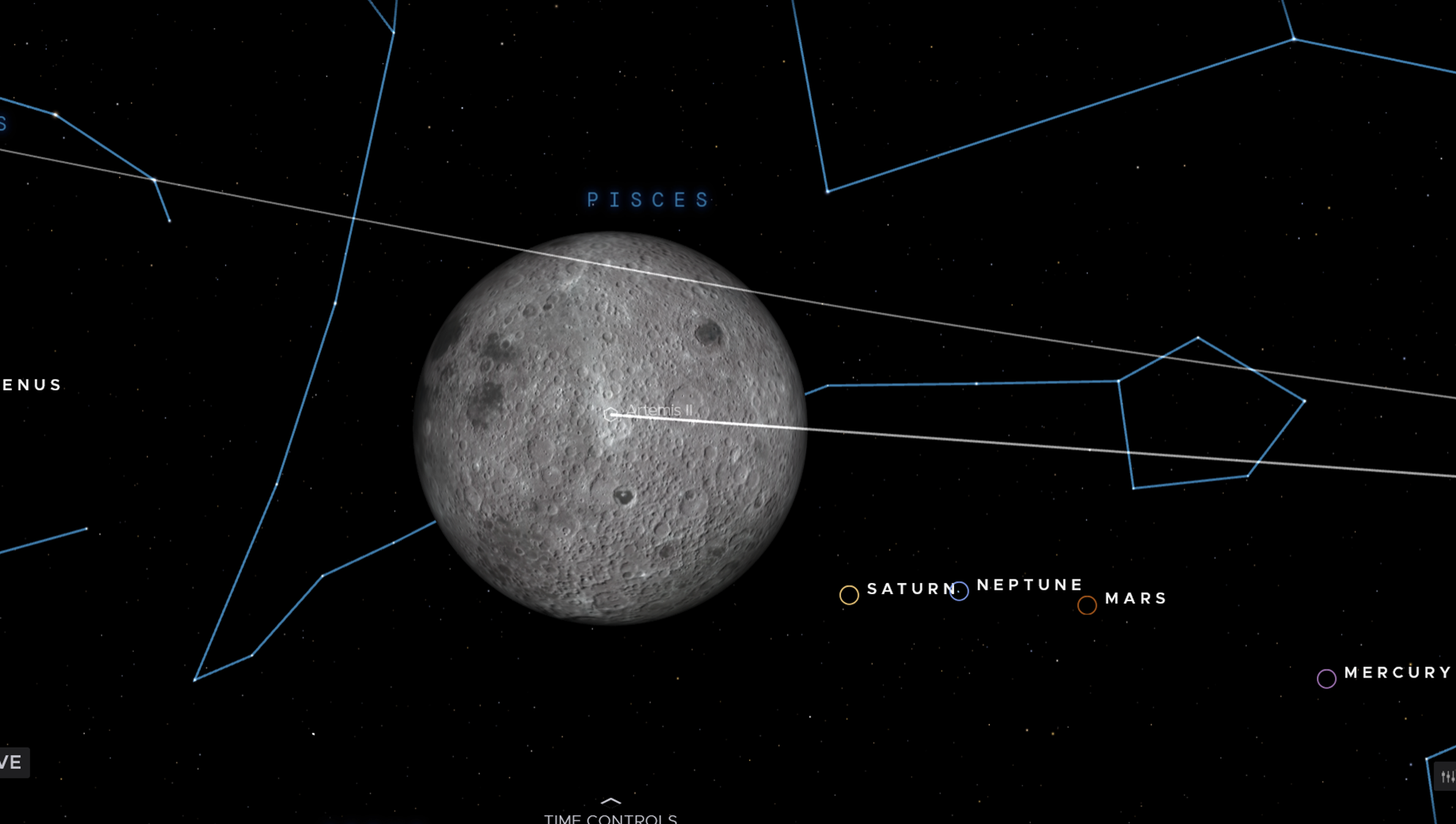
                Saturn, Mars and Mercury as seen in this simulated view at 01:06:19 UTC April 7.

                Neptune, located between Saturn and Mars, is too faint to see.
                Link Preview Image
                Eyes on the Solar System - NASA/JPL

                Explore the 3D world of the Solar System. Learn about past and future missions.

                favicon

                Eyes on the Solar System - NASA/JPL (eyes.nasa.gov)
                Link Preview Image
                ericfielding@mastodon.socialE 1 Reply Last reply
                0
                • akasci@fosstodon.orgA akasci@fosstodon.org

                  Hi-res Earth-set images captured using the Nikon D5 camera by astronauts aboard the Artemis II Orion spacecraft last night around 22:41 UTC.

                  EXIF data at https://www.flickr.com/photos/nasa2explore/55193180468/ and https://www.flickr.com/photos/nasa2explore/55193178333/
                  More images at https://www.flickr.com/photos/nasa2explore/with/55193462360
                  63/n

                  Link Preview Image
                  the_turtle@mastodon.sdf.orgT This user is from outside of this forum
                  the_turtle@mastodon.sdf.orgT This user is from outside of this forum
                  the_turtle@mastodon.sdf.org
                  wrote last edited by
                  #9

                  @AkaSci yay, regular old 10-year-old DSLRs in spaaaaaaaaaace!

                  My D7200 feels better now.

                  1 Reply Last reply
                  0
                  • akasci@fosstodon.orgA akasci@fosstodon.org

                    A fascinating image of the Moon's far side during the total solar eclipse, as seen last night by Artemis II astronauts around 01:06:19 UTC.

                    The Sun's corona forms a glowing halo around the dark lunar disk, revealing details of the Sun’s outer atmosphere typically hidden by its brightness.

                    The left side of the moon is dimly lit up by Earth-shine, light reflected off the Earth, which is located off the frame in the distance on the left side.

                    https://www.flickr.com/photos/nasa2explore/55193054741/
                    https://www.flickr.com/photos/nasa2explore/
                    64/n

                    Link Preview Image
                    cosmos4u@scicomm.xyzC This user is from outside of this forum
                    cosmos4u@scicomm.xyzC This user is from outside of this forum
                    cosmos4u@scicomm.xyz
                    wrote last edited by
                    #10

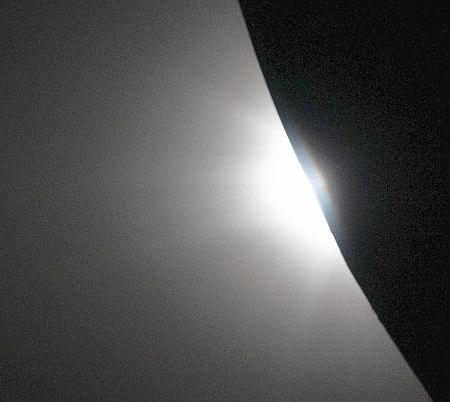
                    @AkaSci This is NOT the corona - all the NASA image captions get it wrong 😞 - but the zodiacal light i.e. cold dust unrelated to the Sun other than being illuminated by it. The super-hot atmosphere of the Sun, the (K) corona, shows up only in the image https://images.nasa.gov/details/art002e009299 as the helmet streamers on top of the zodiacal light pyramid. Require more image processing - some high spatial frequency boosting - to bring them out more clearly.
                    Link Preview Image
                    akasci@fosstodon.orgA 1 Reply Last reply
                    0
                    • cosmos4u@scicomm.xyzC cosmos4u@scicomm.xyz

                      @AkaSci This is NOT the corona - all the NASA image captions get it wrong 😞 - but the zodiacal light i.e. cold dust unrelated to the Sun other than being illuminated by it. The super-hot atmosphere of the Sun, the (K) corona, shows up only in the image https://images.nasa.gov/details/art002e009299 as the helmet streamers on top of the zodiacal light pyramid. Require more image processing - some high spatial frequency boosting - to bring them out more clearly.

                      Link Preview Image
                      akasci@fosstodon.orgA This user is from outside of this forum
                      akasci@fosstodon.orgA This user is from outside of this forum
                      akasci@fosstodon.org
                      wrote last edited by
                      #11

                      @cosmos4u
                      They just updated the description of the image with "We see a glowing halo around the dark lunar disk. The science community is investigating whether this effect is due to the corona, zodiacal light, or a combination of the two."

                      cosmos4u@scicomm.xyzC 2 Replies Last reply
                      0
                      • akasci@fosstodon.orgA akasci@fosstodon.org

                        @cosmos4u
                        They just updated the description of the image with "We see a glowing halo around the dark lunar disk. The science community is investigating whether this effect is due to the corona, zodiacal light, or a combination of the two."

                        cosmos4u@scicomm.xyzC This user is from outside of this forum
                        cosmos4u@scicomm.xyzC This user is from outside of this forum
                        cosmos4u@scicomm.xyz
                        wrote last edited by
                        #12

                        @AkaSci Yikes, they have a room full of 40-50 top scientists - and need to "investigate" a most obvious phenomenon ... #facepalm

                        akasci@fosstodon.orgA 1 Reply Last reply
                        0
                        • cosmos4u@scicomm.xyzC cosmos4u@scicomm.xyz

                          @AkaSci Yikes, they have a room full of 40-50 top scientists - and need to "investigate" a most obvious phenomenon ... #facepalm

                          akasci@fosstodon.orgA This user is from outside of this forum
                          akasci@fosstodon.orgA This user is from outside of this forum
                          akasci@fosstodon.org
                          wrote last edited by
                          #13

                          @cosmos4u
                          True.

                          The Corona goes out about 13 million km from the Sun's surface, as measured by PSP. So, the Corona sphere diameter = ~27 million km.

                          The moon is blocking a sphere around the Sun with diameter of about 42 million km, given the vantage point of Orion, 10,410 km from the surface of the Moon at that point in time.

                          So, it is bit of a stretch to attribute the halo to the Corona.

                          I corrected the post.
                          Thanks!

                          1 Reply Last reply
                          0
                          • akasci@fosstodon.orgA akasci@fosstodon.org

                            Can't find any info on the status of the TACHELES 6U CubeSat from Germany, deployed by Artemis II. Except that it is in a 156.4 x 70,254.4 km elliptical inclined orbit.

                            The satellite is designed to test the effect of radiation on electronics for lunar rovers being built by the German company NEUROSPACE.

                            The name comes from the German Tacheles, "straight talk," which is itself derived from Yiddish תּכלית (takhles, 'purpose, result').

                            @markmccaughrean @cosmos4u
                            https://www.neuro-space.de/portfolio-collections/missions/project-title-5
                            60/n

                            Link Preview Image
                            enigma@norden.socialE This user is from outside of this forum
                            enigma@norden.socialE This user is from outside of this forum
                            enigma@norden.social
                            wrote last edited by
                            #14

                            @AkaSci
                            tried already to contact them ?
                            +49 30 275816600
                            info@neurospace.de
                            https://www.neuro-space.de/mission

                            and don't hesitate to contact DLR, Cologne PR department
                            https://www.dlr.de/de/aktuelles/nachrichten/2024/artemis-ii-deutscher-kleinsatellit-fliegt-mit-zum-mond
                            Kommunikation & Presse
                            Königswinterer Straße 522-524, 53227 Bonn
                            Tel: +49 228 447-221

                            @markmccaughrean @cosmos4u

                            1 Reply Last reply
                            0
                            • akasci@fosstodon.orgA akasci@fosstodon.org

                              @cosmos4u
                              They just updated the description of the image with "We see a glowing halo around the dark lunar disk. The science community is investigating whether this effect is due to the corona, zodiacal light, or a combination of the two."

                              cosmos4u@scicomm.xyzC This user is from outside of this forum
                              cosmos4u@scicomm.xyzC This user is from outside of this forum
                              cosmos4u@scicomm.xyz
                              wrote last edited by
                              #15

                              @AkaSci The caption in https://www.nasa.gov/blogs/missions/2026/04/07/artemis-ii-flight-day-7-crew-makes-long%e2%80%91distance-call-begins-return/ remains the same ...

                              1 Reply Last reply
                              0
                              • akasci@fosstodon.orgA akasci@fosstodon.org

                                Hi-res Earth-set images captured using the Nikon D5 camera by astronauts aboard the Artemis II Orion spacecraft last night around 22:41 UTC.

                                EXIF data at https://www.flickr.com/photos/nasa2explore/55193180468/ and https://www.flickr.com/photos/nasa2explore/55193178333/
                                More images at https://www.flickr.com/photos/nasa2explore/with/55193462360
                                63/n

                                Link Preview Image
                                seiz@mastodon.socialS This user is from outside of this forum
                                seiz@mastodon.socialS This user is from outside of this forum
                                seiz@mastodon.social
                                wrote last edited by
                                #16

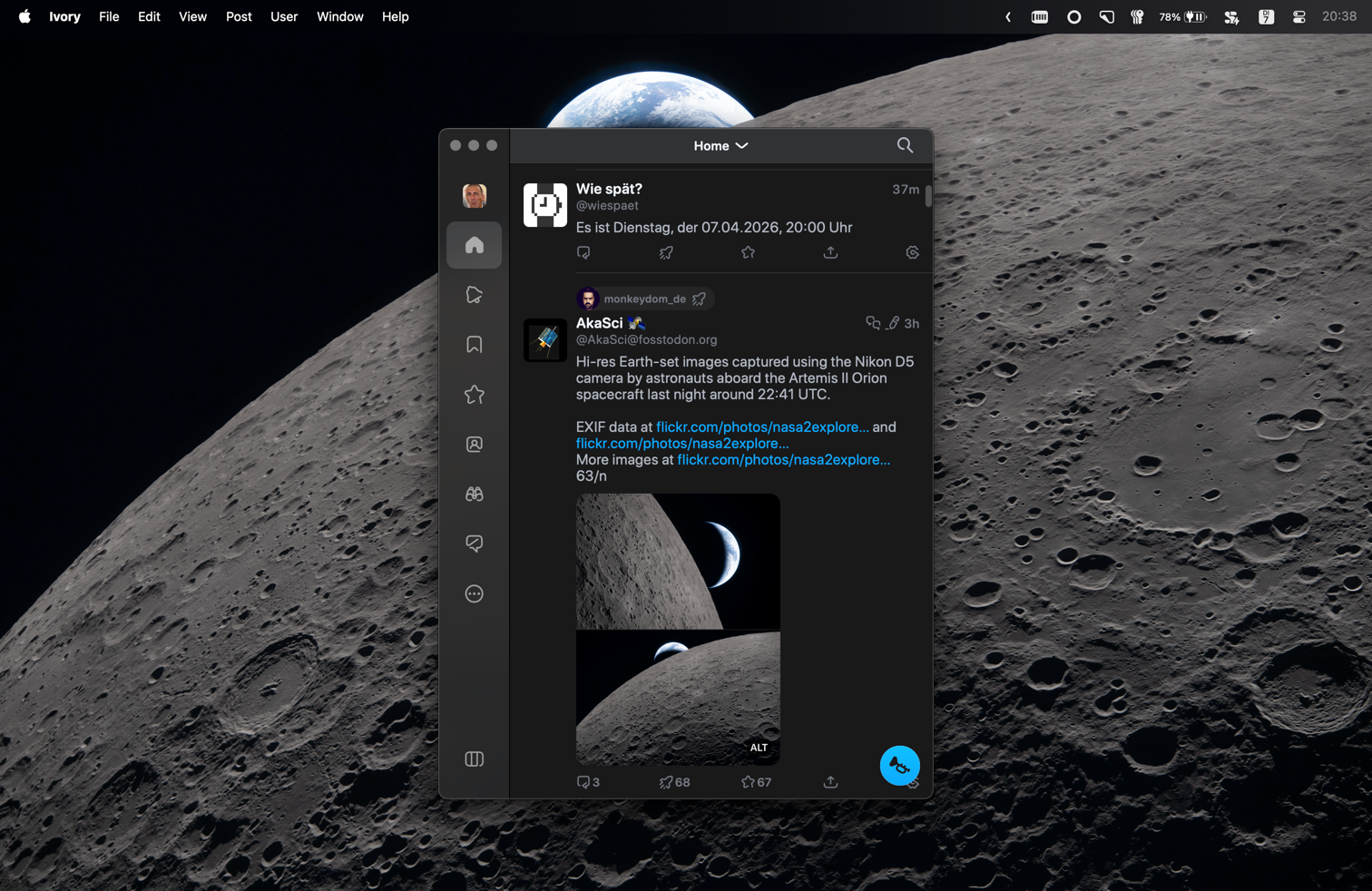
                                @AkaSci @monkeydom_de Wow! Instant Desktop:
                                Link Preview Image
                                1 Reply Last reply
                                0
                                • akasci@fosstodon.orgA akasci@fosstodon.org

                                  A fascinating image of the Moon's far side during the total solar eclipse, as seen last night by Artemis II astronauts around 01:06:19 UTC.

                                  The Sun's corona forms a glowing halo around the dark lunar disk, revealing details of the Sun’s outer atmosphere typically hidden by its brightness.

                                  The left side of the moon is dimly lit up by Earth-shine, light reflected off the Earth, which is located off the frame in the distance on the left side.

                                  https://www.flickr.com/photos/nasa2explore/55193054741/
                                  https://www.flickr.com/photos/nasa2explore/
                                  64/n

                                  Link Preview Image
                                  akasci@fosstodon.orgA This user is from outside of this forum
                                  akasci@fosstodon.orgA This user is from outside of this forum
                                  akasci@fosstodon.org
                                  wrote last edited by
                                  #17

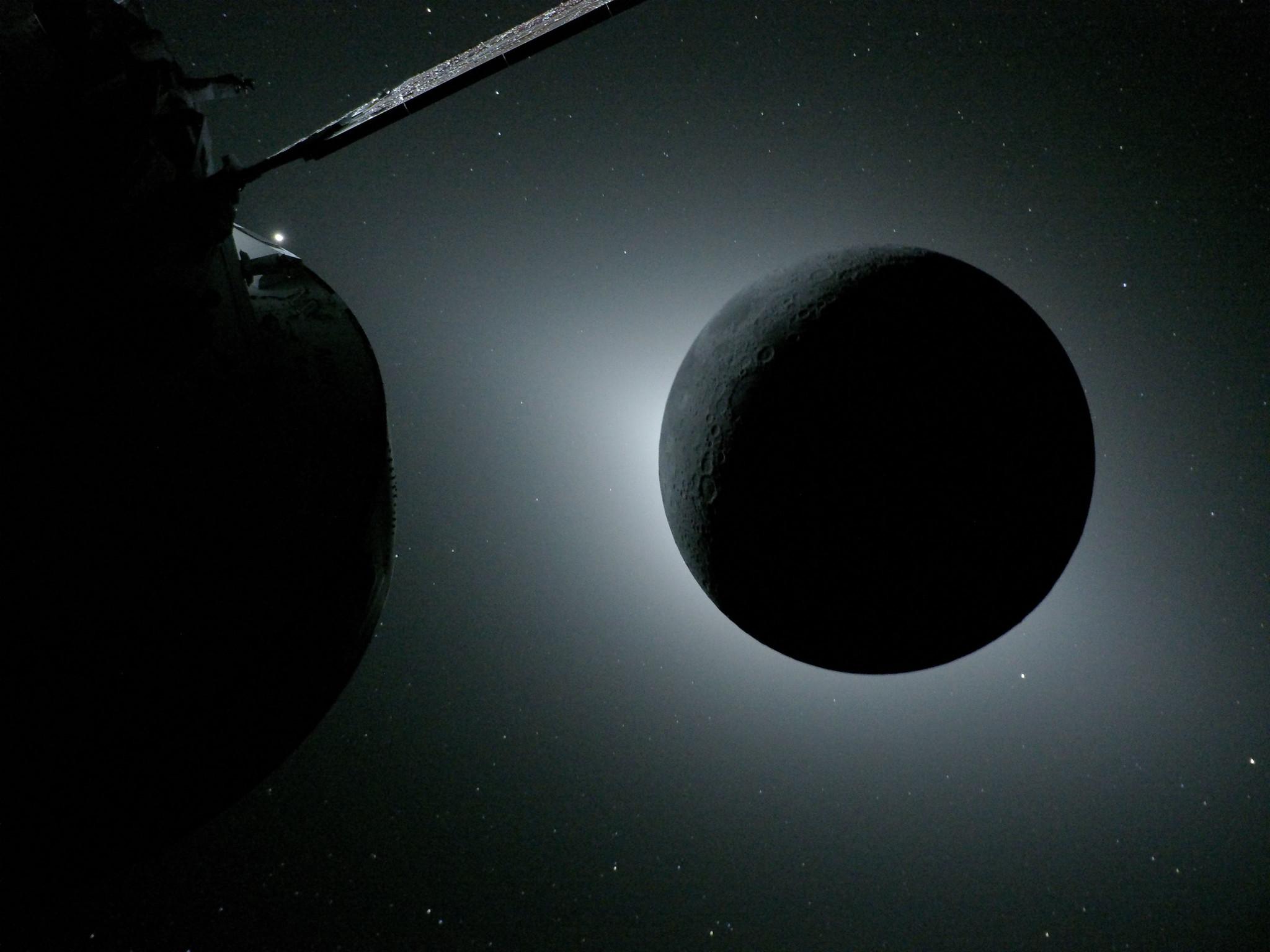
                                  The solar eclipse imaged by the "mighty" GoPro HERO4 Black camera mounted on one of the solar arrays of the Artemis II Orion spacecraft, taken at 01:10:44 UTC.

                                  Featuring the moon lit by Earthshine on the left, a halo of zodiacal light, planets Saturn and Mars on the lower right and stars posing for the camera.
                                  😎
                                  Go #Artemis. Go #GoPro.

                                  https://www.flickr.com/photos/nasa2explore/55193566011/
                                  65/n
                                  Link Preview Image
                                  akasci@fosstodon.orgA 1 Reply Last reply
                                  0
                                  • akasci@fosstodon.orgA akasci@fosstodon.org

                                    The solar eclipse imaged by the "mighty" GoPro HERO4 Black camera mounted on one of the solar arrays of the Artemis II Orion spacecraft, taken at 01:10:44 UTC.

                                    Featuring the moon lit by Earthshine on the left, a halo of zodiacal light, planets Saturn and Mars on the lower right and stars posing for the camera.
                                    😎
                                    Go #Artemis. Go #GoPro.

                                    https://www.flickr.com/photos/nasa2explore/55193566011/
                                    65/n

                                    Link Preview Image
                                    akasci@fosstodon.orgA This user is from outside of this forum
                                    akasci@fosstodon.orgA This user is from outside of this forum
                                    akasci@fosstodon.org
                                    wrote last edited by
                                    #18

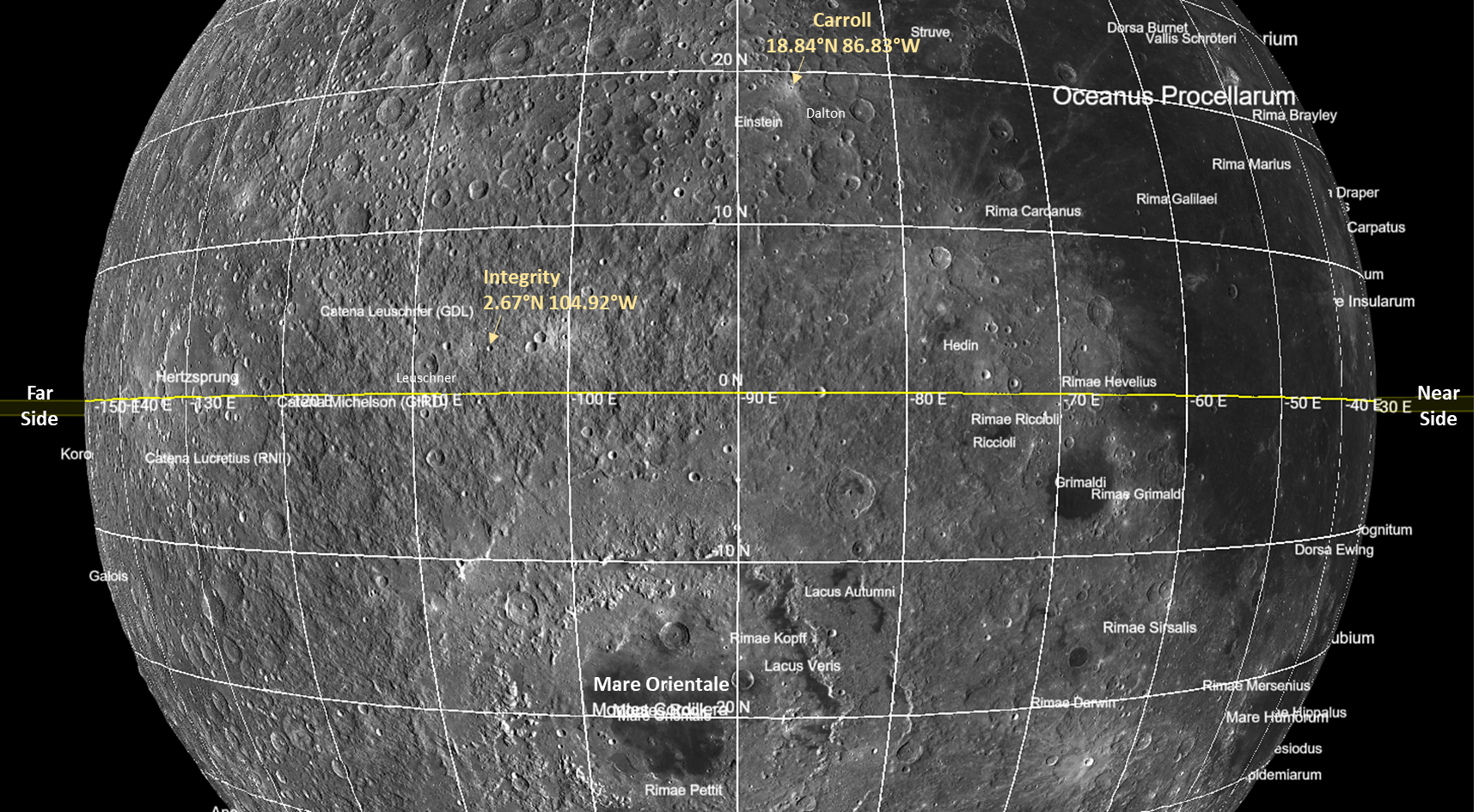
                                    The two newly named craters on the Moon -
                                    1. Carroll - named after astronaut Reid Wiseman's late wife, 18.84°N 86.83°W
                                    2. Integrity - named after the Artemis II Orion spacecraft, 2.67°N 104.92°W

                                    After the mission is complete, the crater name proposals will be submitted to the International Astronomical Union for official review and adoption.

                                    https://quickmap.lroc.im-ldi.com/?camera=8583.1212%2C-4490898.2733%2C12862.3235%2C-0.0019%2C1%2C-0.0029%2C0%2C0.0029%2C1%2C60&showGraticule=true&stack=3314%2C3113&proj=22&defs=N4IgzAjBYgXKB7ADgQwMYEsAuBPOAGAOgBYwBfAGnEmLkVU1zgjLKA
                                    https://en.wikipedia.org/wiki/Carroll_(crater)
                                    https://en.wikipedia.org/wiki/Integrity_(crater)
                                    66/n
                                    Link Preview Image
                                    1 Reply Last reply
                                    1
                                    0
                                    • akasci@fosstodon.orgA akasci@fosstodon.org

                                      @EricFielding
                                      Saturn, Mars and Mercury as seen in this simulated view at 01:06:19 UTC April 7.

                                      Neptune, located between Saturn and Mars, is too faint to see.

                                      Link Preview Image
                                      Eyes on the Solar System - NASA/JPL

                                      Explore the 3D world of the Solar System. Learn about past and future missions.

                                      favicon

                                      Eyes on the Solar System - NASA/JPL (eyes.nasa.gov)

                                      Link Preview Image
                                      ericfielding@mastodon.socialE This user is from outside of this forum
                                      ericfielding@mastodon.socialE This user is from outside of this forum
                                      ericfielding@mastodon.social
                                      wrote last edited by
                                      #19

                                      @AkaSci Thanks, I knew one was Mars because one of the astronauts was talking during the eclipse and said one of the bright planets seemed to be orange or red. The Houston ground folks said "that is Mars, our future destination". I don't think the astronaut's comment was scripted but the ground "capcom" had that line ready.

                                      1 Reply Last reply
                                      0
                                      Reply
                                      • Reply as topic
                                      Log in to reply
                                      • Oldest to Newest
                                      • Newest to Oldest
                                      • Most Votes


                                      • Login

                                      • Login or register to search.
                                      • First post
                                        Last post
                                      0
                                      • Categories
                                      • Recent
                                      • Tags
                                      • Popular
                                      • World
                                      • Users
                                      • Groups