Fact-checking is more important than ever.
-
@EUCommission We shall for sure form a society-wide effort to educate older generations regarding not only this, but scams as well.
But I'm a bit of skeptical with the rules.
Don't get me wrong, we shall sanction deepfakes. But the law doesn't protect uneducated on all the scams / fakes to not fall victim to those. They can at most sanction the one who did it, if we'd be able to find the culprit.We should put a huge emphasis on education.
@The_Universality @EUCommission I am pleased that at least something is being started to help control the overwhelming amount of fake that is installing itself in our social media. Is there is a way to control it if found, or are we just at the beginning?
-
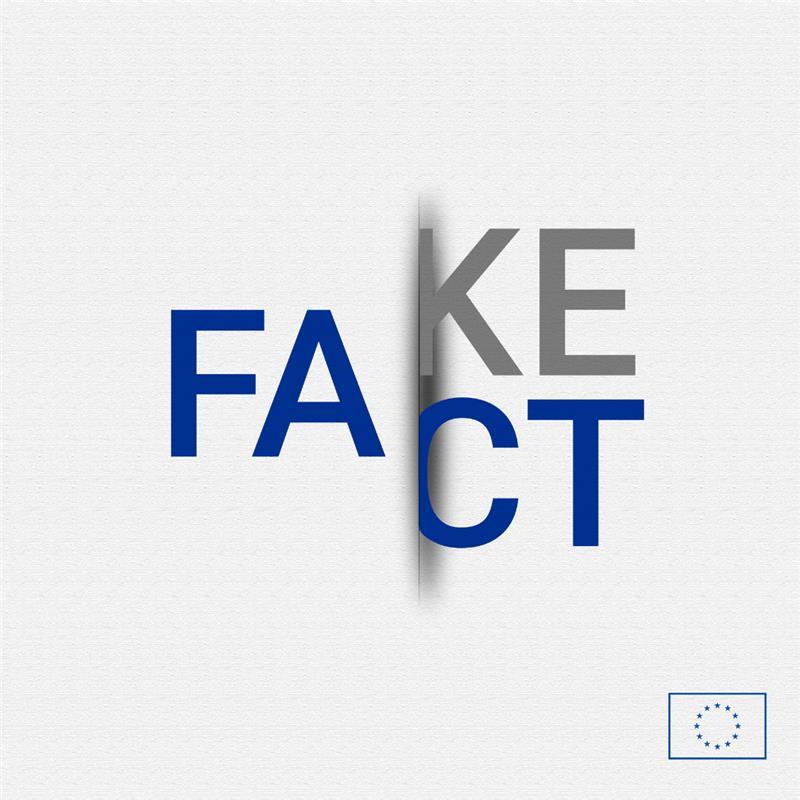
Fact-checking is more important than ever.
In a world shaped by AI-generated content, deepfakes, and increasingly sophisticated misleading narratives, it’s becoming harder to tell what’s real and what’s not.
That’s why we’re acting - with stronger rules and tools to tackle disinformation:
 The Digital Services Act The Code of Conduct on disinformation EUvsDisinfo European Digital Media Observatory
@EUCommission Please take a look at Facebook and X in this regard then!
-
Fact-checking is more important than ever.
In a world shaped by AI-generated content, deepfakes, and increasingly sophisticated misleading narratives, it’s becoming harder to tell what’s real and what’s not.
That’s why we’re acting - with stronger rules and tools to tackle disinformation:
The Digital Services Act The Code of Conduct on disinformation EUvsDisinfo European Digital Media ObservatoryWhen will we ban X (exTwitter) from Europe?
-
@EUCommission We shall for sure form a society-wide effort to educate older generations regarding not only this, but scams as well.
But I'm a bit of skeptical with the rules.
Don't get me wrong, we shall sanction deepfakes. But the law doesn't protect uneducated on all the scams / fakes to not fall victim to those. They can at most sanction the one who did it, if we'd be able to find the culprit.We should put a huge emphasis on education.
@The_Universality @EUCommission By trying to control every word and image through these checklists, these institutions are simply 'shooting themselves in the foot.' You cannot trap the human spirit or the truth within a digital cage. Real authenticity exists #BeyondTheAlgorithm. Reality is pure."
-
@The_Universality @EUCommission I am pleased that at least something is being started to help control the overwhelming amount of fake that is installing itself in our social media. Is there is a way to control it if found, or are we just at the beginning?
@connynasch @EUCommission Well, there are some options.
The worst but most effective in regard to finding who is outputting disinformation / deepfakes is requiring all accounts to be ID verified.
Why is this bad? At least the company, if not everyone, will know who you really are causing a great harm to free press.
And you still might get bypassed.Another bad option would be AI. (I think I needn't explain why this is bad idea).
Another is censorship. Allowing only some to post.
1/2
-
@connynasch @EUCommission Well, there are some options.
The worst but most effective in regard to finding who is outputting disinformation / deepfakes is requiring all accounts to be ID verified.
Why is this bad? At least the company, if not everyone, will know who you really are causing a great harm to free press.
And you still might get bypassed.Another bad option would be AI. (I think I needn't explain why this is bad idea).
Another is censorship. Allowing only some to post.
1/2
Non of these a great and frankly, there's no bullet proof solution to this.
The best solution by me would be a huge investments into education regarding propaganda, fakes, scams & existing technologies. Even for the older generations.
Society wide resilience towards fakes will take time, but it seems as the best option.
Why?
Because if you only sanction disinformation and not educate others about it, they will fall victim.2/2
-
@The_Universality @EUCommission By trying to control every word and image through these checklists, these institutions are simply 'shooting themselves in the foot.' You cannot trap the human spirit or the truth within a digital cage. Real authenticity exists #BeyondTheAlgorithm. Reality is pure."
@Zubair123kk @EUCommission Exactly.
Needless to say there are no technologies to reliably detect truth and even if those would exists, how would we be able to tell if they aren't tempered with by someone?
We wouldn't be able to.
-
@EUCommission We shall for sure form a society-wide effort to educate older generations regarding not only this, but scams as well.
But I'm a bit of skeptical with the rules.
Don't get me wrong, we shall sanction deepfakes. But the law doesn't protect uneducated on all the scams / fakes to not fall victim to those. They can at most sanction the one who did it, if we'd be able to find the culprit.We should put a huge emphasis on education.
@EUCommission This also reminds me of something important. If there is one regulation I'm for it would be regulating algorithms.
Algorithms as of now on most social-media are formed to drag you in presenting you mostly what you like or you'd like.
What is the issue there?
It locks users into bubbles.We shall want the algorithm ration to be at least 60% user preferred content / 40% non preferred content.
-
Fact-checking is more important than ever.
In a world shaped by AI-generated content, deepfakes, and increasingly sophisticated misleading narratives, it’s becoming harder to tell what’s real and what’s not.
That’s why we’re acting - with stronger rules and tools to tackle disinformation:
The Digital Services Act The Code of Conduct on disinformation EUvsDisinfo European Digital Media Observatory@EUCommission Without punishing those who deliberately spread lies, it will be very difficult to fight disinformation. It’s easier to create 100 pieces of disinformation than to debunk just one. But everyone is afraid to punish, because they ask: "Who decides what is a lie and what is the truth?"
We’re losing.
-
@EUCommission Please take a look at Facebook and X in this regard then!
Thanks for the comment, @justive!
We are looking into many platforms, including X and Facebook. You can find an overview of our DSA-related investigations here: https://link.europa.eu/ngkJPH -
Fact-checking is more important than ever.
In a world shaped by AI-generated content, deepfakes, and increasingly sophisticated misleading narratives, it’s becoming harder to tell what’s real and what’s not.
That’s why we’re acting - with stronger rules and tools to tackle disinformation:
The Digital Services Act The Code of Conduct on disinformation EUvsDisinfo European Digital Media Observatory@EUCommission the politicians in power need to learn how to fact check, as they rarely know the truth or are even willing to believe in it
-
Non of these a great and frankly, there's no bullet proof solution to this.
The best solution by me would be a huge investments into education regarding propaganda, fakes, scams & existing technologies. Even for the older generations.
Society wide resilience towards fakes will take time, but it seems as the best option.
Why?
Because if you only sanction disinformation and not educate others about it, they will fall victim.2/2
-
Fact-checking is more important than ever.
In a world shaped by AI-generated content, deepfakes, and increasingly sophisticated misleading narratives, it’s becoming harder to tell what’s real and what’s not.
That’s why we’re acting - with stronger rules and tools to tackle disinformation:
The Digital Services Act The Code of Conduct on disinformation EUvsDisinfo European Digital Media Observatory@EUCommission I can’t watch videos now without doubting
-
Spotting and stopping it is a shared responsibility.
Before sharing content online, consider:
 ️ Check the source ️ Be cautious of strong emotional content ️ Verify images authenticity ️ Use fact-checking sites ️ Stop the spread of disinformation
@EUCommission Still the media keeps sharing the constantlies from tRump and his cronies. They call it news but they parrot lies from the us and russia alike.
Peskov says, tRump says...
-
Spotting and stopping it is a shared responsibility.
Before sharing content online, consider:
️ Check the source ️ Be cautious of strong emotional content ️ Verify images authenticity ️ Use fact-checking sites ️ Stop the spread of disinformation -
Spotting and stopping it is a shared responsibility.
Before sharing content online, consider:
️ Check the source ️ Be cautious of strong emotional content ️ Verify images authenticity ️ Use fact-checking sites ️ Stop the spread of disinformationResearch shows it clearly: a tiny fraction of supersharers—many from coordinated troll farms—are responsible for spreading the vast majority of misinformation. Yet institutions keep blaming everyday people for the problem.
Stop shifting responsibility onto victims!
We won't solve misinformation by policing individual shares when the real sources operate at scale.
We won't reduce pollution by asking families to recycle while corporations emit freely.
We won't address climate change through personal choices when billionaires fly private jets and yachts.
The pattern is the same: systemic problems require systemic solutions. Targeting individuals while ignoring the infrastructure of disinformation is both ineffective and unfair.
The EU Commission's post misses the mark entirely.
-
Fact-checking is more important than ever.
In a world shaped by AI-generated content, deepfakes, and increasingly sophisticated misleading narratives, it’s becoming harder to tell what’s real and what’s not.
That’s why we’re acting - with stronger rules and tools to tackle disinformation:
The Digital Services Act The Code of Conduct on disinformation EUvsDisinfo European Digital Media ObservatoryThe EU should take its own advice.
Speak the truth about Israel.
Stop suppressing and censoring it.
And stop denying your complicity in Israel's genocide and war crimes.
Sanction Israel.
Double standards is no standards.
-
Research shows it clearly: a tiny fraction of supersharers—many from coordinated troll farms—are responsible for spreading the vast majority of misinformation. Yet institutions keep blaming everyday people for the problem.
Stop shifting responsibility onto victims!
We won't solve misinformation by policing individual shares when the real sources operate at scale.
We won't reduce pollution by asking families to recycle while corporations emit freely.
We won't address climate change through personal choices when billionaires fly private jets and yachts.
The pattern is the same: systemic problems require systemic solutions. Targeting individuals while ignoring the infrastructure of disinformation is both ineffective and unfair.
The EU Commission's post misses the mark entirely.
Hello @RaffKarva! Individual responsibility is only a small part of the picture. We're working on our end to hold big tech companies accountable. That's why we created the Digital Services Act. You can find an overview of our DSA-related investigations here: https://link.europa.eu/ngkJPH
-
@connynasch @EUCommission Yeah. Heard about this.
Seems reasonable.
-
Hello @RaffKarva! Individual responsibility is only a small part of the picture. We're working on our end to hold big tech companies accountable. That's why we created the Digital Services Act. You can find an overview of our DSA-related investigations here: https://link.europa.eu/ngkJPH
@EUCommission @RaffKarva We clearly need to onvest more in European AI datacenters, otherwise we are really goingcto miss out on the GenAI boom...
 🤭
🤭


-
R relay@relay.publicsquare.global shared this topic