Since releasing my oil video I've had so many people claiming that renewables will never work and we need nuclear power instead.
-
@notjustbikes Solar on suburban homes is a funny thing. At the latitude of Amsterdam, it can lead to demand evaporation for 7-8 months of the year if the home has a sufficiently sized battery.
The solar from a typical suburban home can carry 10-15 kWp of solar, leading to 7-11 MWh production per year in east/west configuration and 13-16 MWh production in a south facing ideal deployment.
There is a 1:10 production difference between January and June, though, so the household likely needs to buy power Nov-Feb, but will likely break even or almost break even in Mar, and not consume any power from the grid in April to September, and begin to load from the grid lightly on October.
Heating with a heat pump will have them but 3-4 MWh during winter.
(Numbers based on our 75 kWh/(year and qm) home, and our demand, but they seem to be applicable on a more general scale, too).
For power producers this means they have to supply power to homes like ours only for winter.
Fortunately wind + battery can actually do that without CO2.
@isotopp
Nachfrageverpuffung, oder wie heißt das auf deutsch? -
@patterfloof @notjustbikes Sure but I imagine planning for a few days of heavy cloud cover, in mid winter, with low wind is really difficult. Edge cases will be the expensive part. And probably there will be a place for... something to fill those rare gaps other than eg doubling battery capacity. Maybe turbines and hydrogen? Something cheap but energy dense.
@mattsqu No, this is totally unrelated to base load.
What you're talking about is "dispatchable power" from "peaker plants" which is the literal opposite of what a nuclear reactor provides.
-
When I did some reading on the current situation, I found a lot of sites out of Australia that were repeating this "base load" idea, in the context of nuclear power.
I suspect that this is fossil-fuel propaganda.
Fossil fuel companies love promoting nuclear power because they know it takes decades to get a reactor built (if it gets built at all), and in the meantime, everyone keeps using fossil fuels.
It's the perfect way to cripple renewables without being obvious about it.
@notjustbikes that was literally what the conservative (Liberal & National Party coalition) opposition pulled at the last election here in Australia:
Cancel renewables.
Start up a nuclear program (despite multiple failed attempts).
Throw money at gas and coal.They didn't win the election
-
Lots of nuclear trolls/shrills.
Not all of them are real people.Here in Australia, we have lots of mainly uncontrolled rooftop solar.
The sun shines and The commercial solar farms get pushed out.
The constant on "baseload" coal plants lose money with negative prices. They have started to learn to dance. Like the UK coal plants. Ramping their output up and down. But they have their limits. No longer baseload.
So we have a solution.
Give away 3 hours of electricity for free in the middle of the day. When we have the most amount of negative prices and spare solar capacity.
Perfect for charging evs. Or shifting loads away form peak.
Also a big boom in home batteries is also seeing demand reduction in evening peaks. Charge own batteries, rather then export, then use your own electricity in peak. Or sell it back to the grid when it is needed.

The hours the market wants back: Free daytime power, or a fix for solar and wind curtailment?
What does it mean when an offer appears consumer-friendly but is also system-convenient? And what becomes visible when price is placed beside curtailment rather than read in isolation?

Renew Economy (reneweconomy.com.au)
-
I used to be very pro-nuclear, but I am now very pro-fusion.
I have a number of remote nuclear fusion receivers on the roof of my house, and they are netting me around 7 MWh/year at zero running cost.
The remote fusion collection contraptions don't have any moving part either. I think this is important, maintenance-wise.
@sgued @notjustbikes -
@patterfloof @notjustbikes Sure but I imagine planning for a few days of heavy cloud cover, in mid winter, with low wind is really difficult. Edge cases will be the expensive part. And probably there will be a place for... something to fill those rare gaps other than eg doubling battery capacity. Maybe turbines and hydrogen? Something cheap but energy dense.
@mattsqu @patterfloof @notjustbikes This is a "letting the perfect be the enemy of the good" objection. We're in a transition, and the best ways to finish it might not be obvious until there's more experience with the whole tech stack. But it's doable: engineers are doing it.
-
@notjustbikes the only honest reason for using nuclear power is the desire to have nuclear weapons.
"The neglected factor is the military dependence on civil nuclear industries. Maintaining a nuclear armed navy or weapons programme requires constant access to generic reactor technologies, skilled workers and special materials. Without a civilian nuclear industry, military nuclear capabilities are significantly more challenging and costly to sustain. "
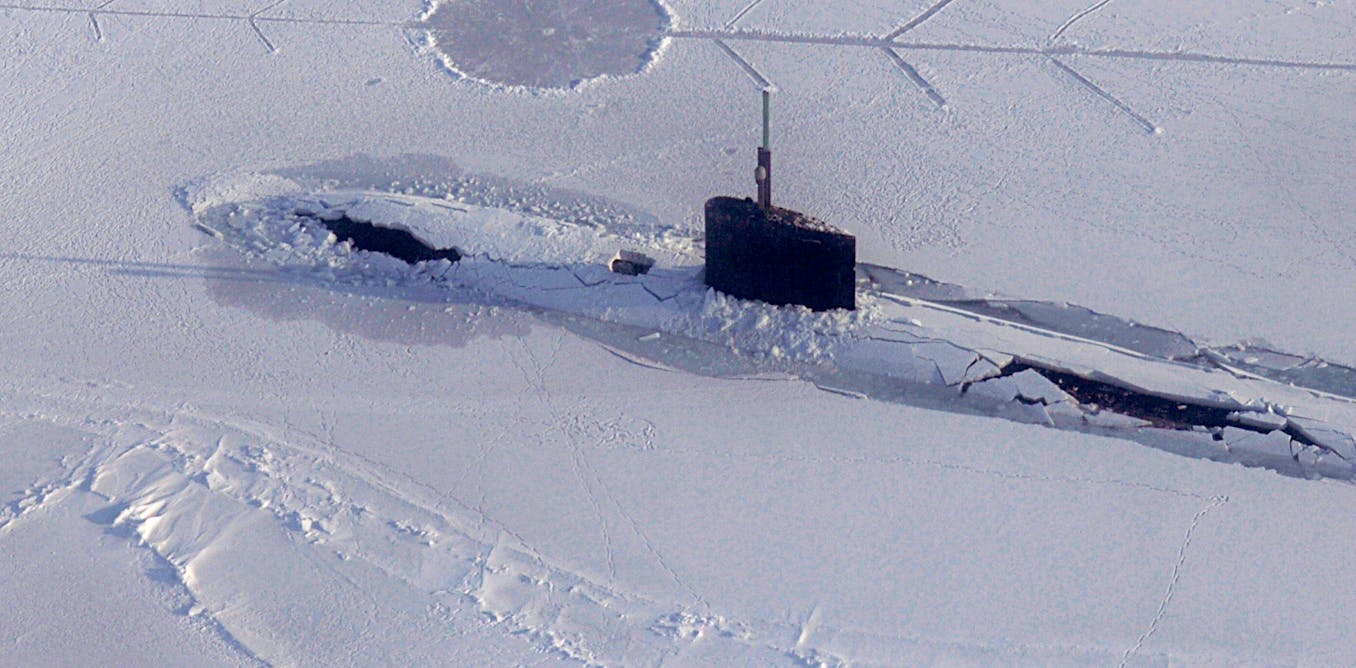
The hidden military pressures behind the new push for small nuclear reactors
If billions are being invested to power submarines not homes, the public deserves to know.

The Conversation (theconversation.com)
-
When I did some reading on the current situation, I found a lot of sites out of Australia that were repeating this "base load" idea, in the context of nuclear power.
I suspect that this is fossil-fuel propaganda.
Fossil fuel companies love promoting nuclear power because they know it takes decades to get a reactor built (if it gets built at all), and in the meantime, everyone keeps using fossil fuels.
It's the perfect way to cripple renewables without being obvious about it.
@notjustbikes My theory us that it's smart, liberal, pro-science, pro-enviornment. But they grew up in the 70s-80s, when nuclear was the "cool" solution to oil. They are intelligent and educated people, but their information is out of date.
-
When I did some reading on the current situation, I found a lot of sites out of Australia that were repeating this "base load" idea, in the context of nuclear power.
I suspect that this is fossil-fuel propaganda.
Fossil fuel companies love promoting nuclear power because they know it takes decades to get a reactor built (if it gets built at all), and in the meantime, everyone keeps using fossil fuels.
It's the perfect way to cripple renewables without being obvious about it.
There seems to be a widespread desire to forget that there is such a thing as a battery.
-
@mattsqu @patterfloof @notjustbikes This is a "letting the perfect be the enemy of the good" objection. We're in a transition, and the best ways to finish it might not be obvious until there's more experience with the whole tech stack. But it's doable: engineers are doing it.
@andygates @patterfloof @notjustbikes Absolutely, and nuclear would be terrible in this scenario. In a world where peak renewables output is way over 100% of peak demand, we will need something that's mostly never used, is reasonably cheap to keep idle, and starts up quickly. This is the first time I'm thinking investment in nuclear now, for 10-20 years time, could be a terrible idea.
-
When I did some reading on the current situation, I found a lot of sites out of Australia that were repeating this "base load" idea, in the context of nuclear power.
I suspect that this is fossil-fuel propaganda.
Fossil fuel companies love promoting nuclear power because they know it takes decades to get a reactor built (if it gets built at all), and in the meantime, everyone keeps using fossil fuels.
It's the perfect way to cripple renewables without being obvious about it.
@notjustbikes I'm not an electrical engineer, but it seems to me that the concept of base load is useful because, at least for now, we don't have enough yearly renewal production to cover the consumption needs. But we also need better ways of using excess production. Two of them are storage and hydrogen production. It would probably make businesses sense for renewable power plants to invest in plugging storage or hydrogen production solutions to their operations.
-
This means that the concept of "base load" is not really relevant, because there is no consistent base. And when the residual load goes negative, the wholesale price of electricity goes negative as well.
Last year the Netherlands had negative wholesale electricity prices for about 7% of the year, and that amount is only going to grow.
You can't afford to run a nuclear reactor when electricity prices are negative, but you also can't shut it down every day either.
>You can't afford to run a nuclear reactor when electricity prices are negative, but you also can't shut it down every day either.
What the lobbying for NPP in countries like the Netherlands is doing is securing legislation where "you" as in the company operating the nuclear reactor actually CAN afford that.
A big component of that is making the concept of "base load generators" a special category with financial compensation. So even at negative prices costs are compensated.
-
@mattsqu @patterfloof @notjustbikes This is a "letting the perfect be the enemy of the good" objection. We're in a transition, and the best ways to finish it might not be obvious until there's more experience with the whole tech stack. But it's doable: engineers are doing it.
@mattsqu @patterfloof @notjustbikes As a "surprise, that's obvious" example, California recently had so much "4h storage" that they discharged it in tranches overnight, time-shifting cheap solar so the sun really does shine all day. Storage is a cheat code.
-
@wall0159
However, the assumption that nuclear power is dispatchable is a myth: once you payed all the sunk cost to build a nuclear plant, it has to run 24/7 for a very long life if it ever wants to have remotely competitive prices per output.
@notjustbikes -
Since releasing my oil video I've had so many people claiming that renewables will never work and we need nuclear power instead.
What's odd is that almost all of the messages mention that nuclear power is the only solution for the "base load".
I have a degree in Electrical Engineering and I took several nuclear science electives. I like nuclear energy. But I received so much "base load" gaslighting that I started to doubt my own understanding of the situation.
@notjustbikes I would start thinking that this might be some form of psyop/propaganda.
Coz those commenters mostly agree, but (there's something). It a playbook to delay any action and/or confuse people. -
@notjustbikes I'm not an electrical engineer, but it seems to me that the concept of base load is useful because, at least for now, we don't have enough yearly renewal production to cover the consumption needs. But we also need better ways of using excess production. Two of them are storage and hydrogen production. It would probably make businesses sense for renewable power plants to invest in plugging storage or hydrogen production solutions to their operations.
@notjustbikes Nuclear would be great if there weren't those small issues you mentioned. That is valid for new nuclear power plants. What I don't think makes sense are decisions like Germany's of unplugging the nuclear power plants they already had working. If there was a commercially viable solution for the small modular power reactors, that would be a good solution.
-
@notjustbikes I'm not an electrical engineer, but it seems to me that the concept of base load is useful because, at least for now, we don't have enough yearly renewal production to cover the consumption needs. But we also need better ways of using excess production. Two of them are storage and hydrogen production. It would probably make businesses sense for renewable power plants to invest in plugging storage or hydrogen production solutions to their operations.
@notjustbikes in terms of storage, though, the current battery solutions don't look like a viable solution as they are expensive and their production and recycling environmental track records aren't great.
-
When I did some reading on the current situation, I found a lot of sites out of Australia that were repeating this "base load" idea, in the context of nuclear power.
I suspect that this is fossil-fuel propaganda.
Fossil fuel companies love promoting nuclear power because they know it takes decades to get a reactor built (if it gets built at all), and in the meantime, everyone keeps using fossil fuels.
It's the perfect way to cripple renewables without being obvious about it.
@notjustbikes
Its not so much renewables, they already lost that battle -- its the coming battery boom that threatens to stabilize the cost of electric production below where fossils can compete. -
@notjustbikes Solar on suburban homes is a funny thing. At the latitude of Amsterdam, it can lead to demand evaporation for 7-8 months of the year if the home has a sufficiently sized battery.
The solar from a typical suburban home can carry 10-15 kWp of solar, leading to 7-11 MWh production per year in east/west configuration and 13-16 MWh production in a south facing ideal deployment.
There is a 1:10 production difference between January and June, though, so the household likely needs to buy power Nov-Feb, but will likely break even or almost break even in Mar, and not consume any power from the grid in April to September, and begin to load from the grid lightly on October.
Heating with a heat pump will have them but 3-4 MWh during winter.
(Numbers based on our 75 kWh/(year and qm) home, and our demand, but they seem to be applicable on a more general scale, too).
For power producers this means they have to supply power to homes like ours only for winter.
Fortunately wind + battery can actually do that without CO2.
@isotopp @notjustbikes but batteries are terribly expensive. I have 5 solar panels and I've completely recovered that investment in less than two years because they were subsidised.They would cover half my daily needs if I could use all the production. So I've considered buying batteries, but there's no way I can recover that investment in a reasonable timeframe. At least not with the current electricity cost, which is very low.
-
@CIMB4 @notjustbikes
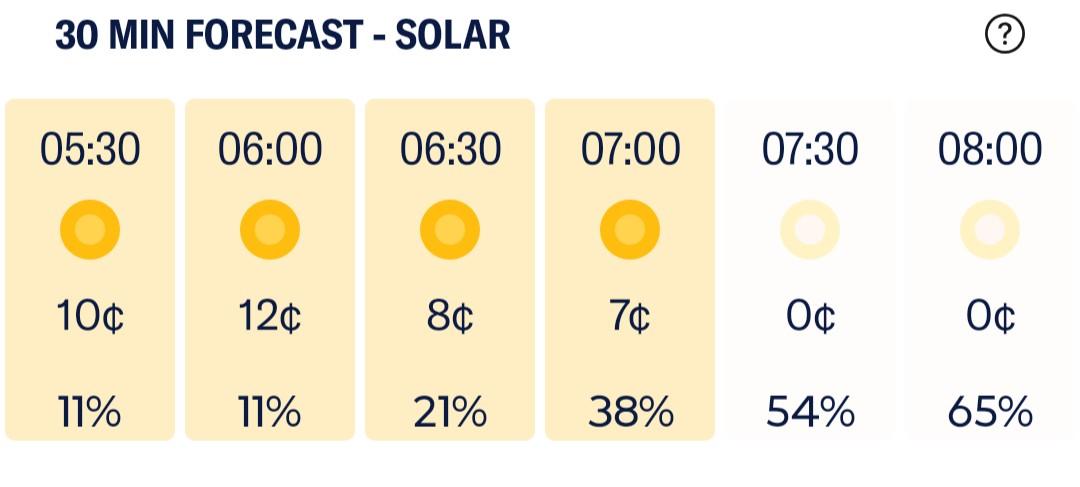
This reasoning (waiting for nuclear keeps us using fossil fuels) is nicely explained in the Australian context in this video by @thejuicemedia https://youtu.be/JBqVVBUdW84I'm in Australia, living in a house with PV panels and a battery. I sell electricity to the grid in the mornings and evenings and buy during the day, if needed. Here are the prices per kWh sellers may get tomorrow morning, the percentage at the bottom is the share of renewables in the grid:
...any more inflexible supply from the coal power plants (or nuclear if we had it) and they would go negative.