I've been unofficially told that Qatar has completely stopped shipping liquid helium, which means that 80% of our vendor's supply is gone.
-
Indeed, only my pet project keeps soldiering on at the moment. But, with other important measurements pending, I'd be willing to give up some of my helium. Though with both my group leader and the person who'd do those measurements currently on vacation, I'm slowly past caring, for the sake of my mental health. I can't take care of every single thing around here.
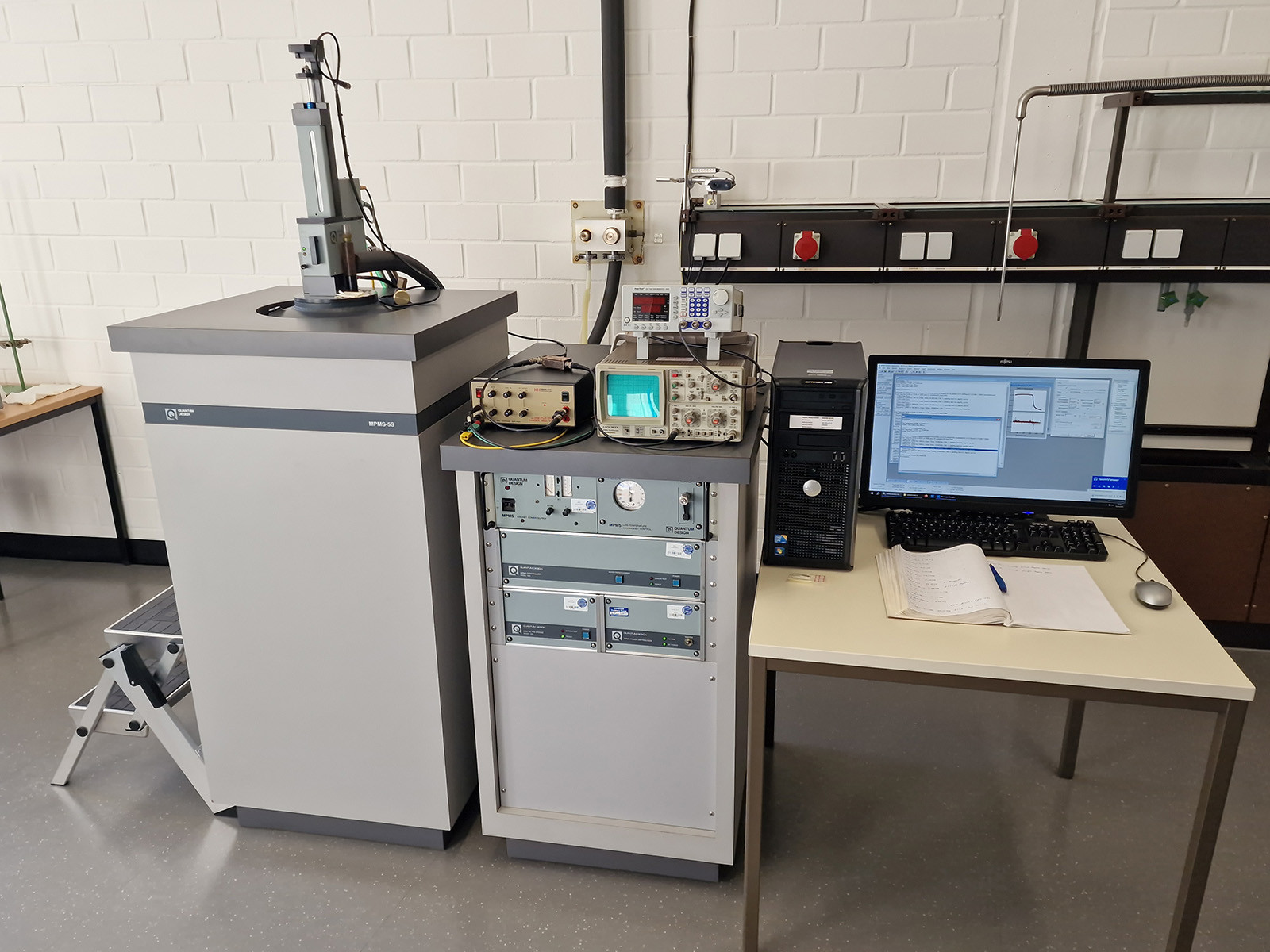
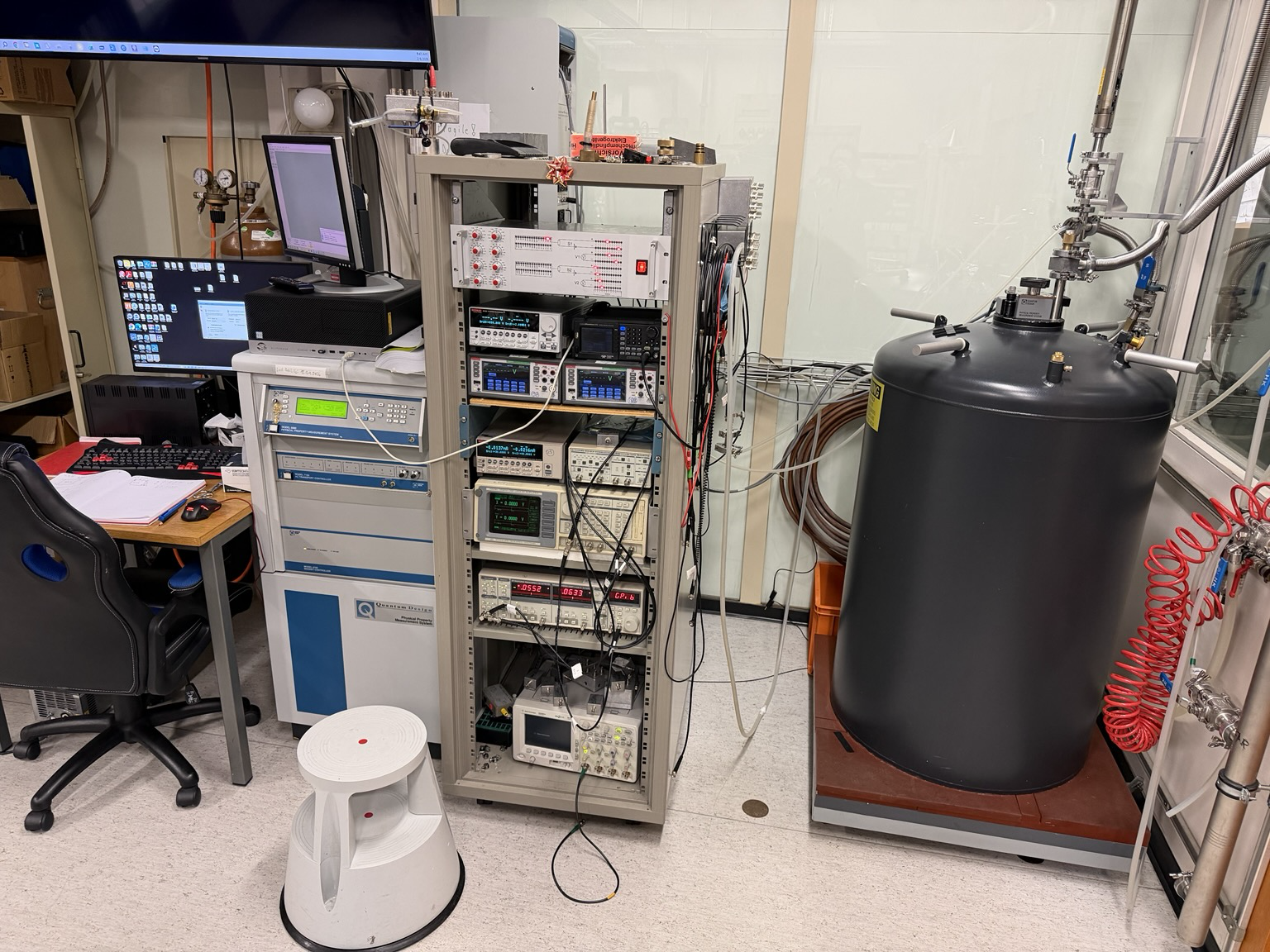
@StripeyYena clean lab, for comparison:

-
@StripeyYena clean lab, for comparison:
@prema Ohh, a classic PPMS! Never seen one of those in the flesh, but we'll probably have four DynaCool on our part of campus... xD
-
I've been unofficially told that Qatar has completely stopped shipping liquid helium, which means that 80% of our vendor's supply is gone. With science at the lowest priority, this means we might not get any helium for months, depending on the orange baboon's war. Yeah, this is probably bad.
@StripeyYena Sorry for your troubles, mate.
-
@prema Ohh, a classic PPMS! Never seen one of those in the flesh, but we'll probably have four DynaCool on our part of campus... xD
@StripeyYena very nice!
 how many Teslas?
 -
@StripeyYena very nice!
how many Teslas?@prema There are two 9T DynaCool in the lab where I'm mainly at, a different part of campus has a 9T EverCool, while two 14T DynaCool have been successfully obtained in terms of "DFG says yes, administration/ministry say blah blah". Still have to wait for the final OK there...
-
Indeed, only my pet project keeps soldiering on at the moment. But, with other important measurements pending, I'd be willing to give up some of my helium. Though with both my group leader and the person who'd do those measurements currently on vacation, I'm slowly past caring, for the sake of my mental health. I can't take care of every single thing around here.
@StripeyYena What's the practical application? I mean… When would one need to measure a magnetic field with such high precision?
-
@StripeyYena What's the practical application? I mean… When would one need to measure a magnetic field with such high precision?
@nblr It doesn't measure the field but the magnetic moment of a sample, which you can then tell the chemist or material scientist who made it, which could in turn lead to the creation of a new catalyst, rare-earth-free magnet, or material suitable for magnetic cooling, for example.
-
@nblr It doesn't measure the field but the magnetic moment of a sample, which you can then tell the chemist or material scientist who made it, which could in turn lead to the creation of a new catalyst, rare-earth-free magnet, or material suitable for magnetic cooling, for example.
@StripeyYena Ah! …so mostly for
Materialwissenschaft und Werkstofftechnik purposes. -
@StripeyYena Ah! …so mostly for
Materialwissenschaft und Werkstofftechnik purposes.@nblr And also useful for any kind of basic research you might want to do if you need to know the general magnetic character of a sample or want to know at which temperature it has a phase transition etc. It's a rather commonly encountered method of characterization if magnetism is your thing.
-
@nblr And also useful for any kind of basic research you might want to do if you need to know the general magnetic character of a sample or want to know at which temperature it has a phase transition etc. It's a rather commonly encountered method of characterization if magnetism is your thing.
@StripeyYena Ah! Right… Sorry for being so nosy, but what’s the temperature range of the device?
-
@StripeyYena Ah! Right… Sorry for being so nosy, but what’s the temperature range of the device?
@nblr I think officially it's around 2.3K up to 400K but with caveats. I usually never go below 4.5K because this is a first generation device (originally released to market in 1984) and the cooling power/reliability down there is iffy. Similarly, I rarely go above 300 or 350K due to the additional helium boiloff it causes (imperfect insulation between cooling annulus and helium bath). Going from 5K to 300K for temperature dependent measurements is usually my standard thing.
-
@nblr I think officially it's around 2.3K up to 400K but with caveats. I usually never go below 4.5K because this is a first generation device (originally released to market in 1984) and the cooling power/reliability down there is iffy. Similarly, I rarely go above 300 or 350K due to the additional helium boiloff it causes (imperfect insulation between cooling annulus and helium bath). Going from 5K to 300K for temperature dependent measurements is usually my standard thing.
@nblr The more modern brother of this thing can go from 1.8K up to 400K with ease, and the magnetometry option includes an oven (or rather heated sample holder) giving you a high temperature range between 300K and 1000K. This old one also has an oven insert, but it works differently and is cumbersome to use.
-
R relay@relay.infosec.exchange shared this topic