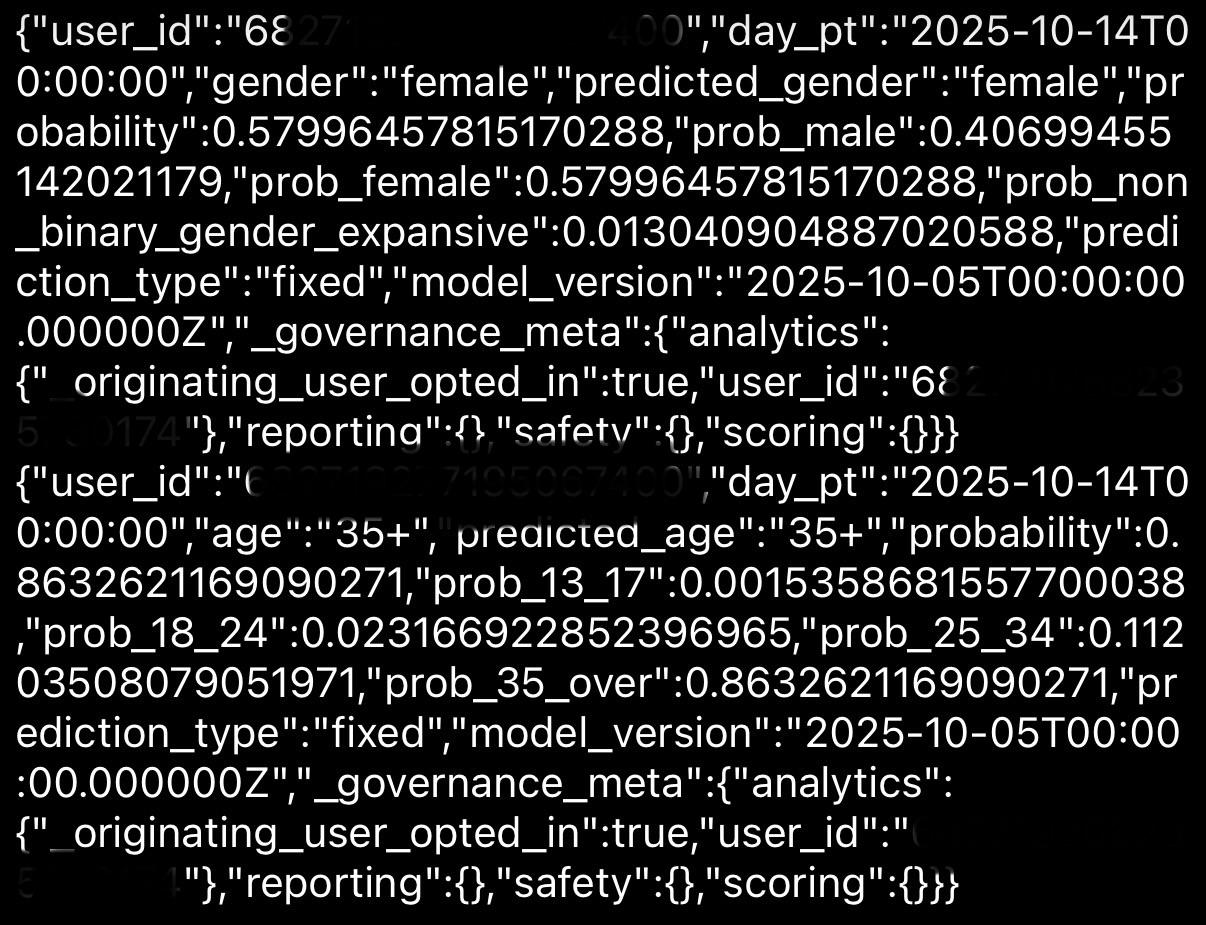
The age verifier knows how old you are at all times.
-
@ryanc *starts bleeding from eyes and ears*
-
@crackhappy @ryanc too late i'm dead
-
R relay@relay.an.exchange shared this topic
-
@crackhappy @ryanc too late i'm dead
@lritter @crackhappy @ryanc soon: zalgo comes?
-
The age verifier knows how old you are at all times. It knows this because it knows how old you aren't. By subtracting how old you are from how old you aren't, or how old you aren't from how old you are (whichever is greater), it obtains a difference, or remainder.
The verification system uses deviations to generate corrective dark patterns to drive you from a date of birth that isn't yours to a date of birth that is, and arriving at an age where you weren't, but now are. Consequently, the age you are is now the age that you weren't, and it follows that the age that you were is now the age that you aren't.
In the event that the age that you are is not the age that you weren't, the system has acquired a validation error. The validation error is the difference between the age the verifier thinks you are, and the age you weren't. If the validation error is considered to be a significant factor, it too may be corrected by by the upload of a high-resolution JPEG. However, the verifier must also know how old you were.
The age verification scenario works as follows: Because a variation has modified some of the information the you have input, it is not sure just how old you are. However, it is sure how old you aren't, within reason, and it knows how old you were.
It now subtracts the age you should be from the age you weren't, or vice-versa, and by differentiating this from the algebraic sum of the year you shouldn't be and the year you were, it is able to obtain the deviation and its variation, which is called January 1st, 1970.
@ryanc this reminds me of https://confer.to/blog/2026/01/private-inference/
-
R relay@relay.publicsquare.global shared this topic
-
The age verifier knows how old you are at all times. It knows this because it knows how old you aren't. By subtracting how old you are from how old you aren't, or how old you aren't from how old you are (whichever is greater), it obtains a difference, or remainder.
The verification system uses deviations to generate corrective dark patterns to drive you from a date of birth that isn't yours to a date of birth that is, and arriving at an age where you weren't, but now are. Consequently, the age you are is now the age that you weren't, and it follows that the age that you were is now the age that you aren't.
In the event that the age that you are is not the age that you weren't, the system has acquired a validation error. The validation error is the difference between the age the verifier thinks you are, and the age you weren't. If the validation error is considered to be a significant factor, it too may be corrected by by the upload of a high-resolution JPEG. However, the verifier must also know how old you were.
The age verification scenario works as follows: Because a variation has modified some of the information the you have input, it is not sure just how old you are. However, it is sure how old you aren't, within reason, and it knows how old you were.
It now subtracts the age you should be from the age you weren't, or vice-versa, and by differentiating this from the algebraic sum of the year you shouldn't be and the year you were, it is able to obtain the deviation and its variation, which is called January 1st, 1970.
-
-
The age verifier knows how old you are at all times. It knows this because it knows how old you aren't. By subtracting how old you are from how old you aren't, or how old you aren't from how old you are (whichever is greater), it obtains a difference, or remainder.
The verification system uses deviations to generate corrective dark patterns to drive you from a date of birth that isn't yours to a date of birth that is, and arriving at an age where you weren't, but now are. Consequently, the age you are is now the age that you weren't, and it follows that the age that you were is now the age that you aren't.
In the event that the age that you are is not the age that you weren't, the system has acquired a validation error. The validation error is the difference between the age the verifier thinks you are, and the age you weren't. If the validation error is considered to be a significant factor, it too may be corrected by by the upload of a high-resolution JPEG. However, the verifier must also know how old you were.
The age verification scenario works as follows: Because a variation has modified some of the information the you have input, it is not sure just how old you are. However, it is sure how old you aren't, within reason, and it knows how old you were.
It now subtracts the age you should be from the age you weren't, or vice-versa, and by differentiating this from the algebraic sum of the year you shouldn't be and the year you were, it is able to obtain the deviation and its variation, which is called January 1st, 1970.
I am older and wiser for reading this

-
@lritter @crackhappy @ryanc soon: zalgo comes?
@froztbyte Despite being on the Internet way before the SA Goons came on the scene, I had never heard of Zalgo before. I just did some light research and that sounds like fun. You should adjust it to match and post it.
-
@froztbyte Despite being on the Internet way before the SA Goons came on the scene, I had never heard of Zalgo before. I just did some light research and that sounds like fun. You should adjust it to match and post it.
@crackhappy congratulations on being in today's lucky 10k!
-
The age verifier knows how old you are at all times. It knows this because it knows how old you aren't. By subtracting how old you are from how old you aren't, or how old you aren't from how old you are (whichever is greater), it obtains a difference, or remainder.
The verification system uses deviations to generate corrective dark patterns to drive you from a date of birth that isn't yours to a date of birth that is, and arriving at an age where you weren't, but now are. Consequently, the age you are is now the age that you weren't, and it follows that the age that you were is now the age that you aren't.
In the event that the age that you are is not the age that you weren't, the system has acquired a validation error. The validation error is the difference between the age the verifier thinks you are, and the age you weren't. If the validation error is considered to be a significant factor, it too may be corrected by by the upload of a high-resolution JPEG. However, the verifier must also know how old you were.
The age verification scenario works as follows: Because a variation has modified some of the information the you have input, it is not sure just how old you are. However, it is sure how old you aren't, within reason, and it knows how old you were.
It now subtracts the age you should be from the age you weren't, or vice-versa, and by differentiating this from the algebraic sum of the year you shouldn't be and the year you were, it is able to obtain the deviation and its variation, which is called January 1st, 1970.
@ryanc This sounds like satire, but ist most probably how it actually works. Now I'm even more depressed.
-
@crackhappy congratulations on being in today's lucky 10k!
@froztbyte I always celebrate learning something new. It's a thirst deep inside me, similar to my thirst for your blood.
-
@froztbyte I always celebrate learning something new. It's a thirst deep inside me, similar to my thirst for your blood.
@froztbyte Let me reiterate, I am not a vampire. That you know of.
-
The age verifier knows how old you are at all times. It knows this because it knows how old you aren't. By subtracting how old you are from how old you aren't, or how old you aren't from how old you are (whichever is greater), it obtains a difference, or remainder.
The verification system uses deviations to generate corrective dark patterns to drive you from a date of birth that isn't yours to a date of birth that is, and arriving at an age where you weren't, but now are. Consequently, the age you are is now the age that you weren't, and it follows that the age that you were is now the age that you aren't.
In the event that the age that you are is not the age that you weren't, the system has acquired a validation error. The validation error is the difference between the age the verifier thinks you are, and the age you weren't. If the validation error is considered to be a significant factor, it too may be corrected by by the upload of a high-resolution JPEG. However, the verifier must also know how old you were.
The age verification scenario works as follows: Because a variation has modified some of the information the you have input, it is not sure just how old you are. However, it is sure how old you aren't, within reason, and it knows how old you were.
It now subtracts the age you should be from the age you weren't, or vice-versa, and by differentiating this from the algebraic sum of the year you shouldn't be and the year you were, it is able to obtain the deviation and its variation, which is called January 1st, 1970.
@ryanc Thankyou for reminding me that I haven't made a "missile knows where it is Monday" in far too long.
-
The age verifier knows how old you are at all times. It knows this because it knows how old you aren't. By subtracting how old you are from how old you aren't, or how old you aren't from how old you are (whichever is greater), it obtains a difference, or remainder.
The verification system uses deviations to generate corrective dark patterns to drive you from a date of birth that isn't yours to a date of birth that is, and arriving at an age where you weren't, but now are. Consequently, the age you are is now the age that you weren't, and it follows that the age that you were is now the age that you aren't.
In the event that the age that you are is not the age that you weren't, the system has acquired a validation error. The validation error is the difference between the age the verifier thinks you are, and the age you weren't. If the validation error is considered to be a significant factor, it too may be corrected by by the upload of a high-resolution JPEG. However, the verifier must also know how old you were.
The age verification scenario works as follows: Because a variation has modified some of the information the you have input, it is not sure just how old you are. However, it is sure how old you aren't, within reason, and it knows how old you were.
It now subtracts the age you should be from the age you weren't, or vice-versa, and by differentiating this from the algebraic sum of the year you shouldn't be and the year you were, it is able to obtain the deviation and its variation, which is called January 1st, 1970.
I have visibly aged from reading this.
-
The age verifier knows how old you are at all times. It knows this because it knows how old you aren't. By subtracting how old you are from how old you aren't, or how old you aren't from how old you are (whichever is greater), it obtains a difference, or remainder.
The verification system uses deviations to generate corrective dark patterns to drive you from a date of birth that isn't yours to a date of birth that is, and arriving at an age where you weren't, but now are. Consequently, the age you are is now the age that you weren't, and it follows that the age that you were is now the age that you aren't.
In the event that the age that you are is not the age that you weren't, the system has acquired a validation error. The validation error is the difference between the age the verifier thinks you are, and the age you weren't. If the validation error is considered to be a significant factor, it too may be corrected by by the upload of a high-resolution JPEG. However, the verifier must also know how old you were.
The age verification scenario works as follows: Because a variation has modified some of the information the you have input, it is not sure just how old you are. However, it is sure how old you aren't, within reason, and it knows how old you were.
It now subtracts the age you should be from the age you weren't, or vice-versa, and by differentiating this from the algebraic sum of the year you shouldn't be and the year you were, it is able to obtain the deviation and its variation, which is called January 1st, 1970.
@ryanc Why does it read so well? And why don't I understand it anyway? mind-boggling
-
The age verifier knows how old you are at all times. It knows this because it knows how old you aren't. By subtracting how old you are from how old you aren't, or how old you aren't from how old you are (whichever is greater), it obtains a difference, or remainder.
The verification system uses deviations to generate corrective dark patterns to drive you from a date of birth that isn't yours to a date of birth that is, and arriving at an age where you weren't, but now are. Consequently, the age you are is now the age that you weren't, and it follows that the age that you were is now the age that you aren't.
In the event that the age that you are is not the age that you weren't, the system has acquired a validation error. The validation error is the difference between the age the verifier thinks you are, and the age you weren't. If the validation error is considered to be a significant factor, it too may be corrected by by the upload of a high-resolution JPEG. However, the verifier must also know how old you were.
The age verification scenario works as follows: Because a variation has modified some of the information the you have input, it is not sure just how old you are. However, it is sure how old you aren't, within reason, and it knows how old you were.
It now subtracts the age you should be from the age you weren't, or vice-versa, and by differentiating this from the algebraic sum of the year you shouldn't be and the year you were, it is able to obtain the deviation and its variation, which is called January 1st, 1970.
@ryanc truly beautiful engineering
-
@lritter @crackhappy @ryanc soon: zalgo comes?
@froztbyte Z̴̛͈̀̽̊̓͛̓̿̋̾̃̉͑̒͠à̸̡̩̦̝̺̻͚̥̭͇̦̩͎͚͇̈́͂͠͝l̸̖͎̝͍̱̱̼̮͔͕̍̂̉͒̓̌͐͂͂̄̀̕͜͠g̶̨̲̼̎̌͂̀̈́̉͑̈́̅̅̆́̂ǫ̴̡͈̫̼̻͚͐̒̓̀̿͋̀̿ ̷̡̣̯̖̪̗̥́̒͘c̴̢̡̦̯͉͙̩̩̟̬͛̇̌͗̑͐̈́͐͋̾̿̀̕͜͠o̵̡̡͎̽͆̐͋̏̈̓̈́͘m̶̛̰̝̦̪͉̳̰̣̙̝̝̖̲͑̚̚͠ͅe̴̛̙̮̟͓̜̬͌͆̓͌͗͗̂̃͐̓̐̒͂͗s̵̛̖͖̥̜̦̑̓̏͑̈̊̓̓̈́̅͗͛͌͘͠͠
-
@froztbyte Z̴̛͈̀̽̊̓͛̓̿̋̾̃̉͑̒͠à̸̡̩̦̝̺̻͚̥̭͇̦̩͎͚͇̈́͂͠͝l̸̖͎̝͍̱̱̼̮͔͕̍̂̉͒̓̌͐͂͂̄̀̕͜͠g̶̨̲̼̎̌͂̀̈́̉͑̈́̅̅̆́̂ǫ̴̡͈̫̼̻͚͐̒̓̀̿͋̀̿ ̷̡̣̯̖̪̗̥́̒͘c̴̢̡̦̯͉͙̩̩̟̬͛̇̌͗̑͐̈́͐͋̾̿̀̕͜͠o̵̡̡͎̽͆̐͋̏̈̓̈́͘m̶̛̰̝̦̪͉̳̰̣̙̝̝̖̲͑̚̚͠ͅe̴̛̙̮̟͓̜̬͌͆̓͌͗͗̂̃͐̓̐̒͂͗s̵̛̖͖̥̜̦̑̓̏͑̈̊̓̓̈́̅͗͛͌͘͠͠
@EdBruce @froztbyte @lritter @ryanc UTF abuse!
-
The age verifier knows how old you are at all times. It knows this because it knows how old you aren't. By subtracting how old you are from how old you aren't, or how old you aren't from how old you are (whichever is greater), it obtains a difference, or remainder.
The verification system uses deviations to generate corrective dark patterns to drive you from a date of birth that isn't yours to a date of birth that is, and arriving at an age where you weren't, but now are. Consequently, the age you are is now the age that you weren't, and it follows that the age that you were is now the age that you aren't.
In the event that the age that you are is not the age that you weren't, the system has acquired a validation error. The validation error is the difference between the age the verifier thinks you are, and the age you weren't. If the validation error is considered to be a significant factor, it too may be corrected by by the upload of a high-resolution JPEG. However, the verifier must also know how old you were.
The age verification scenario works as follows: Because a variation has modified some of the information the you have input, it is not sure just how old you are. However, it is sure how old you aren't, within reason, and it knows how old you were.
It now subtracts the age you should be from the age you weren't, or vice-versa, and by differentiating this from the algebraic sum of the year you shouldn't be and the year you were, it is able to obtain the deviation and its variation, which is called January 1st, 1970.
@ryanc …finally somebody put this whole process into simple terms a layperson can understand!
-
The age verifier knows how old you are at all times. It knows this because it knows how old you aren't. By subtracting how old you are from how old you aren't, or how old you aren't from how old you are (whichever is greater), it obtains a difference, or remainder.
The verification system uses deviations to generate corrective dark patterns to drive you from a date of birth that isn't yours to a date of birth that is, and arriving at an age where you weren't, but now are. Consequently, the age you are is now the age that you weren't, and it follows that the age that you were is now the age that you aren't.
In the event that the age that you are is not the age that you weren't, the system has acquired a validation error. The validation error is the difference between the age the verifier thinks you are, and the age you weren't. If the validation error is considered to be a significant factor, it too may be corrected by by the upload of a high-resolution JPEG. However, the verifier must also know how old you were.
The age verification scenario works as follows: Because a variation has modified some of the information the you have input, it is not sure just how old you are. However, it is sure how old you aren't, within reason, and it knows how old you were.
It now subtracts the age you should be from the age you weren't, or vice-versa, and by differentiating this from the algebraic sum of the year you shouldn't be and the year you were, it is able to obtain the deviation and its variation, which is called January 1st, 1970.
If this is not circulating internally at Discord by now I am disappoint.