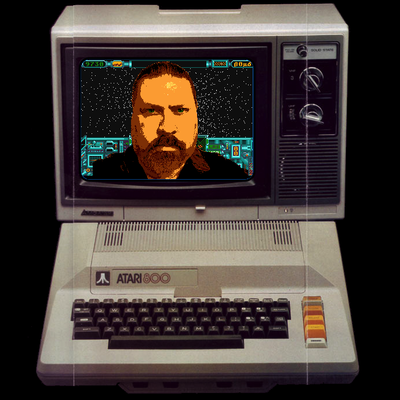
More and more I feel that software is something that's inflicted on me rather than something I create or control that serves me.
-
More and more I feel that software is something that's inflicted on me rather than something I create or control that serves me.
@arclight I have been thinking similar thoughts for a while. I think it's one of the reasons I use my computers a lot less than I used to.
-
So what am I actually arguing here?
This is not 1995 and the expectations surrounding publicly distributed code are very different now.
Some of those expectations are reasonable. If an author knows their code is dangerously broken, it should be fixed or be pulled from distribution. You need to be better than Matt from Matt's Script Archive. You should not be publishing to npm or PyPi or CRAN or CPAN or any of the public repositories unless you accept the minimal responsibility for fixing or retiring your code.
_RETIRING CODE IS ALWAYS AN OPTION, EVEN IN A PUBLIC REPOSITORY_
But let's take npm as a bad example. What happens when an author decides to retire their code and stops distributing it and pulling it from a public archive breaks other people's applications that rely on code from that public archive? Do we accept the breakage that results from our naïve expectations of the public archive or does the archive continue to distribute the retired code against the author's wishes without forking the code and taking responsibility for it?
I was on call the night of Friday, December 31, 1999. The right answer is that organizationally, you take responsibility for your code _AND ALL ITS DEPENDENCIES_ and you factor in that the public repository is not guaranteed to be there when you need it and that any code you pulled in from the internet is your responsibility. You own those dependencies once you start relying on them. Unless you have an explicit agreement with the original author, they owe you _NOTHING_.
That is apparently not the modern expectation. The modern expectation is that authors who make their code public owe free maintenance, development, and security fixes to corporations for free forever and if you ever try to extract yourself from this implicit serfdom by retiring your code, some asshole organization will keep distributing your retired code under your name and keep you yoked to that millstone.
Am I arguing to have it both ways? No. It's reasonable to distribute code of average quality and maintain it on one's own schedule. It's also reasonable to retire code for any reason but specifically because you no longer have the time or interest to maintain it at an average or (personally) acceptable level of quality. Mark it as archived and unsupported so it's clear to everyone what the project's status is. In an extreme case, stop distributing the code - that's what should have happened with Matt's Script Archive.
The other obsolete expectation is that one's public code would be used and read by other humans and that attribution was preserved. The vast corpus of code used as training data for commercial LLMs was never intended to be used in that manner. No explicit permission was granted to strip the license and authorship of all that code - it was effectively plagiarized by sampling.
How much money did Clyde Stubblefield get from all the songs that sampled Funky Drummer? How much money did Gregory Coleman from The Winstons get from all the songs that sampled his drum break from their 1969 track "Amen, Brother"? https://en.wikipedia.org/wiki/Amen_break
Hint: Coleman died homeless and destitute in 2006.
When hip-hop was a niche genre of primarily Black artists sampling other Black artists early on, maybe "sample culture" and the same sort of attribution stripping and plagiarism-by-sampling was acceptable. Once the big money started rolling in it wasn't. People like Richard Spencer, Gregory Coleman, and Clyde Stubblefield never got their due and let's not underemphasize this was yet another instance of Black artists being screwed over by White corporations.
White people _really_ don't like it when they get treated like Black people have been treated like forever. I can't be upset about AI stripping attribution and stealing code by sampling and remixing without clearly and unambiguously showing the parallels to Black musicians 4 decades ago.
Let's just pause and reflect on that for a moment.
-
@arclight Prior to the current LPM regime, library code that wasn't yet vetted and deemed important enough to be included in distros was only really visible to people with adjacent domain expertise to evaluate whether they wanted to use it by copying it into their project or having users obtain it manually out-of-band.
This produced a sort of organic process and feedback loop by which it could be established if anyone had the will to be responsible for large-scale use of the code.
@dalias @arclight
I think that's an important and useful distinction. There's a fundamental difference between"You search, find and download a library to use with your code"; and
"You follow an intro tutorial and the tool chain pulls it down as a secondary dependency without you even knowing what it is, or that it was going to happen."
-
The other obsolete expectation is that one's public code would be used and read by other humans and that attribution was preserved. The vast corpus of code used as training data for commercial LLMs was never intended to be used in that manner. No explicit permission was granted to strip the license and authorship of all that code - it was effectively plagiarized by sampling.
How much money did Clyde Stubblefield get from all the songs that sampled Funky Drummer? How much money did Gregory Coleman from The Winstons get from all the songs that sampled his drum break from their 1969 track "Amen, Brother"? https://en.wikipedia.org/wiki/Amen_break
Hint: Coleman died homeless and destitute in 2006.
When hip-hop was a niche genre of primarily Black artists sampling other Black artists early on, maybe "sample culture" and the same sort of attribution stripping and plagiarism-by-sampling was acceptable. Once the big money started rolling in it wasn't. People like Richard Spencer, Gregory Coleman, and Clyde Stubblefield never got their due and let's not underemphasize this was yet another instance of Black artists being screwed over by White corporations.
White people _really_ don't like it when they get treated like Black people have been treated like forever. I can't be upset about AI stripping attribution and stealing code by sampling and remixing without clearly and unambiguously showing the parallels to Black musicians 4 decades ago.
Let's just pause and reflect on that for a moment.
Honestly, I'm the last person in the world who should be giving a lecture on hip-hop history. I make Weird Al look like Chuck D by comparison: https://youtu.be/N9qYF9DZPdw
-
@dalias @arclight
I think that's an important and useful distinction. There's a fundamental difference between"You search, find and download a library to use with your code"; and
"You follow an intro tutorial and the tool chain pulls it down as a secondary dependency without you even knowing what it is, or that it was going to happen."
@jannem @dalias Agreed. Compare the review and configuration management burden of say, including the PCRE library into a compiled C project vs shipping a Python application with a full Python virtual environment. Even the cascade of dependencies from a simple requirements.txt file can be a huge amount of code. Until you start doing strict configuration management you don't see the burden most interpreted codes put on you. Nobody wants to hear that Python, R, etc. is not fit for use in a high integrity environment, at least not in the way that 99% of developers use it.
-
So what am I actually arguing here?
This is not 1995 and the expectations surrounding publicly distributed code are very different now.
Some of those expectations are reasonable. If an author knows their code is dangerously broken, it should be fixed or be pulled from distribution. You need to be better than Matt from Matt's Script Archive. You should not be publishing to npm or PyPi or CRAN or CPAN or any of the public repositories unless you accept the minimal responsibility for fixing or retiring your code.
_RETIRING CODE IS ALWAYS AN OPTION, EVEN IN A PUBLIC REPOSITORY_
But let's take npm as a bad example. What happens when an author decides to retire their code and stops distributing it and pulling it from a public archive breaks other people's applications that rely on code from that public archive? Do we accept the breakage that results from our naïve expectations of the public archive or does the archive continue to distribute the retired code against the author's wishes without forking the code and taking responsibility for it?
I was on call the night of Friday, December 31, 1999. The right answer is that organizationally, you take responsibility for your code _AND ALL ITS DEPENDENCIES_ and you factor in that the public repository is not guaranteed to be there when you need it and that any code you pulled in from the internet is your responsibility. You own those dependencies once you start relying on them. Unless you have an explicit agreement with the original author, they owe you _NOTHING_.
That is apparently not the modern expectation. The modern expectation is that authors who make their code public owe free maintenance, development, and security fixes to corporations for free forever and if you ever try to extract yourself from this implicit serfdom by retiring your code, some asshole organization will keep distributing your retired code under your name and keep you yoked to that millstone.
Am I arguing to have it both ways? No. It's reasonable to distribute code of average quality and maintain it on one's own schedule. It's also reasonable to retire code for any reason but specifically because you no longer have the time or interest to maintain it at an average or (personally) acceptable level of quality. Mark it as archived and unsupported so it's clear to everyone what the project's status is. In an extreme case, stop distributing the code - that's what should have happened with Matt's Script Archive.
@arclight My view is that nobody should use Other Peoples' Code. You write code for yourself, or for your job. If you want to share it, fine, but nobody should use it. You MUST review/rewrite.
But we live in a fallen world, & people are foolish & lazy, so they DO use OPC. That choice is not my problem.
Even an operating system or language, you must be aware that you didn't write this, it's not yours or safe. Only Terry Davis lived free of sin, & he was insane.
Digital Mark λ ☕️ 🚀 🌗 (@mdhughes@appdot.net)
I wrote this as a ha-ha-but-seriously-yes: You should only use software you wrote for yourself, never let anyone else touch it. Other Peoples' Code is the work of the devil.

AppDot.Net (appdot.net)
-
@arclight My view is that nobody should use Other Peoples' Code. You write code for yourself, or for your job. If you want to share it, fine, but nobody should use it. You MUST review/rewrite.
But we live in a fallen world, & people are foolish & lazy, so they DO use OPC. That choice is not my problem.
Even an operating system or language, you must be aware that you didn't write this, it's not yours or safe. Only Terry Davis lived free of sin, & he was insane.
Digital Mark λ ☕️ 🚀 🌗 (@mdhughes@appdot.net)
I wrote this as a ha-ha-but-seriously-yes: You should only use software you wrote for yourself, never let anyone else touch it. Other Peoples' Code is the work of the devil.
AppDot.Net (appdot.net)
That seems overly pessimistic. I can't imagine you grow your own food, built your own house, synthesize your own medicine. For all these things you rely on others, even though the stakes are higher than for most software.
I think the difference is the lack of oversight. There are enforced regulations governing how each of these things are done, so that (at least ideally) you can rely on them being of a certain level of quality. Software is pretty unique in not having that yet, at least at a societal level.
-
@arclight My view is that nobody should use Other Peoples' Code. You write code for yourself, or for your job. If you want to share it, fine, but nobody should use it. You MUST review/rewrite.
But we live in a fallen world, & people are foolish & lazy, so they DO use OPC. That choice is not my problem.
Even an operating system or language, you must be aware that you didn't write this, it's not yours or safe. Only Terry Davis lived free of sin, & he was insane.
Digital Mark λ ☕️ 🚀 🌗 (@mdhughes@appdot.net)
I wrote this as a ha-ha-but-seriously-yes: You should only use software you wrote for yourself, never let anyone else touch it. Other Peoples' Code is the work of the devil.
AppDot.Net (appdot.net)
@mdhughes We've been sold the notion of reusable code for decade. This history of LINPACK/LAPACK is interesting - the motivation in the early 70s was to have quality numerical routines instead of every dingus with a VAX writing their own matrix solvers badly, they modern equivalent of rolling your own crypto. DIY is usually a Really Bad Idea in these cases. On the other extreme is basically every interpreted code calling in an avalanche of nested dependencies because somebody didn't want to write a ten line function and they had DRY beaten into them.
I think what's lost with frictionless dependencies is that devs don't question whether most dependencies are really needed. It seemingly costs nothing to import a dozen packages that rely on two dozen more behind the scenes. They've been taken in by the cult of DRY and velocity and they don't know how to operate in an environment where free fast internet access isn't available. And here the problem isn't lack of connectivity or bandwidth, it's the rapidly decaying trustability of third-party code. Between bad actors and AI(+) we're getting to a point where network doesn't matter because nothing on the network can be trusted.
(+) Cue Pam: "These are the same picture."
-
That seems overly pessimistic. I can't imagine you grow your own food, built your own house, synthesize your own medicine. For all these things you rely on others, even though the stakes are higher than for most software.
I think the difference is the lack of oversight. There are enforced regulations governing how each of these things are done, so that (at least ideally) you can rely on them being of a certain level of quality. Software is pretty unique in not having that yet, at least at a societal level.
-
@mdhughes We've been sold the notion of reusable code for decade. This history of LINPACK/LAPACK is interesting - the motivation in the early 70s was to have quality numerical routines instead of every dingus with a VAX writing their own matrix solvers badly, they modern equivalent of rolling your own crypto. DIY is usually a Really Bad Idea in these cases. On the other extreme is basically every interpreted code calling in an avalanche of nested dependencies because somebody didn't want to write a ten line function and they had DRY beaten into them.
I think what's lost with frictionless dependencies is that devs don't question whether most dependencies are really needed. It seemingly costs nothing to import a dozen packages that rely on two dozen more behind the scenes. They've been taken in by the cult of DRY and velocity and they don't know how to operate in an environment where free fast internet access isn't available. And here the problem isn't lack of connectivity or bandwidth, it's the rapidly decaying trustability of third-party code. Between bad actors and AI(+) we're getting to a point where network doesn't matter because nothing on the network can be trusted.
(+) Cue Pam: "These are the same picture."
@arclight Yes, the "Software Integrated Circuit"/black box idea was a massive failure, it does not work, you get nonsense like npm's left-pad or outright scams.
Software as a library should be used for research only, like a real library. You go there, read what someone did, make notes, do your own thing entirely separate. So LINPACK should be a book; Numerical Recipes is. If someone's determined that it has to be preinstalled, everyone should still review it if they care if it works or not.
-
@arclight Not a joke: I installed WordStar 7 in DOSBox-X today.
Zero JavaScript. It doesn’t download anything. Doesn’t connect to anything. It *can’t* connect to anything.
It’s gonna take a while for the muscle memory to come back, though.
-
R relay@relay.mycrowd.ca shared this topic